In the early 1990s, a legendary Korean drama titled 'Years of Ambition' (야망의 세월) became a massive hit. The story was loosely based on the life of Lee Myung-bak (MB), who was then a high-ranking executive at Hyundai and would later become the President of South Korea. The drama portrayed his rise to success within the corporate world.
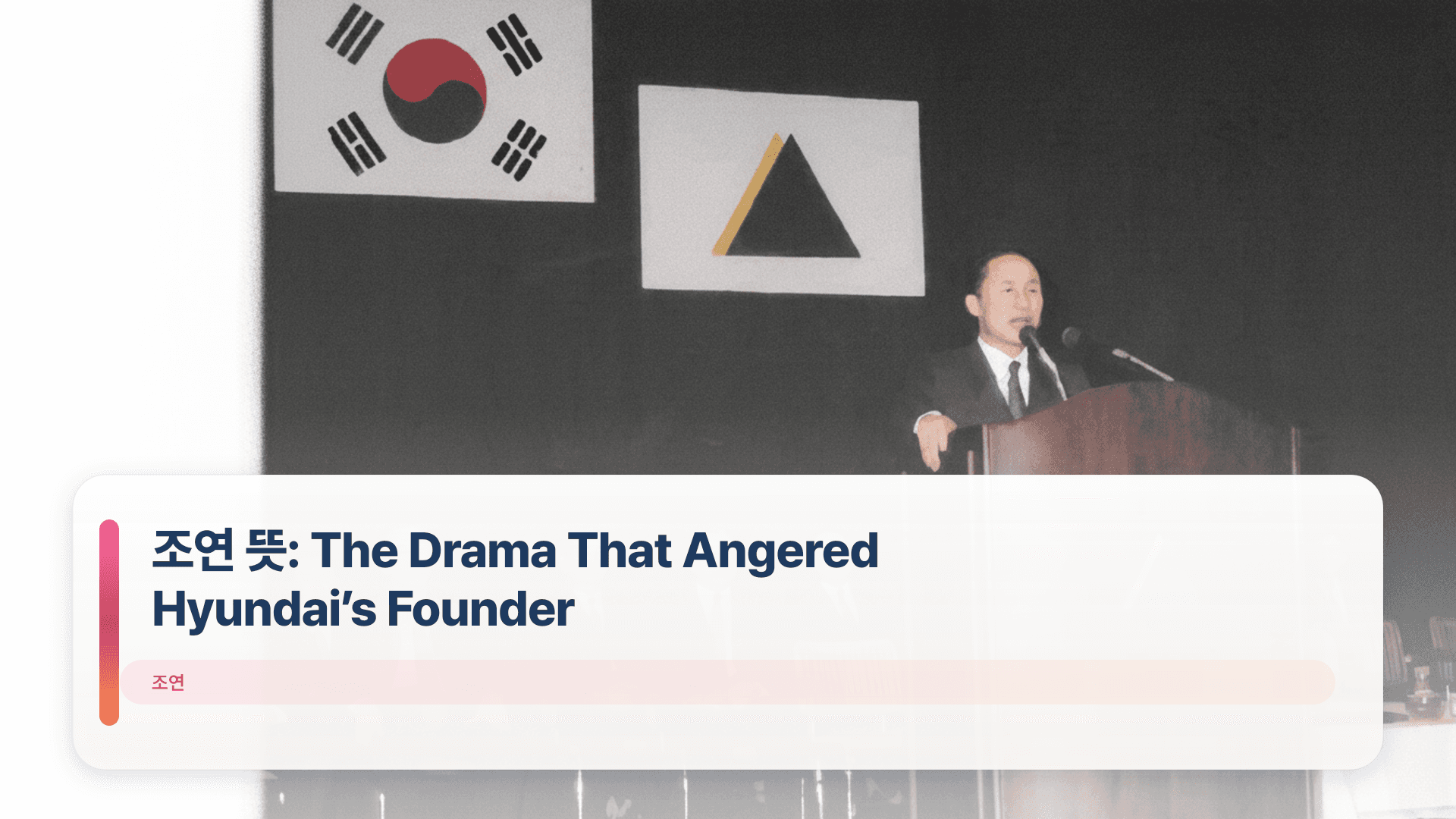
However, the production of this drama caused significant friction within the Hyundai Group. While the public was fascinated by the dramatized version of Lee Myung-bak's life, the actual founder of Hyundai, Chung Ju-yung, was reportedly displeased. The tension arose from how the characters were positioned relative to one another in the narrative.
According to memoirs and reports from the time, Chung Ju-yung felt that the drama unfairly relegated him to a secondary position. Despite being the visionary founder who built the empire, the television script focused heavily on the 'salaryman myth' of Lee Myung-bak, making the founder feel like a background figure in his own company's history.
In the context of the article, 조연joyeon refers to a supporting role or a secondary character in a play, movie, or drama. Chairman Chung Ju-yung used this term to express his frustration that the drama treated the founder of the company as less important than the employee.
This cultural moment highlights the complex relationship between real-life corporate titans and their fictionalized counterparts. It also serves as a famous anecdote involving Yoo In-chon, the actor who played the lead role and later served as the Minister of Culture, Sports and Tourism under the Lee Myung-bak administration.
Full story (translated & rewritten)
In early 1990, writer Na Yeon-sook, known for hits like 'Daldongne,' visited Lee Myung-bak's office. She wasn't alone; she was accompanied by actor Yoo In-chon and a KBS producer. They proposed creating a drama modeled after the Hyundai Group, seeking internal materials to ensure a level of realism in their storytelling.
Lee Myung-bak initially welcomed the idea, assuming the story would naturally center on the legendary founder, Chung Ju-yung. He even asked the writers what more they needed to know about the Chairman that wasn't already public knowledge. However, the focus of the script shifted toward the dramatic success of the professional manager—Lee himself.
As the drama aired, it became a cultural phenomenon. Yoo In-chon’s portrayal of the charismatic executive solidified Lee Myung-bak’s public image as a hero of the working class. But inside the Hyundai headquarters, the atmosphere was cold. Chairman Chung Ju-yung reportedly expressed anger, asking, "Am I just a supporting character?"
This internal conflict eventually contributed to Lee Myung-bak's departure from Hyundai. The drama that made him a household name and paved his way into politics simultaneously severed his decades-long tie with the man who had hired him. The article notes that the specific details of these meetings were often kept private until memoirs later revealed the depth of the founder's discomfort.
Context
'Years of Ambition' is credited with creating the 'MB Myth,' which was a cornerstone of Lee Myung-bak's later political campaigns.
Yoo In-chon, the actor who played the lead, eventually entered real-life politics, showing a rare case of a 'character' and 'inspiration' working together in government.
In Korean corporate culture of that era, the hierarchy between a founder and an employee was absolute, making the drama's focus highly controversial.
그는 이번 영화에서 조연을 맡았다.geuneun ibeon yeonghwaeseo joyeoneul matatda. — He took on a supporting role in this movie.
주연보다 조연의 연기가 더 인상적이었어요.juyeonboda joyeonui yeongiga deo insangjeogieosseoyo. — The supporting actor's performance was more impressive than the lead's.
주인공의 친구 역할인 조연 배우가 누구예요?
juingoui chingu yeokharin joyeon baeuga nuguyeyo?
Who is the supporting actor playing the protagonist's friend?
저는 제 인생의 주연이지 조연이 아니에요.
jeoneun je insaeui juyeoniji joyeoni anieyo.
I am the lead in my life, not a supporting character.