The Movie 'The Man Who Lives with the King' Revives Interest in Gwangnamseowon
Discover how the hit film 'The Man Who Lives with the King' is bringing new attention to Pohang's Gwangnamseowon and the loyal legacy of Hwangbo In.

Discover how the hit film 'The Man Who Lives with the King' is bringing new attention to Pohang's Gwangnamseowon and the loyal legacy of Hwangbo In.

Discover how Shinsegae Food is leading the way in Korean food culture and innovation. Learn the meaning of 종합식품기업 today!

Netflix beat Q1 expectations but saw shares tumble due to a weak Q2 outlook. Learn the meaning of 깜짝 실적 in this news brief.
Explore the concept of 귀천 (social status) through K-dramas and Buddhist philosophy. Learn how to define your own worth.

Netflix reports strong Q1 earnings and subscriber growth, yet shares fall 9% in after-hours trading. Learn about 실적 호조 and market reactions.
EN brief: 영화 '왕사남'이 깨운 광남서원···포항에 황보인 후손 집성촌 있다 (culture) + 1 glossary term.
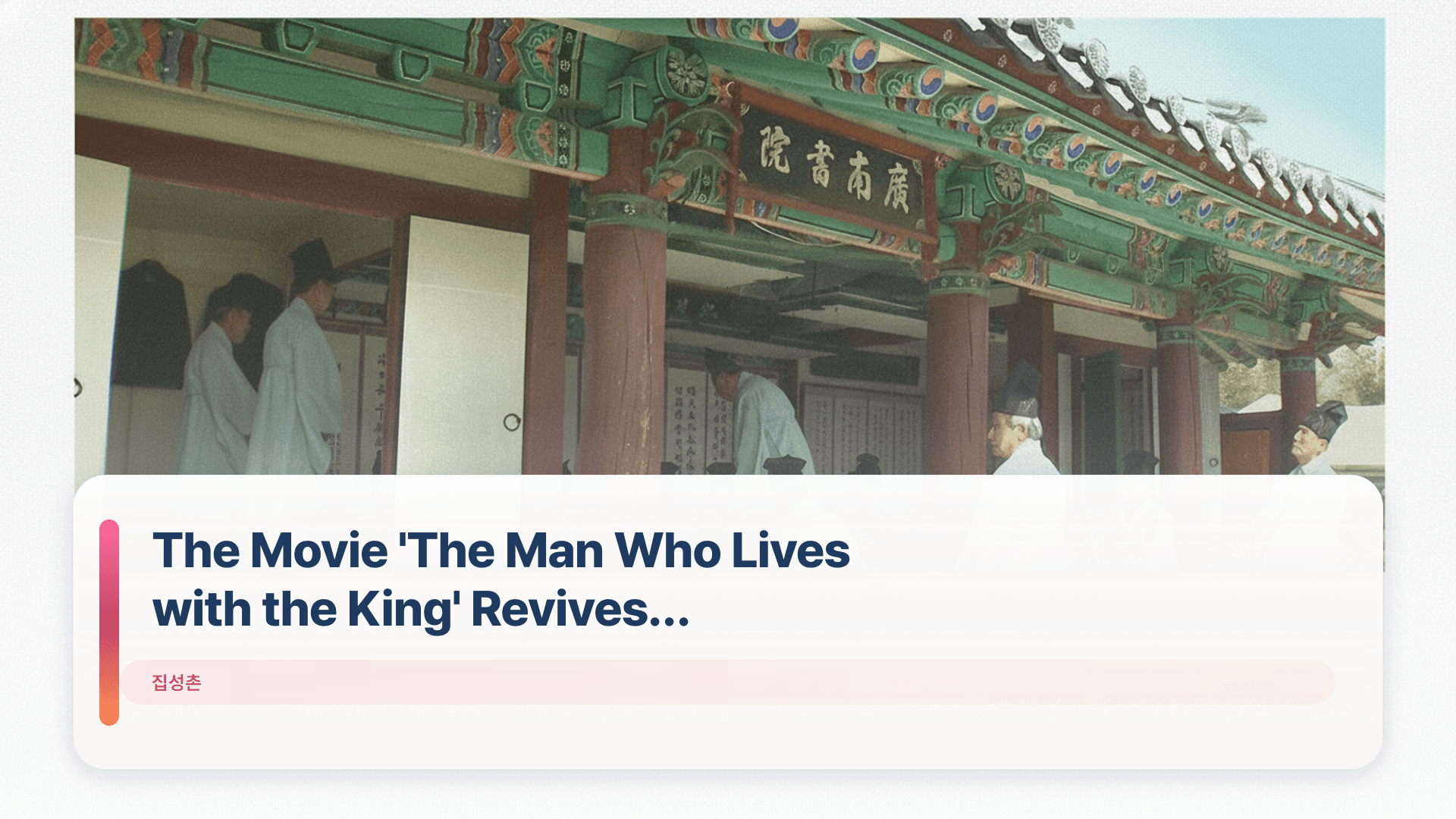
The massive success of the film "The Man Who Lives with the King" (Wang-sa-nam), which has surpassed 16 million viewers, is sparking a renewed interest in Korean historical sites. Specifically, Gwangnamseowon in Guryongpo, Pohang, has become a point of cultural fascination. This Confucian academy is dedicated to the memory of those who remained loyal to King Danjong during a period of intense political upheaval in the Joseon Dynasty.
While the movie focuses on the tragic life of King Danjong and the official Eom Heung-do, it has led audiences to seek out the real-world locations and descendants of the figures involved. Gwangnamseowon serves as a memorial for Hwangbo In, a high-ranking official who died defending the young king, and his family members who narrowly escaped extinction.
Local cultural experts note that the site is becoming a symbol of "Chungjeol" (unwavering loyalty). Descendants and local Confucian scholars continue to hold traditional ceremonies (Hyangsa) at the academy, maintaining a 600-year-old tradition that has survived through the centuries.
The story of how the Hwangbo family survived is particularly dramatic, involving a servant who hid a young child in a water jar to escape a purge. This narrative of survival and loyalty is resonating with modern audiences who have seen the cinematic retelling of the era's tragedies.
The film "The Man Who Lives with the King" centers on the relationship between Danjong, the sixth king of the Joseon Dynasty, and Eom Heung-do, a local official in Yeongwol. The movie portrays Danjong's life with a humanistic lens, showing his rise to the throne at a young age, his subsequent deposition by his uncle (Grand Prince Suyang), and his tragic death in exile. This emotional portrayal has struck a chord with the public, leading to a "Danjong fever" that extends to historical landmarks.
In the wake of this popularity, Gwangnamseowon, located at the easternmost tip of the Korean peninsula, is seeing a surge in visitors. For nearly 600 years, the descendants of the Hwangbo clan and scholars from the Janggi Hyanggyo have quietly performed ancestral rites here. The academy was established to honor Hwangbo In, the Chief State Councillor (Yeonguijeong) who was killed alongside Kim Jong-seo during the Gyeyu Jeongnan (the 1453 coup) while trying to protect the young king.
The site also honors Hwangbo In's two sons, Seok and Heum, and a female servant named Dan-ryang. Dan-ryang is a legendary figure in the family history; during the purge where three generations of the family were being executed, she hid Hwangbo In's young grandson, Dan, in a water jar. She carried the jar on her head and fled to Guman-ri, Homigot-myeon—the very edge of the land—to ensure the family line would not be wiped out.
Lee Sang-jun, Vice President of the Pohang Cultural Center, emphasizes that Gwangnamseowon should be remembered as a space where the "duty" (Dori) of a subject to a king, and a servant to a master, was realized. The site is now being re-evaluated as a significant cultural heritage of loyalty in the Pohang region.

집성촌jipseongchon (Jipseongchon) refers to a "clan village" or a concentrated family settlement where most residents share the same surname and ancestral lineage. In the context of the article, it refers to the village in Pohang where the descendants of Hwangbo In have lived for generations since the 15th century.
포항에는 황보인 후손들의 집성촌이 아직 남아 있다.pohaeneun hwangboin husondeurui jipseongchoni ajik nama itda.
— A clan village of Hwangbo In's descendants still remains in Pohang.
한국의 시골에는 특정 성씨가 모여 사는 집성촌이 많다.hangugui sigoreneun teukjeong seongssiga moyeo saneun jipseongchoni manda.
— In the Korean countryside, there are many clan villages where people with specific surnames live together.