
물가·상승률 meaning: Decode inflation headlines
Decode 물가 and 상승률 in Korean inflation headlines with safe % paraphrases, rewrite drills, and a numbers cheat sheet—learn
Numbers-first decoding of 3 inflation headline keywords: collocations + how to paraphrase % changes safely in plain English.
If you read Korean inflation coverage (CPI releases, 물가mulga chyrons on evening news, or those quick portal headlines), the hardest part isn’t vocabulary—it’s not overclaiming what the numbers mean. I once misread a 둔화dunhwa headline as “prices are falling” and said it out loud at a café after noticing my iced americano got pricier. It wasn’t falling; the pace was just slowing.
The 3 verbs you’ll see everywhere
오르다/상승하다oreuda/sangseunghada signals the level went up; pair it with a base like물가mulga or지수jisu and look for a %.내리다/하락하다naerida/harakhada signals the level went down; it’s less common in inflation headlines than “slowing”.둔화되다dunhwadoeda signals the change is smaller than before; it can still be positive.
Quick cheat sheet
Expressions in this post

In headlines, 물가mulga usually points to the broad “price level” (think CPI), not a single item like gas or onions. A common trap is reading it as “people feel it’s expensive” rather than “the measured index moved”.
Typical headline pattern
소비자물가(지수) [전년 동월 대비] 2.8% 상승sobijamulga(jisu) [jeonnyeon dowol daebi] 2.8% sangseung물가 상승 압력mulga sangseung apryeok /물가 부담mulga budam생활물가saenghwalmulga (everyday basket feel) vs소비자물가sobijamulga (official CPI framing)
Rewrite drill (headline → plain Korean)
소비자물가 2.8% 상승sobijamulga 2.8% sangseung →작년 같은 달보다 물가가 2.8% 올랐어요.jaknyeon gateun dalboda mulgaga 2.8% olrasseoyo.물가 상승세 지속mulga sangseungse jisok →물가가 오르는 흐름이 계속되고 있어요.mulgaga oreuneun heureumi gyesokdoego isseoyo.생활물가 부담 커져saenghwalmulga budam keojyeo →장 보거나 외식할 때 체감하는 물가 부담이 더 커졌어요.jang bogeona oesikhal ttae chegamhaneun mulga budami deo keojyeosseoyo.
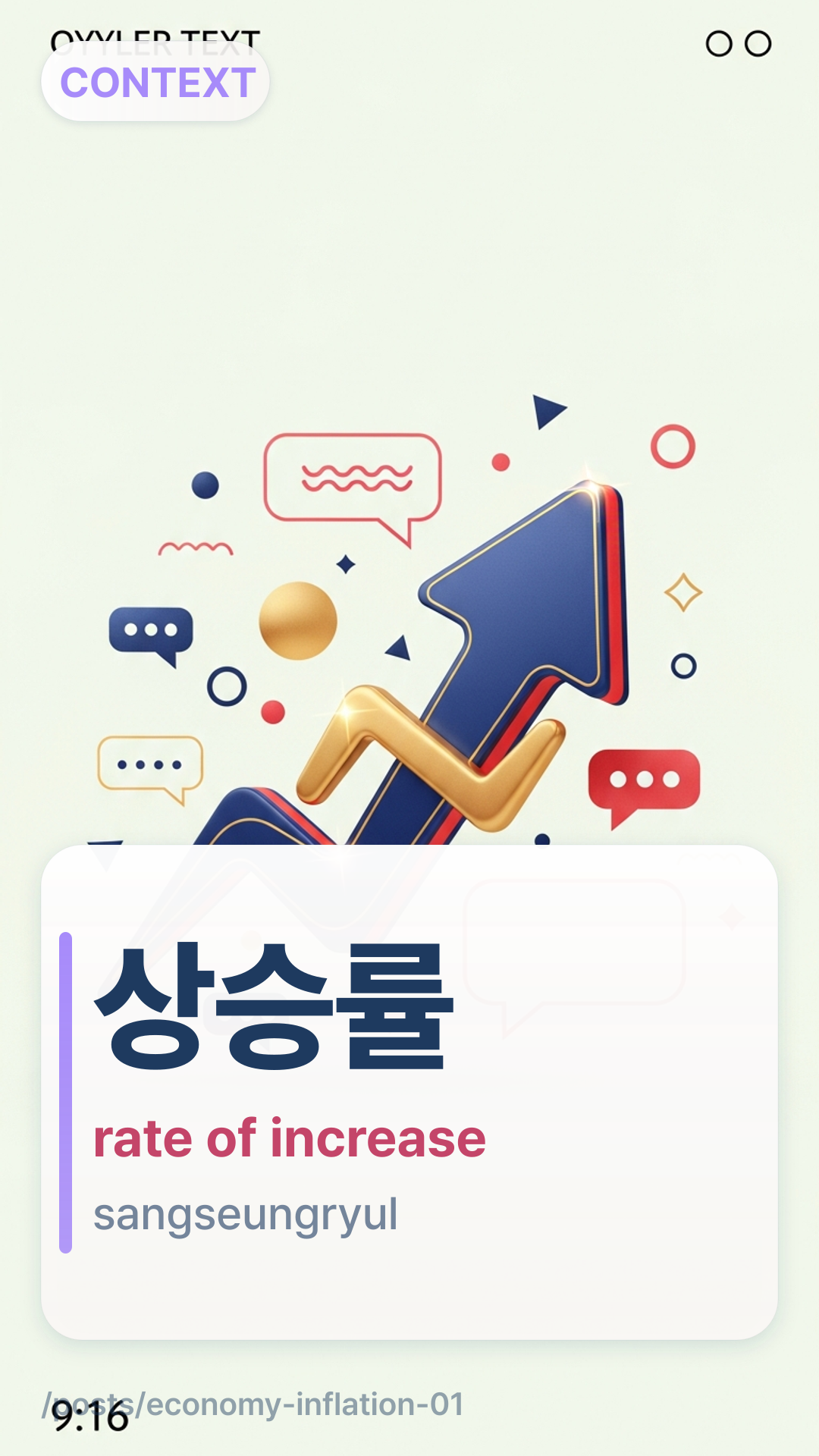
상승률sangseungryul is the “rate of increase”: the % change, not the amount something is “up” in absolute terms. In speech, English learners often over-translate it as “prices increased by X” without stating the comparison base (YoY, MoM), which matters.
Typical headline pattern
[전년 동월 대비] 상승률 [둔화/확대][jeonnyeon dowol daebi] sangseungryul [dunhwa/hwakdae]상승률 3%대sangseungryul 3%dae (in the 3% range)근원물가 상승률geunwonmulga sangseungryul (core inflation rate)
Rewrite drill (headline → plain Korean)
상승률 3%대 유지sangseungryul 3%dae yuji →오르는 비율이 3%대에서 유지되고 있어요.oreuneun biyuri 3%daeeseo yujidoego isseoyo.상승률 다시 확대sangseungryul dasi hwakdae →오르는 속도가 다시 커졌어요.oreuneun sokdoga dasi keojyeosseoyo.근원물가 상승률 둔화geunwonmulga sangseungryul dunhwa →근원물가가 오르는 속도는 느려졌어요.geunwonmulgaga oreuneun sokdoneun neuryeojyeosseoyo.
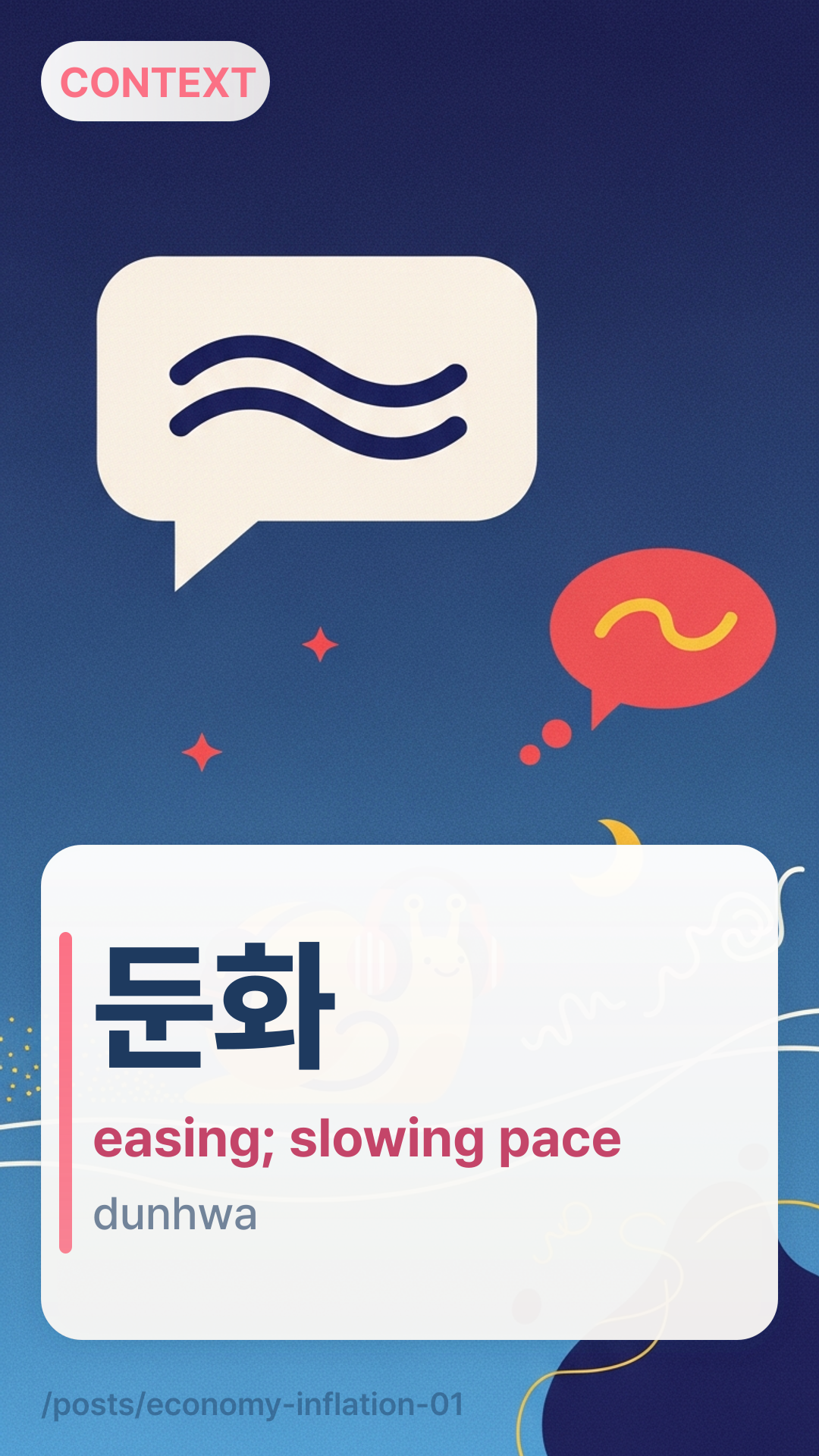
둔화dunhwa is “slowing” or “easing” of the pace. The big misunderstanding: 둔화dunhwa does not automatically mean prices are falling; it can mean “still rising, just less fast.”
Typical headline pattern
상승세 둔화sangseungse dunhwa (the uptrend slows)오름폭 둔화oreumpok dunhwa (the size of the increase gets smaller)[전년 동월 대비] 둔화[jeonnyeon dowol daebi] dunhwa without saying하락harak
Rewrite drill (headline → plain Korean)
물가 상승세 둔화mulga sangseungse dunhwa →물가가 오르긴 하지만, 오르는 속도는 느려졌어요.mulgaga oreugin hajiman, oreuneun sokdoneun neuryeojyeosseoyo.오름폭 둔화oreumpok dunhwa →오른 폭이 전보다 작아졌어요.oreun pogi jeonboda jagajyeosseoyo.상승률 둔화에도 체감 부담sangseungryul dunhwaedo chegam budam →상승률은 느려졌지만, 체감 부담은 여전하다는 뜻이에요.sangseungryureun neuryeojyeotjiman, chegam budameun yeojeonhadaneun tteusieyo.
Numbers drill
Focus on %, percentage points, and won.
Use these as “safe” English paraphrase templates so you don’t accidentally claim a level change when the headline is about a rate.
| Korean number cue | What it usually means | Safe plain-English template |
|---|---|---|
전년 동월 대비 2.8%jeonnyeon dowol daebi 2.8% | year-over-year % change | “up 2.8% year over year” |
전월 대비 0.3%jeonwol daebi 0.3% | month-over-month % change | “up 0.3% from last month” |
0.5%p / 0.5포인트0.5pointeu | percentage-point change in a rate | “by 0.5 percentage points” |
1,000원1,000won | absolute change in won | “by 1,000 won” (absolute amount) |
Try rewriting each line into one careful English sentence (don’t add causes like oil, wages, politics):
소비자물가 전년 동월 대비 2.8% 상승sobijamulga jeonnyeon dowol daebi 2.8% sangseung — Consumer prices were up 2.8% year over year.상승률 0.5%p 둔화sangseungryul 0.5%p dunhwa — The rate of increase eased by 0.5 percentage points.외식 가격 1,000원 인상oesik gagyeok 1,000won insang — Dining-out prices rose by 1,000 won.
Next steps:
- When you see
둔화dunhwa, ask: “slower than when?” and look for the comparison period. - When you see
상승률sangseungryul, say the base out loud: YoY or MoM. - Practice one clean paraphrase per headline, then stop—Korean headline style rewards precision over extra interpretation.
Copy/paste mini-dialogues
A: 상승률이 둔화됐대.sangseungryuri dunhwadwaetdae.
A (English): The rate of increase eased.
B: 그러면 물가가 내려간 거야?geureomyeon mulgaga naeryeogan geoya?
B (English): Does that mean prices went down?
A: 아니, 오르긴 하는데 덜 빠르게 오른다는 뜻이야.ani, oreugin haneunde deol ppareuge oreundaneun tteusiya.
A (English): No—prices can still be rising; it means they’re rising more slowly.
A: 전년 동월 대비 2.8% 상승이래.jeonnyeon dowol daebi 2.8% sangseuirae.
A (English): It says up 2.8% year over year.
B: 전월 대비는 아니지?jeonwol daebineun aniji?
B (English): That’s not month over month, right?
A: 응, 작년 같은 달이랑 비교한 거야.eung, jaknyeon gateun darirang bigyohan geoya.
A (English): Right, it’s compared with the same month last year.
Mini quiz
- Fill the blank: “The rate of increase ____ by 0.5 percentage points.”
- Fill the blank: “Consumer prices were up 2.8% ____.”
- Fill the blank: “Prices were up 0.3% ____.”
Answers:
eased/slowedyear over year/YoY/year-on-yearfrom last month/month over month/MoM
Notes:
- Q1:
eased/slowedmatch둔화dunhwa because it describes a slower pace; it does not state that the level fell. - Q2:
year over year/YoY/year-on-yearare equivalent ways to express전년 동월 대비jeonnyeon dowol daebi (same month last year comparison). - Q3:
from last month/month over month/MoMare equivalent ways to express전월 대비jeonwol daebi (comparison with the previous month).