
ㅇㅈ, ㄹㅇ, TMI: Korean Chat Slang for Beginners
Master ㅇㅈ, ㄹㅇ & TMI - essential Korean chat slang with real examples and politeness tips. Perfect for K-drama fans!
Ever scrolled through Korean YouTube comments and felt completely lost? Or watched a K-drama where friends text each other in what looks like random consonants? You're not alone.
I remember my first Korean group chat—someone replied "ㅇㅈ" to my message and I spent 10 minutes googling what I did wrong. Turns out, they were just agreeing with me!
These 7 expressions pop up constantly in KakaoTalk, Instagram DMs, and Naver comments. They're casual and can sound blunt, so I'll cover when to use them, when NOT to use them, and safer alternatives for each.
Quick cheat sheet
Expressions in this post
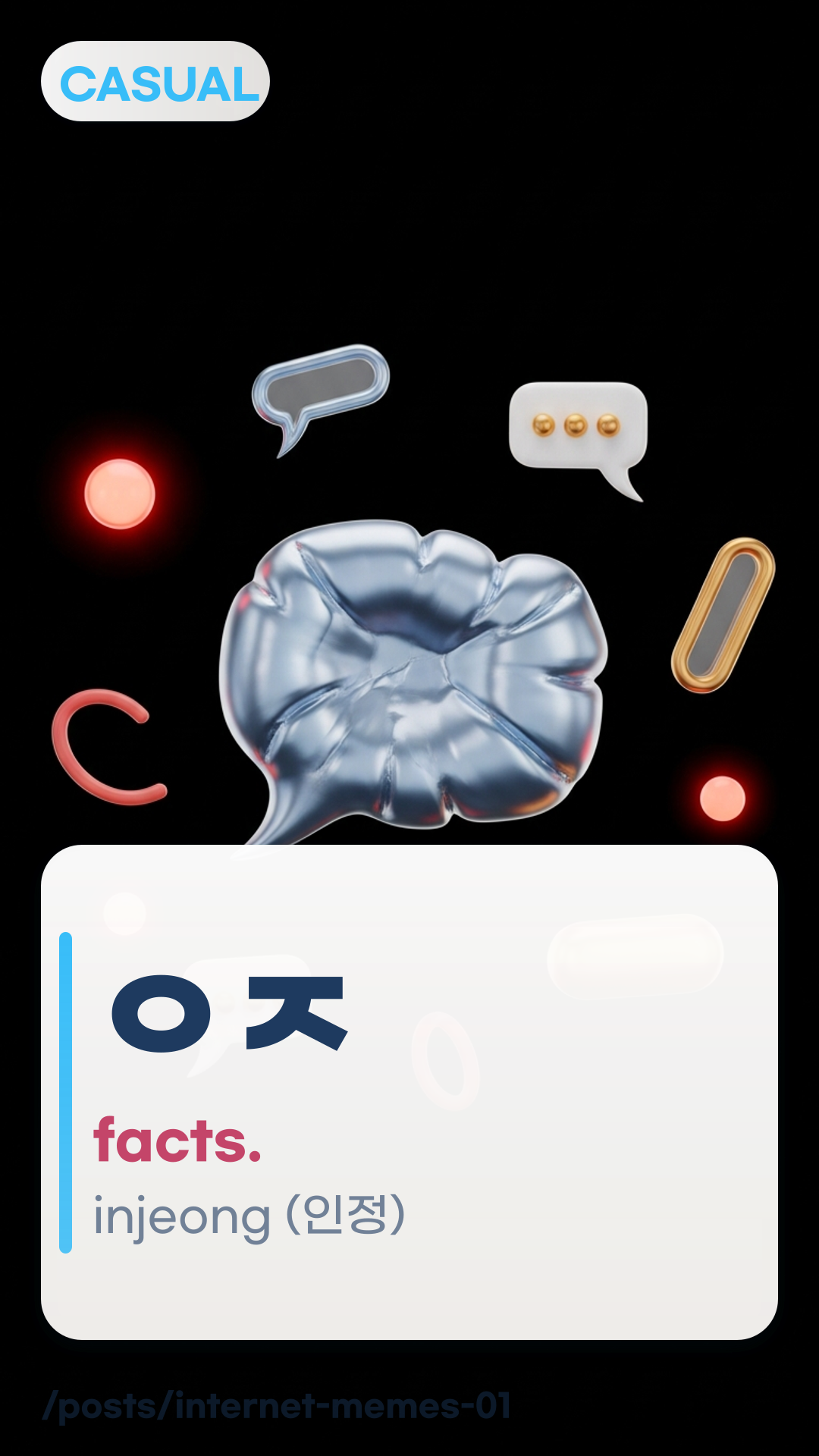
What does ㅇㅈ mean? It's short for 인정 (injung) - basically "agreed" or "facts."
This is probably the most common reaction you'll see in Korean chats. It's quick, punchy, and shows you're on the same page. Think of it like typing "true" or "this" in English.
Use it when:
- Chatting with friends about relatable stuff
- Someone makes a point you agree with
Skip it when:
- Texting your boss or professor (too casual)
- Someone shares something emotional (feels dismissive)
Safer alternatives: 맞아maja, 맞아요majayo, 동의해요douihaeyo
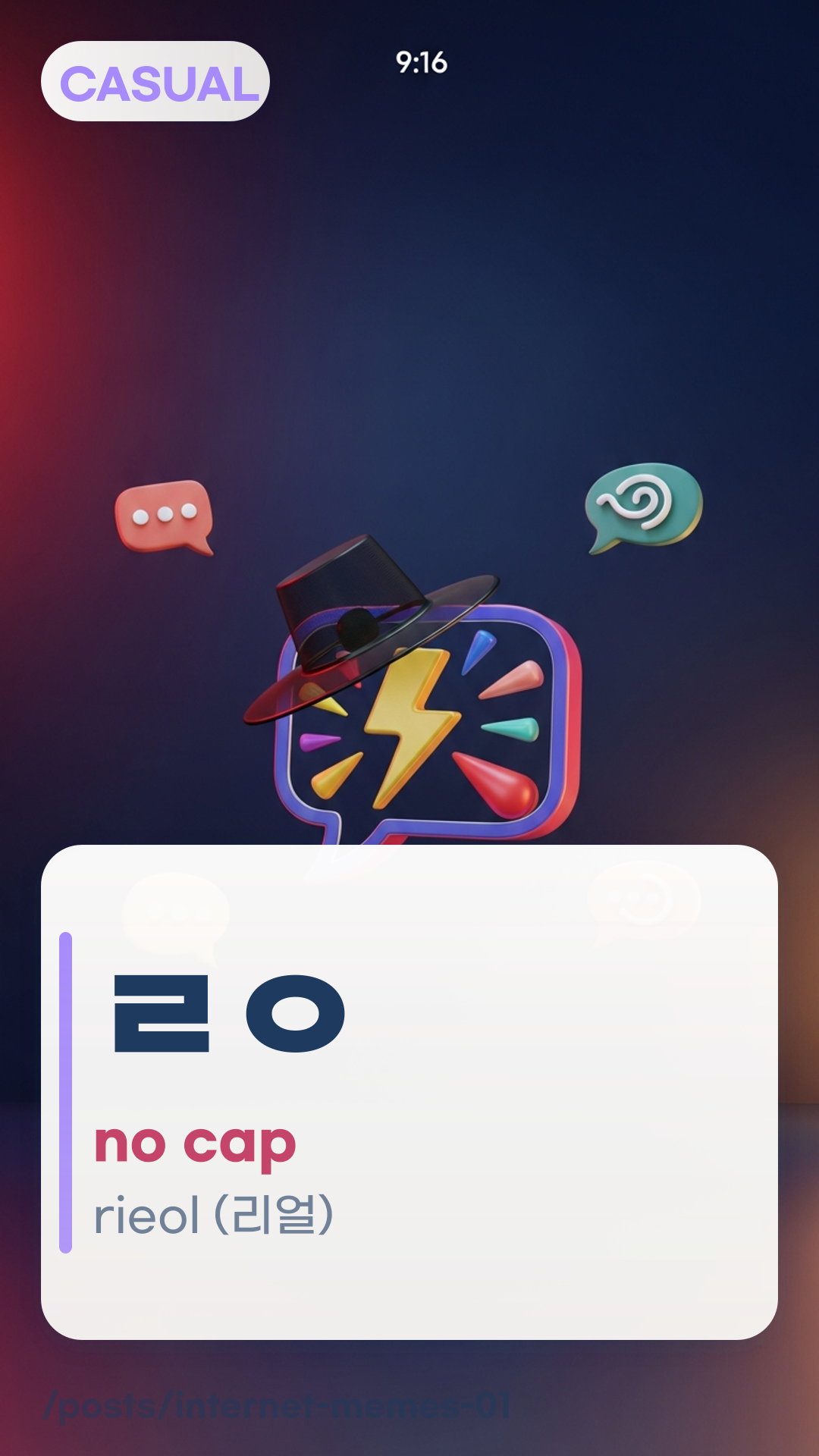
What does ㄹㅇ mean? Short for 리얼 (real) - used like "for real?" or "seriously."
This one's versatile. Use it to show surprise ("ㄹㅇ?"), emphasize something ("ㄹㅇ 힘들다" = seriously tired), or agree strongly. Watch the tone though—it can come across as sarcastic depending on context.
Use it when:
- Reacting with surprise or emphasis
- Agreeing strongly with friends
Skip it when:
- Work Slack or formal emails
- You need to sound neutral
Safer alternatives: 진짜jinjja, 정말jeongmal, 진심으로jinsimeuro

What does TMI mean in Korean? Same as English—Too Much Information. Koreans use it to flag random details they're about to share.
Here's the thing: in Korean, TMI is usually self-deprecating. You say "TMI인데..." before oversharing something silly about yourself. Calling someone ELSE's story TMI? That's rude.
Use it when:
- Prefacing your own random tangent
- Sharing fun trivia with close friends
Skip it when:
- Shutting down someone else's story
- Talking to people you just met
Safer alternatives: 참고로chamgoro, 덧붙이면deotbutimyeon
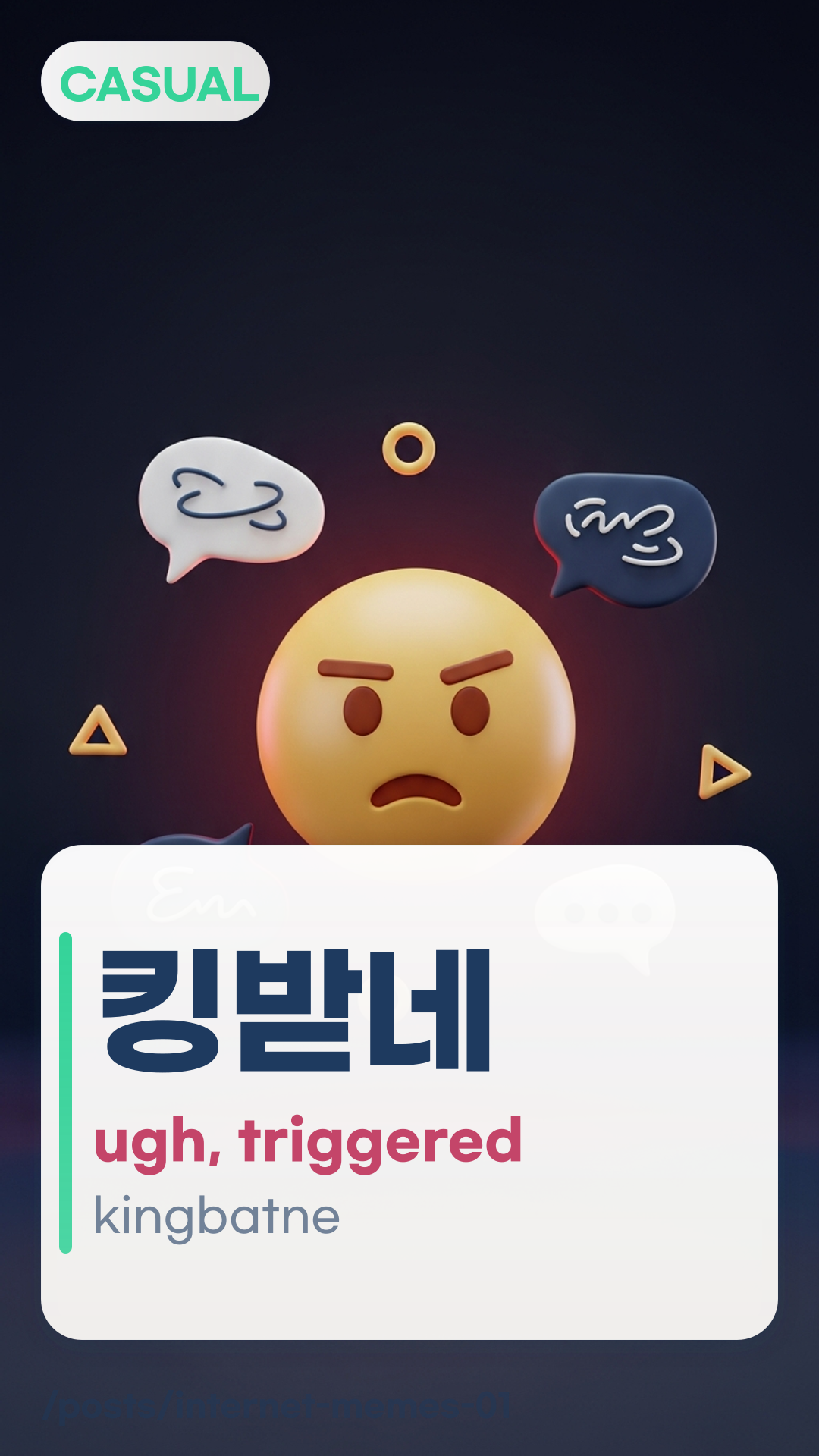
What does 킹받네 mean? It's a meme version of 열받네 (I'm annoyed), but funnier and less aggressive.
Origin story: Someone combined 킹 (king) with 열받다 (to be heated/annoyed) to create this playful expression. It's like saying "ugh, that's SO annoying" but in a comedic, exaggerated way.
Use it when:
- Venting about minor inconveniences
- You want to sound dramatically annoyed (jokingly)
Skip it when:
- Actually angry at someone
- Talking to older people or in formal settings
Safer alternatives: 좀 짜증나jom jjajeungna, 답답하다dapdaphada
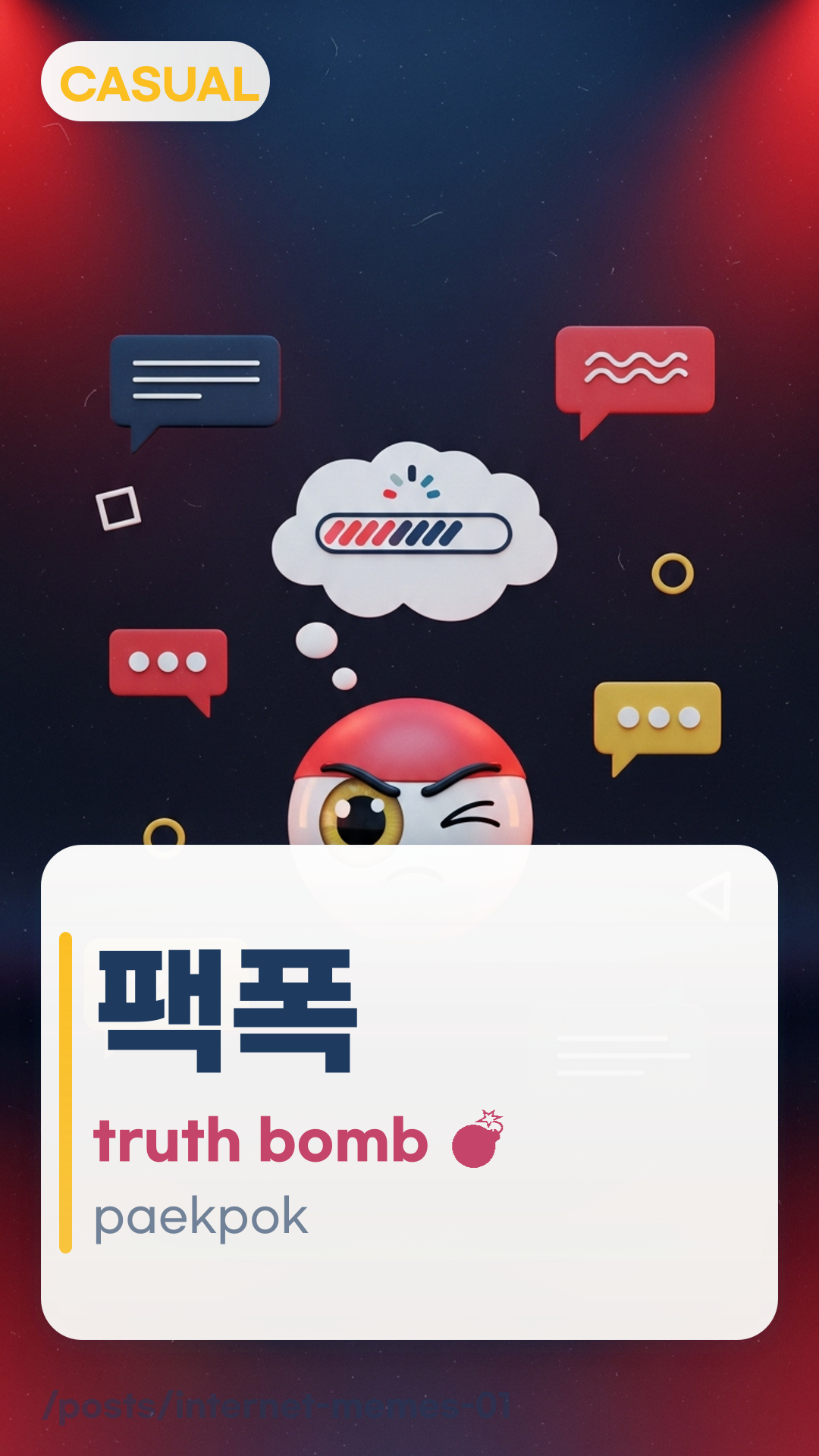
What does 팩폭 mean? Short for 팩트 폭격 (fact bombing)—dropping a harsh truth that stings.
Be careful with this one. It's used when someone states an uncomfortable truth, often about someone else. Using it about yourself ("팩폭하자면...") can sound like you're proud of being blunt, which isn't always a good look.
Use it when:
- Light teasing among very close friends
- Describing a savage moment in memes
Skip it when:
- Giving actual advice or feedback
- The truth might genuinely hurt someone
Safer alternatives: 솔직히 말하면soljikhi malhamyeon, 현실적으로는hyeonsiljeogeuroneun
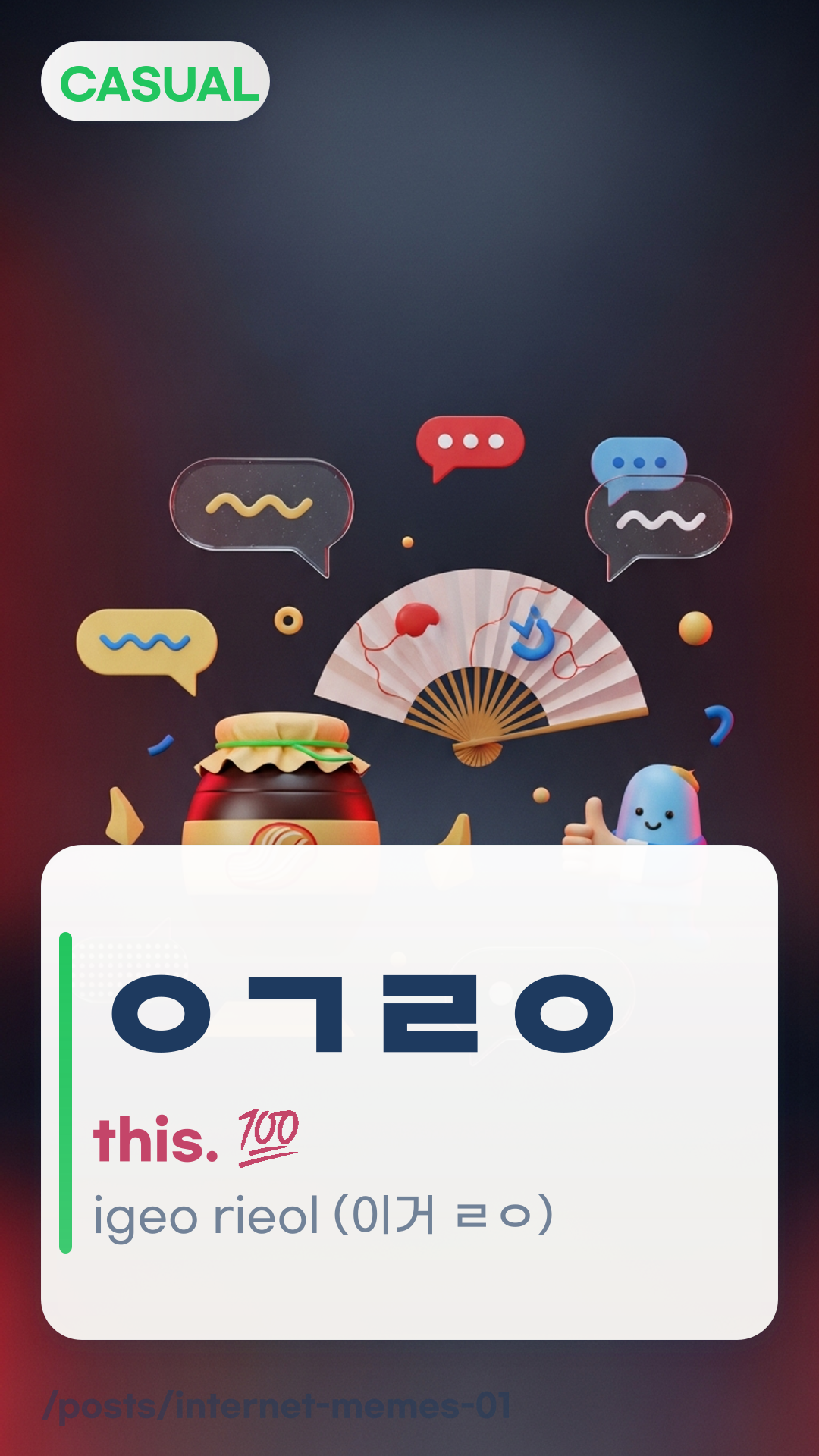
What does ㅇㄱㄹㅇ mean? It stands for 이거 ㄹㅇ (igeo real) = "this is SO true" or "literally this."
Maximum internet energy. You'll see this in YouTube comments and Twitter replies when someone perfectly captures a shared experience. It's like the Korean version of "THIS" or "literally me."
Use it when:
- Something is painfully relatable
- Commenting on viral posts
Skip it when:
- Professional contexts
- Talking to people unfamiliar with slang
Safer alternatives: 이거 진짜 맞아igeo jinjja maja, 완전 공감wanjeon gonggam
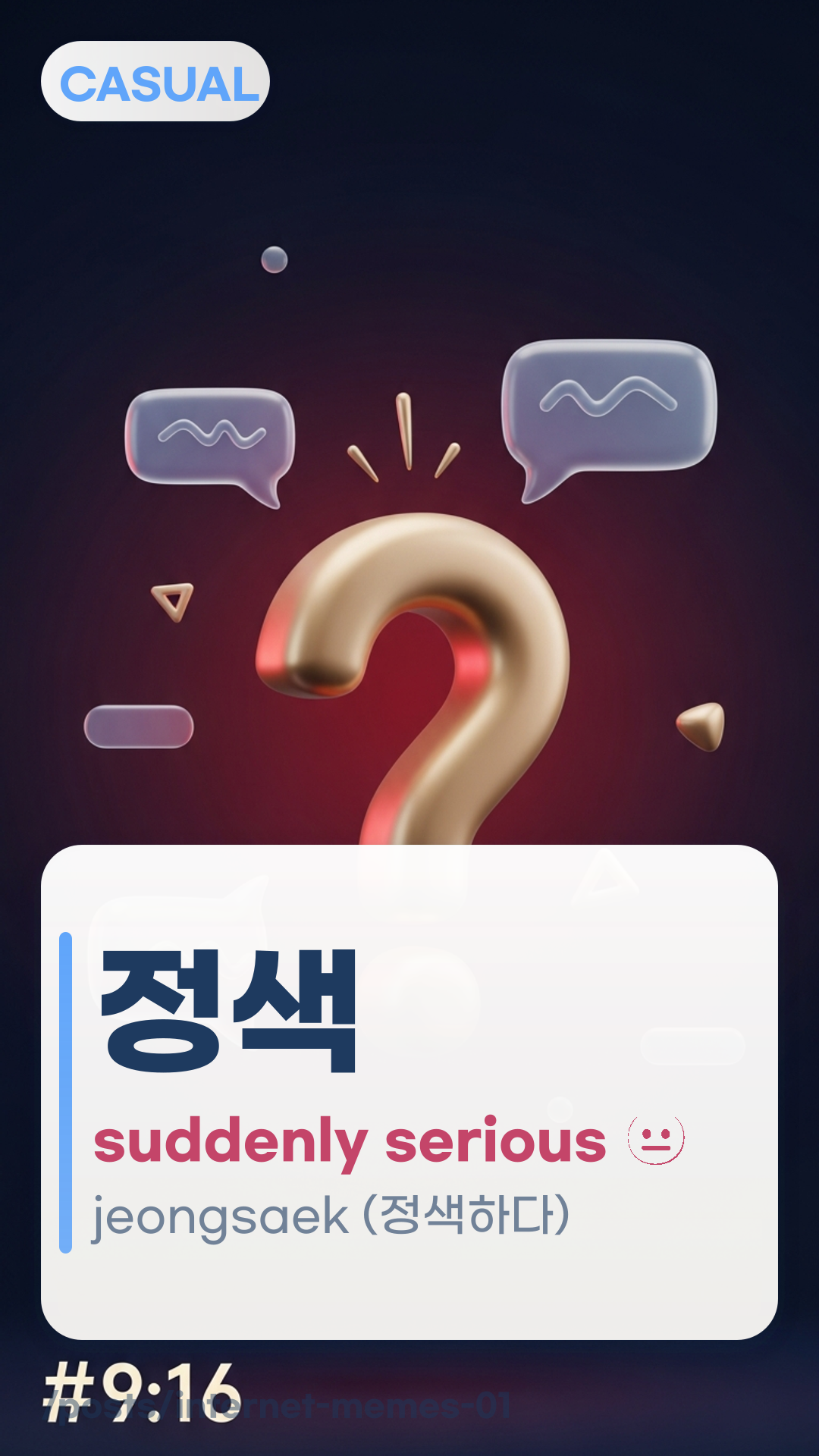
What does 정색 mean? It means suddenly going serious or deadpan, usually after a joke.
Not an abbreviation, but you'll see it everywhere. When someone 정색하다 (jungsaek-hada), they drop the playful tone and get serious. It's often used to describe your own reaction: "sorry, I accidentally went serious there."
Use it when:
- Describing your own sudden mood shift
- Signaling a tone change with friends
Skip it when:
- Telling others not to be serious (sounds dismissive)
- Emotions are genuinely running high
Safer alternatives: 진지하게 말하면jinjihage malhamyeon, 농담은 농담이고nongdameun nongdamigo