어쩔티비 Meaning: Banter vs Bullying Scenarios
Learn 어쩔티비 & 선 넘네 with 12 escalation scenes, safer rewrites, and repair lines for comments/DMs—master
Learn 어쩔티비 & 선 넘네 with 12 escalation scenes, safer rewrites, and repair lines for comments/DMs—master
A banter-vs-bullying decision tree plus escalation scenes teaches 어쩔티비 as a risky deflection and gives repair lines when it lands mean.
Situation (what’s happening)
Two friends are joking in a group chat, and one message hits a nerve. The goal: recognize when 어쩔~ is playful, and when it turns into a shutdown.
Chat script (8 lines):
- A:
또 늦었네?tto neujeotne? — You’re late again? - B:
어쩔~eojjeol~ — So what~? - A:
그 말투 뭐야, 선 넘네.geu maltu mwoya, seon neomne. — What’s with that tone? You’re crossing a line. - B:
어쩔티비.eojjeoltibi. — Whatever. - A:
그만해. 진짜 기분 나빠.geumanhae. jinjja gibun nappa. — Stop. I’m seriously upset. - B:
미안, 말이 심했어mian, mari simhaesseo — Sorry, I went too far. - A:
오케이. 다음엔 처음부터 그렇게 말해.okei. daeumen cheoeumbuteo geureotge malhae. — Okay. Next time say it like that from the start. - B:
응, 알겠어.eung, algesseo. — Yeah, got it.
Banter-vs-bullying decision tree (fast)
- Are you close friends and both laughing right now?
- Yes → a light
어쩔~eojjeol~ can land as teasing. - No / not sure → skip it.
- Yes → a light
- Did the other person say they’re upset, embarrassed, or “not funny”?
- Yes → stop the meme. Use
그만해geumanhae (firm) or a softer version, then repair with미안, 말이 심했어mian, mari simhaesseo.
- Yes → stop the meme. Use
- Did you use
어쩔티비eojjeoltibi after they set a boundary?- That reads as “I don’t care.” Expect escalation.
12 mini-scenes (escalation ladder + safer alternative)
- Level 1 (playful):
또 졌네 ㅋㅋtto jyeotne ㅋㅋ — You lost again lol- Risky reply:
어쩔~eojjeol~ — So what~? - Safer:
ㅋㅋ 다음 판 가자ㅋㅋ daeum pan gaja — Haha, next round
- Risky reply:
- Level 1 (playful):
오늘 패션 왜 그래?oneul paesyeon wae geurae? — What’s with your outfit today?- Risky reply:
어쩔티비eojjeoltibi — Whatever - Safer:
그냥 편한 게 좋아geunyang pyeonhan ge joha — I just like comfy clothes
- Risky reply:
- Level 1 (playful):
답장 왜 이렇게 느려dapjang wae ireotge neuryeo — Why are you so slow to reply?- Risky reply:
어쩔~eojjeol~ — So what~? - Safer:
미안, 지금 바빴어mian, jigeum bappasseo — Sorry, I was busy
- Risky reply:
- Level 2 (tense):
너 맨날 늦어neo maennal neujeo — You’re always late- Risky reply:
어쩔티비eojjeoltibi — Whatever - Safer:
맞아. 고칠게maja. gochilge — Yeah. I’ll fix it
- Risky reply:
- Level 2 (tense):
진짜 눈치 없어jinjja nunchi eopseo — You really have no sense- Risky reply:
어쩔~eojjeol~ — So what~? - Safer:
그렇게 들렸어? 미안geureotge deulryeosseo? mian — Did it sound like that? Sorry
- Risky reply:
- Level 2 (tense):
그 말 좀 별로다geu mal jom byeolroda — That comment is not great- Risky reply:
어쩔티비eojjeoltibi — Whatever - Safer:
오케이, 그럼 안 할게okei, geureom an halge — Okay, I won’t do that
- Risky reply:
- Level 3 (boundary set):
선 넘네seon neomne — You’re crossing a line- Bad move:
어쩔티비eojjeoltibi — Whatever - Safer:
미안, 말이 심했어mian, mari simhaesseo — Sorry, I went too far
- Bad move:
- Level 3 (boundary set):
그만해geumanhae — Stop- Bad move:
어쩔~eojjeol~ — So what~? - Safer:
알겠어. 그만할게algesseo. geumanhalge — Got it. I’ll stop
- Bad move:
- Level 3 (public embarrassment):
댓글로 그러지 마daetgeulro geureoji ma — Don’t do that in the comments- Bad move:
어쩔티비eojjeoltibi — Whatever - Safer:
미안. DM할게mian. DMhalge — Sorry. I’ll DM you
- Bad move:
- Level 4 (hostile vibe):
너 진짜 별로야neo jinjja byeolroya — You’re really awful
- Don’t meme back:
어쩔티비eojjeoltibi can pour oil on it - Safer:
이 대화는 여기까지 하자i daehwaneun yeogikkaji haja — Let’s end this conversation here
- Level 4 (pile-on):
다들 얘 말 무시하자dadeul yae mal musihaja — Everyone, ignore them
- Don’t deflect:
어쩔~eojjeol~ - Safer:
그만해 줘geumanhae jwo — Please stop
- Level 4 (after you messed up):
너 방금 너무했어neo banggeum neomuhaesseo — You went too far just now
- Repair:
미안, 말이 심했어mian, mari simhaesseo - Safer add-on:
기분 상했지?gibun sanghaetji? — You got hurt, right?
Repair line bank (copy when you went too far)
미안, 말이 심했어mian, mari simhaesseo — Sorry, I went too far그 말은 취소할게geu mareun chwisohalge — I take that back기분 나빴다면 미안해gibun nappatdamyeon mianhae — If that felt bad, I’m sorry장난이었는데, 안 웃겼지jangnanieotneunde, an utgyeotji — It was a joke, but it wasn’t funny, right지금은 그만할게jigeumeun geumanhalge — I’ll stop now너 입장에서 생각 못 했어neo ipjangeseo saenggak mot haesseo — I didn’t think from your side다음부터 조심할게daeumbuteo josimhalge — I’ll be careful next time괜찮아?gwaenchanha? — Are you okay?
Personal note: In a college KakaoTalk study group, I once saw 어쩔티비eojjeoltibi used after someone said they felt embarrassed. The room went quiet fast—people read it as “I don’t care,” not “we’re joking.”
Quick cheat sheet
Expressions in this post
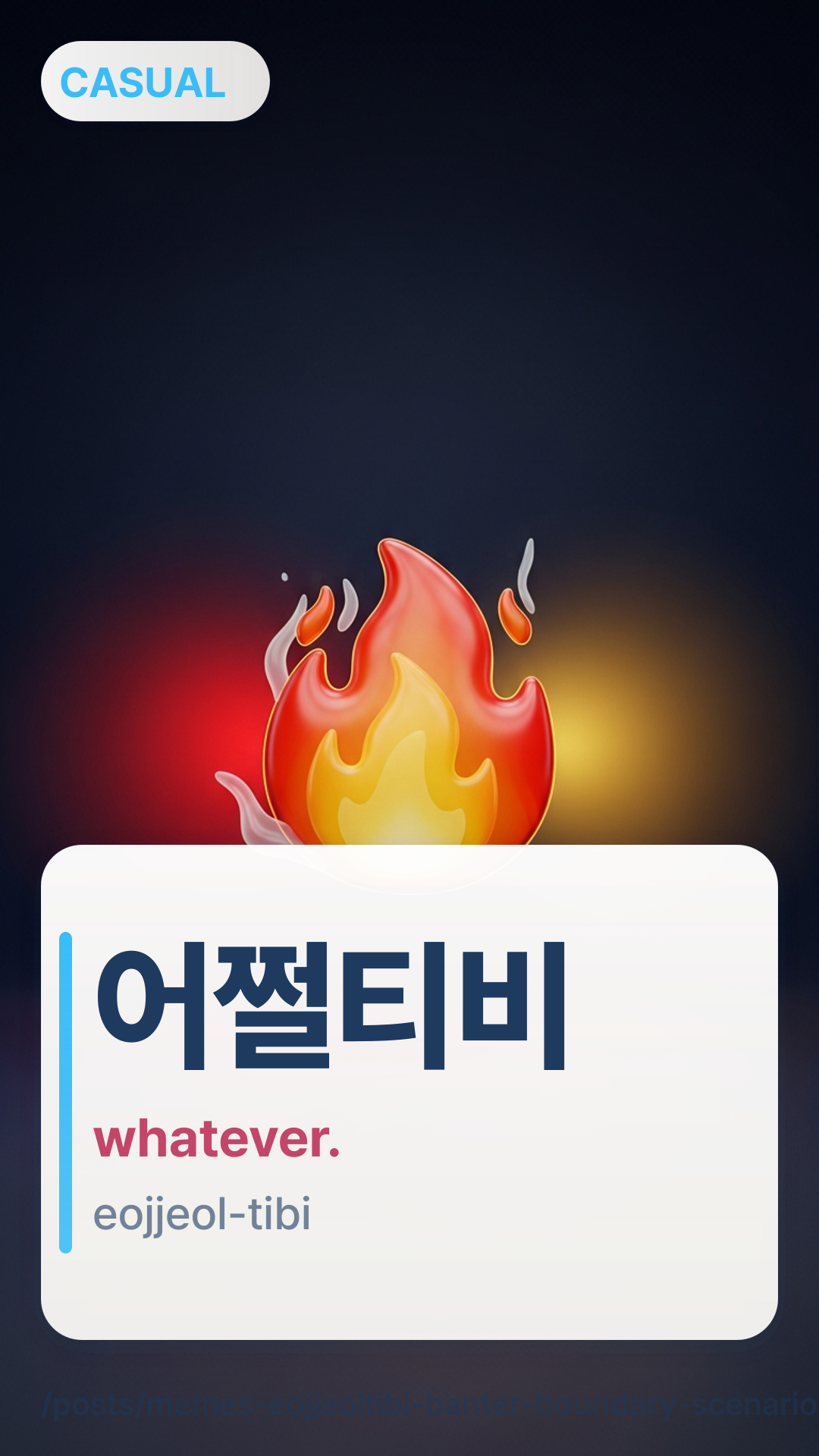
Why this fits the scene
Here it’s used as a hard deflection: “I’m not engaging, drop it.” In a banter mood it can be meme-funny, but once someone signals discomfort, it reads cold.
Safer alternative
알겠어. 그만할게algesseo. geumanhalge — “Okay. I’ll stop.”
Example line (from the script)
어쩔티비.eojjeoltibi. — Whatever.
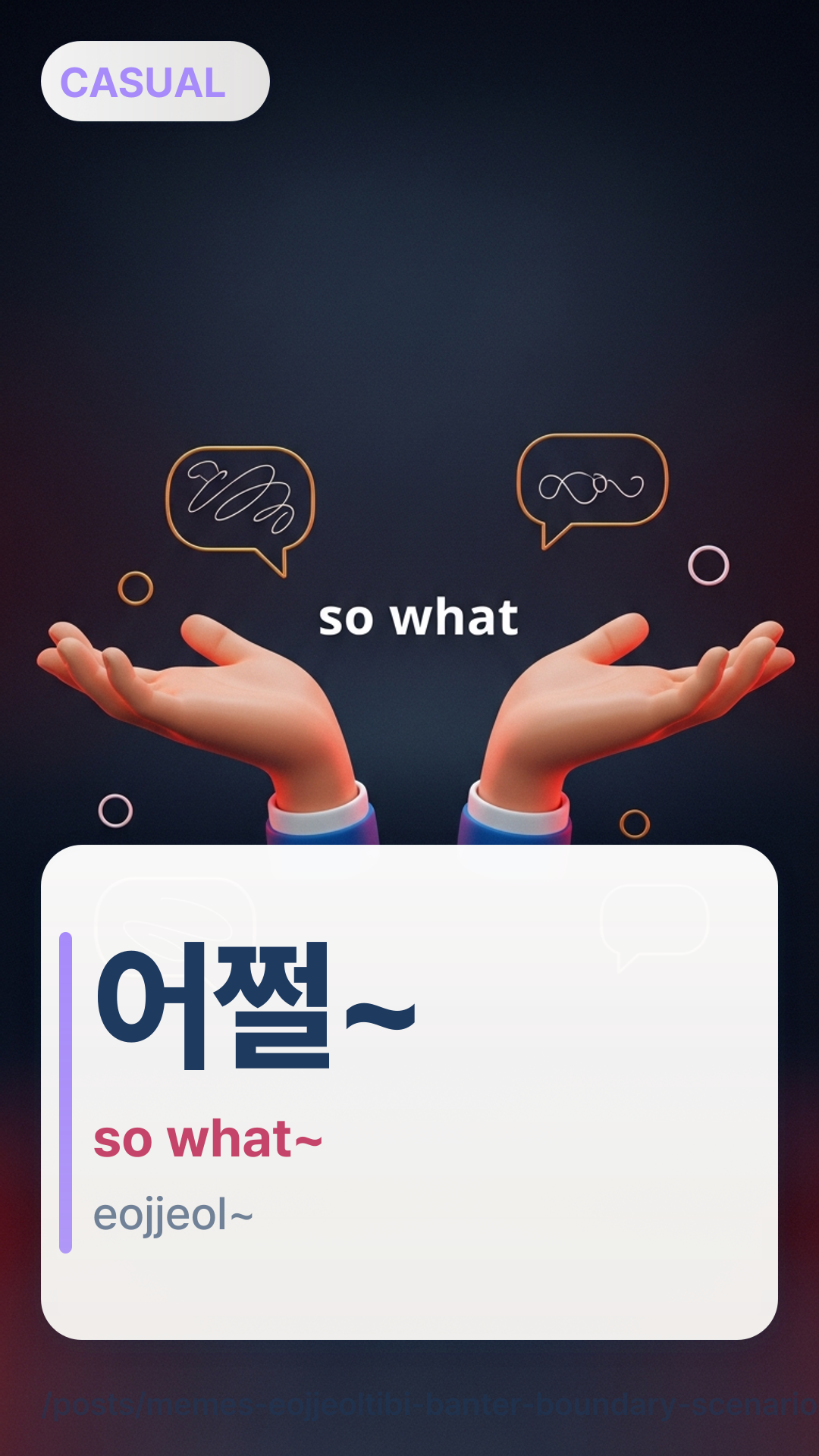
Why this fits the scene
어쩔~eojjeol~ is the cute, half-sung version people use to keep things light. The trap: if the other person is already annoyed, it sounds like you’re brushing them off.
Safer alternative
미안, 지금 좀 예민했어mian, jigeum jom yeminhaesseo — “Sorry, I was a bit sensitive just now.”
Example line (from the script)
어쩔~eojjeol~ — So what~?
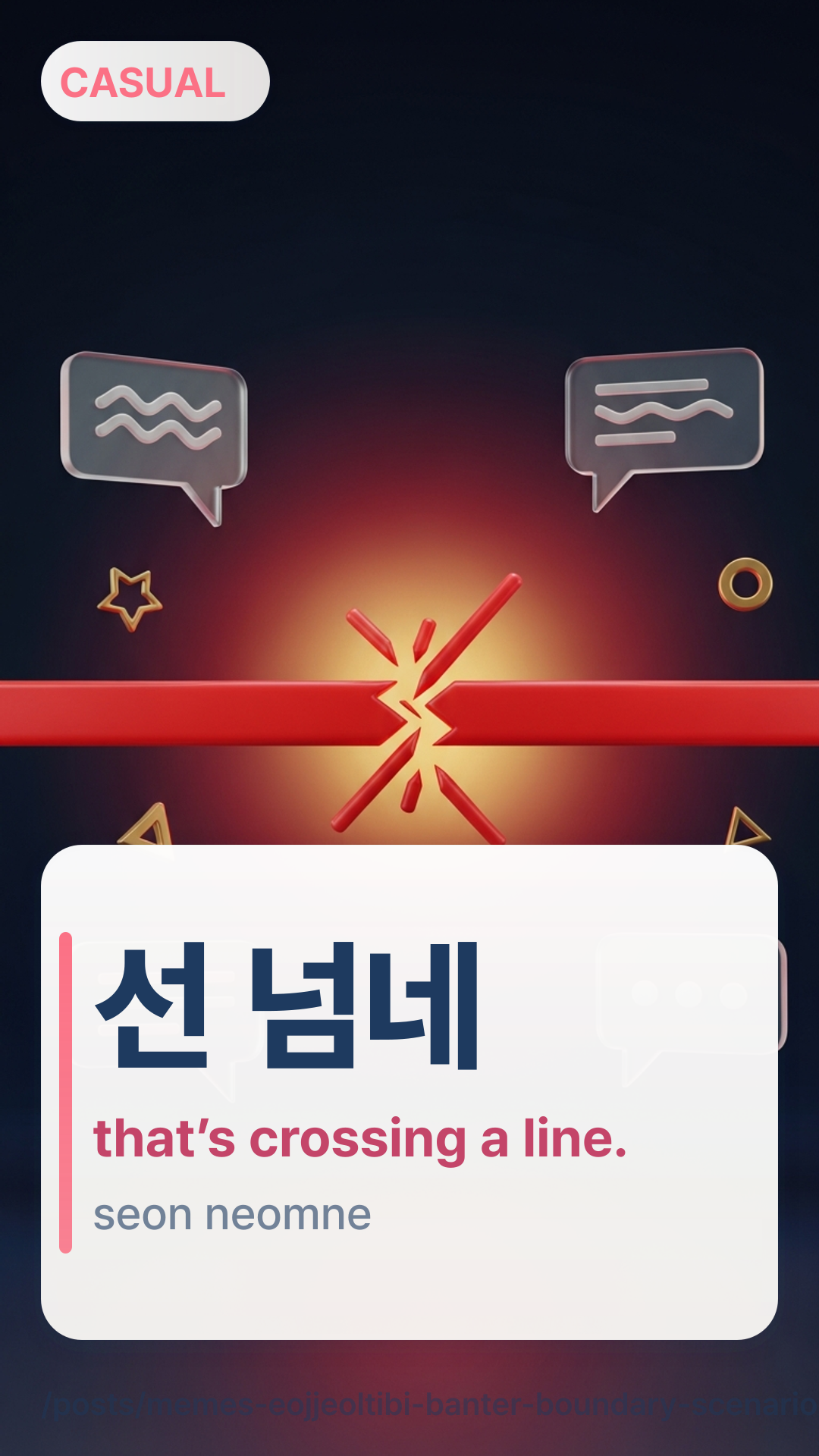
Why this fits the scene
This is a boundary alarm: “That’s over the line.” It’s direct, but it’s still about the behavior, not attacking the person.
Safer alternative
그 말은 좀 불편해geu mareun jom bulpyeonhae — “That comment is a bit uncomfortable.”
Example line (from the script)
그 말투 뭐야, 선 넘네.geu maltu mwoya, seon neomne. — What’s with that tone? You’re crossing a line.
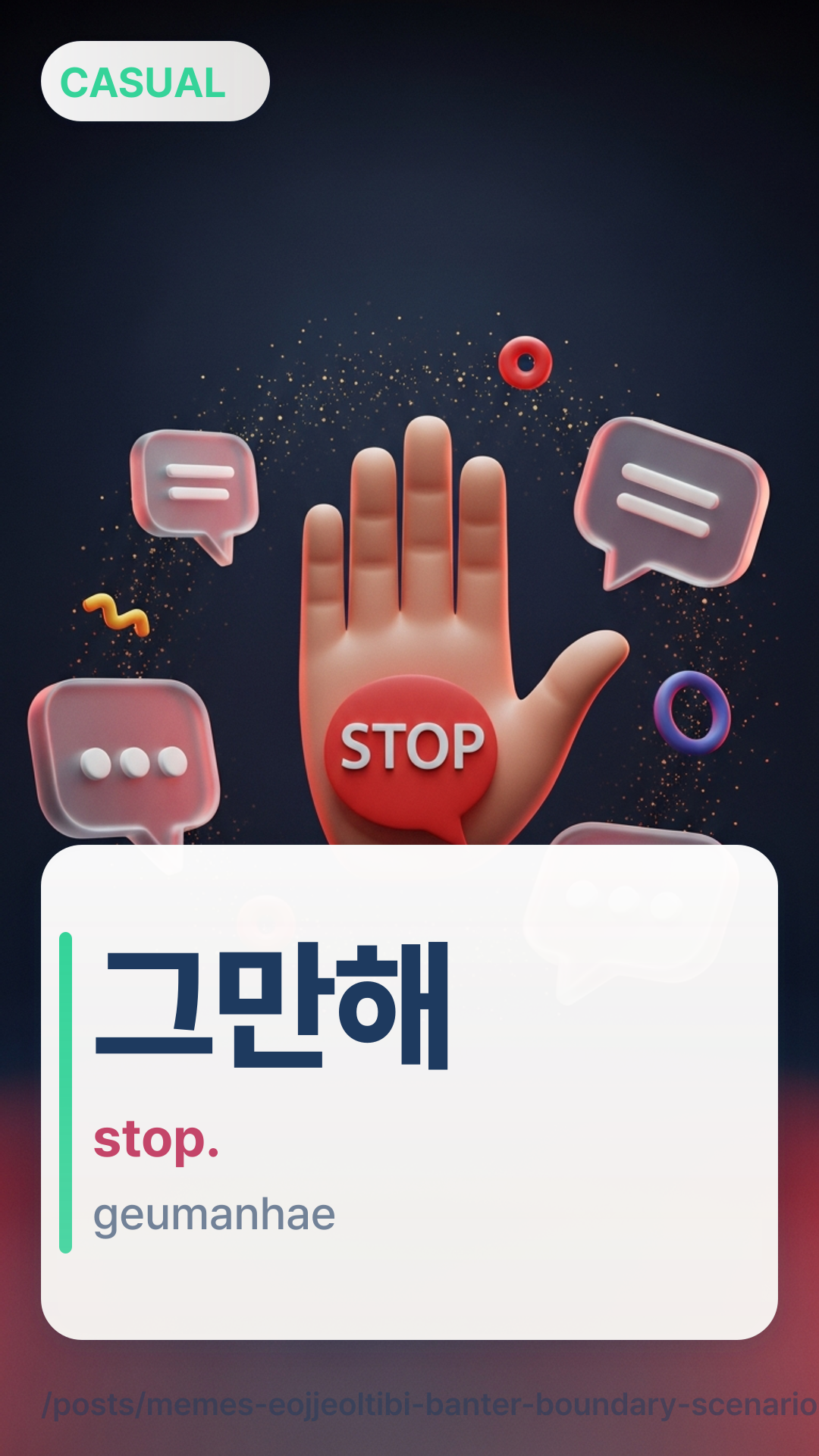
Why this fits the scene
그만해geumanhae is a stop sign. It’s short, clear, and useful when you don’t want to debate. If you want softer, add 줘jwo or use 그만하자geumanhaja.
Safer alternative
이 얘기는 여기까지 하자i yaegineun yeogikkaji haja — “Let’s stop this topic here.”
Example line (from the script)
그만해. 진짜 기분 나빠.geumanhae. jinjja gibun nappa. — Stop. I’m seriously upset.
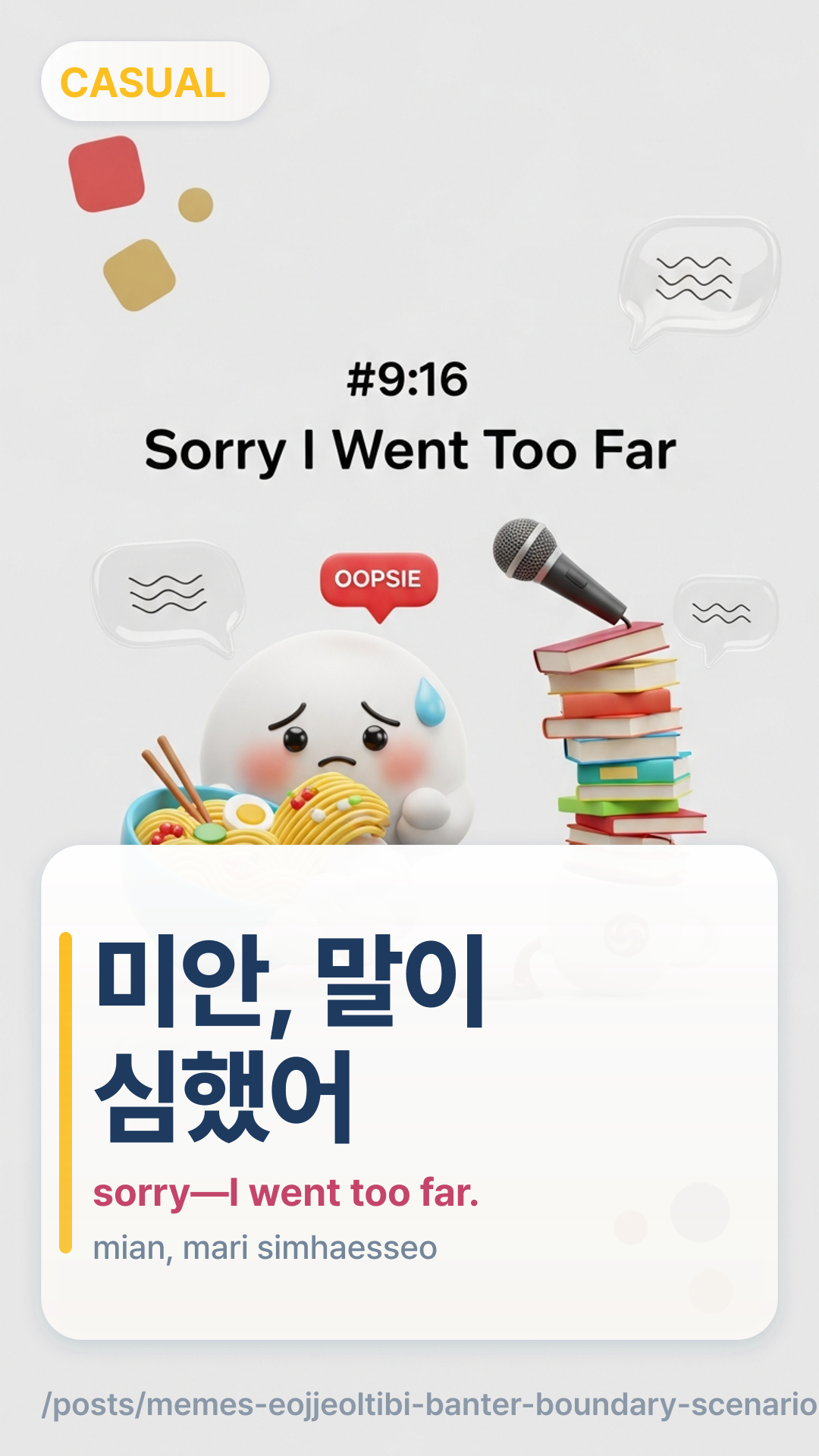
Why this fits the scene
This repair line admits excess without over-explaining. It works well right after a boundary like 그만해geumanhae or 선 넘네seon neomne. The trap is adding excuses immediately; keep it short first.
Safer alternative
미안. 내가 잘못했어mian. naega jalmothaesseo — “Sorry. That was my fault.”
Example line (from the script)
미안, 말이 심했어mian, mari simhaesseo — Sorry, I went too far.
Rewrite drill
Rewrite ONE message in 3 tones: casual / neutral / polite (keep meaning).
Message to rewrite: 그만해. 선 넘네geumanhae. seon neomne
- Casual:
야 그만해 ㅋㅋ 선 넘는다ya geumanhae ㅋㅋ seon neomneunda — Hey, stop lol, that’s crossing a line - Neutral:
그만해. 선 넘는 말이야geumanhae. seon neomneun mariya — Stop. That crosses a line - Polite:
그만해 주세요. 선 넘는 말이에요geumanhae juseyo. seon neomneun marieyo — Please stop. That’s crossing a line
Copy/paste mini-dialogues (with EN)
Mini quiz (2 minutes)
Notes:
- Q1:
미안, 말이 심했어mian, mari simhaesseo accepts you went too far and signals repair; meme-deflecting with어쩔티비eojjeoltibi/어쩔~eojjeol~ after a boundary typically escalates. - Q2:
어쩔~eojjeol~ is the lighter, playful deflection;어쩔티비eojjeoltibi reads more like a shutdown and그만해geumanhae is a boundary/stop line, not a tease.
Next steps
- Watch for boundary signals like “not funny,” “stop,” or silence; that’s when you drop the meme and switch to repair.
- If you really want to keep joking, add warmth and an exit:
ㅋㅋ 알겠어 그만할게ㅋㅋ algesseo geumanhalge — it sounds less like a shutdown. - Practice in low-stakes chats first (close friends); avoid
어쩔티비eojjeoltibi in work/school authority contexts.