Decoding the 'Fire Pillar': Nvidia's Stock Market Surge in Korean Media
Learn how Korean financial news uses explosive metaphors like 'fire pillars' and the causal particle '-에' to describe market volatility.

Learn how Korean financial news uses explosive metaphors like 'fire pillars' and the causal particle '-에' to describe market volatility.
1. Headline anchor
2. What you will be able to do
After reading this post, you will be able to identify how the causal particle -에 is used in a financial context to denote a specific trigger or event that causes a sudden market reaction. You will also understand the visual metaphors used by Korean retail investors, specifically why a stock rising is described as a "fire pillar."
3. Word-by-word breakdown
Korean news headlines are known for their extreme brevity and high density of information. Unlike English headlines that often follow a subject-verb-object structure, Korean headlines frequently omit particles or use truncated forms to fit as much punchy, emotional language as possible. In the headline provided, we see a focus on the causal relationship between a single individual's speech and a massive market movement. This reflects a broader trend in Korean media where global tech leaders are treated with a level of celebrity status, often referred to as "God-like" figures in the retail investing community (the "Ants" or 개미).
To an intermediate learner, the use of emotive verbs like "터졌다" (exploded) might seem more fitting for an action movie than a financial report. However, in the fast-paced world of the Korean stock market, such sensationalism is standard. The headline also uses a bracketed tag [종목+], which is a stylistic convention used by the publisher, Korea Economic Daily, to categorize the content as a deep dive into a specific stock or listing. This helps readers quickly filter news by their investment interests.
| Korean | Roman | Literal | TOPIK | Notes |
|---|---|---|---|---|
| 젠슨 황 | Jensen Hwang | Jensen Huang | - | The CEO of Nvidia; names are often written phonetically. |
| 한마디 | han-ma-di | One word | 2 | A compound of 'one' and 'word/phrase'; implies brevity or impact. |
| -에 | -e | At / Due to | 1 | Here, it functions as a causal marker indicating the trigger. |
| 터졌다 | teo-jyeot-da | Exploded | 2 | Past tense of 터지다; used for unexpected, massive outcomes. |
| 엔비디아 | en-bi-di-a | Nvidia | - | Phonetic transcription of the American tech company. |
| 잭팟 | jaek-pat | Jackpot | - | A loanword from English, used to describe a massive financial gain. |
| 주가 | ju-ga | Stock price | 2 | Sino-Korean (株價); the standard term for market value. |
| 불기둥 | bul-gi-dung | Fire pillar | 2 | A metaphor for a long red bar on a stock candle chart. |
| 종목 | jong-mok | Item/Stock | 2 | Refers to a specific listed company or sector in finance. |
The word "한마디" (han-ma-di) is particularly significant here. While "말" (mal) simply means speech or language, "한마디" emphasizes that even a single, short sentence or remark was enough to move the needle. This highlights the perceived power of Jensen Huang's influence. Choosing "한마디" over "연설" (speech) or "발언" (statement) makes the event seem more dramatic, suggesting that his mere presence or a casual comment was the catalyst.
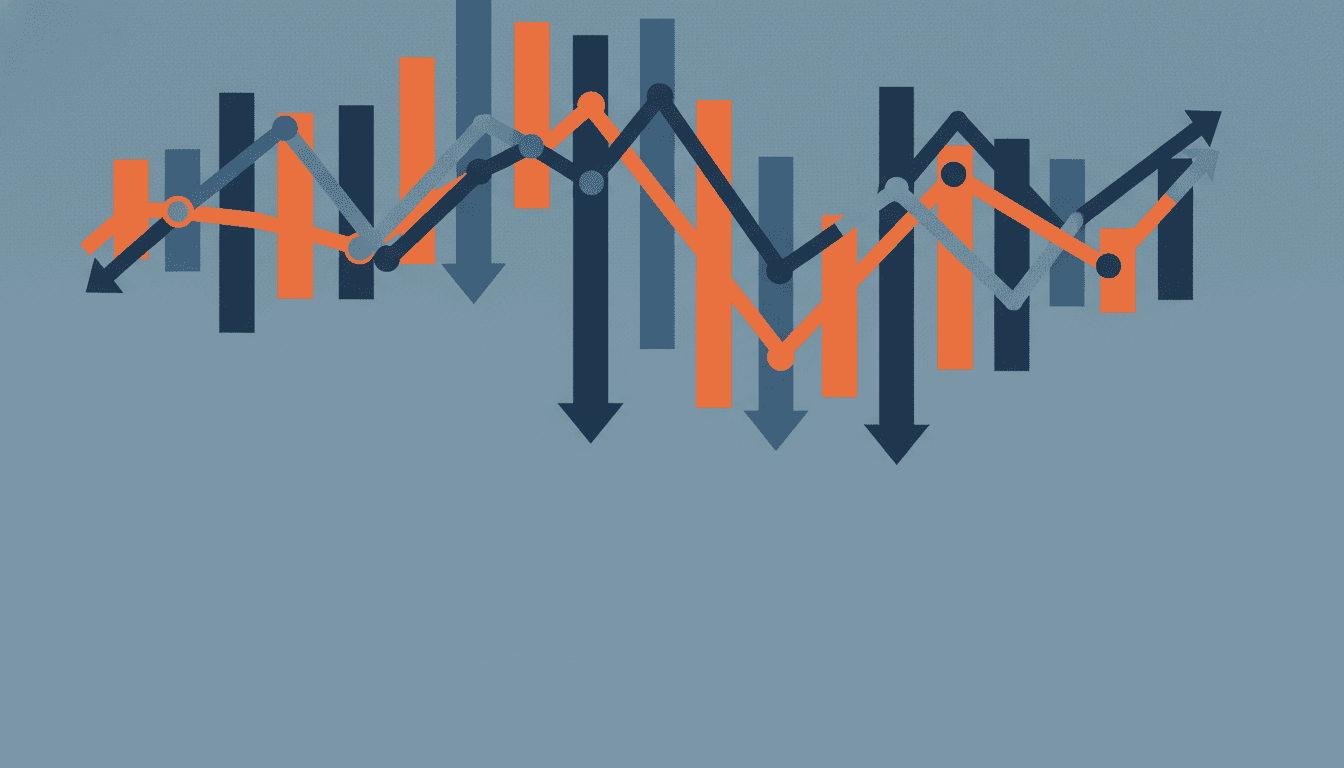
Furthermore, the term "불기둥" (fire pillar) is a piece of industry-specific jargon that has migrated into common parlance. In the Korean stock market, the color red signifies an increase in price, while blue signifies a decrease. This is the opposite of the convention in many Western markets. Therefore, a "pillar of fire" is a visual representation of a long red candle on a technical analysis chart, indicating that the price surged rapidly during the trading session. Using this word instead of a more clinical term like "급상승" (rapid rise) makes the headline more visceral and clickable for retail investors searching for high-growth opportunities.
Finally, the verb "터졌다" (to explode/burst) is often used in Korea to describe anything that happens suddenly and on a large scale. It can refer to a scandal breaking out, a person suddenly becoming famous, or, as seen here, a stock price hitting a metaphorical "jackpot." It conveys a sense of release and sudden energy that formal financial terms lack. By combining "Jackpot" and "Exploded," the journalist creates an atmosphere of excitement and urgency, suggesting that the reader might be missing out on a once-in-a-lifetime financial event.
4. Grammar deep-dive
The most critical grammar point in this headline for intermediate learners is the particle -에 when used to indicate a cause, reason, or stimulus. While beginners learn -에 as a location marker (at/in) or a time marker (on/at), its role as a causal particle is essential for reading news and literature.
In this context, -에 attaches to a noun to show that the noun is the direct reason or trigger for the following state or action. It is often used with verbs of emotion, physical reactions, or sudden events. In the headline, "한마디에" (due to one word) and "잭팟에" (due to the jackpot) establish a cause-and-effect relationship. It implies that the explosion and the fire pillar were not random occurrences but were directly set off by the preceding nouns. This usage is much more immediate and punchy than using full clausal connectors like "-기 때문에" (because of).
Common learner mistakes include using -에 to describe a person as the agent of an action. For example, you should not say "선생님에 칭찬받았어요" to mean "I was praised by the teacher." In that case, you must use -에게 or -한테. The causal -에 is strictly for inanimate triggers, situations, or stimuli. Another mistake is confusing it with the instrumental particle -로/으로, which indicates the method or means used. While -에 points to the reason something happened, -로 points to the tool or medium.
Here are three examples of this grammar in daily life and media contexts:
- 천둥소리에 깜짝 놀랐어요. (cheon-dung-so-ri-e kkam-jjak nol-rat-seo-yo) "I was startled at the sound of thunder."
- 그 영화의 슬픈 결말에 모두가 울었다. (geu yeong-hwa-ui seul-peun gyeol-mal-e mo-du-ga ul-eot-da) "Everyone cried at/due to the movie's sad ending."
- 갑작스러운 전화에 잠이 깼어. (gap-jak-seu-reo-un jeon-hwa-e jam-i kkaet-seo) "I woke up from a sudden phone call." (K-drama style casual speech)
Why not -때문에? You might wonder why the journalist didn't use "한마디 때문에." While grammatically correct, "때문에" feels heavy and explanatory. It is used when you want to provide a logical reason. In contrast, -에 suggests a more spontaneous, automatic, or immediate reaction. In a fast-moving stock market, the reaction is seen as an instinctive response to a trigger, making -에 the much more natural choice for headlines and vivid storytelling.
5. Cultural or register context
To a learner using standard textbooks, the term "불기둥" (bul-gi-dung) might simply translate to a "pillar of fire," perhaps evoking biblical or mythological imagery. However, in the context of the Korean financial ecosystem, it is a highly specific visual cue. As mentioned previously, Korean stock charts use red for gains and blue for losses. This is deeply rooted in cultural perceptions of color: red is associated with luck, prosperity, and heat (energy), whereas blue is associated with coldness and stagnation. When an investor says they see a "fire pillar," they are celebrating a massive intraday gain that looks like a tall red rectangle on their screen.
Conversely, the term for a sudden drop is "물기둥" (mul-gi-dung - water pillar) or sometimes "파란 나라" (blue country/world), which is a sarcastic reference to a children's song. Understanding these color-coded metaphors is vital for navigating Korean social media platforms like Naver Finance or KakaoTalk trading groups. If you see a comment section filled with fire emojis and the word "불장" (bul-jang - fire market), you know the market is "bullish."
Furthermore, the term "잭팟" (jackpot) illustrates the heavy influence of American gambling and financial terminology on the Korean lexicon. While Korea has its own terms for winning big, "잭팟" is used almost exclusively in modern media to describe high-tech success stories, especially those involving Silicon Valley. It bridges the gap between traditional business news and the high-energy, high-risk culture of modern retail investing. You will encounter this register frequently in YouTube titles, financial blogs, and news apps targeting the younger "2030 generation" (people in their 20s and 30s) who are increasingly active in global markets. This blend of loanwords and vivid Korean metaphors creates a unique "finance-speak" that is essential for intermediate learners aiming for cultural fluency.
6. Vocabulary set
| Korean | Roman | English | Tag | TOPIK | One-line usage |
|---|---|---|---|---|---|
| 젠슨 황 | Jen-seun Hwang | Jensen Huang | Noun | - | 젠슨 황은 엔비디아의 CEO입니다. |
| 한마디 | han-ma-di | A single word | Noun | 2 | 그의 한마디가 큰 변화를 가져왔다. |
| 터지다 | teo-ji-da | To burst/explode | Verb | 2 | 풍선이 갑자기 터져서 놀랐어요. |
| 잭팟 | jaek-pat | Jackpot | Noun | - | 이번 투자가 잭팟을 터뜨렸다. |
| 주가 | ju-ga | Stock price | Noun | 2 | 금리가 오르면 주가는 보통 내려가요. |
| 불기둥 | bul-gi-dung | Fire pillar | Noun | - | 차트에 빨간 불기둥이 솟았어요. |
| 종목 | jong-mok | Stock item | Noun | 2 | 추천할 만한 종목이 있나요? |
| 급등하다 | geup-deung-ha-da | To skyrocket | Verb | 2 | 유가가 갑자기 급등하고 있습니다. |
| 실적 | sil-jeok | Performance/Earnings | Noun | 2 | 이번 분기 실적이 매우 좋습니다. |
| 상한가 | sang-han-ga | Daily upper limit | Noun | - | 그 주식은 오늘 상한가를 기록했다. |
7. What just happened, briefly
Nvidia CEO Jensen Huang delivered a keynote or made comments (likely at a major tech conference like Computex) that sent shockwaves through the market. His optimistic outlook on AI and Nvidia's future hardware roadmap acted as a massive catalyst, causing Nvidia's stock price to surge dramatically. In the Korean market, this was viewed as a "jackpot" moment, resulting in the visual phenomenon known as a "fire pillar" on trading charts, where the price bars are colored red to indicate gains. This news highlights the profound influence of AI leadership on global financial markets. For more details, see the original report by 한국경제.
8. Keep learning
- [pillar guide on Korean particles like -에 and -에서]
- [vocabulary drill on Korean financial and business terms]
- [another news-decode post regarding global tech trends]
Subscribe to our newsletter to master more real-world Korean through the daily news!
Quick cheat sheet
Expressions in this post