Unpacking the $1.3 Trillion Nuclear Boom: K-Construction's New Records
Learn how Korean construction giants are targeting massive overseas nuclear projects and master the speculative '-나' interrogative ending used in news headlines.
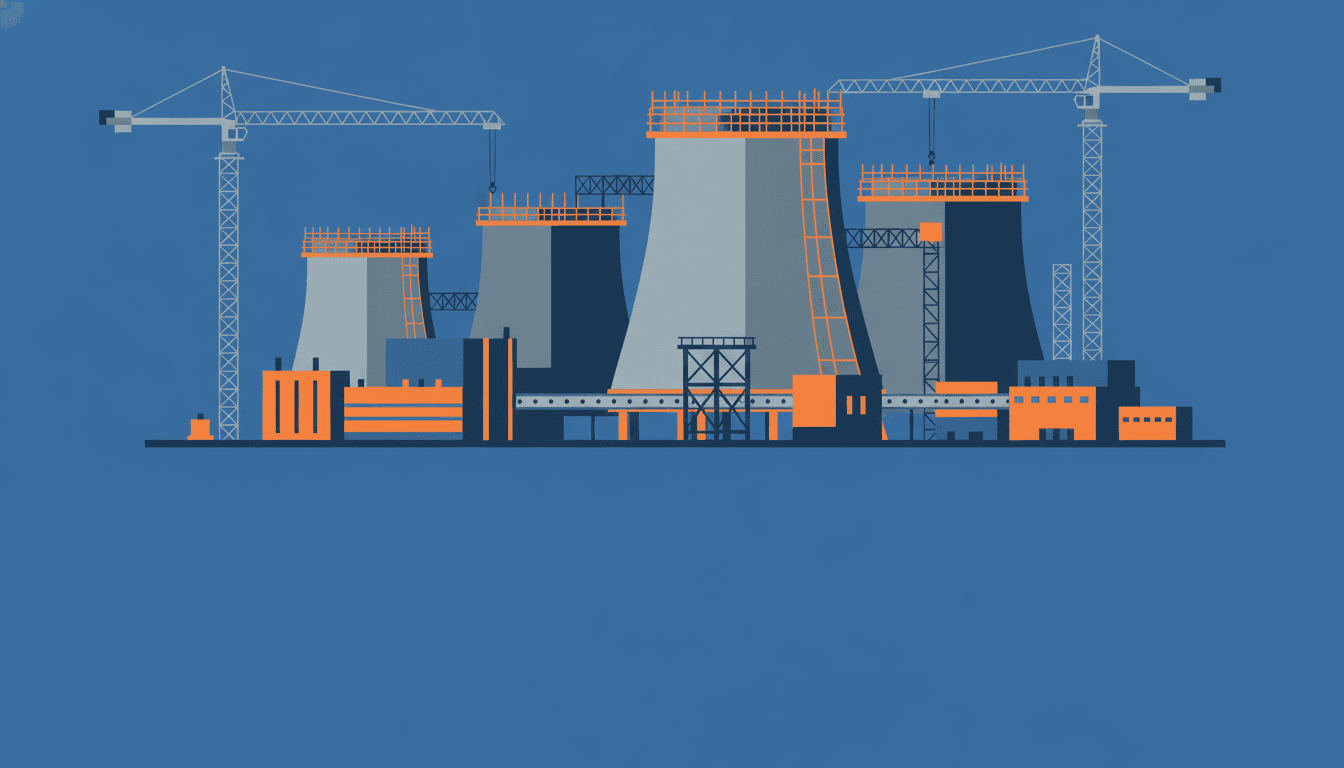
Learn how Korean construction giants are targeting massive overseas nuclear projects and master the speculative '-나' interrogative ending used in news headlines.
1. Headline anchor
‘1800조’ 원전 특수 온다…K건설, 해외 수주 새 기록 쓰나
— v.daum.net
2. What you will be able to do
After reading this analysis, you will be able to explain the specific nuance of the literary interrogative suffix -나 and why it is favored in journalistic titles to imply speculation rather than a direct question. You will also understand the economic significance of the term 수주 (su-ju) in the context of South Korea's heavy industry and export-driven growth model.
3. Word-by-word breakdown
To understand this headline, one must first appreciate the linguistic economy of Korean financial news. Headlines often omit particles and use high-density Hanja-derived vocabulary to convey massive amounts of data in a single glance. The figure "1800조" (1,800 trillion won) serves as a "hook," immediately establishing the scale of the topic. In the Korean media landscape, such large numbers are frequently used to signal a national-level economic opportunity, often referred to as a "special boom" or "super cycle."
Furthermore, the headline utilizes the "K-" prefix, a branding strategy that has expanded far beyond K-pop. When applied to industry—such as K-건설 (K-Construction)—it signifies a sense of global competitiveness and national pride. The transition from building simple infrastructure in the 20th century to exporting complex nuclear technology in the 21st century is a major narrative arc in the Korean news, making the vocabulary choice here particularly resonant for an intermediate student of the language.
| Korean | Roman | Literal | TOPIK | Notes |
|---|---|---|---|---|
| 1800조 | cheon-pal-baek-jo | 1,800 Trillion | 2 | A massive currency unit (approx. 1.3 trillion USD) used to grab attention. |
| 원전 | won-jeon | Nuclear Power Plant | 4 | An abbreviation of '원자력 발전소'; common in news for brevity. |
| 특수 | teuk-su | Special Demand | 5 | Refers to a sudden, unique surge in market demand or a business boom. |
| 온다 | on-da | Is coming | 2 | The plain form of 오다, used here to create a sense of immediacy and certainty. |
| K건설 | K-geon-seol | K-Construction | 3 | Refers to the Korean construction industry/companies as a global brand. |
| 해외 | hae-oe | Overseas | 3 | Literally 'outside the sea'; used for any international context. |
| 수주 | su-ju | Winning an order | 5 | A specific business term for a company receiving a project contract. |
| 새 | sae | New | 1 | A native Korean adjective used to modify nouns (a 'new' record). |
| 기록 | gi-rok | Record | 3 | Can refer to a physical record or, as here, a historical achievement. |
| 쓰나 | sseu-na | Is [it] writing? | 3 | The verb 쓰다 (to write) combined with the wondering suffix -나. |
The term 원전 is a classic example of Korean news-speak. While a textbook might teach you 원자력 발전소, the four-syllable word is almost always shortened to 원전 in print to save space. For an intermediate learner, recognizing these abbreviations is the first step toward reading newspapers comfortably. Similarly, 특수 is a nuanced word; while '호황' (ho-hwang) means a general boom, 특수 implies a boom caused by a specific, external event—in this case, the global shift back toward nuclear energy. This choice suggests that the opportunity is a unique "special case" for Korean firms.
Finally, let’s look at the phrase 기록을 쓰다 (to write a record). In English, we might say "set a record" or "break a record," but in Korean, the imagery is often about "writing" history. By ending the headline with 기록 쓰나 (writing a record?), the author is not just asking a question; they are inviting the reader to imagine a future where these companies achieve unprecedented success. This use of figurative language in a financial context is a hallmark of Korean journalism, where emotional stakes and economic data are often blended to engage the public's sense of national progress.
4. Grammar deep-dive
The grammar pattern we will focus on is the interrogative ending -나. This is a non-honorific, somewhat literary or "inward-looking" question ending that attaches directly to the stem of verbs and the existential verbs 있다 and 없다. In headlines, it is the standard way to pose a speculative question.
Technically, -나 is used when the speaker is wondering about something or asking themselves a question. It lacks the directness of endings like -니? (which can sound too casual or even childish) or -습니까? (which is strictly for formal interviews). In the context of a news headline, -나 transforms the statement into a possibility that is currently being observed. When the headline asks "새 기록 쓰나" (Are they writing a new record?), it doesn't have a specific person it is asking; rather, it is reflecting a collective sense of curiosity about the industry's future. It invites the reader to think, "I wonder if they will actually succeed?"
One common mistake for learners is using -나 in a face-to-face conversation with someone older or in a position of authority. Because -나 is a low-form (반말-adjacent) ending, using it with a teacher or a boss can sound impolite or overly familiar. It is best used when talking to yourself ("Where did I put my keys?"), writing in a diary, or in the specific stylistic environment of newspaper headlines and literature. Another mistake is confusing it with -ㄴ가/은가, which is generally used with adjectives. For verbs in the present tense, -나 is the standard choice (e.g., 가나? 먹나? 하나?).
Here are three examples of how this might appear in other contexts:
- 드라마 대사 (K-Drama line): "그 사람이 정말 나를 좋아하나?" (I wonder if that person really likes me?)
- 일상 대화 (Everyday speech): "밖에 비가 오나? 창문 좀 봐봐." (Is it raining outside? Take a look at the window.)
- 혼잣말 (Talking to oneself): "이게 도대체 어떻게 된 일이나?" (How on earth did this happen?)
Why not -나요? A learner might wonder why the headline doesn't use the polite version, -나요. While -나요 is very common in spoken Korean to ask questions softly and politely, it is almost never used in written headlines. Headlines aim for a "neutralized" and punchy style. Using -나요 would make the news sound like a person is speaking directly to you in a cafe, which breaks the professional, detached register expected in serious reporting. The -나 ending provides the perfect balance of speculation and brevity.
5. Cultural or register context
To a student using a standard textbook, this headline might seem like a simple report on business contracts. However, for a Korean reader, this touches on a deep sense of national industrial pride. The construction industry is legendary in South Korean history; the "Middle East Construction Boom" of the 1970s and 80s is credited with bringing in the foreign currency that fueled the nation's rapid modernization. When a headline mentions "K-건설" (K-Construction) alongside "Overseas Orders," it triggers a nostalgic yet modern pride in Korea's ability to compete globally in large-scale engineering.
Furthermore, the specific focus on "원전" (Nuclear Power) carries political and social weight. South Korea has spent decades developing its own indigenous nuclear technology (the APR-1400 model). Exporting this technology is seen as the ultimate proof of becoming a "first-class" nation, moving away from labor-intensive construction to high-tech energy solutions. In a society that is highly competitive and export-dependent, news about "breaking records" in overseas orders is often treated with the same excitement as a national sports victory.
You will encounter this register primarily in business news (the "economy section"), but the term 수주 (winning an order) is also common in everyday professional life. If a Korean company wins a big contract, you'll see office workers celebrating a "대박 수주" (a huge order win). Understanding this vocabulary helps you navigate the professional hierarchy and the collective goals of a Korean workplace, where the success of the "team" (the company or the country) is a frequent topic of conversation.
6. Vocabulary set
| Korean | Roman | English | Tag | TOPIK | One-line usage |
|---|---|---|---|---|---|
| 원전 | won-jeon | Nuclear power plant | Industry | 4 | 원전 수출은 국가적인 사업입니다. |
| 수주 | su-ju | Winning an order | Business | 5 | 우리 회사는 이번에 큰 공사를 수주했다. |
| 특수 | teuk-su | Special boom | Economy | 5 | 올림픽 덕분에 관광 특수가 생겼다. |
| 기록 | gi-rok | Record | General | 3 | 그는 세계 신기록을 세웠습니다. |
| 건설 | geon-seol | Construction | Industry | 3 | 아파트 건설 현장이 매우 바쁩니다. |
| 해외 | hae-oe | Overseas | General | 3 | 저는 내년에 해외로 여행을 갈 거예요. |
| 조 | jo | Trillion | Number | 2 | 한국의 국방 예산은 수십 조 원입니다. |
| 수출 | su-chul | Export | Business | 3 | 한국은 자동차 수출이 활발합니다. |
| 체결 | che-gyeol | Conclusion/Signing | Business | 5 | 두 나라는 무역 협정을 체결했다. |
| 전망 | jeon-mang | Prospect/Outlook | General | 4 | 내년 경제 전망이 매우 밝습니다. |
7. What just happened, briefly
The South Korean construction industry is anticipating a massive windfall from a global nuclear energy boom, estimated to be worth up to 1,800 trillion won. Major Korean firms (K-Construction) are actively bidding for international projects, aiming to set new historical records for the total value of overseas orders won in a single cycle. This surge is driven by a global renewed interest in nuclear power as a stable energy source. Full article link.
8. Keep learning
- [pillar guide on Hanja-based economic terms]
- [vocabulary drill on the construction and energy sectors]
- [another news-decode post]
Subscribe to our newsletter to receive weekly deep-dives into the linguistic nuances of Korean current events!
Quick cheat sheet
Expressions in this post