개정안·본회의·표결 뜻: Korean politics headlines
Decode 개정안 & 표결 in Korean politics headlines with collocations, implication notes, and safe paraphrase practice—learn

Decode 개정안 & 표결 in Korean politics headlines with collocations, implication notes, and safe paraphrase practice—learn
Neutral, language-first decoding of three politics headline keywords—collocations + implication notes for safe paraphrasing.
What this headline implies
When Korean political headlines use these keywords, they’re usually signaling a step in a formal legislative process, not a value judgment. The same event can sound “bigger” or “more urgent” depending on whether the headline highlights the agenda stage, the meeting venue, or the vote.
Quick cheat sheet
Expressions in this post
Context note
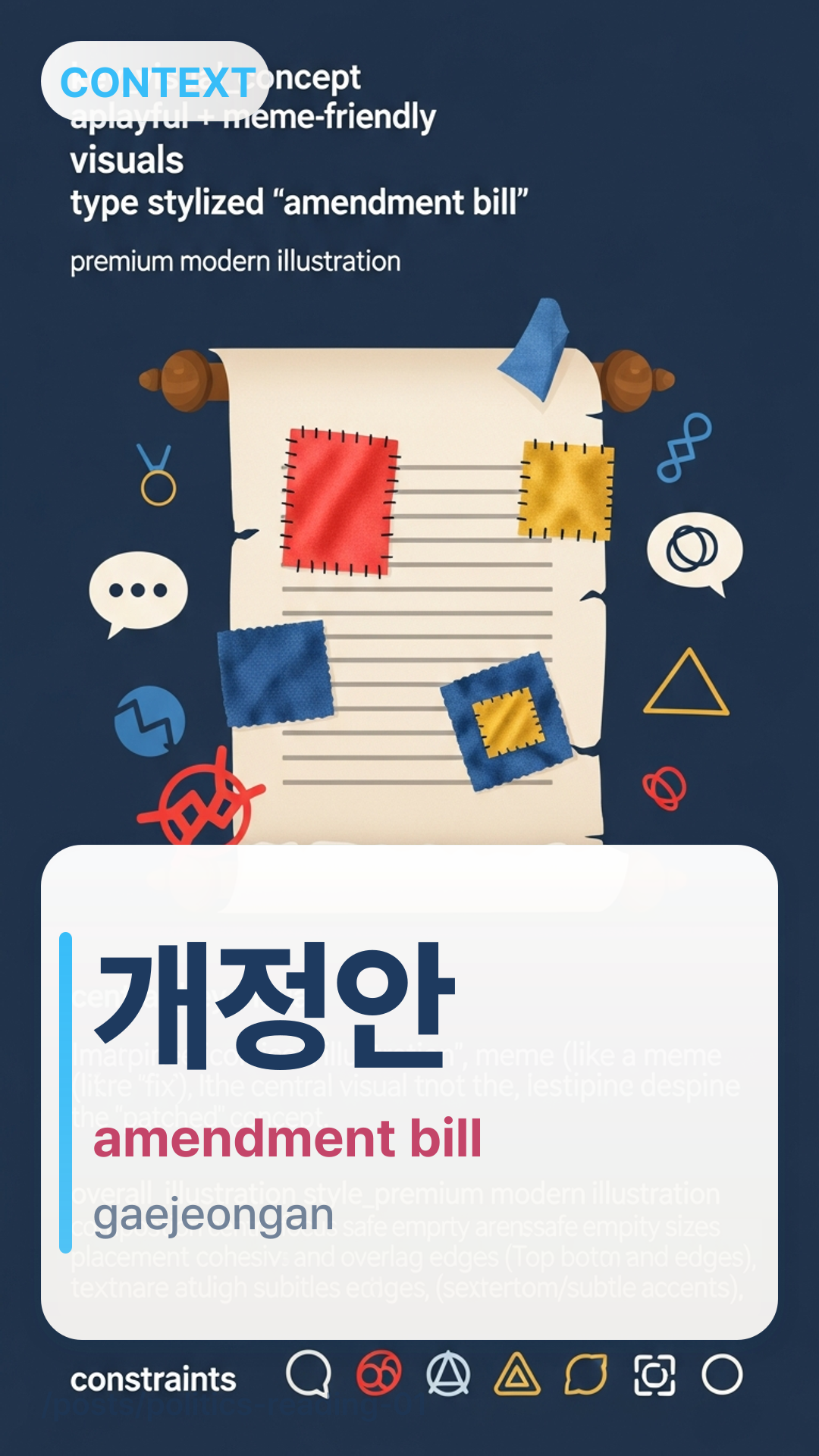
개정안gaejeongan is about a proposed change, and headlines often treat it like a “thing moving through steps.” A common trap is reading it as “the law has been amended already” when it can still be under review.
One time I saw a push alert with 개정안 처리gaejeongan cheori and assumed the policy had already taken effect—only to realize the article was describing a procedural step, not implementation.
Common pairing
개정안을 발의하다gaejeonganeul baruihada — introduce/propose an amendment bill개정안을 상정하다gaejeonganeul sangjeonghada — place it on the agenda개정안을 심사하다gaejeonganeul simsahada — review/examine it개정안을 처리하다gaejeonganeul cheorihada — handle/process it (broad, headline-friendly)
Examples you’ll see:
○○법 개정안○○beop gaejeongan — an amendment to the ○○ Act개정안 논의gaejeongan nonui — discussion of an amendment bill
Context note
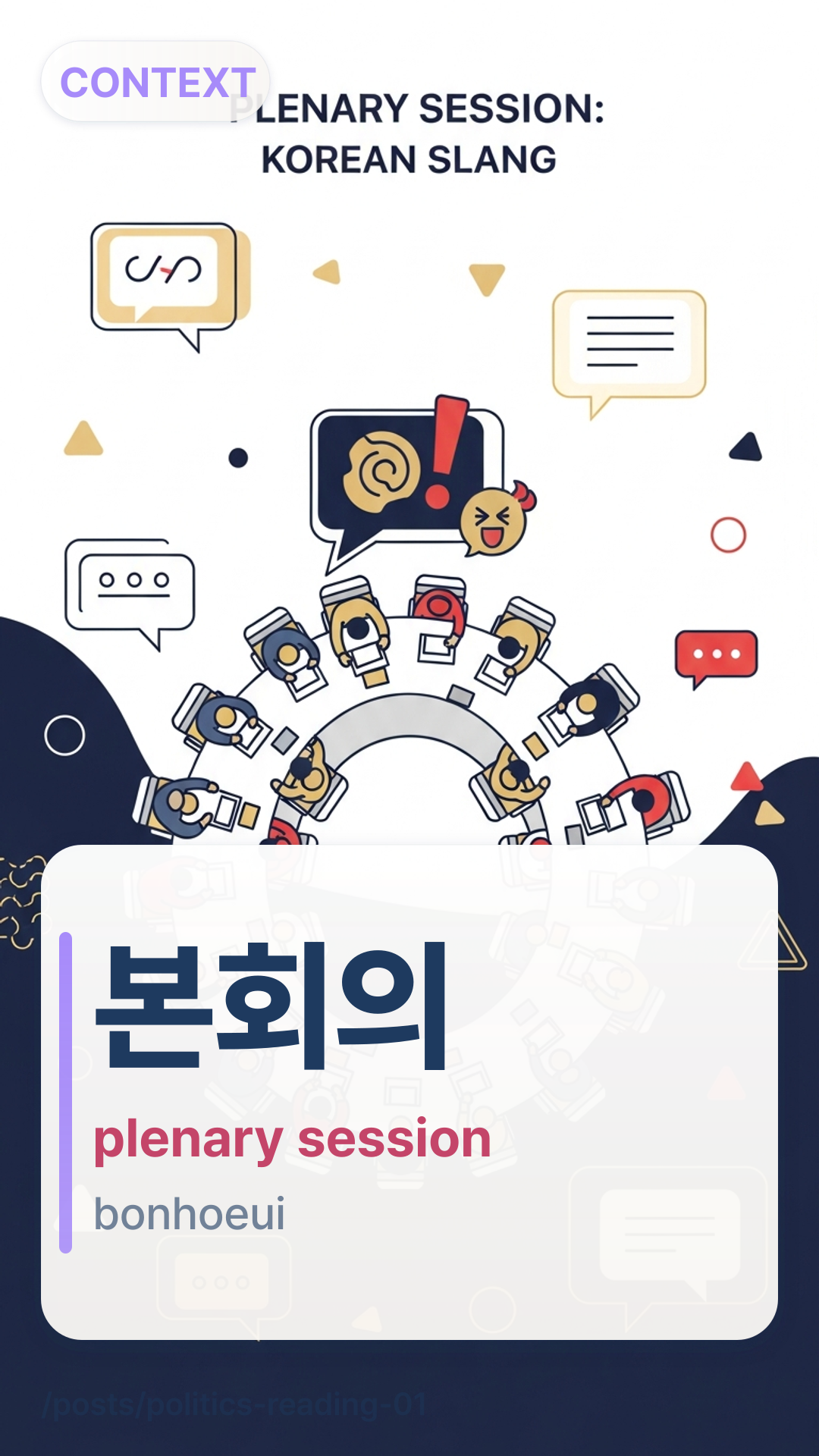
본회의bonhoeui points to the venue/stage: a plenary session where final decisions often happen, especially compared to committee-level work. The nuance is procedural: it suggests the issue is on the floor of the assembly, which can imply it’s nearing a decisive moment, but it doesn’t guarantee a vote happened.
Common pairing
본회의를 열다bonhoeuireul yeolda — convene a plenary session본회의에 상정하다bonhoeuie sangjeonghada — bring (an item) to the plenary agenda본회의에서 처리하다bonhoeuieseo cheorihada — handle it at the plenary session본회의 일정bonhoeui iljeong — plenary schedule
Quick read tip:
본회의 상정bonhoeui sangjeong is “onto the floor agenda,” not “approved.”
Context note
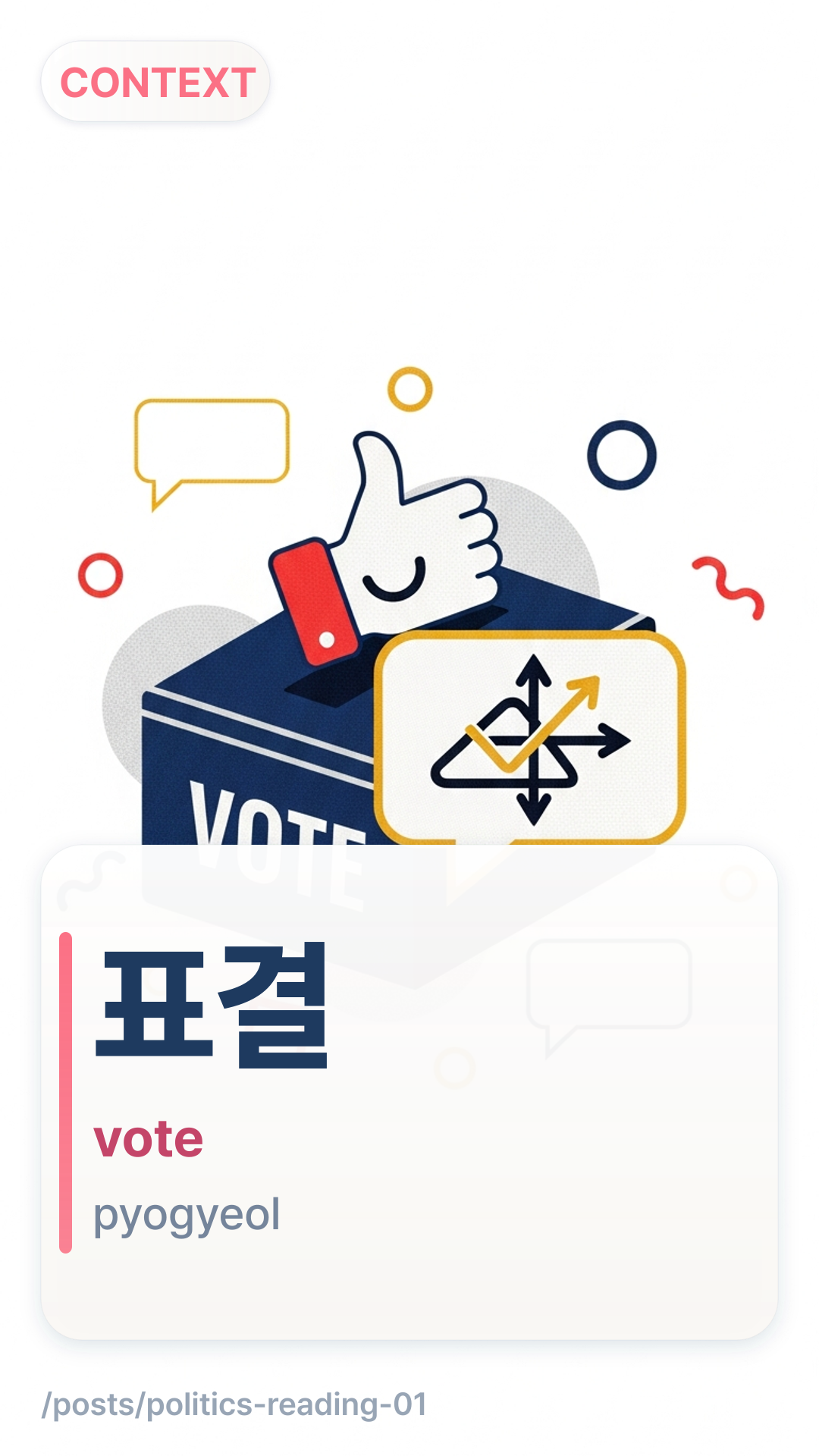
표결pyogyeol is the act (or result) of voting, and headlines use it to frame a decision point. Another trap is assuming it means “everyone voted” in a dramatic sense; it can refer to routine votes, and the result may be unclear unless you see words like 가결gagyeol (passed) or 부결bugyeol (rejected).
Common pairing
표결에 부치다pyogyeore buchida — put (something) to a vote표결을 진행하다pyogyeoreul jinhaenghada — conduct a vote표결을 앞두다pyogyeoreul apduda — ahead of the vote표결 결과pyogyeol gyeolgwa — vote result가결되다gagyeoldoeda /부결되다bugyeoldoeda — pass / be rejected
Next steps
- A push alert says
○○법 개정안 발의○○beop gaejeongan barui. What keyword tells you it was introduced (not yet debated or voted)? - You read
본회의 상정bonhoeui sangjeong. What keyword would confirm that a vote actually happened (and the outcome)? - A headline includes
표결에 부치다pyogyeore buchida (or표결에 부쳐pyogyeore buchyeo). What does that mean in English? - An article says
개정안 처리gaejeongan cheori but doesn’t mention가결gagyeol or부결bugyeol. What’s a safe, neutral paraphrase in English? - You see
본회의 일정 합의bonhoeui iljeong habui. What stage does that point to: policy outcome or scheduling?
Answers:
발의barui가결gagyeol /부결bugyeolput to a votewas handled/was dealt withscheduling stage
Notes:
- Q1:
발의barui specifically means “to introduce/propose (a bill),” which is earlier than debate, agenda placement, or voting. - Q2:
가결gagyeol/부결bugyeol indicate a vote occurred and state the result, which is stronger than only seeing표결pyogyeol mentioned. - Q3:
표결에 부치다pyogyeore buchida literally means “to submit (something) to a vote,” i.e., the next procedural action is voting. - Q4: With only
처리cheori and no outcome word, avoid “passed”;was handled/was dealt withdescribe a procedural step without claiming the result. - Q5:
본회의 일정 합의bonhoeui iljeong habui is agreement on the plenary schedule, so it points to scheduling/procedure rather than a policy outcome.
If you want extra practice, turn each question into two paraphrases: one “neutral report” version and one “uncertainty-safe” version.