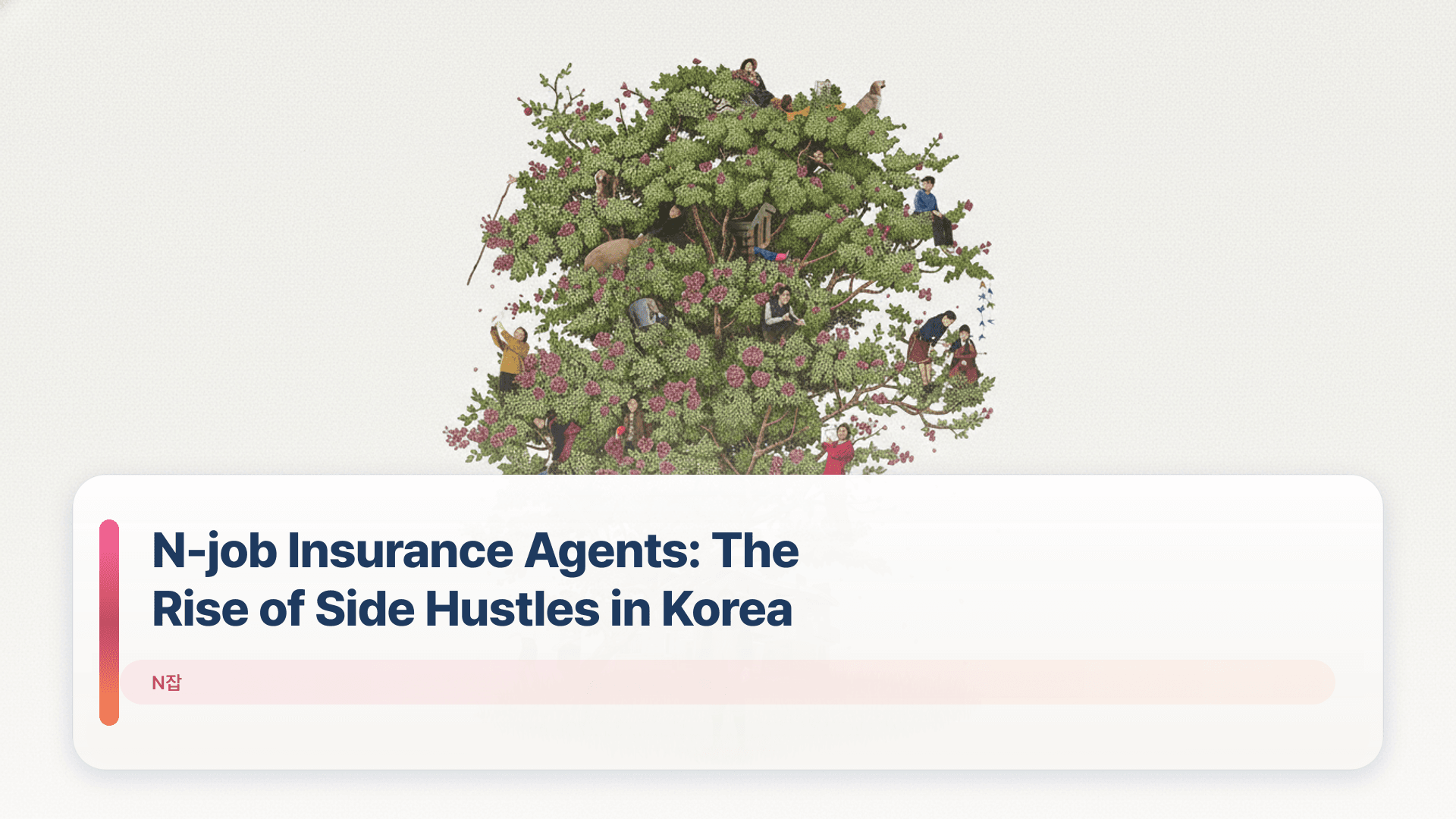
South Korea is seeing a significant rise in 'N-job' insurance agents—individuals who sell insurance as a secondary source of income rather than a full-time career. This trend is driven by the increasing accessibility of digital platforms that allow almost anyone to register and sell insurance products with minimal overhead.
While this provides flexibility for workers, it poses a challenge for traditional full-time agents. The barrier to entry has lowered so much that the distinction between a professional consultant and a casual side-hustler is blurring. Many are turning to these roles to supplement their income in a stagnant economy.
However, the industry is also facing the rapid integration of Artificial Intelligence. AI is now capable of analyzing complex policy data and recommending products faster than human agents. This technological shift is creating a sense of inevitability among workers who feel they cannot compete with the efficiency of algorithms.
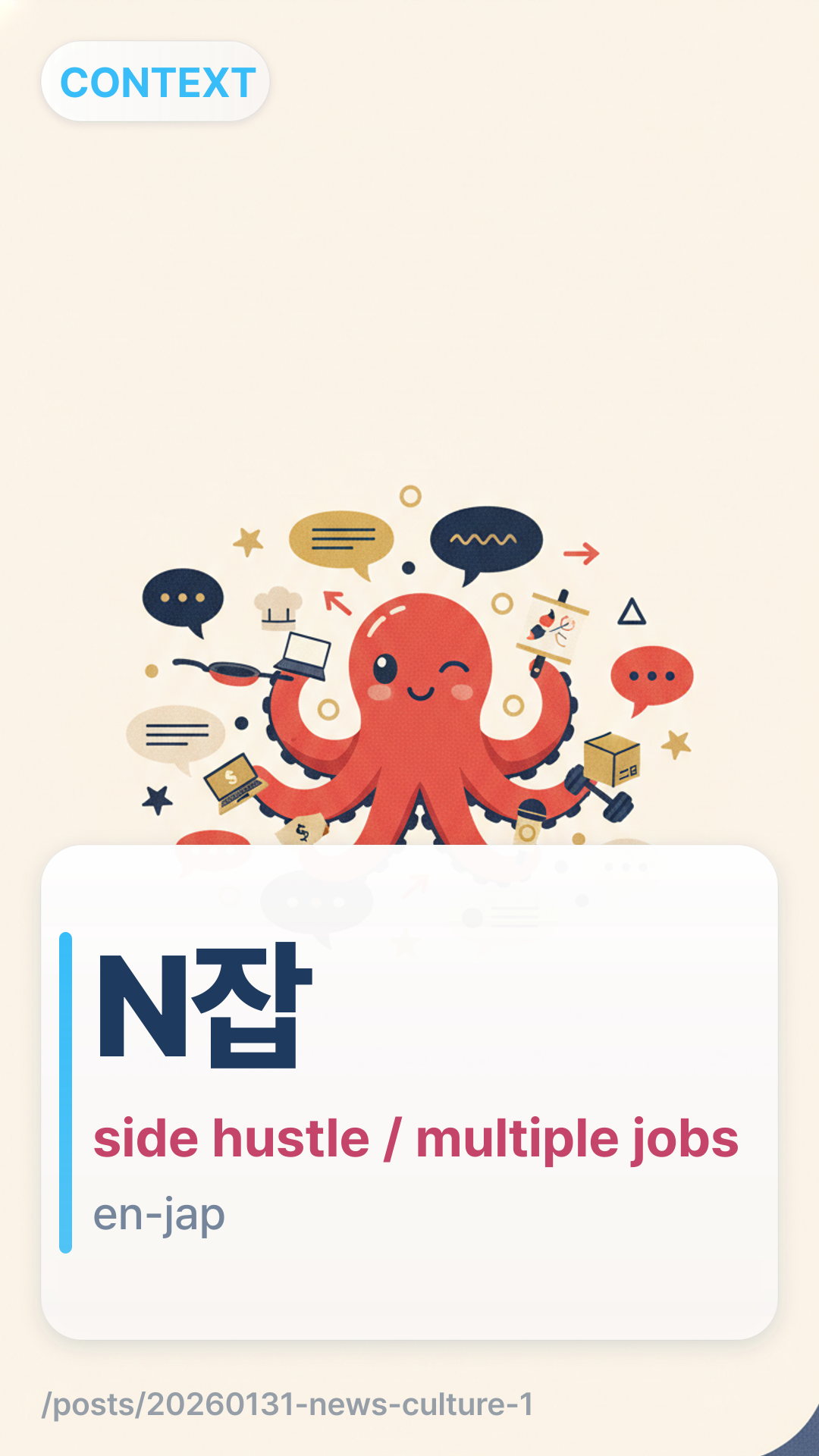
N잡 (N-job) refers to the practice of having multiple jobs or 'side hustles' to diversify income streams. It is a combination of the English letter 'N' (representing a number) and the Korean word (job).
Industry experts suggest that while the 'N-job' trend provides short-term financial relief for individuals, the long-term quality of insurance consulting may vary. The focus is shifting from deep relationship-building to transactional, platform-based sales.
Full story (translated & rewritten)
According to recent industry reports from News1, the landscape of the Korean insurance market is shifting toward the 'N-job' model. An 'N-jobber' refers to someone holding multiple jobs, and in the insurance sector, this means people are taking up insurance sales alongside their primary occupations. Digital transformation has made it possible for people to manage clients and process applications through mobile apps, removing the need to report to a physical office daily.
This surge in part-time agents is partly a response to the 'gig economy' culture taking root in Korea. For many, the appeal lies in the commission-based structure where they can earn extra cash by selling to friends, family, or through social media networks. However, veteran agents express concern that this 'easy entry' might undermine the professionalism required to explain complex financial products accurately.
Adding to the pressure is the rise of AI-driven insurance platforms. These systems can process vast amounts of data to find the 'cheapest' or 'best' coverage for a user in seconds. The article notes that even for experienced agents, the speed and data-processing power of AI feel like an insurmountable wall. There is a growing sentiment of 'it can't be helped' (어쩔 수가 없다) regarding the automation of the industry.
While the article does not provide specific percentage growth for this month, it highlights that major insurance companies are actively launching 'lite' versions of their platforms to attract these N-jobbers. The competition is no longer just between companies, but between human intuition and machine efficiency.
Context
The term 'N-job' (N잡) uses the variable 'N' to represent an indefinite number of jobs, similar to 'N-th' in English.
Korea's insurance market is one of the most saturated in the world, leading companies to seek new sales channels through casual sellers.
Digital-only insurance companies are leading the charge in AI integration to reduce labor costs.
Njap
잡jap
요즘은 직장인들도 N잡을 하는 경우가 많아요.yojeumeun jikjaindeuldo Njabeul haneun gyeouga manhayo. — These days, there are many cases where office workers also do N-jobs.
그는 N잡러로서 세 가지 일을 하고 있다.geuneun Njapreoroseo se gaji ireul hago itda. — As an N-jobber, he is doing three different jobs.