Director Kim Yu-yeong: The Gumi Roots of KAPF Cinema
Discover the Gumi roots of Kim Yu-yeong, the director behind Korea's first KAPF-affiliated films, and the meaning of 카프 (KAPF) in history.
Discover the Gumi roots of Kim Yu-yeong, the director behind Korea's first KAPF-affiliated films, and the meaning of 카프 (KAPF) in history.
EN brief: 우리나라 최초의 카프 계열 영화를 제작한 감독의 고향 (culture) + 1 glossary term.
Summary
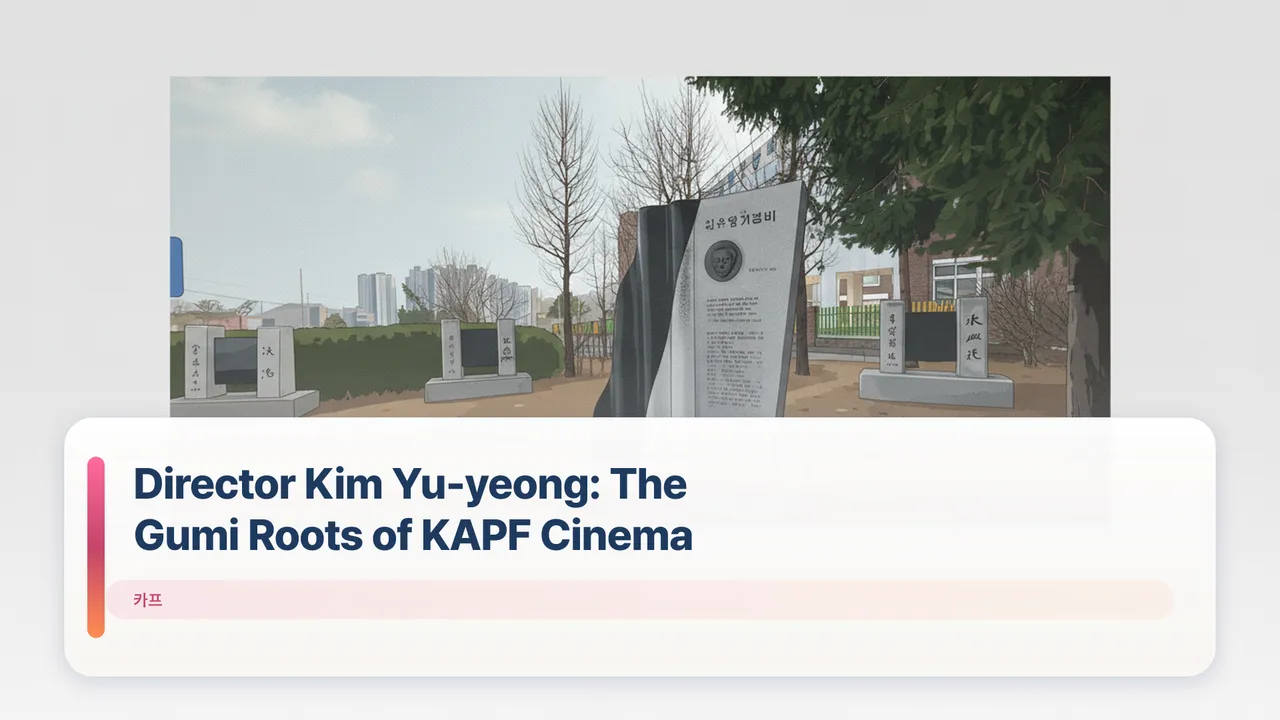
A commemorative monument in Gumi, Gyeongsangbuk-do, is drawing attention to the life of Kim Yu-yeong, a pioneering figure in early Korean cinema. Located on the road from Doryang-dong to Goa-eup, the site features a central memorial tower detailing his biography alongside four smaller pillars representing his major film works.
Kim spent his formative years in this region, specifically in Wonho-ri (formerly known as Deulseong). His upbringing in Gumi is believed to have been a primary source of inspiration for his later creative work in Gyeongseong (modern-day Seoul). Even as he battled illness during his youth, he reportedly maintained a deep longing for his hometown.
Historically, Kim is recognized for producing Korea's first films associated with the KAPF (Korea Artista Proleta Federatio) movement. His life was marked by resistance against Japanese colonial rule, including an arrest during his student days for involvement in a private reading society incident.
Local efforts to honor his legacy continue to grow in Gumi. As a member of the Seonsan Kim clan—often referred to locally as the Deulseong Kim clan—his contributions to both the independence movement and the arts remain a significant point of regional pride.
Full story (translated & rewritten)
During the recent Seollal (Lunar New Year) holiday, visitors traveling through Gumi encountered a quiet but significant tribute to a giant of Korean film history. The memorial for Director Kim Yu-yeong stands as a reminder of a filmmaker who merged art with social consciousness during one of Korea's darkest historical periods. The monument's layout is intentional, with a chronological record of his life leading visitors toward four structures that symbolize his cinematic achievements.
Born in Gumi during the Japanese colonial era, Kim's path was never purely aesthetic. His academic years were defined by his resistance to colonial authorities, most notably through his participation in 'dokseohwe' (reading circles), which were often fronts for intellectual and anti-colonial organizing. This rebellious spirit eventually transitioned into the medium of film, where he sought to portray the realities of the working class and the struggles of the colonized.
Kim is most famous for being the first to bring the ideology of the KAPF (Korea Artista Proleta Federatio) to the silver screen. While the article does not list the specific titles of the four films represented by the towers at the memorial, it emphasizes that these works were the fruit of the inspiration he gathered from his rural roots. The transition from the quiet fields of Wonho-ri to the bustling, politically charged atmosphere of Gyeongseong defined his unique directorial voice.
Despite his early success, Kim's life was cut short by illness. The narrative provided by local reporters suggests that his final days were spent in nostalgic reflection of Gumi. Today, the local community is calling for more robust commemorative projects to ensure that Kim’s choice to resist through art is not forgotten by future generations.
Context
- KAPF (Korea Artista Proleta Federatio): A socialist cultural and artistic organization active in Korea during the 1920s and 30s, focusing on class struggle and anti-imperialism.
- Seonsan Kim Clan: A prominent lineage in the Gumi area; the nickname 'Deulseong Kim' comes from the old name of the village where they settled.
- Gyeongseong: The name used for Seoul during the Japanese colonial period (1910–1945).
Quick cheat sheet
Expressions in this post

카프kapeu (KAPF) refers to the Korea Artista Proleta Federatio, an influential leftist arts collective in 1920s-30s Korea that used literature and film to advocate for social change.
그는 카프 계열의 영화를 처음으로 제작했다.geuneun kapeu gyeyeorui yeonghwareul cheoeumeuro jejakhaetda. — He produced the first film affiliated with the KAPF line.
일제강점기 당시 카프 문학은 매우 활발했다.iljegangjeomgi dangsi kapeu munhageun maeu hwalbalhaetda. — During the Japanese colonial period, KAPF literature was very active.