Decoding the 110-Won Lifetime Phone Plan Craze
Analyze a viral Korean headline about extreme price wars in the mobile industry and learn how to express suspicion using the '-ㄴ 거 아냐?' grammar pattern.

Analyze a viral Korean headline about extreme price wars in the mobile industry and learn how to express suspicion using the '-ㄴ 거 아냐?' grammar pattern.
1. Headline anchor
"진짜? 0 빠진 거 아냐?" 월 110원에 평생 요금제…알뜰폰 '출혈 경쟁' — 네이트
2. What you will be able to do
After reading this breakdown, you will be able to explain the specific nuance of the rhetorical suspicion pattern -ㄴ 거 아냐? as it appears in conversational Korean. You will also understand why the term 출혈 경쟁 is used to describe unsustainable business practices and how the word 알뜰폰 differs from standard mobile service providers in the South Korean market context.
3. Word-by-word breakdown
Korean news headlines are masters of the "hook and reveal" strategy. In this headline from Nate, we see a clever two-part structure. The first part, enclosed in quotation marks, uses visceral, casual language to mimic the reaction of an average consumer. This is a common tactic in Korean media to bridge the gap between dry economic data and the lived experience of the reader. By starting with "진짜?" (Really?), the editor immediately builds rapport, acknowledging that the price of 110 won is so low it seems fake. This conversational register provides a sharp contrast to the second half of the headline, which utilizes more formal, noun-heavy economic terminology. This transition from emotional reaction to factual reporting is a hallmark of modern digital journalism in Korea.
| Korean | Roman | Literal | TOPIK | Notes |
|---|---|---|---|---|
| 진짜 | Jinjja | Real / Really | 1 | Chosen here to show immediate disbelief; stronger than '정말'. |
| 0 | Yeong / Gong | Zero | 1 | In phone numbers or digits, '공' is often used colloquially. |
| 빠지다 | Ppajida | To fall out / To be omitted | 2 | Specifically used for missing elements; '잃어버리다' (lose) would be wrong. |
| 거 | Geo | Thing / Fact | 1 | Contraction of '것'; turns the preceding clause into a noun phrase. |
| 아냐 | Anya | Is not | 1 | Casual contraction of '아니야'; used for rhetorical questions here. |
| 월 | Wol | Month | 1 | Counter for months; indicates a recurring monthly cost. |
| 원 | Won | Won (currency) | 1 | The official currency of South Korea. |
| 평생 | Pyeongsaeng | Lifetime | 2 | Used to emphasize that the price will not increase over time. |
| 요금제 | Yogeumje | Fee system / Rate plan | 3 | Compound of 요금 (fee) + 제 (system). |
| 알뜰폰 | Altteul-pon | Frugal phone | 2 | Refers to MVNOs (budget carriers); '알뜰' means thrifty. |
| 출혈 | Chulhyeol | Bleeding | 4 | Metaphor for financial loss; used exclusively in business contexts here. |
| 경쟁 | Gyeongjaeng | Competition | 3 | General term for rivalry between companies or individuals. |
Looking closer at the word choices, "빠지다" is particularly interesting. While a beginner might learn this verb as "to fall into a hole" (구멍에 빠지다), in the world of numbers and data, it means "to be left out." When the speaker asks if a zero is "빠진 거," they are literally asking if a zero fell off the price tag by mistake. This suggests the price is so low that it must be a typo for 1,100 won or 11,000 won. This specific verb highlights the speaker's suspicion of an error, rather than just saying the price is "wrong."
Furthermore, notice the term "원" (Won) and "월" (Month). They look and sound very similar to the untrained ear, but their placement is crucial. "월" usually precedes the numerical value or the unit of time, while "원" follows the currency amount. In this headline, "월 110원" creates a rhythmic balance that is easy to read. The term "요금제" is also more specific than just saying "가격" (price). A "요금제" implies a service contract or a subscription model, which is necessary to understand that this is not a one-time purchase but a monthly commitment. Finally, the phrase "출혈 경쟁" (bleeding competition) rounds out the headline by explaining the 'why' behind the low price—companies are effectively "cutting their own flesh" to survive in a saturated market.
4. Grammar deep-dive
The grammar pattern at the heart of the headline’s quote is -ㄴ/은/는 거 아냐?. This is a contraction of the more formal -ㄴ/은/는 것이 아니야?.
At its most basic level, this pattern attaches to verbs or adjectives to form a rhetorical question. In Korean, adding "아니야?" (Isn't it?) to a noun-modified verb clause transforms a simple observation into a suspicion or an invitation for agreement.
1. When it attaches:
- For past tense verbs or present tense adjectives, use -ㄴ/은 거 아냐?. (e.g., 빠지다 → 빠진 거 아냐?)
- For present tense verbs, use -는 거 아냐?. (e.g., 먹다 → 먹는 거 아냐?)
- For future tense, use -ㄹ/을 거 아냐?. (e.g., 갈 거 아냐?)
2. Meaning and Nuance: Unlike a direct question ("Did a zero fall out?"), the pattern "-ㄴ 거 아냐?" (Isn't it the case that a zero fell out?) expresses a speaker's hunch. It conveys that the speaker has already drawn a conclusion based on the evidence—in this case, the absurdly low price of 110 won—and is now voicing that conclusion with a touch of skepticism or disbelief. It is the Korean equivalent of saying, "Wait, I bet..." or "Don't you think that...?"
3. Common Learner Mistakes:
Learners often confuse this with the simple negative question -지 않아?-ji anha?. While -지 않아?-ji anha? is a general way to ask "Isn't it...?", the -ㄴ 거 아냐?-ㄴ geo anya? pattern is much more colloquial and specifically implies a discovery or a suspicion of a specific fact. Another common mistake is failing to use the correct noun-modifying form (the -ㄴ/는-ㄴ/neun part). You cannot say "빠지 거 아냐"; it must be "빠진 거" because "거" (thing) is a bound noun that requires a modifier.
Example Sentences:
- (From a K-drama) "너 지금 나 질투하는 거 아냐?" (Wait, aren't you being jealous of me right now?)
- (Everyday speech) "우리 버스 놓친 거 아냐? 빨리 가보자." (I think we might have missed the bus, don't you? Let's hurry.)
- (Shopping context) "이거 너무 싼데, 가짜인 거 아냐?" (This is too cheap; isn't it likely a fake?)
Why not -지 않아?
While both can translate to "Isn't it?", -지 않아?-ji anha? is a broad negation. If you say "빠지지 않아?", it sounds like you are asking if something doesn't fall out as a general rule. In contrast, "빠진 거 아냐?" focuses on the state of the zero being missing right now. The latter is far more effective for expressing sudden realization or suspicion.
5. Cultural or register context
To fully appreciate this headline, one must understand the unique landscape of the South Korean telecommunications market. For decades, the market was a rigid triopoly controlled by SKT, KT, and LG U+. These "Big Three" carriers were known for high prices but also high subsidies for new smartphones. However, about a decade ago, the government introduced "알뜰폰" (Altteul-phone), which are MVNOs (Mobile Virtual Network Operators) that rent bandwidth from the big carriers and sell it at a discount.
In recent years, especially among the "MZ Generation" (Millennials and Gen Z), there has been a massive cultural shift toward "frugal living" (알뜰한 생활). This has manifested in trends like the "No Spend Challenge" (무지출 챌린지). The popularity of the 알뜰폰 is a direct result of this. The headline's mention of "110 won" is a shock even by these standards. To put it in perspective, a standard cup of coffee in Seoul costs around 4,000 to 5,000 won. A phone bill for 110 won—roughly 8 cents in US dollars—is less than the cost of a single piece of chewing gum.
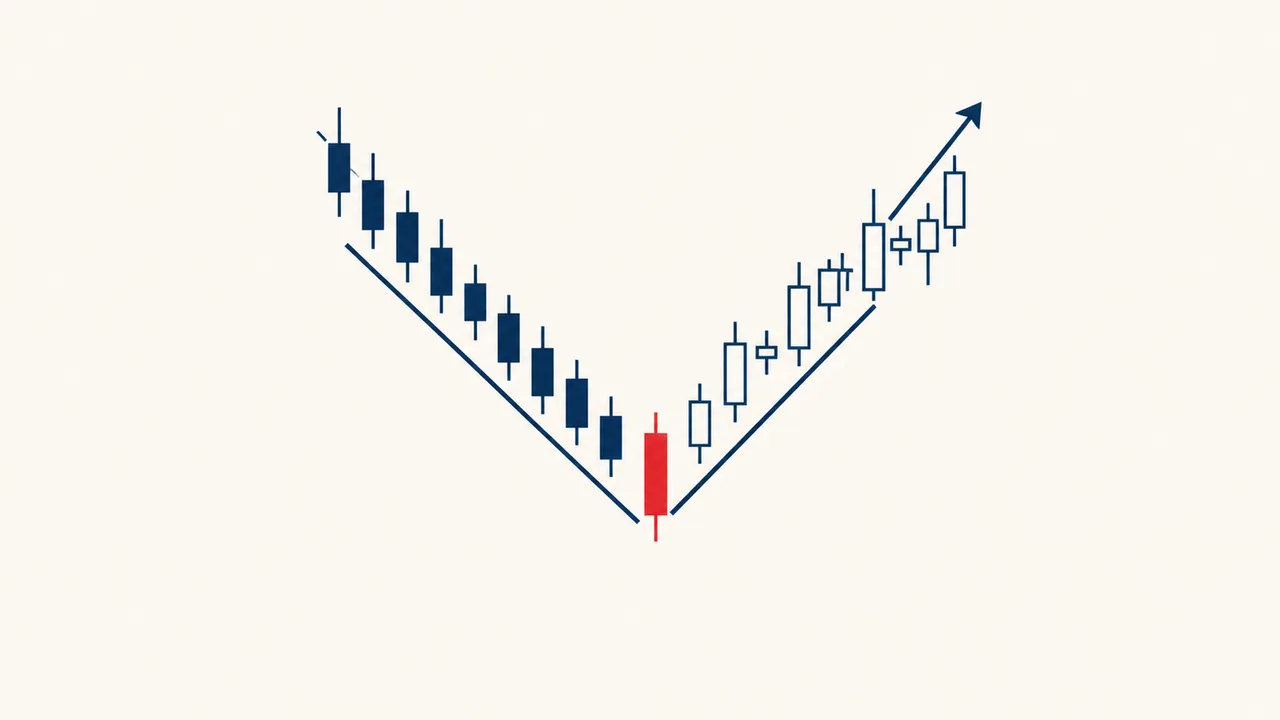
The term 출혈 경쟁 (bleeding competition) is vital here. In a hyper-competitive society like Korea, companies often engage in "chicken games" where they lower prices to a point where they are losing money on every customer, hoping that the sheer volume of subscribers will eventually lead to profit or that they can squeeze out smaller competitors. For a learner, seeing this register shift from the casual "진짜?" to the business-heavy "출혈 경쟁" mirrors how Koreans talk about the economy—starting with personal disbelief and ending with a cynical understanding of corporate warfare. You will encounter this term frequently in news about tech startups, delivery apps, and now, the budget phone market.
6. Vocabulary set
| Korean | Roman | English | Tag | TOPIK | One-line usage |
|---|---|---|---|---|---|
| 진짜 | jinjja | real / really | Noun / Adv | 1 | 진짜인지 가짜인지 확인하세요. (Check if it is real or fake.) |
| 빠지다 | ppajida | to be omitted | Verb | 2 | 명단에서 제 이름이 빠졌어요. (My name was left off the list.) |
| 평생 | pyeongsaeng | lifetime | Noun | 2 | 우리는 평생 친구야. (We are friends for life.) |
| 요금제 | yogeumje | rate plan | Noun | 3 | 비싼 요금제를 쓰고 있어요. (I am using an expensive rate plan.) |
| 알뜰폰 | altteul-pon | MVNO / budget phone | Noun | 2 | 알뜰폰으로 바꾸고 돈을 아꼈어요. (I switched to a budget phone and saved money.) |
| 출혈 | chulhyeol | bleeding / loss | Noun | 4 | 이번 사업은 출혈이 컸다. (This business venture had heavy losses.) |
| 경쟁 | gyeongjaeng | competition | Noun | 3 | 시장 경쟁이 너무 치열해요. (The market competition is too fierce.) |
| 가입자 | gaipja | subscriber | Noun | 3 | 가입자 수가 계속 늘고 있다. (The number of subscribers is increasing.) |
| 혜택 | hyetaek | benefit / perk | Noun | 3 | 멤버십 혜택이 정말 많아요. (There are so many membership perks.) |
| 파격적 | pagyeokjeok | shocking / unconventional | Adj | 4 | 파격적인 할인을 진행 중입니다. (A shocking discount is in progress.) |
7. What just happened, briefly
South Korean budget mobile carriers (MVNOs) have entered a period of extreme price warfare. In an effort to capture market share from major telecommunications companies, some providers are launching nearly-free monthly plans. This specific headline highlights a plan costing only 110 won per month, intended to last for the customer's "lifetime." Experts refer to this as "bleeding competition" because the carriers are likely losing money on every new subscriber to maintain growth. You can read the full report on 네이트.
8. Keep learning
- [pillar guide on Korean sentence endings]
- [vocabulary drill on business terms]
- [another news-decode post]
Subscribe to our newsletter to receive weekly deep-dives into the latest Korean trends and grammar!
Quick cheat sheet
Expressions in this post