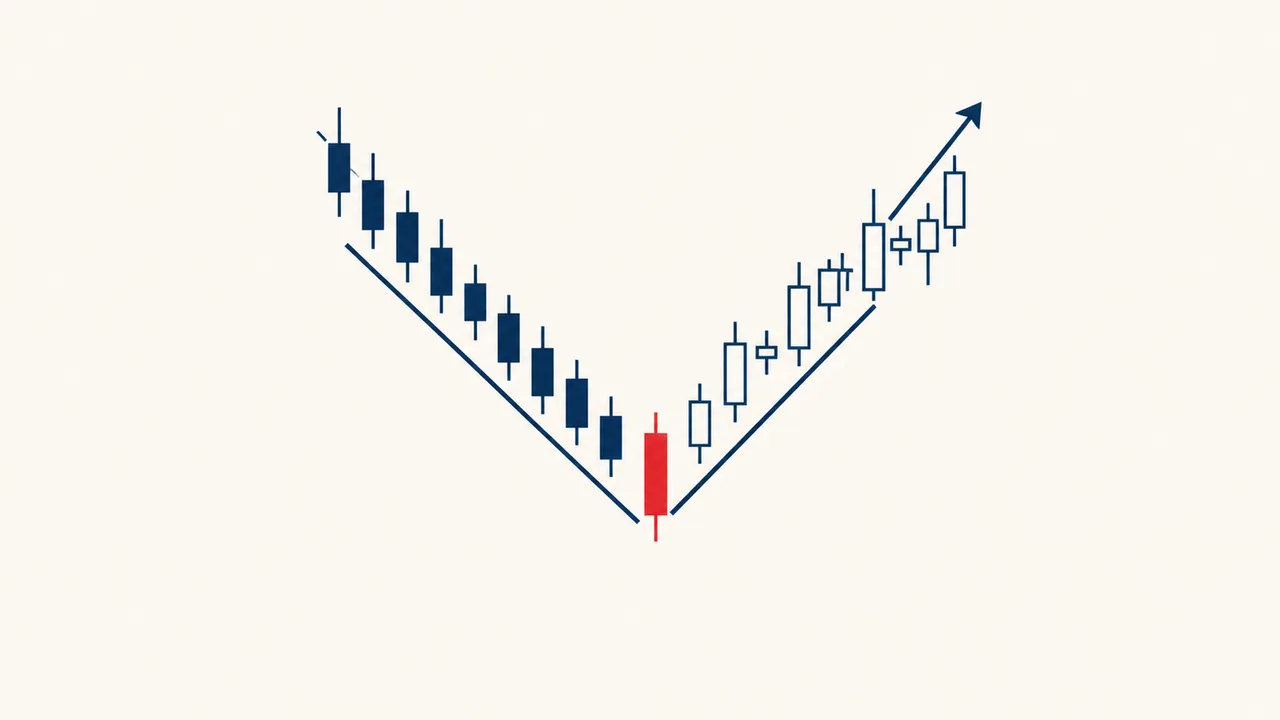
Deciphering Market Volatility: SpaceX's 'Rocket' Jump
Learn how to use the particle ~처럼 to create vivid comparisons and understand the dynamic verbs used in Korean financial news.

Learn how to use the particle ~처럼 to create vivid comparisons and understand the dynamic verbs used in Korean financial news.
1. Headline anchor
로켓처럼 튄 스페이스X…6개월 뒤? 하락 50%/상승 35% [김현석의 월스트리트나우]
— 한국경제
2. What you will be able to do
After reading this post, you will be able to accurately identify and use the comparative particle ~처럼 (like/as) to describe market movements and metaphorical actions in a professional context. You will also understand how the verb 튀다 is applied to financial volatility, allowing you to answer: "How do Korean headlines use figurative language to describe sudden asset price changes?"
3. Word-by-word breakdown
Korean headlines are masters of compression, often omitting subject markers and using punctuation to replace complex conjunctions. This headline from The Korea Economic Daily (한국경제) is a prime example of how financial journalism creates a sense of urgency and movement. Before we look at the specific words, it is important to note the structure: the author establishes a past action (the "rocket-like" jump), poses a question about the future, and then provides a binary probability or statistical outlook. This 'Fact-Question-Projection' structure is ubiquitous in the business section of Korean portals like Naver News or Daum.
In this specific case, the headline deals with the valuation and market sentiment surrounding SpaceX. The use of the word "Rocket" is both literal (since SpaceX builds rockets) and metaphorical (referring to price action). For an intermediate learner, the challenge lies in identifying the root forms of verbs like 튄, which is the past modifier form of 튀다. Without knowing how to strip away the grammar, the vocabulary remains locked. Let's look at the individual components that build this market narrative.
| Korean | Roman | Literal | TOPIK | Notes |
|---|---|---|---|---|
| 로켓 | roket | Rocket | 1 | A loanword used here for both industry context and metaphorical speed. |
| 처럼 | cheoreom | Like / As | 1 | A particle expressing similarity; chosen over '같이' for its stronger comparative nuance. |
| 튄 | twin | Bounced / Popped | 2 | Past modifier form of '튀다'. Chosen for its sense of sudden, explosive movement. |
| 스페이스X | seupeiseu-X | SpaceX | - | The proper noun for the company; standard transcription in Hangeul. |
| 6개월 | yuk-gaewol | 6 months | 1 | '개' is the counter for months when counting a duration of time. |
| 뒤 | dwi | After / Behind | 1 | Used here as a temporal marker meaning 'later' or 'after the elapsed time'. |
| 하락 | harak | Fall / Decline | 2 | A Sino-Korean noun (下落) used in formal/economic contexts instead of '내려감'. |
| 상승 | sangseung | Rise / Increase | 2 | A Sino-Korean noun (上昇) used specifically for prices, rates, or status. |
After reviewing the table, notice the contrast between the first half and the second half of the headline. The first half is descriptive and vivid, using the native Korean verb 튀다. This verb originally means to splash (like water) or to bounce (like a ball), but in a financial context, it suggests a sudden, sharp upward move that catches people off guard. It feels much more energetic than the standard verb 오르다 (to rise). Using 튀다 suggests that the price movement was not just an increase, but an erratic or explosive one.
Moving to the second half, the tone shifts to the clinical language of finance. 하락 and 상승 are the standard Hanja-based terms used in every stock market report. You will rarely see "내려가다" or "올라가다" in a headline like this because Sino-Korean words provide a sense of objectivity and technical precision. The slash (/) between the two numbers indicates a comparison of probabilities or a range of outcomes. For a learner, mastering this balance between vivid native verbs (like 튀다) and formal Sino-Korean nouns (like 하락/상승) is the key to moving from intermediate to advanced proficiency in reading news.
4. Grammar deep-dive
The star grammar pattern in this headline is the particle ~처럼. This is a postpositional particle that attaches directly to a noun to indicate that the following action or state is similar to that noun. While it is often translated as "like" or "as," its usage in Korean is specifically for establishing a standard of comparison.
Usage and Attachment: ~처럼 attaches to any noun without a space. Unlike many other particles, it does not change based on whether the noun ends in a vowel or a consonant (받침). In our headline, it attaches to 로켓 (rocket) to create 로켓처럼 (like a rocket). It serves to modify the verb 튀다, telling us how the company (SpaceX) "bounced" or "popped" in value. It sets a vivid mental image that a simple adverb like "quickly" could not achieve.
Nuance and Meaning: While ~처럼 is often interchangeable with ~같이, there is a subtle difference in formal or literary contexts. ~처럼 tends to be used more often in writing and formal speech to describe an idealized or representative similarity. It is frequently found in poetry, song lyrics, and—as we see here—creative news headlines. It allows the writer to borrow the inherent qualities of the noun (speed, power, and verticality of a rocket) and apply them to the subject (SpaceX's valuation).
Common Learner Mistakes:
- Spacing: Learners often place a space before 처럼. Since it is a particle (조사), it must be glued to the noun: 로켓 처럼 (X) -> 로켓처럼 (O).
- Confusing with ~듯: While ~듯(이) also means "as if," it is usually used with verbs or adjectives rather than simple nouns. Using 처럼 with a noun is the most direct way to say "X-like."
- Overusing with 'Same': Beginners sometimes try to use 처럼 when they want to say something is identical. If two things are the same, 같다 is used; 처럼 is for the manner of an action or appearance.
Example Sentences:
- 가수처럼 노래를 정말 잘 부르시네요! (You sing so well, just like a singer! - Everyday compliment)
- 우리 사랑도 영화처럼 끝날 수 있을까? (Could our love end like a movie? - Dramatic K-drama style)
- 그는 마치 전문가처럼 이 복잡한 기계를 수리했다. (He repaired this complex machine just like an expert. - Descriptive/Formal)
Why not ~같이? In many cases, you can swap ~처럼 for ~같이. However, ~같이 can also function as an adverb meaning "together" (e.g., 같이 가요). Using ~처럼 removes this ambiguity. Furthermore, in news headlines, ~처럼 is preferred for its slightly more sophisticated and evocative tone when making metaphors.
5. Cultural or register context
To a student using a standard textbook, this headline might seem like a simple statement of fact, but it carries deep cultural weight within the current South Korean investment landscape. The "Wall Street Now" (월스트리트나우) series by reporter Kim Hyun-seok is a staple for a specific demographic in Korea: the Seohak-gaemi (서학개미).
"Seohak-gaemi," literally meaning "Western Ants," refers to Korean individual retail investors who aggressively buy stocks in the U.S. market. Because Korea's domestic market (KOSPI) has historically been stagnant compared to the NASDAQ, millions of Koreans stay up late at night to trade US tech stocks like Tesla, Nvidia, and SpaceX (via private equity or related funds). Consequently, Korean news outlets provide incredibly granular, real-time coverage of Wall Street. The register used here—blending high-level economic terms with sensationalist metaphors—is designed to capture the attention of these "Ant" investors who are looking for the next big "rocket."
Furthermore, the mention of SpaceX highlights the Korean public's fascination with Elon Musk. In Korea, Musk is a polarizing but legendary figure whose every move is analyzed. The register is strictly Business Formal, yet it utilizes the "hook" style common in digital journalism. Notice the use of the question mark (뒤?) and the slash (/). In traditional printed Korean, this would be considered too informal, but in the digital age, this "shorthand" register is the standard for financial news designed to be read on a smartphone during a subway commute. Understanding this context helps a learner realize that the headline isn't just about space travel; it's a pulse-check for the Korean public's investment sentiment.
6. Vocabulary set
| Korean | Roman | English | Tag | TOPIK | One-line usage |
|---|---|---|---|---|---|
| 로켓 | roket | Rocket | Loanword | 1 | 로켓이 하늘로 솟구쳤다. |
| 처럼 | cheoreom | Like/As | Particle | 1 | 나도 너처럼 잘하고 싶어. |
| 튀다 | twida | To bounce/pop | Verb | 2 | 공이 멀리 튀어 나갔다. |
| 하락 | harak | Fall/Decline | Noun | 2 | 주가가 하락세를 보이고 있다. |
| 상승 | sangseung | Rise/Increase | Noun | 2 | 물가 상승이 우려된다. |
| 전망 | jeonmang | Outlook/Prospect | Noun | 2 | 올해 경제 전망은 밝다. |
| 주가 | juga | Stock price | Noun | 2 | 삼성전자의 주가가 올랐다. |
| 분석가 | bunseokga | Analyst | Noun | 3 | 시장 분석가의 말을 들었다. |
| 변동성 | byeondongseong | Volatility | Noun | 3 | 이 주식은 변동성이 크다. |
| 투자자 | tujaja | Investor | Noun | 2 | 많은 투자자가 그를 믿는다. |
| 월스트리트 | wolseuteuriteu | Wall Street | Loanword | - | 월스트리트는 세계의 금융 중심지다. |
7. What just happened, briefly
This article from The Korea Economic Daily analyzes the current market valuation of SpaceX, which has seen a dramatic, "rocket-like" surge. The report, authored by Kim Hyun-seok as part of his "Wall Street Now" column, explores the future outlook for the company's valuation. It presents a split forecast: while some indicators suggest a potential 50% decline from its peak, other bullish scenarios suggest a further 35% rise within the next six months. The piece serves to inform Korean retail investors about the risks and rewards of one of the world's most high-profile private companies. You can read the original report here: 한국경제.
8. Keep learning
- [pillar guide on Korean particles (~처럼 vs ~같이)]
- [vocabulary drill on financial and economic terminology]
- [another news-decode post regarding US-Korea trade relations]
Subscribe to our newsletter to receive weekly breakdowns of the most important Korean news headlines and master the language of the pros!
Quick cheat sheet
Expressions in this post