Decoding Korean Tech: Wearable Robots and Mimetic Power
Learn how Korean news uses pop culture references and mimetic words to explain advanced wearable technology.
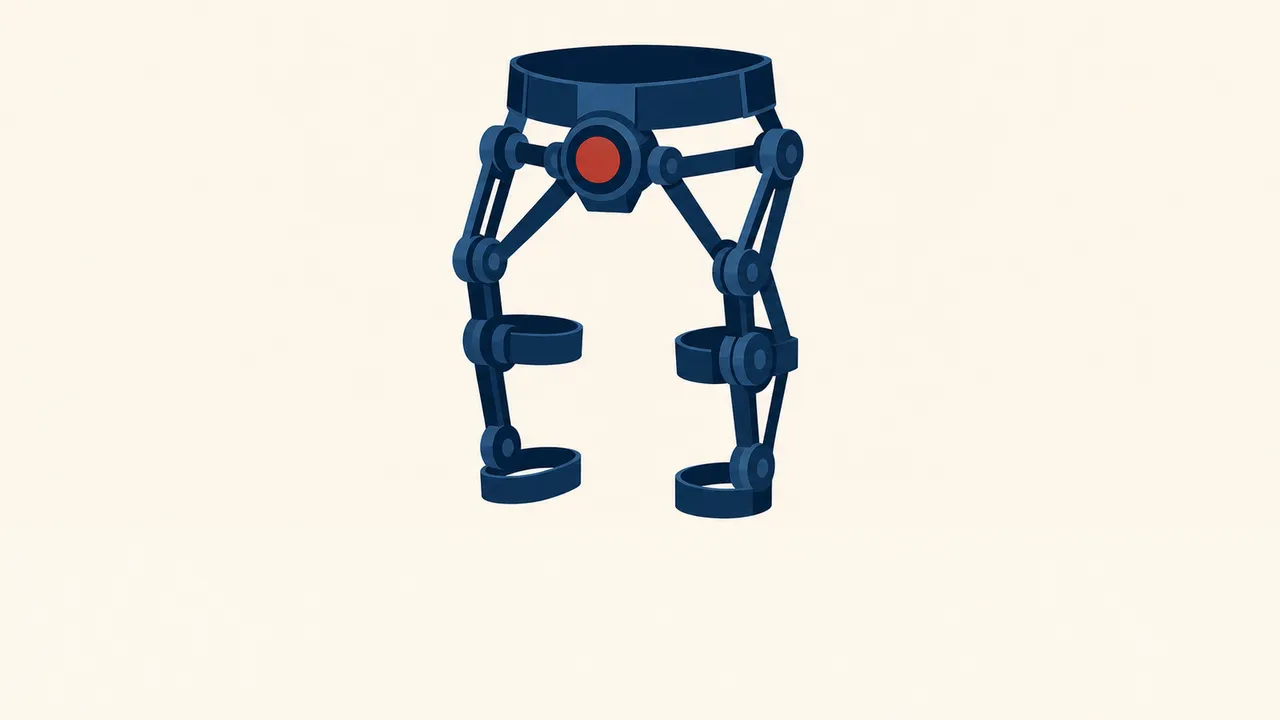
Learn how Korean news uses pop culture references and mimetic words to explain advanced wearable technology.
1. Headline anchor
'착용형 로봇' 입고 타이어 번쩍‥나도 아이언맨? — v.daum.net
2. What you will be able to do
After reading this post, you will be able to accurately identify and use the mimetic word 번쩍 to describe sudden, powerful movements in Korean. You will also understand how the grammar pattern -고 functions in this headline to connect a prerequisite action (putting on equipment) with a subsequent result (lifting heavy objects), allowing you to explain sequential activities with precision.
3. Word-by-word breakdown
Understanding a Korean news headline requires more than just a dictionary; it requires an appreciation for how words are selected for maximum impact. Headlines often pair high-level Sino-Korean nouns with vivid, pure Korean verbs or onomatopoeia to create a sense of immediacy. In this specific headline, we see a blend of technical terminology and pop-culture-inspired excitement. This structure is designed to draw the reader's eye by presenting a futuristic concept through familiar, relatable language.
Before we dive into the table, note how the headline uses punctuation. The use of single quotes around '착용형 로봇' (wearable robot) suggests that while this is a technical term, the article will focus on its practical application. The two dots (‥) act as a visual bridge, leading from the mechanical description to the human reaction. This stylistic choice is common in Korean digital journalism to indicate a logical consequence or a transition to a more conversational tone.
| Korean | Roman | Literal | TOPIK | Notes |
|---|---|---|---|---|
| 착용형 | chakyong-hyeong | wearable type | 4 | Chosen over '입는 것' to provide a formal, technical classification. |
| 로봇 | robot | robot | 1 | A direct loanword; globally understood and essential for tech news. |
| 입고 | ipgo | wearing and... | 2 | Combining '입다' (to wear) with '-고' (and); specific to clothing-like items. |
| 타이어 | taieo | tire | 1 | Loanword; used here to represent a heavy, industrial object. |
| 번쩍 | beonjjeok | with a flash/lightly | 3 | An ideophone describing lifting something heavy as if it were weightless. |
| 나도 | nado | me too | 1 | Particle '-도' (too/also) attached to '나' (I/me) for a personal touch. |
| 아이언맨 | Aieonmaen | Iron Man | 1 | Pop culture reference used to simplify the concept of an exoskeleton. |
Looking closer at the word choices, '착용형' (chakyong-hyeong) is a critical term for intermediate learners. The suffix '-형' (hyeong) means 'type' or 'model,' and you will see it everywhere in Korean news, from '보급형' (entry-level model) to '미래형' (future-type). By using this instead of a simpler descriptive phrase, the journalist gives the headline a professional, authoritative edge. This contrasts sharply with '번쩍' (beonjjeok), a word that likely reminds many learners of children's books or casual storytelling.
Why use '번쩍' in a news headline about high-tech robotics? This is a deliberate stylistic choice known as uitaeo (mimetic words). While '들어 올리다' (to lift up) is the standard verb, '번쩍' provides a visual and sensory experience for the reader. It implies that the heavy tire was lifted effortlessly and suddenly, which is exactly the benefit the wearable robot provides. This interplay between the sterile, scientific '착용형 로봇' and the energetic, human '번쩍' is what makes Korean news headlines so dynamic. Finally, the inclusion of '아이언맨' (Iron Man) serves as a cultural shortcut. Rather than explaining the physics of torque and pneumatic assistance, the headline invokes a globally recognized symbol of power through technology, instantly making the story accessible to a general audience.
4. Grammar deep-dive
The central grammar point in this headline is the connective particle -고. In its most basic form, -고 is used to connect two sentences or clauses, functioning much like the English word "and." However, its application in this headline is more nuanced, representing a sequential relationship where the first action (wearing the robot) is a necessary step or a continuing state for the second action (lifting the tire) to occur.
To use -고 correctly, you simply attach it to the stem of a verb or an adjective. It does not change based on whether the stem ends in a vowel or a consonant. For example, '입다' (to wear) becomes '입고', and '하다' (to do) becomes '하고'. One of the most important rules for intermediate learners to remember is that tense is usually not expressed in the first clause. Even if the entire event happened in the past, you should not say '입었고' if the two actions are closely linked in a sequence; instead, you put the tense marker on the final verb of the sentence. This keeps the sentence flow smooth and avoids unnecessary repetition.
Common learner mistakes often involve confusing -고 with -아서/어서. While both can mean "and," -아서/어서 implies a much stronger causal connection or a very tight chronological sequence where the first action is almost a part of the second. If you used -아서 in this headline ('입어서'), it would suggest that because you wore the robot, you lifted the tire, which is logically sound but loses the sense of listing a sequence of distinct actions. -고 is safer when you are listing actions or when the first action results in a state (like being dressed) that continues while the next action happens.
Here are three examples of -고 in different contexts:
- K-Drama style: "먼저 씻고 나올게." (I'll wash first and then come out.) - Here, washing is the prerequisite action.
- Everyday speech: "어제 친구를 만나고 영화를 봤어요." (Yesterday I met a friend and [then] watched a movie.) - A simple sequence of events.
- Descriptive: "이 가방은 싸고 예뻐요." (This bag is cheap and pretty.) - Connecting two adjectives of equal weight.
Why not -으며? You might wonder why the journalist didn't use -으며, which also means "and." While -으며 is very common in formal writing and news, it often implies that two actions are happening simultaneously or that two facts are being listed in parallel. In this headline, the act of putting on the robot (입고) must be completed before the lifting (번쩍) can occur. -고 better emphasizes this "A then B" sequence than the more literary and parallel-sounding -으며.
5. Cultural or register context
To a student studying from a standard textbook, the phrase "나도 아이언맨?" (Am I Iron Man too?) might seem overly casual for a news report. However, Korean media frequently uses "Iron Man" as a standard descriptor for exoskeleton technology. In Korea, the Marvel Cinematic Universe has had a massive cultural impact, and Tony Stark's suit is the primary mental model for any technology that enhances human physical strength. Using this reference helps the public understand that these robots aren't just for sci-fi movies—they are tools being integrated into the Korean workforce.
This headline also reflects a specific social reality in South Korea: an aging workforce in manufacturing and logistics. There is a high level of national interest in "wearable robots" because they are seen as a solution to help older workers continue performing physically demanding tasks like lifting tires or heavy boxes. Therefore, the register of this headline is a calculated mix. It starts with the technical classification (formal/industrial) and ends with a rhetorical, playful question (conversational/relatable).
You will encounter this specific linguistic blend—technical nouns followed by pop-culture references—anywhere Korean tech is discussed, from YouTube reviews of the latest Samsung gadgets to government briefings on AI. For the learner, recognizing this means understanding that "news Korean" isn't always stiff and robotic; it often tries to tap into the "emotional vocabulary" of the reader. The use of the mimetic word '번쩍' further reinforces this; it transforms a dry report about industrial equipment into a story about the "superpower" of modern technology. When you see a question mark at the end of a headline like this, it’s a classic "hook" designed to invite the reader to imagine themselves in the story, a common tactic in the competitive landscape of Korean digital portals like Daum and Naver.
6. Vocabulary set
| Korean | Roman | English | Tag | TOPIK | One-line usage |
|---|---|---|---|---|---|
| 착용하다 | chakyong-hada | to wear/put on | Verb | 3 | 장비를 올바르게 착용하세요. |
| 근력 | geullyeok | muscle strength | Noun | 4 | 로봇은 근력을 보조해 줍니다. |
| 보조 | bojo | assistance/aid | Noun | 3 | 이 장치는 보조 역할을 합니다. |
| 산업용 | saneopyong | for industrial use | Noun | 4 | 산업용 로봇이 공장에 도입되었다. |
| 무게 | muge | weight | Noun | 2 | 타이어의 무게가 가볍게 느껴진다. |
| 가뿐하다 | gappun-hada | to be light/easy | Adj | 3 | 무거운 짐을 가뿐하게 들었다. |
| 작업자 | jageopja | worker | Noun | 3 | 작업자들이 로봇을 착용했다. |
| 현장 | hyeonjang | site/field | Noun | 3 | 건설 현장에서 로봇을 테스트한다. |
| 혁신 | hyeoksin | innovation | Noun | 5 | 기술 혁신이 삶을 변화시킨다. |
| 힘차게 | himchage | powerfully | Adv | 3 | 아이언맨처럼 힘차게 걸었다. |
7. What just happened, briefly
This news segment highlights the growing implementation of wearable exoskeleton robots in industrial workplaces. The report demonstrates how these "wearable robots" assist workers in lifting heavy objects like tires with minimal physical strain, effectively augmenting their natural muscle strength. By reducing the physical burden on the body, this technology aims to prevent workplace injuries and increase efficiency, especially for tasks that require repetitive heavy lifting. The headline's reference to "Iron Man" underscores the transformative nature of this tech for everyday laborers. For more details on the specific robot models and their performance in the field, you can view the original report here: v.daum.net.
8. Keep learning
- [pillar guide on Korean mimetic and onomatopoeic words]
- [vocabulary drill on technology and industry terms]
- [another news-decode post]
Enjoying these breakdowns? Subscribe to our newsletter to get the latest Korean news decoded and delivered straight to your inbox!
Quick cheat sheet
Expressions in this post