EN brief: 한병도 “한동훈 토크콘서트는 티켓 장사”…한동훈 “단 1원도 안 가져가” (culture) + 1 glossary term.
Summary
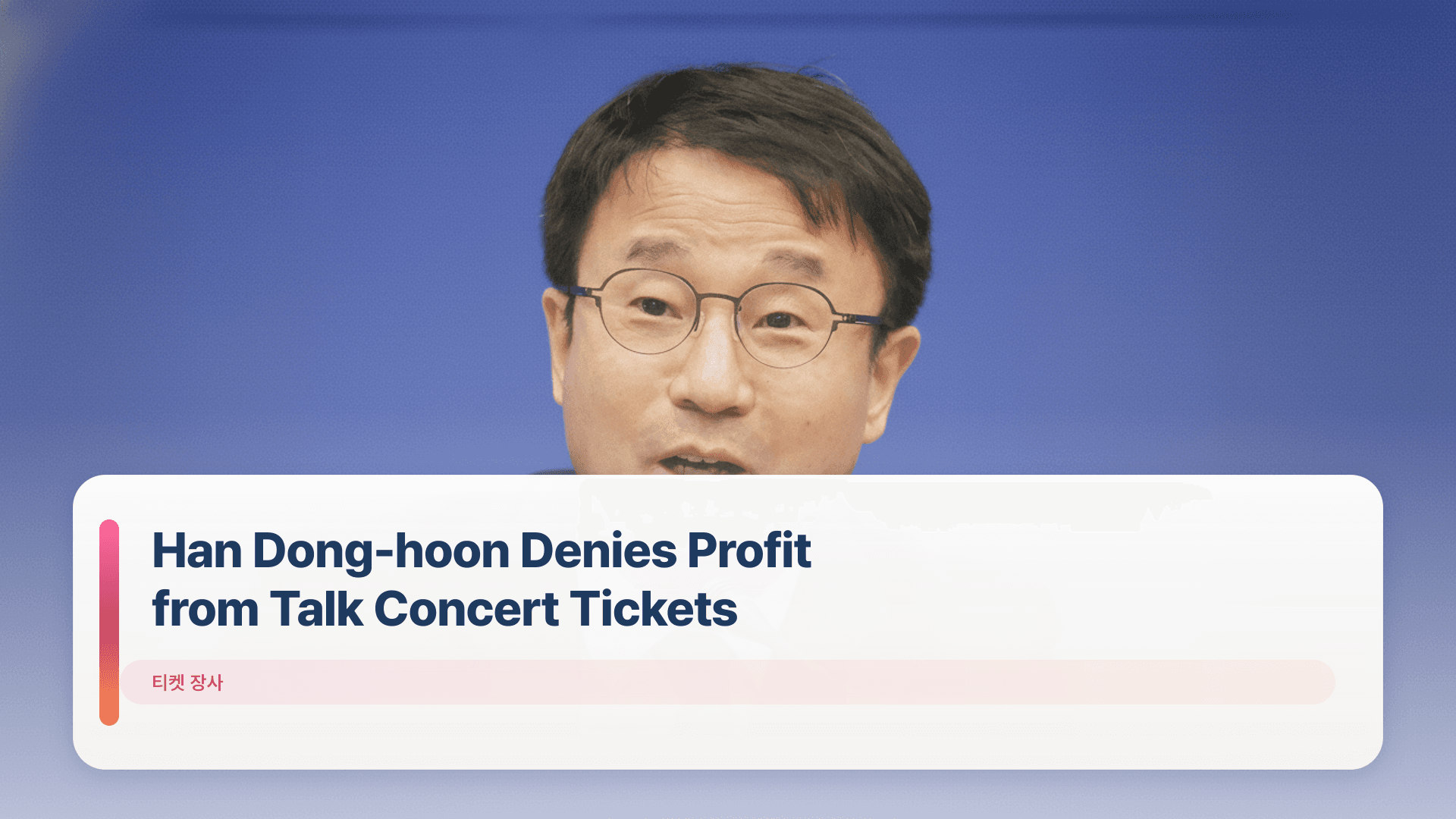
A heated debate has erupted between Han Byeong-do, the floor leader of the Democratic Party of Korea, and Han Dong-hoon, the former leader of the People Power Party. The conflict centers on the pricing structure of Han Dong-hoon's upcoming talk concert.
Han Byeong-do criticized the event for using a tiered seating system, which includes R, S, and A seats ranging from 45,000 to 79,000 KRW. He labeled the event as "bizarre ticket business" and accused Han of using supporters to raise political funds.
In response, Han Dong-hoon stated that he does not take a single won from the event's revenue. He clarified that the ticket sales are used strictly to cover operational costs such as venue rental, lighting, and staff wages.
Han Dong-hoon further argued that if he were to lower the prices or make the event free by paying for it himself, it could potentially violate the Public Official Election Act as an illegal donation.
티켓 장사tiket jangsa (ticket-jangsa) literally means "ticket business" or "selling tickets for profit." In a political context, it is a derogatory term used to accuse someone of using an event to extract money from supporters rather than for genuine communication.
When reading Korean news, look for the word 장사jangsa (business/commerce) attached to other nouns like 정치 장사 (political business) or (nomination business). It almost always implies that something which should be public or ethical is being treated as a way to make money. To sound like a native observer, use this term when discussing the commercialization of non-commercial fields.
Spaced Review
Rate each card to schedule your next review. Cards you find hard come back sooner.
The controversy began when Han Byeong-do posted on Facebook, calling the event "Han Dong-hoon style tiered paid politics." He argued that categorizing supporters by seat grade is unprecedented in Korean politics and turns public service into a commercial enterprise. He specifically pointed out that high-priced tickets are a way to "fleece" supporters for political capital.
Han Byeong-do also raised legal concerns, suggesting that if the event makes a profit, it violates the Political Funds Act, and if it runs at a loss covered by Han himself, it violates the Public Official Election Act. This puts the event in a difficult legal position regardless of the financial outcome.
Han Dong-hoon's side quickly issued a clarification. They explained that the revenue is entirely consumed by the high costs of production, including content creation and labor. They emphasized that the "zero profit" model is a deliberate choice to remain within legal boundaries while providing a high-quality event for supporters.
Han Dong-hoon took to social media to counter-attack, questioning why the ruling party's floor leader is so focused on a talk concert by a politician who has been expelled from the opposition's grace. He called the accusations of "business" shameless, especially coming from a party currently facing its own investigations regarding nomination bribes.
Other political figures have joined the fray. Kim Hanna, a spokesperson for the Democratic Party, and Kim Jung-cheol of the Reform Party have both noted that without extreme transparency in accounting, the event will remain vulnerable to legal challenges regarding how the revenue and expenses are settled.
Context
Talk concerts are a popular way for Korean politicians to engage with the public outside of formal rallies.
The Public Official Election Act in Korea is very strict about what constitutes a "gift" or "donation" to voters.
Political funding laws are frequently used as a tool for mutual criticism between the major parties.
그 정치인은 출판기념회를 통해 티켓 장사를 한다는 비판을 받았다.geu jeongchiineun chulpanginyeomhoereul tonghae tiket jangsareul handaneun bipaneul badatda. — That politician was criticized for doing a ticket business through his book launch.
팬들을 상대로 티켓 장사를 하려는 의도는 전혀 없습니다.paendeureul sangdaero tiket jangsareul haryeoneun uidoneun jeonhyeo eopseupnida. — There is absolutely no intention to do a ticket business targeting the fans.
정치인이 티켓 장사를 해서는 안 된다.
jeongchiini tiket jangsareul haeseoneun an doenda.
A politician should not engage in ticket business.