Han Dong-hoon’s Concert: Idol Fandom or Political Expansion?
Explore the debate over Han Dong-hoon's recent talk concert and learn the meaning of 외연 확장 in Korean politics.

Explore the debate over Han Dong-hoon's recent talk concert and learn the meaning of 외연 확장 in Korean politics.
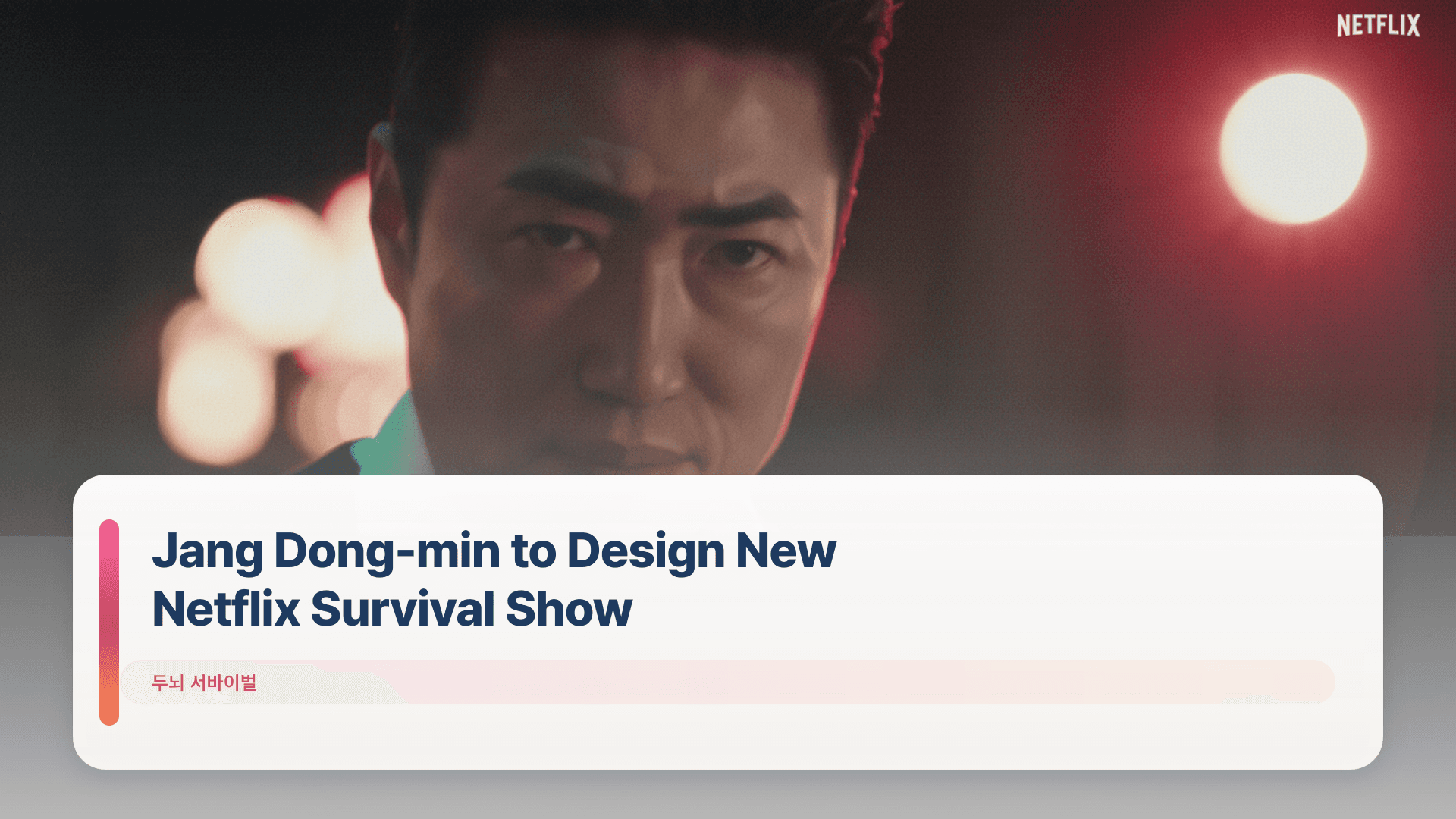
Comedian Jang Dong-min joins forces with 'Blood Game' PD for a new Netflix brain survival series. Discover the latest in K-entertainment!
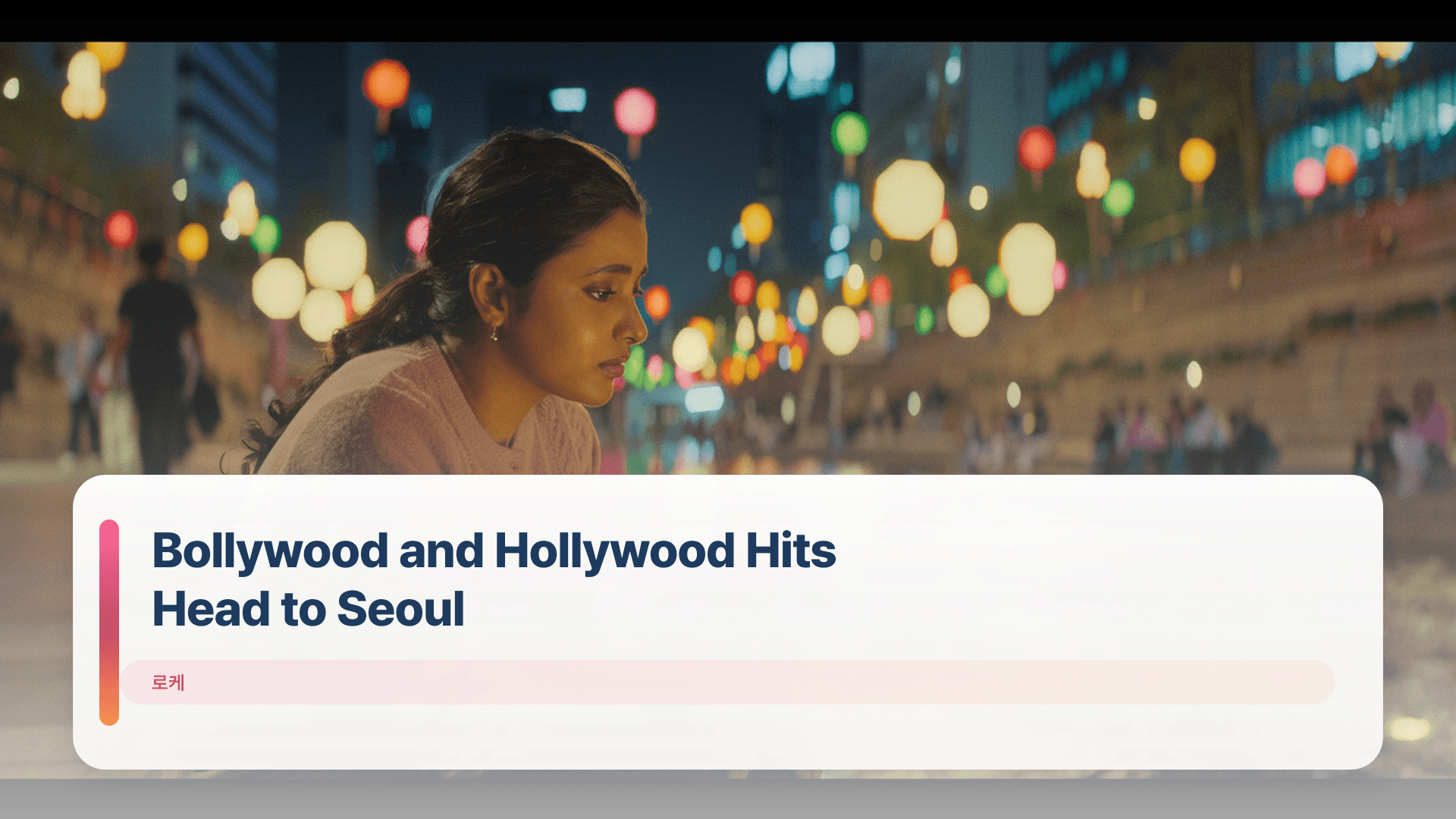
Discover how global hits like 'Made in Korea' and 'XO, Kitty' are turning Seoul into a primary filming location. Learn the term 로케.

Discover the controversy over AI companies accessing public health data in Korea. Learn the meaning of 비정형데이터 (unstructured data).

Discover how the Seoul Cinema Center and local Eulji-myeongbo merchants are collaborating to revitalize the historic Chungmuro film district.
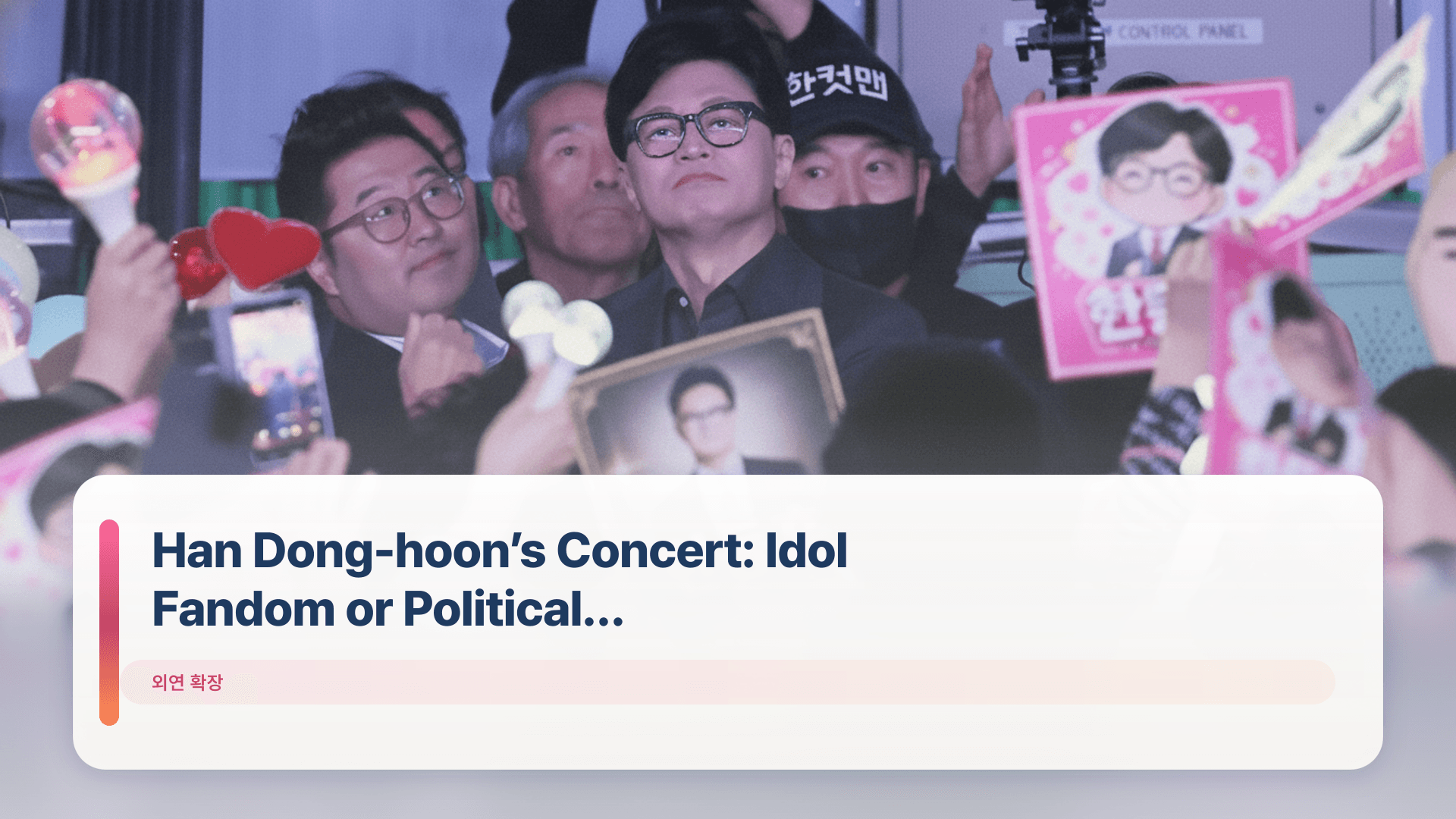
EN brief: “아이돌인 줄 아나” “외연 확장 시작”…한동훈 콘서트 극과극 평가 (culture) + 1 glossary term.
Former People Power Party (PPP) leader Han Dong-hoon recently held a large-scale talk concert at the Jamsil Indoor Stadium in Seoul. The event drew approximately 15,000 supporters, showcasing a level of fandom rarely seen for individual politicians in South Korea. While the atmosphere was electric, the event has sparked a heated debate across the political aisle regarding its effectiveness.
Opposition Democratic Party members were quick to criticize the move, suggesting that Han is acting more like a K-pop idol than a serious political leader. They argued that gathering a crowd of loyal fans does not necessarily translate into broader political influence or the ability to lead a nation. Critics emphasized that true leadership requires reaching out to those who do not already support him.
On the other hand, Han’s allies within the PPP defended the concert as a significant step toward broadening his appeal. They viewed the event as a declaration of his intent to remain active in politics despite his recent expulsion from the party. Supporters argued that his unique ability to mobilize a massive fandom is a rare asset that could revitalize the conservative movement.
Han himself addressed the crowd with a firm message, stating that those expecting him to give up or fade away should abandon such expectations. This suggests he plans to stay the course and potentially prepare for future elections, though his specific path—such as running for a local seat—remains a subject of speculation.
On February 8, Han Dong-hoon took the stage before 15,000 cheering supporters, a scene more reminiscent of a BTS concert than a traditional political rally. Democratic Party representative Park Ji-won noted this during a radio interview, stating bluntly that Han is a politician, not an idol. Park argued that the sheer number of attendees is less important than whether Han can actually build a cohesive political force. He criticized Han for "testing the waters" with various factions and the public instead of taking decisive action.
Representative Han Min-soo of the Democratic Party echoed these sentiments, questioning the "so what?" factor of the event. He jokingly asked if Han intended to tour the entire country like a professional singer, visiting Jeju, Gwangju, and Busan just to hold concerts. He suggested that Han needs to focus on his actual political career path, especially with the June 3 local elections approaching, rather than just enjoying the spotlight.
Adding to the critique, Representative Park Seong-jun mentioned that the concert lacked emotional resonance because it felt like a scripted performance in a "fortress" of existing supporters. He argued that "public politics" requires winning over the hearts of those in the middle ground or those who are currently indifferent, which requires a level of personal sacrifice and risk that he believes Han has yet to show.
In contrast, Han Ji-ah of the PPP interpreted the event as a symbolic start to a new chapter. She described it as a moment where Han showed his desire to become a leader who expands the national interest. She emphasized that the concert was a way to gather people who can rebuild conservative values and make the opposition healthier by providing a strong alternative.
Fellow PPP member Yu Yong-won pointed out that Han is likely the only conservative presidential hopeful since Park Geun-hye to possess such a dedicated fandom. While acknowledging that Han is still weighing his options, Yu noted that four months before an election is a long time in Korean politics, leaving plenty of room for strategic shifts and a potential run for office.
In the context of Korean politics, 외연 확장oeyeon hwakjang (oeyeon hwakjang) refers to the expansion of a politician's or party's reach beyond their core support base. It is the act of appealing to moderates, swing voters, or even supporters of the opposing side to increase overall influence.
정치인은 외연 확장을 위해 중도층을 공략해야 합니다.jeongchiineun oeyeon hwakjaeul wihae jungdocheueul gongryakhaeya hapnida. — Politicians must target the middle class to expand their political reach.
이번 콘서트가 그의 외연 확장에 도움이 될까요?ibeon konseoteuga geuui oeyeon hwakjae doumi doelkkayo? — Will this concert help in expanding his external influence?