EN brief: 영화와 드라마가 된 소설 7편 (culture) + 1 glossary term.
Summary
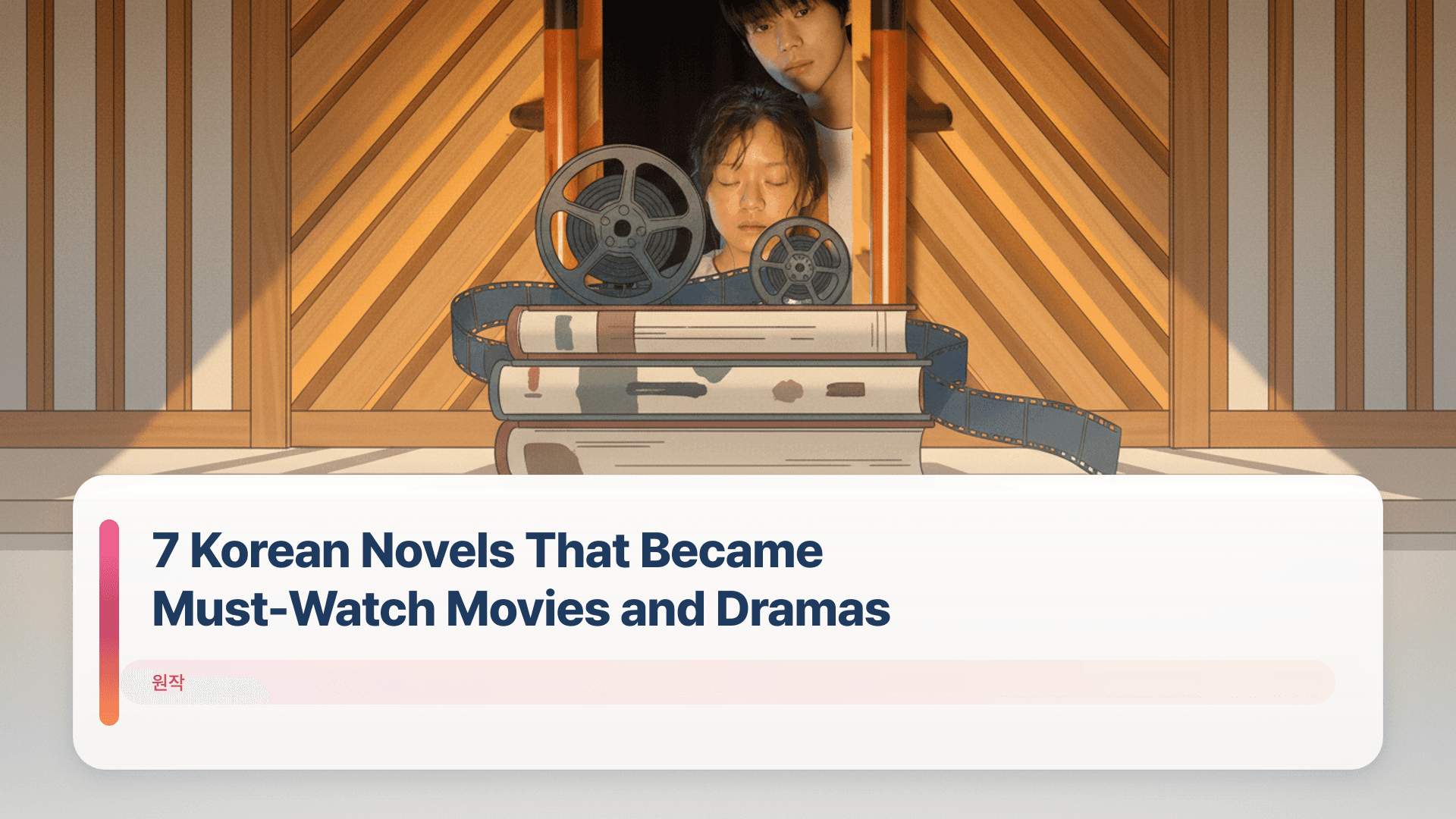
Adaptations often struggle to capture the full essence of their source material, yet they offer a unique lens through which to view a story. In the world of Korean entertainment, several recent films and series have drawn inspiration from acclaimed novels, sparking a renewed interest in the original texts.
From the gritty realism of 1980s Korea to futuristic mysteries, these adaptations highlight the creative tension between literature and cinema. While some movies focus on genre thrills, the original books often provide deeper social commentary and psychological insight that the screen cannot always replicate.
Reading the original novel alongside its adaptation opens up new possibilities for understanding the characters and the era they inhabit. Whether it is a 60-year-old killer or a temporary marriage service, these stories challenge our perceptions of reality and society.
Exploring these seven works reveals how a single story can evolve across different mediums, offering fans of K-culture a richer, more layered experience of the narratives they love.
In the context of Korean entertainment news, 원작wonjak (won-jak) refers to the original work—usually a novel, webtoon, or play—that serves as the basis for a movie or drama adaptation.
The relationship between a book and its screen adaptation is rarely a simple mirror image. In the case of the Netflix original film Pavane, based on the novel A Pavane for a Dead Princess, the movie focuses on a youthful romance in a world devoid of hope. However, the original 2009 novel by Park Min-gyu delves much deeper into the landscape of 1985 Korea, critiquing the worship and hatred of physical appearance that emerged with rising capitalism—insights that remain painfully relevant in 2026.
Similarly, the film One Battle After Another (adapted from Thomas Pynchon's Vineland) shifts the setting to address modern issues of state violence and immigrant exclusion. While the movie is praised for its clarity and linear rhythm, the original novel is celebrated for its satirical take on the hypocrisy of political life in the 1980s, making it a fascinating companion piece for those who want to understand the story's ideological roots.
Director Park Chan-wook’s No Help For It (based on The Ax) offers another example of creative divergence. While the novel builds suspense through a protagonist systematically eliminating job rivals, the film focuses on the man's psychological downward spiral. Readers of the book often find a unique sense of relief and dark irony in the original text that the cinematic version chooses to bypass in favor of atmospheric tension.
Other notable mentions include The Fruit of Old Age (based on the novel Pagwa), which explores the internal struggle of a 60-year-old female assassin facing the physical and mental changes of aging. While the film leans into the tension of her profession, the book captures the quiet, internal conflict of a woman being defined by a society that views her only as "old."
Finally, the Netflix series The Trunk illustrates how a central metaphor can change. In the series, the trunk is a vessel for mystery and melodrama. In the original novel by Kim Ryeo-ryeong, however, the trunk symbolizes a marriage that can be packed up and ended as easily as a trip. The book uses the concept of a fixed-term marriage service to critique modern social structures, providing a more grounded, insightful perspective than the mystery-driven show.
Context
Literary Trends: Many Korean directors are turning to older novels (from the 1980s and 2000s) to find stories that critique modern social pressures like lookism and job competition.
Global Platforms: Netflix has become a major driver for these adaptations, often turning niche Korean literary hits into global streaming sensations.
Author Spotlight: Authors like Han Kang (Nobel laureate) and Annie Ernaux have seen their works adapted into films that maintain the "dry" and "cold" temperature of their original prose.
이 영화는 소설이 원작이에요.i yeonghwaneun soseori wonjagieyo.
This movie is based on a novel.
원작 소설의 결말이 더 감동적이에요.wonjak soseorui gyeolmari deo gamdongjeogieyo.
The ending of the original novel is more moving.
드라마보다 원작 웹툰이 더 재밌어요.
deuramaboda wonjak weptuni deo jaemisseoyo.
The original webtoon is more fun than the drama.
원작의 느낌을 잘 살린 영화예요.
wonjagui neukkimeul jal salrin yeonghwayeyo.
It is a movie that captured the feeling of the original work well.