Sentimental Value: Why We Can't Let Go of Family
Explore the emotional depth of 'Sentimental Value,' the award-winning film by Joachim Trier. Discover the meaning of 센티멘탈 밸류 in Korean culture.

Explore the emotional depth of 'Sentimental Value,' the award-winning film by Joachim Trier. Discover the meaning of 센티멘탈 밸류 in Korean culture.
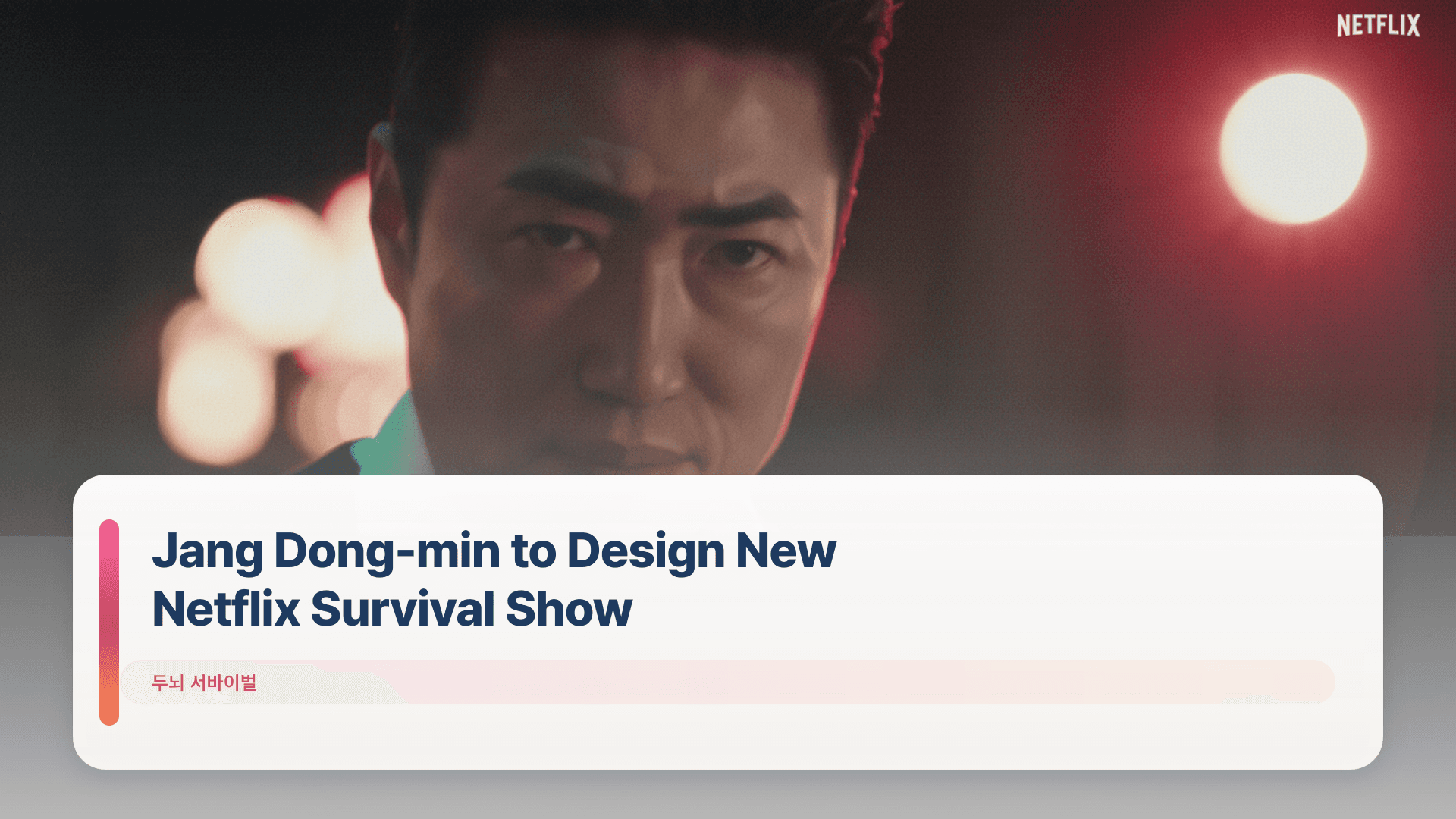
Comedian Jang Dong-min joins forces with 'Blood Game' PD for a new Netflix brain survival series. Discover the latest in K-entertainment!

Discover how global hits like 'Made in Korea' and 'XO, Kitty' are turning Seoul into a primary filming location. Learn the term 로케.

Discover the controversy over AI companies accessing public health data in Korea. Learn the meaning of 비정형데이터 (unstructured data).

Discover how the Seoul Cinema Center and local Eulji-myeongbo merchants are collaborating to revitalize the historic Chungmuro film district.

EN brief: [그 영화 어때] 가족을 버린 아버지를 버리지 못하는 이유, ‘센티멘탈 밸류’ (culture) + 1 glossary term.
Director Joachim Trier returns with 'Sentimental Value,' a film that explores the complex layers of family, memory, and the weight of the past. Following his success with 'The Worst Person in the World,' Trier reunites with actress Renate Reinsve to tell a story that is both melancholic and humorous. The film has already garnered significant acclaim, winning the Grand Prix at the Cannes Film Festival and receiving nine Oscar nominations.
At its core, the movie examines the strained relationship between a father who abandoned his family and his two daughters. While the premise might seem familiar, the film subverts expectations by focusing on the unique emotional textures of their shared history. It uses the physical decay of a family home as a metaphor for the fracturing of their domestic bonds.
Through the lens of art and history, the characters attempt to navigate their collective trauma. The protagonist, Nora, is a successful stage actress struggling with severe performance anxiety, a symptom of her unresolved childhood wounds. When her father returns for her mother's funeral, she is forced to confront the man she has spent years hating.
The film suggests that while we may want to discard painful memories, some things have an inherent value that makes them impossible to abandon. It is a poignant look at how we process grief and find reconciliation through creative expression.
'Sentimental Value' begins with a 100-year-old family home. Through the narration of an essay written by a young Nora, the house is personified, watching as its once-grand walls begin to crack. This physical deterioration mirrors the state of Nora’s family. After her father, Gustav (played by Stellan Skarsgård), left the family, the house fell into a heavy silence—a silence Nora claims was even worse than the noise of her parents' constant arguing.
In the present day, Nora is a celebrated actress, yet she is paralyzed by stage fright. Her anxiety is so intense that she often has to be physically forced onto the stage by staff. This internal chaos comes to a head when Gustav reappears following the death of Nora's mother. Gustav, a filmmaker looking to revive his career, proposes a new project: a film about his own mother (Nora's grandmother) who took her own life after the trauma of World War II. He even insists on filming it in the very house where Nora's mother just passed away.
Nora initially rejects the proposal, fueled by years of resentment. However, the film highlights the undeniable similarities between father and daughter—both are stubborn, sensitive, and artistically gifted. Gustav uses the medium of film to communicate with Nora in a way he cannot with words. As they work on the project, the film within the film becomes a bridge for understanding the grandmother's trauma and, by extension, their own.
Meanwhile, Nora’s sister Agnes, a historian, digs into the archives to find records of their grandmother’s past. This parallel narrative explores how collective and historical trauma, such as the Nazi occupation of Norway, trickles down through generations. The film asks how we should handle these inherited burdens—whether we should bury them or face them to find healing.
Director Joachim Trier infused the script with his own family history. His grandfather, Erik Løchen, was a filmmaker and a member of the Norwegian resistance during World War II. Like the characters in the movie, Trier has spent time in national archives researching his own lineage. The result is a screenplay that balances cynical humor with sharp, tender insights into the human condition.

In the context of this film and the Korean article, this loanword phrase refers to the emotional or subjective worth of an object or memory that far exceeds its material price. It is the reason why we keep "useless" items or maintain difficult relationships—because they are tied to our identity and history.
이 시계는 낡았지만 나에게는 센티멘탈 밸류가 커요.i sigyeneun nalgatjiman naegeneun sentimental baelryuga keoyo. — This watch is old, but it has great sentimental value to me.
그는 센티멘탈 밸류 때문에 고향 집을 팔지 못했다.geuneun sentimental baelryu ttaemune gohyang jibeul palji mothaetda. — He couldn't sell his childhood home because of its sentimental value.