Why Japanese Fans Are Canceling Netflix After WBC Loss
Discover why 'Netflix cancellation' trended in Japan after their WBC exit and learn the essential term 구독 취소 for digital trends.

Discover why 'Netflix cancellation' trended in Japan after their WBC exit and learn the essential term 구독 취소 for digital trends.
Comedian Jang Dong-min joins forces with 'Blood Game' PD for a new Netflix brain survival series. Discover the latest in K-entertainment!
Discover how global hits like 'Made in Korea' and 'XO, Kitty' are turning Seoul into a primary filming location. Learn the term 로케.
Discover the controversy over AI companies accessing public health data in Korea. Learn the meaning of 비정형데이터 (unstructured data).

Discover how the Seoul Cinema Center and local Eulji-myeongbo merchants are collaborating to revitalize the historic Chungmuro film district.
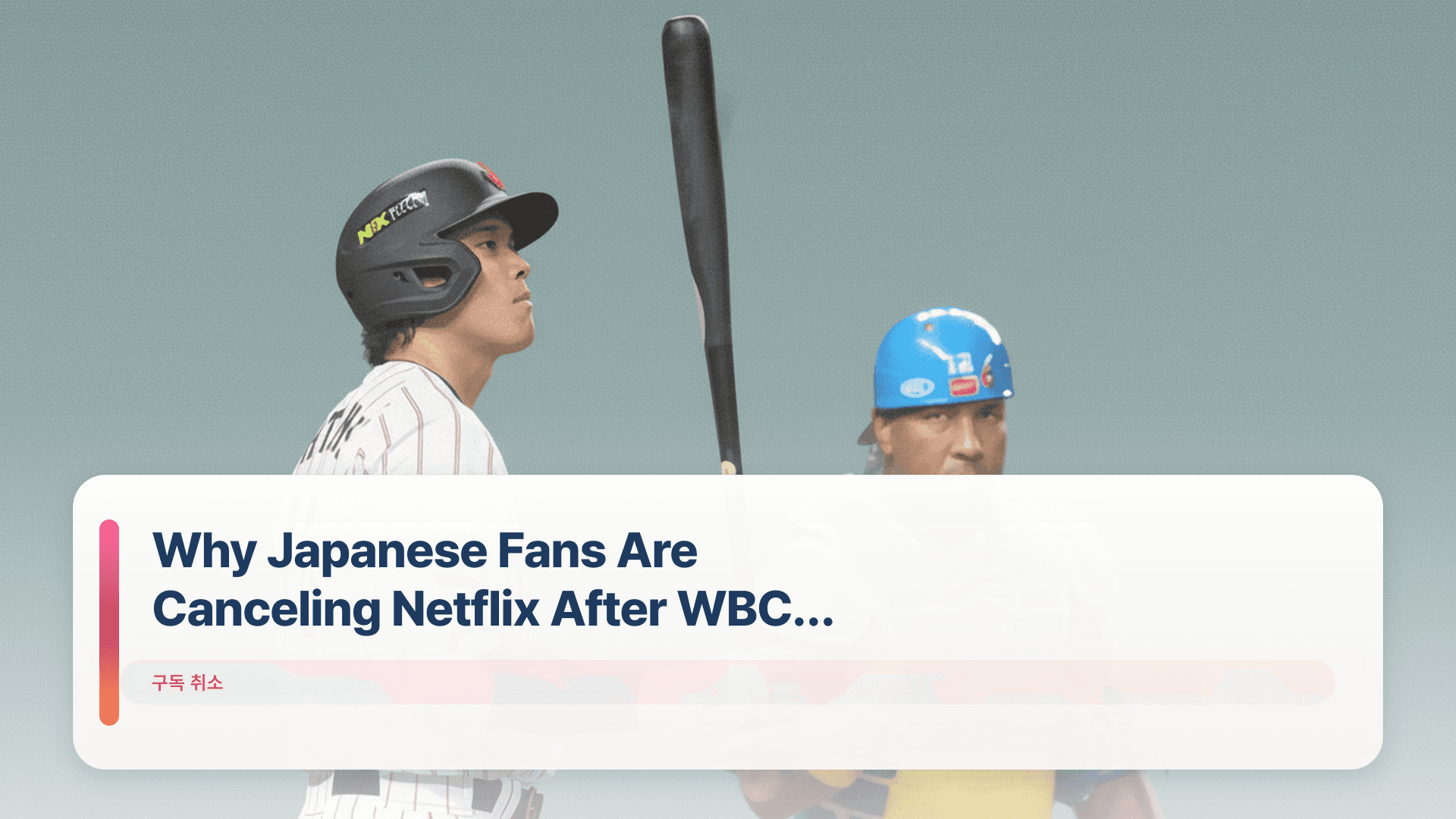
EN brief: 日 야구대표팀 WBC 탈락에 SNS선 넷플릭스 구독 취소 인증 게시물 확산, 왜? (culture) + 1 glossary term.
Following the Japanese national baseball team's unexpected exit from the 2026 World Baseball Classic (WBC), a peculiar trend emerged on Japanese social media. Fans began posting screenshots of their Netflix cancellation screens, signaling a mass exodus from the streaming platform immediately after the team's defeat.
The movement gained traction shortly after Japan lost 5-8 to Venezuela in the quarterfinals held in Miami. For many fans, the primary reason for subscribing to Netflix in the first place was to watch the tournament, making the service redundant the moment the national team was eliminated.
While some fans expressed genuine frustration and disappointment through these cancellations, others viewed the trend as a humorous way to cope with the loss. The phenomenon has sparked a larger conversation about the cost of sports broadcasting and the shift from free-to-air television to paid streaming services.
Industry experts note that this event highlights the volatile nature of sports-driven subscriptions. As streaming giants like Netflix outbid traditional broadcasters for exclusive rights, the public's relationship with major sporting events is fundamentally changing.
On March 15, 2026, the Japanese national baseball team, led by stars like Shohei Ohtani and Yoshinobu Yamamoto, saw their quest for a second consecutive WBC title come to an end. The 8-5 loss to Venezuela in the quarterfinals was a significant shock to fans who had considered Japan a top contender for the championship.
Immediately following the game, Japanese SNS platforms were flooded with posts featuring the hashtag or phrase "Netflix Cancellation." Many users shared screenshots of their account settings showing the subscription had been terminated. Common sentiments included, "I only joined Netflix to watch the WBC, so now that Japan is out, I'm done," and "I was so upset by the loss that I canceled immediately."
This mass reaction is directly linked to Netflix's aggressive move into the Japanese sports market. For this tournament, Netflix secured exclusive broadcasting rights for all 47 WBC matches in Japan, reportedly paying approximately 15 billion yen (around 140 billion won). This was five times the cost of the previous tournament's rights, effectively shutting out traditional terrestrial broadcasters who had historically aired the games for free.
While some netizens joked that canceling immediately was "inefficient" and suggested watching a few dramas before the billing cycle ended, the situation has reignited a serious debate over "Universal Access" rights. In Europe, certain major events like the Olympics or World Cup are legally required to be available on free-to-air TV. Japan currently lacks such regulations, but this WBC incident may push the government to discuss similar protections for viewers.
Similar tensions have been felt in South Korea recently, where JTBC's exclusive rights to the 2026 Winter Olympics raised concerns about public access to major sporting events. The "Netflix exit" in Japan serves as a high-profile example of how the platform-centric shift in sports media can lead to sudden, collective consumer actions.
구독 취소gudok chwiso (gudok chwiso) refers to the act of canceling a subscription. In the context of the "subscription economy," this term is frequently used when users stop recurring payments for services like Netflix, YouTube Premium, or digital newspapers. In the news article, it specifically highlights the "proof of cancellation" (인증) culture where users share their actions online to signal a collective mood.
넷플릭스 구독 취소를 인증하는 게시물이 늘고 있다.netpeulrikseu gudok chwisoreul injeunghaneun gesimuri neulgo itda. — Posts proving Netflix subscription cancellations are increasing.
경기가 끝나자마자 구독 취소를 했어요.gyeonggiga kkeutnajamaja gudok chwisoreul haesseoyo. — I canceled my subscription as soon as the match ended.