Zen Master YongHua to Lead Gwan-eum-chil in Korea
Discover the upcoming Gwan-eum-chil retreat led by Zen Master YongHua of the Wei Yang Lineage. Learn about this unique Buddhist tradition in Korea.

Discover the upcoming Gwan-eum-chil retreat led by Zen Master YongHua of the Wei Yang Lineage. Learn about this unique Buddhist tradition in Korea.
Comedian Jang Dong-min joins forces with 'Blood Game' PD for a new Netflix brain survival series. Discover the latest in K-entertainment!
Discover how global hits like 'Made in Korea' and 'XO, Kitty' are turning Seoul into a primary filming location. Learn the term 로케.

Discover the controversy over AI companies accessing public health data in Korea. Learn the meaning of 비정형데이터 (unstructured data).

Discover how the Seoul Cinema Center and local Eulji-myeongbo merchants are collaborating to revitalize the historic Chungmuro film district.
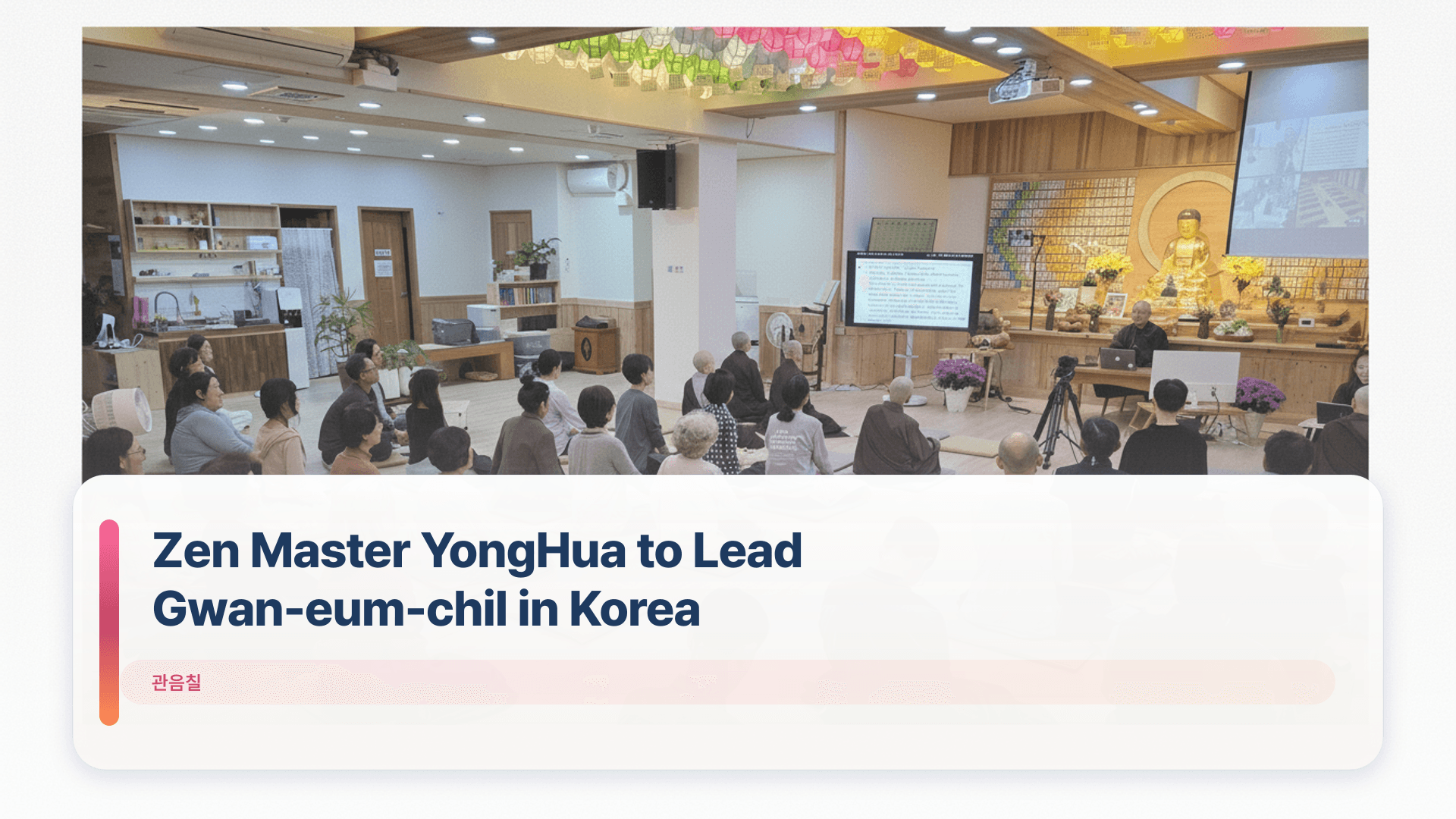
EN brief: 미국 위앙종 영화 스님 초청 ‘관음칠 법회’ 개최 (culture) + 1 glossary term.
Zen Master YongHua, a prominent figure in the American Wei Yang Lineage of Buddhism, has been invited to South Korea to lead a special spiritual retreat known as a Gwan-eum-chil. This event marks a significant cross-cultural exchange between Western-based Zen practices and traditional Korean Buddhist circles.
The retreat is scheduled to take place at a local temple, providing practitioners with an opportunity to engage in intensive meditation and chanting. Master YongHua is known for his rigorous approach to Chan (Zen) meditation and his ability to translate complex Eastern philosophies for a global audience.
Organizers expect a diverse group of attendees, ranging from dedicated monks to laypeople interested in mindfulness. The program typically involves several days of focused practice centered around the Bodhisattva of Compassion, Avalokiteshvara.
This visit is part of a broader effort to revitalize traditional meditation techniques and foster international Buddhist cooperation. It highlights the growing influence of the Wei Yang Lineage, which has seen increasing interest in both the United States and Asia.
According to reports from Hyundai Bulgyo, Zen Master YongHua will be visiting Korea to preside over the 'Gwan-eum-chil Dharma Assembly.' Master YongHua, who resides in the United States, is a successor of the Wei Yang Lineage, one of the five houses of Chan Buddhism. His teachings emphasize the integration of strict discipline with practical application in modern life.
The 'Gwan-eum-chil' (Avalokiteshvara Seven-Day Retreat) is a period of seven days dedicated to the recitation of the name of Gwan-se-eum-bosal (Avalokiteshvara) and meditative contemplation. While the article does not specify the exact temple location for every session, it notes that the invitation was extended by local Buddhist groups eager to experience the Master's unique teaching style, which often includes direct Q&A sessions and intensive sitting meditation.
Master YongHua's approach is noted for being particularly accessible to those who find traditional monastic rituals daunting. By bridging the gap between Western logical frameworks and Eastern spiritual traditions, he has built a following that transcends national boundaries. During the seven-day period, participants are expected to maintain a schedule of early morning starts and multiple meditation blocks.
The event is seen as a major cultural bridge. As Buddhism continues to evolve globally, the return of these teachings—refined in a Western context—back to Korea represents a full circle in the history of the religion. The assembly will focus on cultivating great compassion, a core tenet of the Gwan-eum practice.
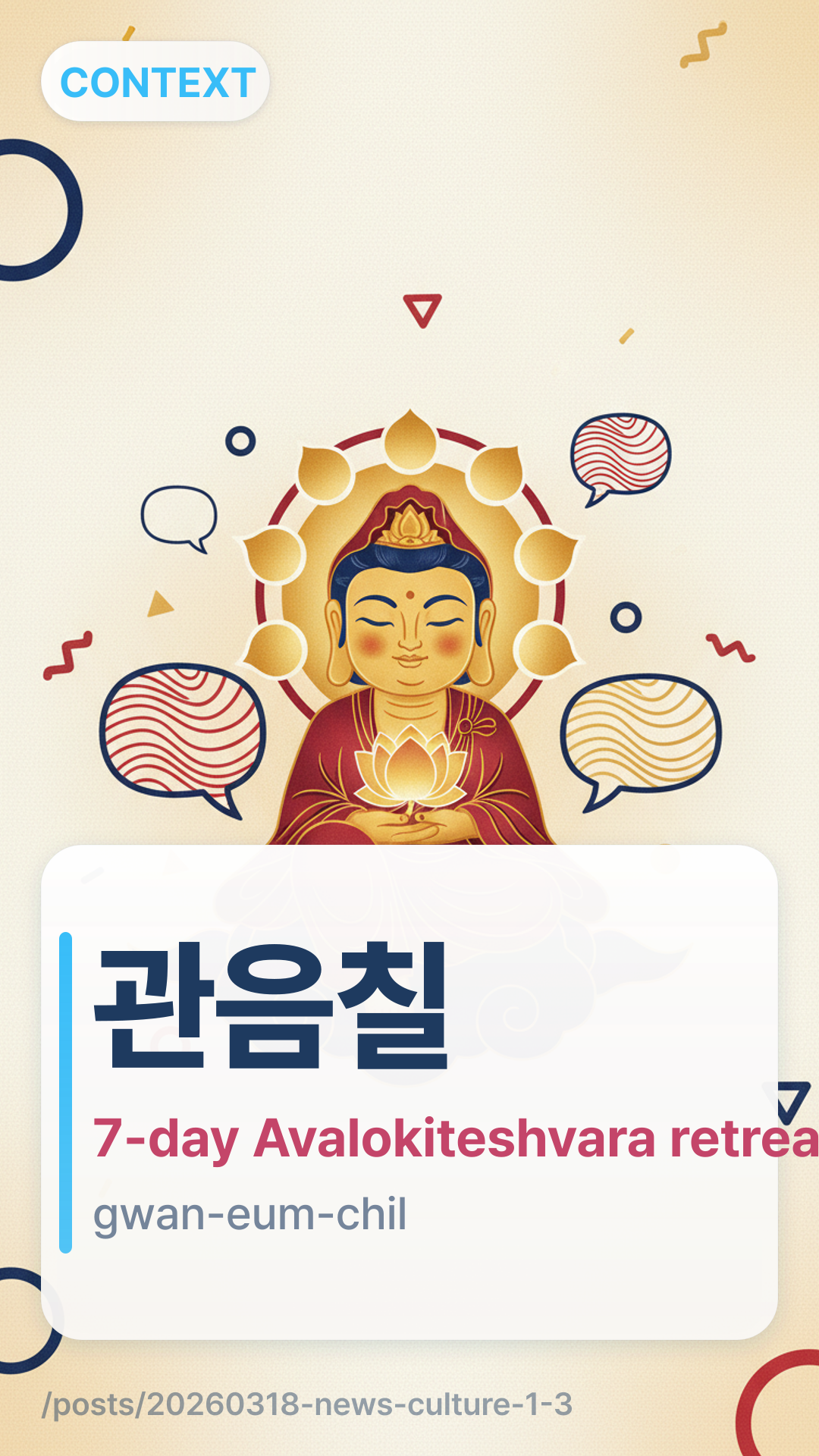
관음칠gwaneumchil (Gwan-eum-chil) refers to a specific seven-day Buddhist retreat focused on Gwan-se-eum-bosal, the Bodhisattva of Compassion. The number seven (칠) signifies the duration of the intensive practice.
이번 관음칠 법회에 많은 사람들이 참석했습니다.ibeon gwaneumchil beophoee manheun saramdeuri chamseokhaetseupnida. — Many people attended this Gwan-eum-chil Dharma assembly.
관음칠 기간 동안에는 묵언을 수행합니다.gwaneumchil gigan doaneneun mugeoneul suhaenghapnida. — During the Gwan-eum-chil period, we practice noble silence.
If you are interested in Korean spiritual culture, look for terms ending in 'Chil' (칠) when browsing temple stay programs, as they indicate intensive retreats. To sound more natural when discussing Buddhism in Korea, remember that 'Beop-hoe' (법회) is the standard term for a formal Buddhist service or assembly.