Why 46% of Koreans are Skipping the Cinema
Discover why nearly half of Korean moviegoers are visiting theaters less frequently and learn the key term '관람비' in this culture brief.

Discover why nearly half of Korean moviegoers are visiting theaters less frequently and learn the key term '관람비' in this culture brief.
Comedian Jang Dong-min joins forces with 'Blood Game' PD for a new Netflix brain survival series. Discover the latest in K-entertainment!
Discover how global hits like 'Made in Korea' and 'XO, Kitty' are turning Seoul into a primary filming location. Learn the term 로케.

Discover the controversy over AI companies accessing public health data in Korea. Learn the meaning of 비정형데이터 (unstructured data).

Discover how the Seoul Cinema Center and local Eulji-myeongbo merchants are collaborating to revitalize the historic Chungmuro film district.
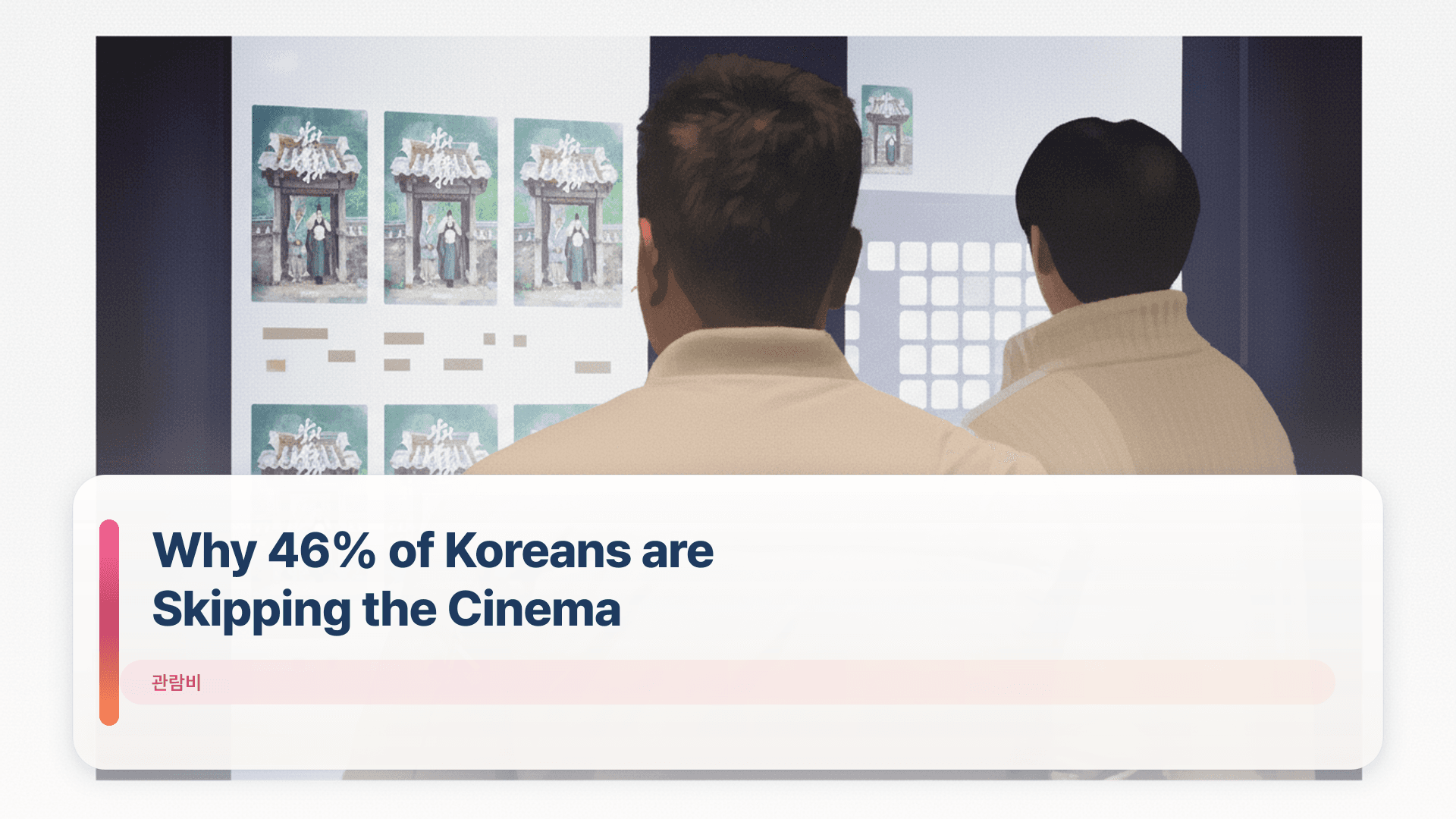
EN brief: 영화 소비자 46% "극장 관람 줄었다"…이유는 "관람비 부담돼" (culture) + 1 glossary term.
A recent report by the Korean Film Council (KOFIC) reveals a significant shift in how South Koreans consume movies. According to the "Movie Content Consumption Trend Research," approximately 45.8% of consumers reported visiting movie theaters less frequently over the past year compared to the previous 12 months.
While 42.1% of respondents said their attendance remained steady, only a small fraction—about 12.1%—reported an increase in theater visits. This data highlights a cooling interest in the traditional cinema experience across the country.
The most cited reason for this decline is the rising cost of tickets. Many consumers feel that the financial burden of a night out at the movies has become too high, especially when compared to more affordable digital alternatives.
Furthermore, the dominance of Online Video Services (OTT) like Netflix and Tving has fundamentally changed habits. Over half of the survey participants now identify streaming as their primary method for watching films.
The Korean Film Council's latest study, conducted in October last year, surveyed men and women aged 14 to 69 who had watched at least one movie between October 2024 and September 2025. The results paint a challenging picture for the domestic film industry, as nearly half of the active movie-going population is pulling back from the big screen.
Among those who reported a decrease in visits, 16.5% said their attendance had "decreased significantly," while 29.3% said it had "decreased slightly." When asked for the specific reason behind this change, 25.1% of respondents pointed directly to the "burden of theater admission fees." This was the single most common response, suggesting that price sensitivity is the primary barrier for modern audiences.
Other significant factors included a perceived lack of interesting films (21.5%) and the high quality of original series available on OTT platforms (17.5%). Additionally, 17.4% of respondents noted that they prefer to wait for a film to become available on VOD or streaming services shortly after its theatrical release, rather than paying for a cinema ticket.
The shift toward home viewing is now the "new normal" in Korea. The report indicates that more than 50% of movie consumers now consider OTT platforms their main venue for cinema. This trend is particularly strong among younger demographics who are used to the convenience and fixed-cost subscription models of digital services.
While the film industry has attempted to lure audiences back with special formats like IMAX and 4DX, the core issue remains the perceived value of a standard ticket. As ticket prices have climbed post-pandemic, the "opportunity cost" of seeing a mediocre film in theaters has become a frequent topic of debate on Korean social media.
관람비gwanrambi (Gwan-ram-bi) refers to the admission fee or the cost of watching a performance, movie, or exhibition. It is a compound of 관람gwanram (viewing/watching) and 비bi (fee/expense). In the context of the news, it specifically highlights the rising cost of movie tickets that is currently deterring the public.
요즘 관람비가 너무 비싸서 극장에 가기 망설여져요.yojeum gwanrambiga neomu bissaseo geukjae gagi mangseoryeojyeoyo. — The admission fees are so expensive lately that I hesitate to go to the theater.
영화 관람비 외에도 팝콘 가격까지 생각하면 부담이 커요.yeonghwa gwanrambi oeedo papkon gagyeokkkaji saenggakhamyeon budami keoyo. — Besides the movie ticket cost, even the price of popcorn makes it a big burden.
When discussing hobbies with Korean friends, you can use the term 부담되다budamdoeda (to be a burden/expensive) alongside 관람비gwanrambi to explain why you might prefer Netflix over the cinema. It's a very natural way to talk about the high cost of living in Seoul or other major cities.