Salmokji: The New Korean Horror Film Reviving Urban Legends
Explore the chilling urban legend of Salmokji reservoir in this new horror film. Discover the meaning of Mulgwisin and Korean water ghost lore.

Explore the chilling urban legend of Salmokji reservoir in this new horror film. Discover the meaning of Mulgwisin and Korean water ghost lore.

Comedian Jang Dong-min joins forces with 'Blood Game' PD for a new Netflix brain survival series. Discover the latest in K-entertainment!

Discover how global hits like 'Made in Korea' and 'XO, Kitty' are turning Seoul into a primary filming location. Learn the term 로케.

Discover the controversy over AI companies accessing public health data in Korea. Learn the meaning of 비정형데이터 (unstructured data).

Discover how the Seoul Cinema Center and local Eulji-myeongbo merchants are collaborating to revitalize the historic Chungmuro film district.
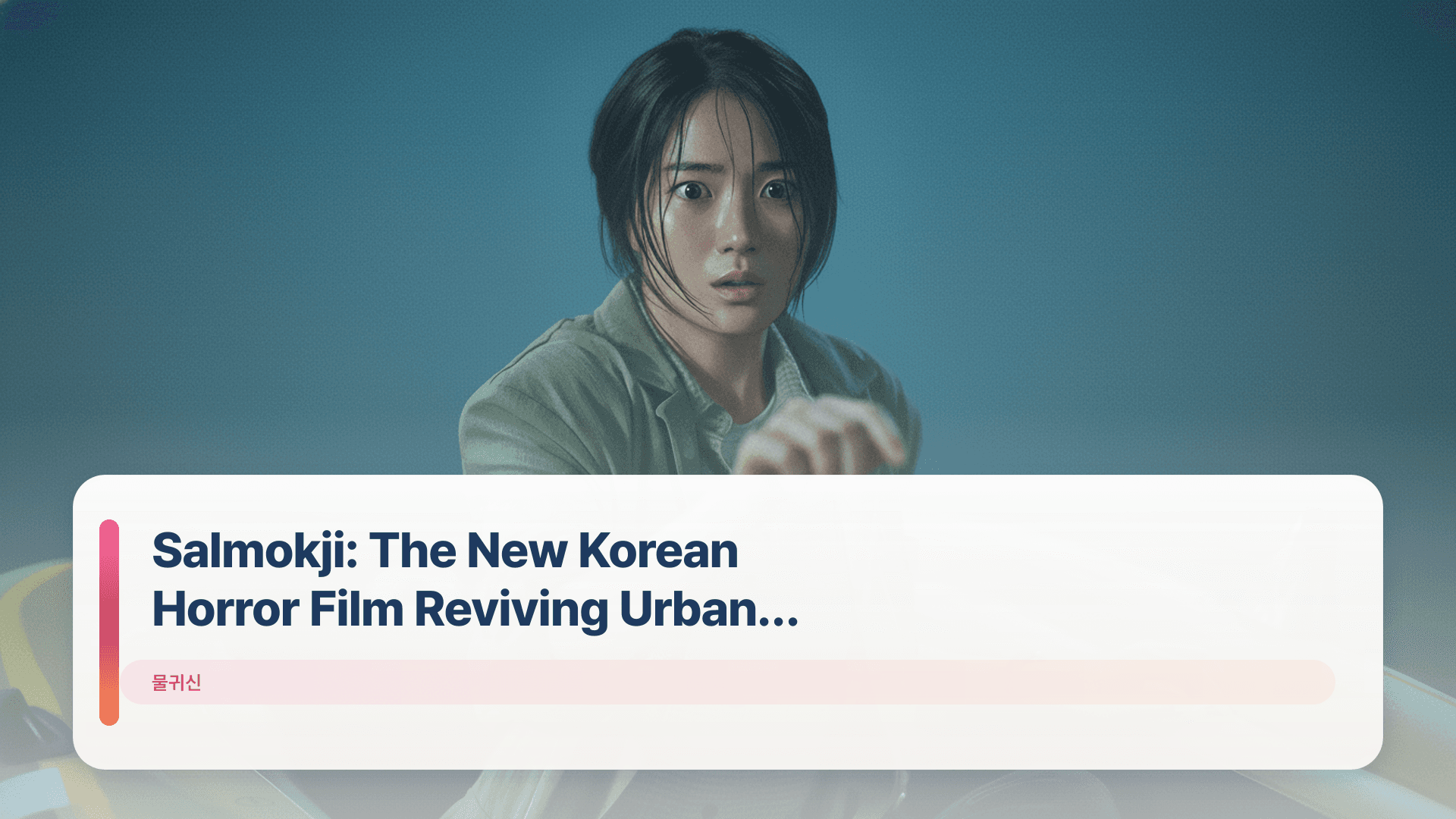
EN brief: 물귀신은 사람 이렇게 홀린다…영화가 된 ‘저수지 괴담’ (culture) + 1 glossary term.
A new horror film titled 'Salmokji' is set to hit Korean theaters on April 8th, tapping into the deep-seated fear of water-based urban legends. The story follows a production team led by PD Su-in (played by Kim Hye-yoon) who returns to a remote reservoir to re-shoot road view footage after a mysterious figure was captured in the original images.
As the team arrives at the site, they encounter eerie phenomena and the sudden appearance of a missing colleague. The film is inspired by real-life rumors surrounding a reservoir in Yesan, South Chungcheong Province, a location notorious among ghost hunters and mystery enthusiasts.
Director Lee Sang-min, making his feature debut, focuses on the psychological process of how people are 'possessed' or lured into the water. He explores how individual desires, guilt, and obsessions lead characters to ignore obvious danger signs.
To enhance the realism, the production consulted professional shamans and utilized actual equipment used by 'ghost hunting' YouTubers, such as motion detectors and ghost boxes. This grounded approach aims to bridge the gap between traditional folklore and modern technology.
The plot of 'Salmokji' centers on the 'Salmokji' reservoir, a place where local residents have long complained about strange occurrences. The inciting incident occurs when a road view service provider receives numerous complaints after a face-like shape is spotted in their panoramic photos of the area. Su-in and her team are dispatched to fix the footage, only to find themselves trapped in a nightmare.
Director Lee Sang-min mentioned in an interview that he was particularly fascinated by the contrast between everyday technology—like navigation voice prompts—and the ancient, damp fear of a water ghost. This 'everyday horror' is a key theme, making the audience feel that such supernatural events could happen during a routine drive or a work trip.
The film draws heavy comparisons to the 2018 hit 'Gonjiam: Haunted Asylum' because it uses a real-world 'haunted' location as its foundation. However, 'Salmokji' leans more into the shamanistic elements of Korean culture. The director sought advice from shaman Go Chun-ja, who also consulted on the blockbuster 'Exhuma' (2024), to ensure the ritualistic details were accurate.
Specific ritual items like rice bowls with knives, sacred ropes (saekki-jul), and the 'neok-geori' ceremony—a ritual to save a soul that has fallen into the water—are used to build a thick, unsettling atmosphere. One of the most anticipated scenes involves a game of stone skipping at night, designed to use silence and tension rather than jump scares to frighten the audience.

물귀신mulgwisin (Mulgwisin) refers to a 'water ghost' or the spirit of someone who drowned. In Korean folklore, these spirits are often depicted as lonely and resentful, trying to pull others into the water to take their place so they can finally leave. In modern metaphorical usage, it can also describe someone who tries to drag others down with them when they are in trouble (the 'if I'm going down, you're coming with me' mentality).
저수지 근처에는 물귀신이 나온다는 괴담이 있다.jeosuji geuncheoeneun mulgwisini naondaneun goedami itda. — There is a ghost story that a water ghost appears near the reservoir.
그는 물귀신 작전으로 동료들을 같이 비난했다.geuneun mulgwisin jakjeoneuro dongryodeureul gati binanhaetda. — He used a 'water ghost tactic' (dragging others down) by criticizing his colleagues along with himself.