AI Legal Tech Trends: South Korea's New Digital Standards
Explore the latest AI legal tech trends in South Korea. Learn about the term 인공지능 and how it's shaping the future of law.

Explore the latest AI legal tech trends in South Korea. Learn about the term 인공지능 and how it's shaping the future of law.

Comedian Jang Dong-min joins forces with 'Blood Game' PD for a new Netflix brain survival series. Discover the latest in K-entertainment!

Discover how global hits like 'Made in Korea' and 'XO, Kitty' are turning Seoul into a primary filming location. Learn the term 로케.
Discover the controversy over AI companies accessing public health data in Korea. Learn the meaning of 비정형데이터 (unstructured data).

Discover how the Seoul Cinema Center and local Eulji-myeongbo merchants are collaborating to revitalize the historic Chungmuro film district.
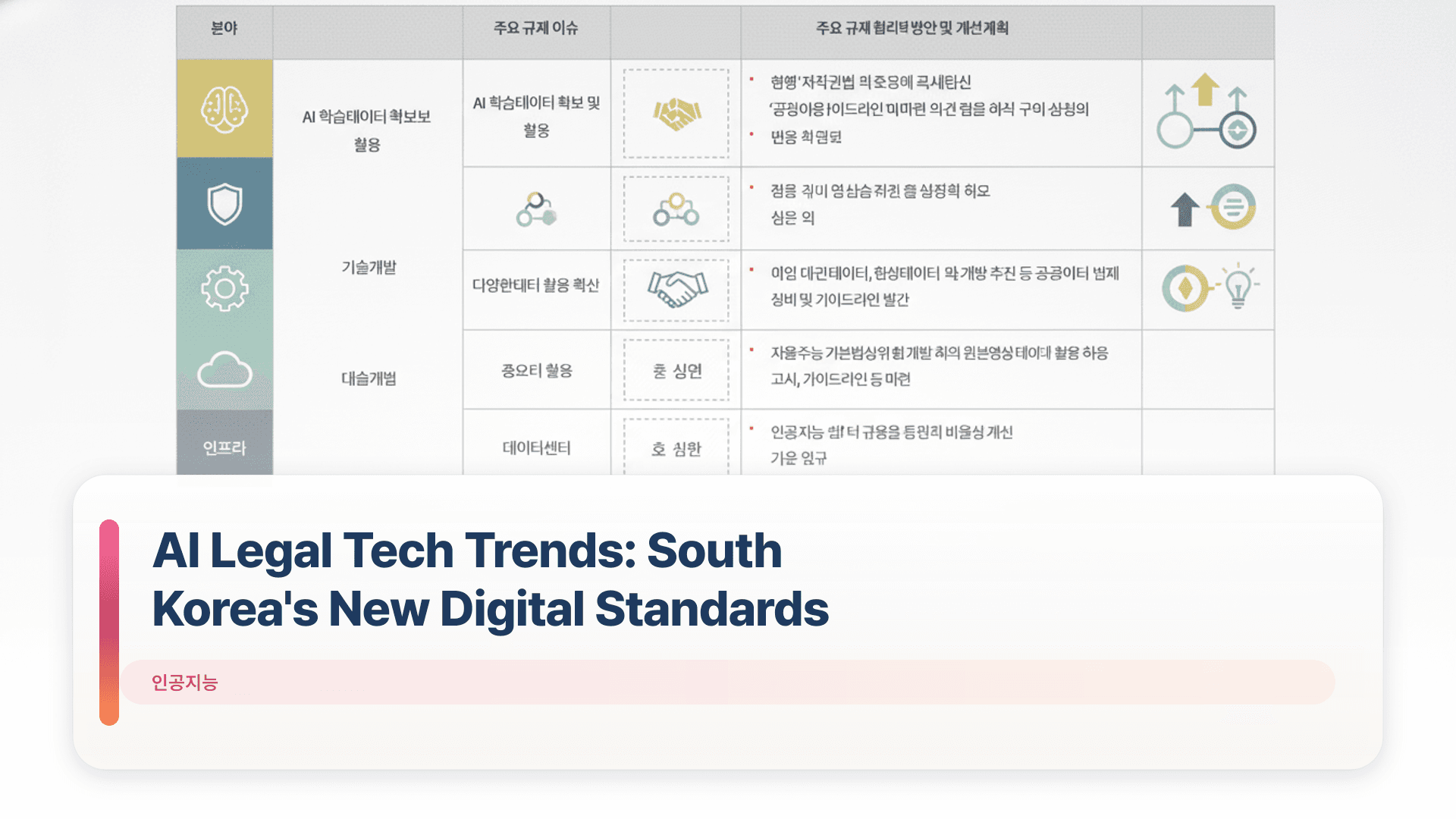
EN brief: 인공지능(AI) 관련 최신 동향 (it-life) + 1 glossary term.
South Korea is currently witnessing a significant shift in its legal landscape as artificial intelligence (AI) begins to integrate with traditional judicial processes. Recent reports from the Law Times highlight how legal professionals and tech developers are collaborating to establish new standards for digital evidence and automated legal research.
This movement isn't just about efficiency; it's about accuracy. The focus is on creating AI systems that can handle the complexities of Korean law while minimizing the risk of 'hallucinations' or incorrect legal citations. Government bodies are also stepping in to provide regulatory frameworks that ensure these technologies are used ethically.
For international observers, this represents a major step in South Korea's 'Digital Strategy.' The goal is to position the country as a leader in legal tech within the Asian market, providing a blueprint for how civil law systems can adapt to the age of generative AI.
While the technology is advancing rapidly, the legal community remains cautious. There are ongoing debates regarding the liability of AI-generated advice and the protection of sensitive personal data within these automated systems. The balance between innovation and consumer protection remains the central theme of 2026.
The Law Times recently detailed the 'Latest Trends in Artificial Intelligence,' focusing on how the Korean Bar Association and various tech startups are navigating the intersection of law and technology. The report emphasizes that the adoption of AI is no longer optional for large law firms in Seoul. Many have already implemented internal AI tools to summarize thousands of pages of case law in seconds, a task that previously took junior lawyers days to complete.
One specific area of growth is the development of 'Legal LLMs' (Large Language Models) specifically trained on Korean statutes and precedents. Unlike general-purpose AI, these specialized models are designed to understand the nuances of Korean legal terminology, which often involves complex Hanja-based terms. This specialization is crucial for maintaining the integrity of legal documents and ensuring that the AI does not provide misleading information to practitioners.
Furthermore, the Ministry of Justice has begun discussing the implementation of AI-assisted sentencing guidelines. While the final decision always rests with a human judge, the AI provides a data-driven analysis of past rulings to ensure consistency in similar cases. This has sparked a nationwide conversation about the 'human element' in the judiciary and whether an algorithm can truly understand the context of a crime.
On the corporate side, legal tech startups are receiving record-breaking investments. These companies are not just building tools for lawyers but also for the general public. New platforms allow citizens to upload simple contracts and receive an AI-generated risk assessment, making legal services more accessible to those who cannot afford high attorney fees. However, the Law Times notes that the legal validity of such assessments is still being tested in the courts.
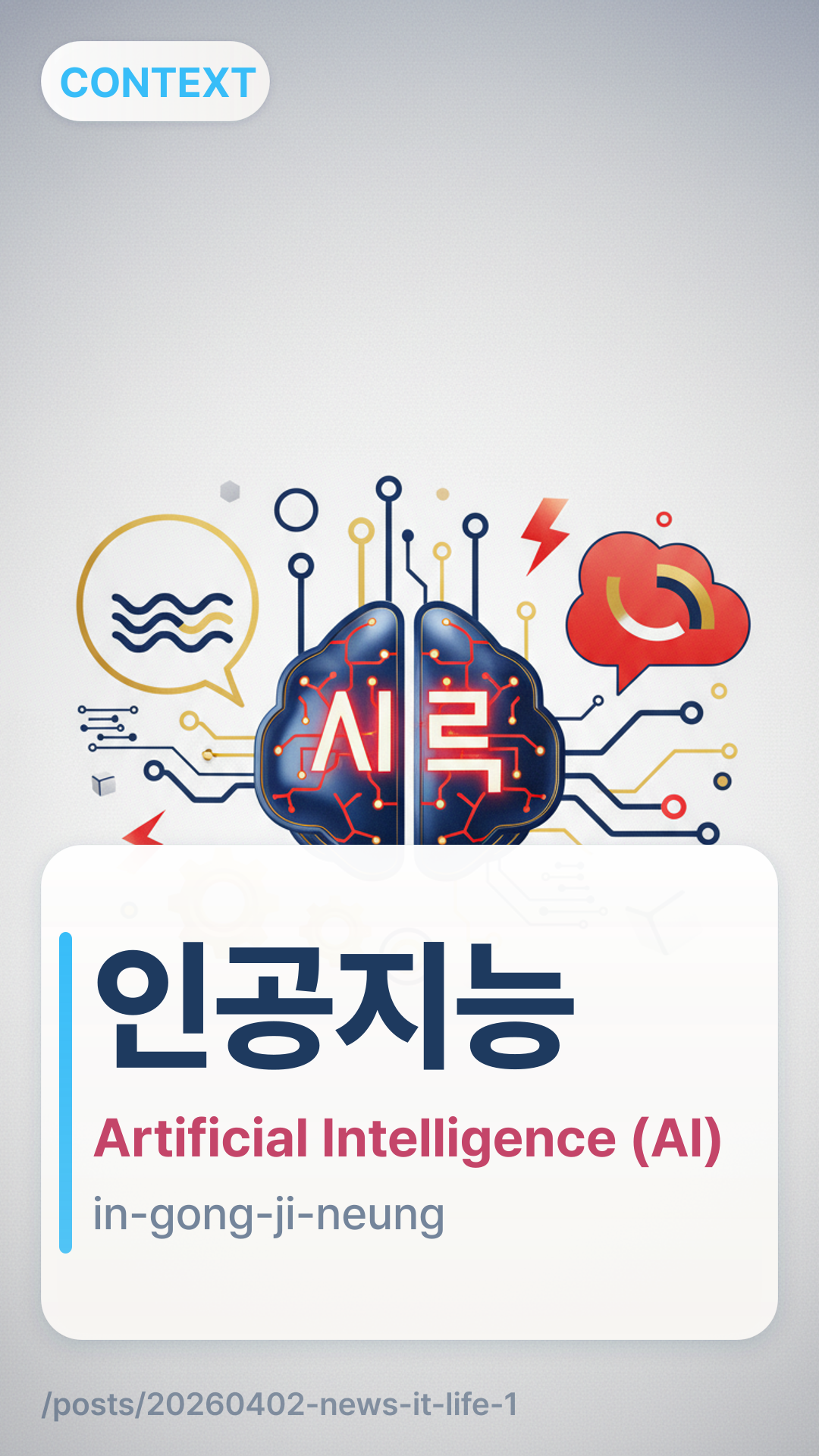
인공지능ingongjineung (In-gong-ji-neung) refers to Artificial Intelligence. In the context of the article, it specifically points to generative AI and machine learning models used to automate legal research and document drafting.
인공지능 기술이 법조계를 변화시키고 있습니다.ingongjineung gisuri beopjogyereul byeonhwasikigo itseupnida. — AI technology is changing the legal profession.
최근 인공지능은 판례 분석에 활용됩니다.choegeun ingongjineueun panrye bunseoge hwaryongdoepnida. — Recently, AI is being used for case law analysis.
As AI continues to evolve in Korea, keep an eye on how the term 인공지능ingongjineung is paired with other industry-specific words like 법률beopryul (law) or 기술gisul (technology). Understanding these pairings will help you navigate professional news articles and corporate announcements in the Korean tech sector.