Women Diagnosed 4 Years Later Than Men for 700+ Diseases
Discover why women face a 4-year delay in disease diagnosis and how this 'health gap' impacts the global economy. Learn the term 자궁내막증.

Discover why women face a 4-year delay in disease diagnosis and how this 'health gap' impacts the global economy. Learn the term 자궁내막증.

Comedian Jang Dong-min joins forces with 'Blood Game' PD for a new Netflix brain survival series. Discover the latest in K-entertainment!

Discover how global hits like 'Made in Korea' and 'XO, Kitty' are turning Seoul into a primary filming location. Learn the term 로케.

Discover the controversy over AI companies accessing public health data in Korea. Learn the meaning of 비정형데이터 (unstructured data).

Discover how the Seoul Cinema Center and local Eulji-myeongbo merchants are collaborating to revitalize the historic Chungmuro film district.
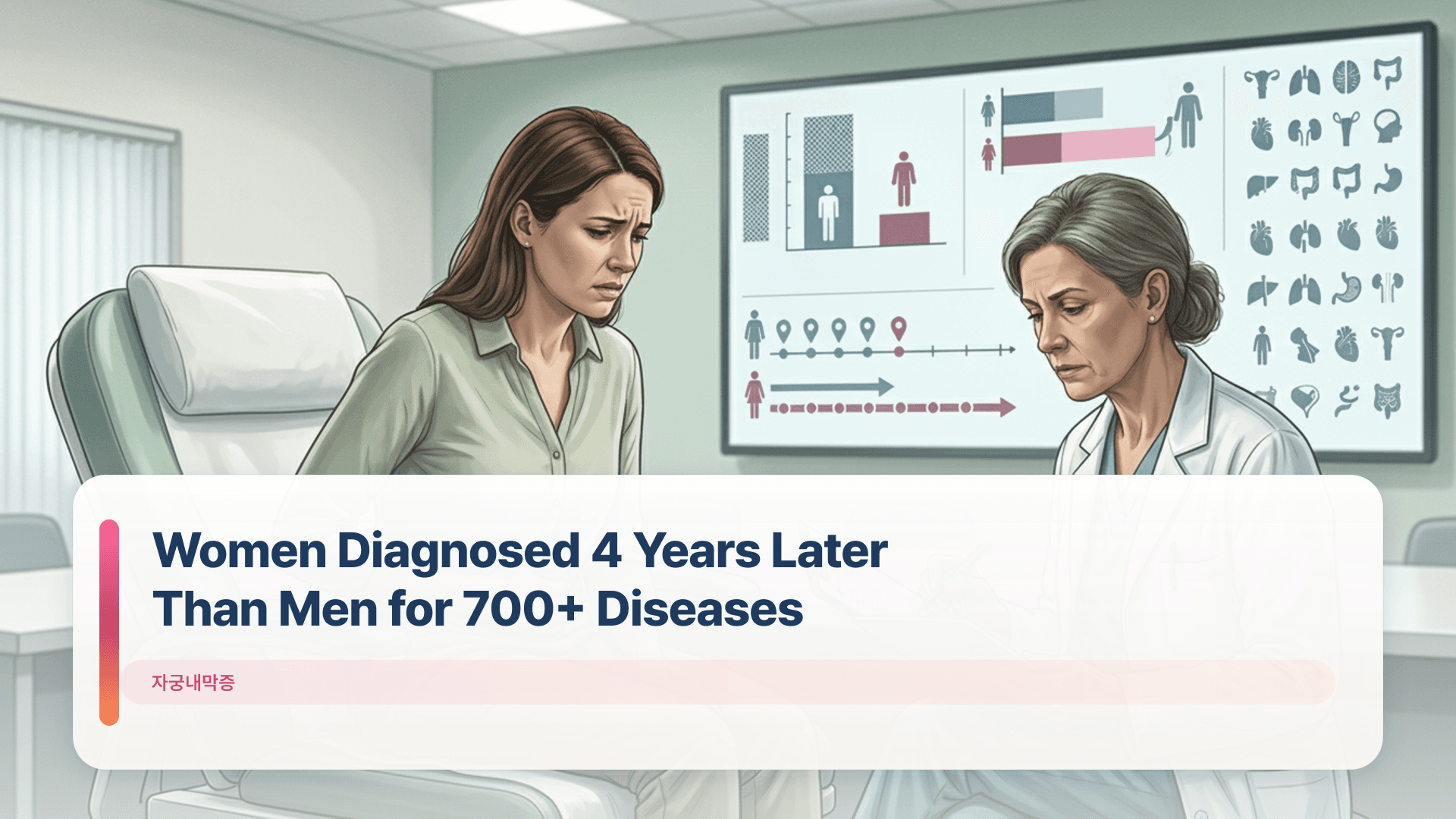
EN brief: 여성의 질병 진단, 남성보다 4년 늦다 [건강한겨레] (it-life) + 1 glossary term.
A recent report from the World Economic Forum (WEF) reveals a startling disparity in global healthcare: women are diagnosed with over 700 different diseases an average of four years later than men. This data, compiled from 20 years of health records, suggests that the delay is not just a medical oversight but a systemic failure.
When diagnoses are delayed, diseases often progress to more advanced stages before they are caught. This leads to higher treatment costs, decreased quality of life, and a significant drop in economic productivity. The WEF argues that this is a structural inefficiency in the global economy.
For specific conditions like endometriosis, the wait for an accurate diagnosis can stretch to over seven years. During this time, patients endure preventable pain and complications that disrupt their education, careers, and social lives. This cumulative delay means women live 25% longer with poor health or disabilities compared to men.
Addressing this gap could be a massive economic driver. The WEF estimates that closing the women's health gap could add at least $1 trillion to the global economy annually by 2040. This growth would come from increased labor participation and reduced absenteeism as women's health outcomes improve.
The World Economic Forum, often associated with high-level financial discussions in Davos, has shifted its focus to a critical macroeconomic issue: the gender health gap. Their March 2026 report highlights that women face significant delays in receiving medical diagnoses across a vast spectrum of illnesses. This isn't limited to rare conditions but spans over 700 different diseases.
The research team analyzed two decades of health data to quantify the impact of these delays. They found that the late detection of illnesses results in a global loss of 75 million years of healthy life. This is not merely a personal tragedy for the individuals involved but a massive drain on societal resources and capital.
A major factor behind this disparity is the severe imbalance in medical investment. Out of approximately $2.9 trillion in global private healthcare investment, only about 6% is directed toward female-specific conditions. Furthermore, 90% of that small slice is concentrated in just three areas: female cancers, reproductive health, and maternal health. This leaves a wide range of other conditions that affect women differently or more severely in a "blind spot."
The economic potential of fixing this is enormous. By improving women's health, the WEF predicts a surge in productivity. Healthy women are more likely to stay in the workforce, avoid early retirement, and contribute to "invisible" sectors like caregiving and community volunteering, which are essential for social capital.
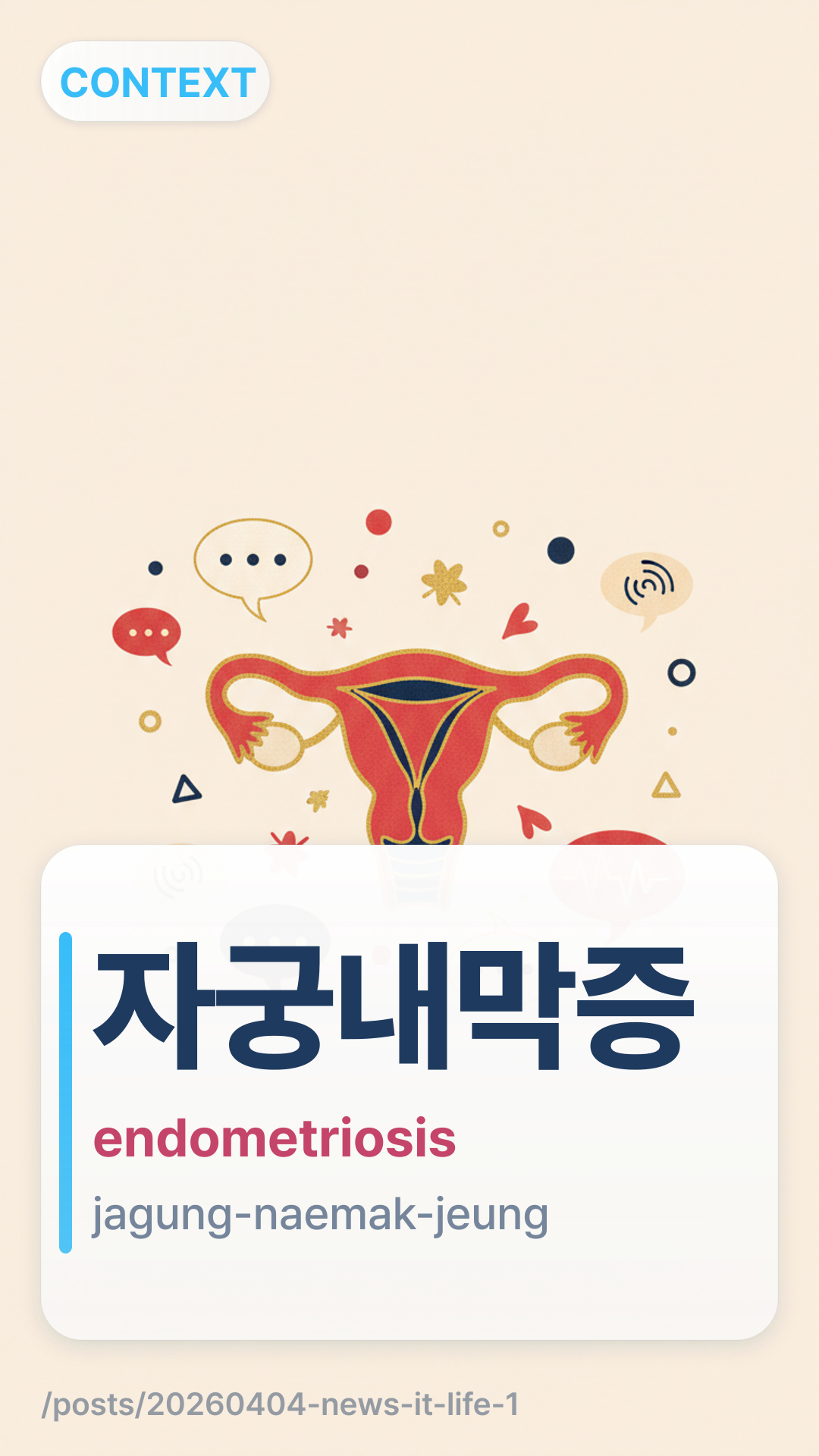
자궁내막증jagungnaemakjeung (Jagung-naemak-jeung) refers to Endometriosis, a medical condition where tissue similar to the lining of the uterus grows outside the uterus. It is cited in the article as a primary example of a disease that takes an average of 7 years to diagnose.
자궁내막증 때문에 병원에 다녀왔어요.jagungnaemakjeung ttaemune byeowone danyeowasseoyo. — I went to the hospital because of endometriosis.
자궁내막증은 진단까지 시간이 오래 걸릴 수 있습니다.jagungnaemakjeueun jindankkaji sigani orae geolril su itseupnida. — Endometriosis can take a long time to be diagnosed.