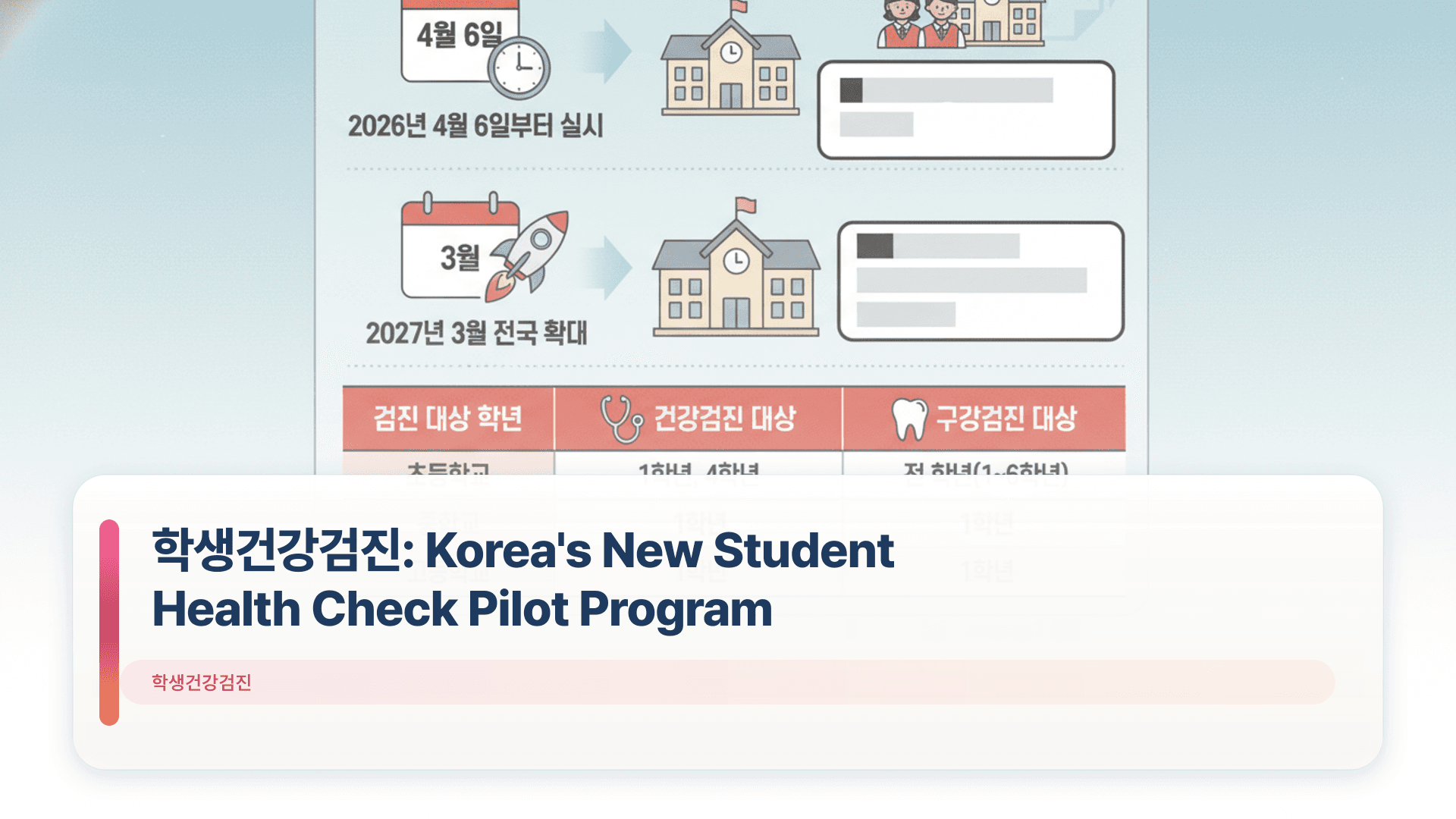
The National Health Insurance Service (NHIS) in South Korea is preparing a significant shift in how student health examinations are managed. Starting in 2026, a new pilot program will be launched to improve the efficiency and accessibility of these mandatory check-ups for school-aged children.
Currently, student health checks are often handled through specific contracts between schools and local clinics, which can sometimes lead to limited options for parents and students. The reform aims to integrate these checks more closely with the national health system.
By moving the management to the NHIS, the government hopes to ensure more consistent follow-up care and better data management for youth health. This change is expected to reduce the administrative burden on schools while providing more flexible clinic choices for families.
This pilot program is a precursor to a nationwide rollout, testing the logistics of the new system before it becomes the standard for all primary and secondary students across the country.
학생건강검진haksaenggeonganggeomjin (Hak-saeng Geon-gang Geom-jin) refers to the mandatory physical examinations conducted for students in South Korea to monitor growth, eyesight, hearing, and general health.
According to reports from Yaksa Gongron and the National Health Insurance Service, the year 2026 will mark the beginning of a "Student Health Examination System Improvement Pilot Project." This initiative is designed to address long-standing complaints regarding the inconvenience of the current school-based health check system.
Under the existing framework, schools typically designate one or two specific medical institutions where all students must go for their annual or biennial physicals. This often results in long wait times during peak seasons and forces families to travel to clinics that may not be their regular healthcare providers. The 2026 pilot program will test a system where students can visit any clinic participating in the national health insurance network.
One of the primary goals of this transition is the continuity of health records. When health checks are managed by the NHIS rather than individual schools, a student's medical history can be tracked more effectively from childhood through adulthood. This allows for better monitoring of chronic conditions or developmental issues that might otherwise be lost in school-specific paper files.
The NHIS is currently working on the digital infrastructure to support this shift. This includes updating the "Health-In" platform to allow parents to book appointments and view results directly on their smartphones. The pilot will specifically look at how data is shared between the medical institutions, the NHIS, and the schools to ensure privacy while maintaining the school's need to know the general health status of its student body.
While the full list of participating regions for the 2026 pilot has not been finalized, the NHIS indicated that it will select a diverse range of urban and rural areas to gather comprehensive data. Pharmaceutical and medical professional groups are also monitoring the situation, as the change will likely affect how clinics are reimbursed for these specific services.
Context
Student health checks in Korea are mandatory by law for students in specific grades (usually 1st and 4th grade of elementary school, and 1st grade of middle and high school).
The NHIS (National Health Insurance Service) is the single insurer in South Korea, managed by the government.
Digitalization of health records is a major priority in Korea's current "Smart Healthcare" roadmap.
올해 학생건강검진은 어디서 받나요?olhae haksaenggeonganggeomjineun eodiseo batnayo? — Where do we take the student health check this year?
학생건강검진 결과가 집으로 배송되었습니다.haksaenggeonganggeomjin gyeolgwaga jibeuro baesongdoeeotseupnida. — The student health examination results have been delivered to our home.