Samsung's APV Codec: Turning Mobile Videos into Cinema
Discover how Samsung's new APV codec allows professional-grade 8K video editing on your smartphone. Learn the key term 코덱 today!

Discover how Samsung's new APV codec allows professional-grade 8K video editing on your smartphone. Learn the key term 코덱 today!

Discover 'Weather Idol,' the world's first AI group by K-Weather using real-time data to create daily weather songs. Learn the term '선봬' in context.

Actress Jin Ki-joo takes on a unique role as a psychiatrist who falls asleep in front of patients. Discover the latest K-drama news!

Discover how Pan Entertainment is evolving into a multi-media studio with the new film 'Jjang-gu' and global IP expansion. Learn the term '웃픈'.
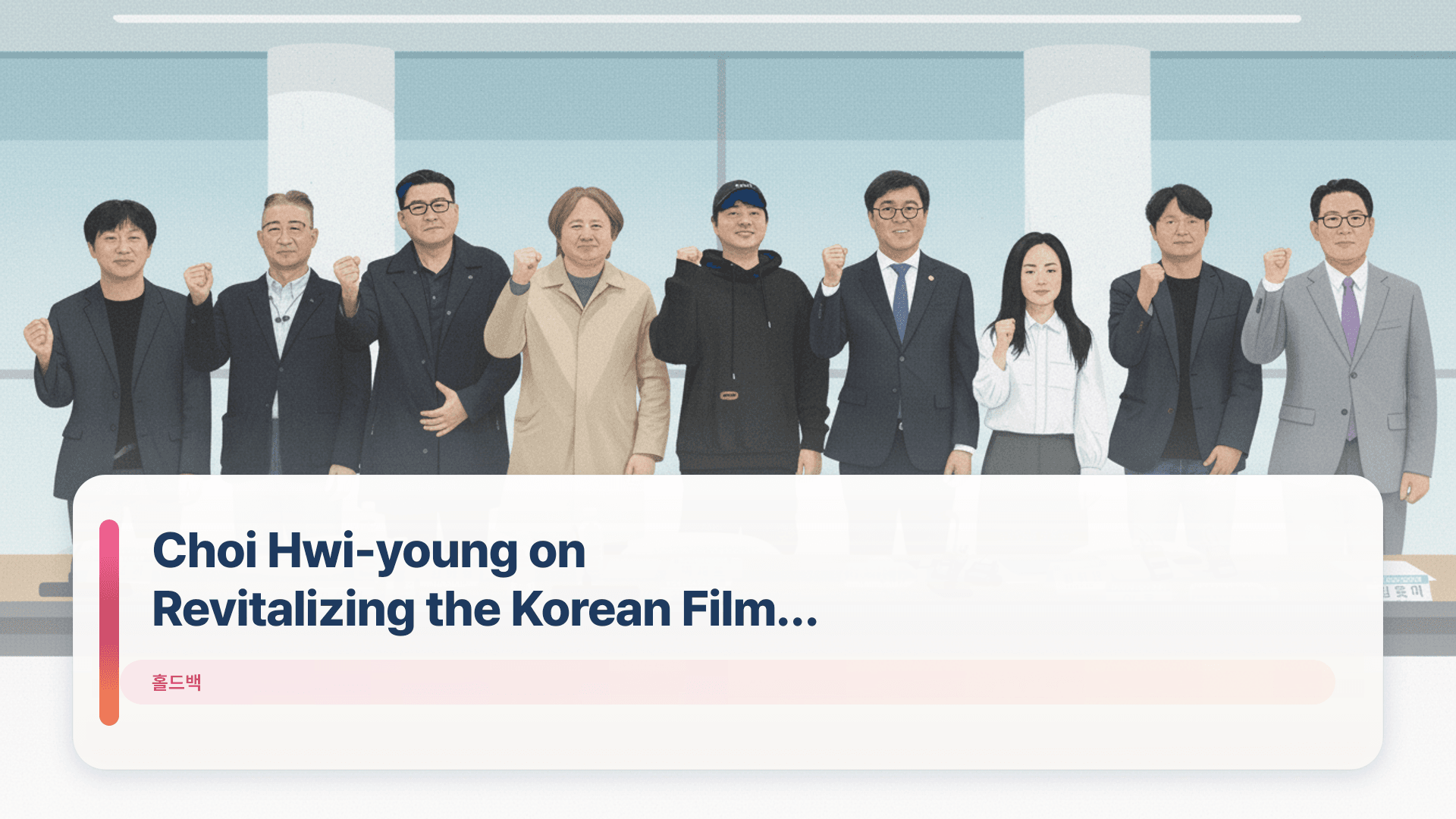
Discover the latest on Korean cinema's recovery plan and the 'holdback' policy debate with Choi Hwi-young. Learn the term 홀드백.
EN brief: [기고문] 당신의 모바일폰 영상이 ‘영화’가 되는 순간…APV 코덱으로 현실이 되다 (culture) + 1 glossary term.
Samsung Electronics has announced the development of the Advanced Professional Video (APV) codec, a technology designed to bring professional-level cinematography to mobile devices. This innovation aims to bridge the gap between casual smartphone recording and high-end film production.
The APV codec serves as a high-efficiency compression tool that preserves immense amounts of visual data while allowing for smooth editing. It addresses the long-standing challenge of maintaining image quality during post-production processes like color grading and visual effects on mobile hardware.
By standardizing this technology globally, Samsung intends to empower users to act as their own film directors. The goal is to allow anyone to capture and refine high-quality stories without needing expensive, specialized studio equipment.
Technological breakthroughs such as Lightweight Entropy Coding and Frame Tiling make this possible. These methods reduce the computational load on smartphone processors, enabling real-time 8K video editing without the typical lag or quality loss associated with mobile platforms.
In a recent contribution by Samsung researcher Choi Kwang-pyo, the company detailed its vision for the future of mobile videography. While most people already use their phones to record daily life, there is a growing demand for more sophisticated tools that allow for professional-grade editing, specifically in terms of color accuracy and detail retention.
The core of this advancement is the APV (Advanced Professional Video) codec. In the world of digital media, a codec is the technology that compresses large video files for storage and decompresses them for playback. Samsung likens this to an expert packer who can fit a massive amount of luggage into a small suitcase while ensuring everything remains easy to access and undamaged.
Traditionally, professional editors use what is known as a "mezzanine format." This intermediate format preserves the original detail of the footage through multiple rounds of encoding, but it usually requires high-performance PCs and expensive software. Samsung's APV codec brings this "mezzanine" capability directly to the smartphone, allowing for multiple edits without the "generational loss" in quality that usually plagues mobile videos.
To overcome the technical hurdles of processing such heavy data on a mobile chip, Samsung implemented two specific innovations. First, Lightweight Entropy Coding minimizes the math required by the Application Processor (AP). Second, Frame Tiling breaks the video into smaller sections so the processor can handle multiple parts of the image simultaneously, much like a team of chefs working on different parts of a meal at once.
As a result, users can now perform complex tasks like color grading—the process of adjusting colors to create a specific mood—directly on their devices. This technology is currently being pushed for global standardization to ensure compatibility across different platforms and devices in the future.
In the context of this tech news, 코덱kodek (Codec) refers to the software or hardware used to compress and decompress digital media files. While it is a technical loanword from English, it is the central term used in Korean tech reporting to describe how video quality is maintained.
이 영상은 코덱 문제 때문에 재생되지 않아요.i yeongsaeun kodek munje ttaemune jaesaengdoeji anhayo. — This video won't play because of a codec issue.
최신 코덱을 사용하면 화질 저하 없이 용량을 줄일 수 있습니다.choesin kodegeul sayonghamyeon hwajil jeoha eopsi yongryaeul juril su itseupnida. — Using the latest codec allows you to reduce file size without losing image quality.