EN brief: 인공지능 실증에 머물지 않고 확산 체계 구축[모두의 AI 광주⑩끝] (it-life) + 1 glossary term.
Summary
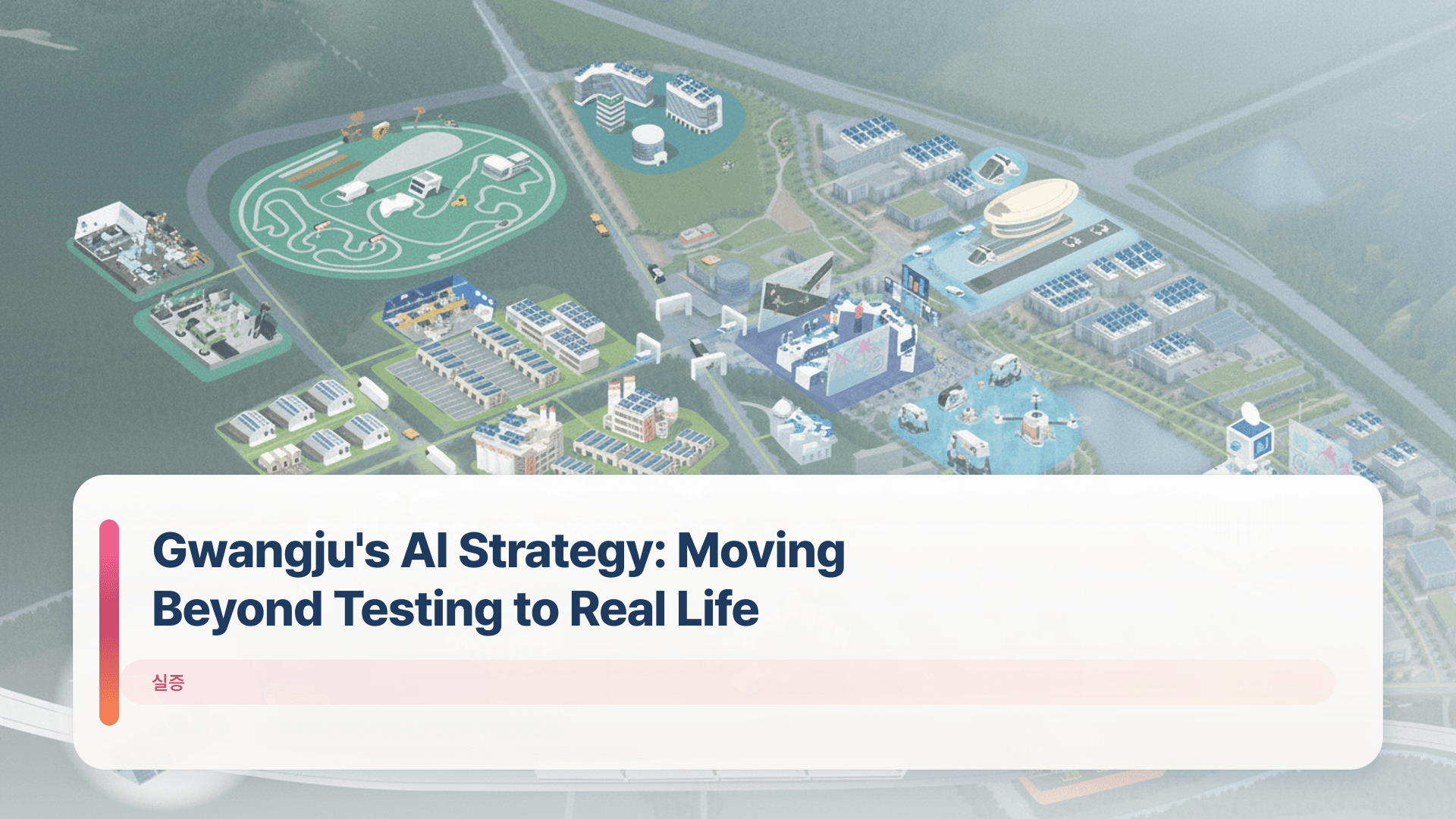
Gwangju is entering a new phase in its journey to become a global AI powerhouse. After years of focusing on building infrastructure and testing new technologies, the city is now shifting its focus toward a "diffusion system." This means moving AI out of the labs and into the daily lives of citizens and the operations of local businesses.
Mayor Kang Gi-jung recently emphasized that the city's goal is no longer just about proving that AI works. Instead, the focus is on creating a sustainable ecosystem where AI technology is naturally integrated into various industries, from healthcare to manufacturing. This marks the conclusion of a long-term series of initiatives aimed at making Gwangju the "AI Representative City" of Korea.
The city has already established a significant foundation with the AI Convergence Cluster in the High-Tech District. This area houses one of the world's most powerful AI data centers, providing the computing power necessary for startups and researchers to develop complex algorithms. However, the city recognizes that infrastructure alone isn't enough for long-term growth.
실증siljeung (sil-jeung) refers to the process of "demonstration" or "proof of concept" in a real-world environment. In the context of Korean tech news, it specifically describes the stage where a new technology is tested outside the lab to verify its safety, efficiency, and commercial viability before a full-scale launch.
To ensure this transition is successful, Gwangju is focusing on talent cultivation and corporate support. By providing a space where companies can not only test their products but also find a market for them, the city hopes to attract more tech investment and create high-quality jobs for the next generation of innovators.
Full story (translated & rewritten)
The city of Gwangju has officially announced the completion of its initial AI roadmap, signaling a pivot from "demonstration" to "expansion." For the past several years, the city's primary objective was to build the physical and digital infrastructure required to support an AI industry. This included the construction of massive data centers and specialized testing facilities where companies could verify their software and hardware.
According to city officials, the next stage involves creating a "diffusion-oriented" ecosystem. This means that instead of just hosting companies that are testing products, Gwangju will actively help these companies implement their AI solutions in real-world scenarios. For example, AI-driven diagnostic tools developed in Gwangju are being integrated into local hospitals, and smart factory solutions are being applied to regional manufacturing plants.
One of the key pillars of this new strategy is the "AI Cloud" service. By offering high-performance computing resources to private companies, the city is lowering the barrier to entry for small and medium-sized enterprises (SMEs) that otherwise couldn't afford the massive costs of AI development. The city reports that hundreds of companies have already utilized these resources to bring their products to market faster.
Furthermore, the city is doubling down on its "AI Talent Academy." Recognizing that a tech hub cannot survive without a skilled workforce, Gwangju is partnering with local universities to create specialized curricula. The goal is to produce a steady stream of developers, data scientists, and AI ethics experts who can support the growing number of tech firms relocating to the region. While the article does not provide specific employment statistics for 2026, it highlights that the city's policy focus is firmly on long-term human capital.
Context
Gwangju was designated as a special district for AI industrial convergence by the Korean government to decentralize tech growth away from Seoul.
The city's AI Data Center is ranked among the top in the world in terms of computing power (FLOPS), specifically designed for industrial use.
The "Everyone's AI Gwangju" series has documented the city's transition from a traditional manufacturing base to a digital-first economy.
이 기술은 현재 현장에서 실증 단계에 있습니다.i gisureun hyeonjae hyeonjaeseo siljeung dangyee itseupnida. — This technology is currently in the demonstration stage on-site.
정부는 자율주행차 실증 단지를 조성했습니다.jeongbuneun jayuljuhaengcha siljeung danjireul joseonghaetseupnida. — The government has created a demonstration complex for self-driving cars.