JMT 뜻: Meaning, nuance, and safer alternatives
Learn JMT & 존맛탱 meanings with tone ladders, rewrite fixes, and safe substitutes for DMs or comments—master
Learn JMT & 존맛탱 meanings with tone ladders, rewrite fixes, and safe substitutes for DMs or comments—master
Use a register ladder and “safe substitute” decision tree so learners can enjoy JMT hype without sounding rude in mixed-company chats.
I first noticed it under a late-night convenience-store snack review on Instagram: someone posted a blurry photo of a hot bar item and the top comment was just JMT. No punctuation, no context—yet everyone understood it meant “this is really, really good.”
Quick cheat sheet
Expressions in this post
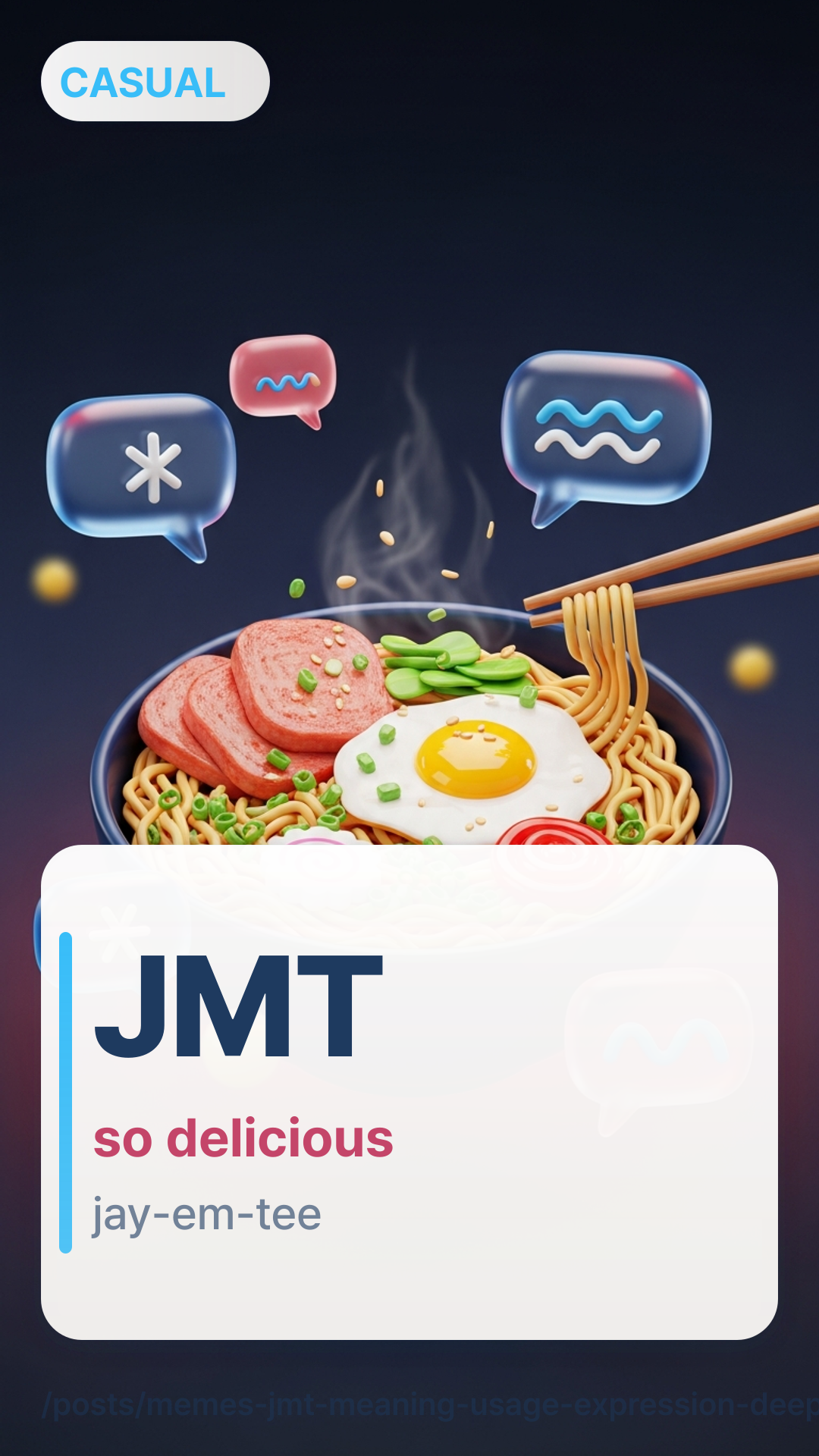
Quick meaning
JMT is a quick way to say something tastes amazing.
Nuance (how it feels)
It feels like a fast thumbs-up in text form—light, meme-y, and casual. People use it when they don’t want to write a full sentence like 진짜 맛있다jinjja masitda.
Common trap (misunderstanding)
Some beginners assume JMT is “okay” or “average” because it’s so short. It’s actually the opposite: it’s high praise.
Tone ladder (risky → safer)
존맛탱jonmattaeng (strong, can sound rough)JMT(casual shorthand)진짜 맛있다jinjja masitda (neutral and clear)정말 맛있어요jeongmal masisseoyo (polite)
Minimal pairs (A vs B)
JMTvs진짜 맛있다jinjja masitdaJMTfeels like a comment/DM reaction.진짜 맛있다jinjja masitda works anywhere, including real-life.
JMTvs대박daebakJMTis specifically about taste.대박daebak is “wow/amazing” about anything.
Examples (chat)
이거 JMT야igeo JMTya — This is so good.방금 먹은 라면 JMTbanggeum meogeun ramyeon JMT — The ramen I just ate was amazing.그 가게 떡볶이 JMT라던데?geu gage tteokbokki JMTradeonde? — I heard that place’s tteokbokki is amazing?
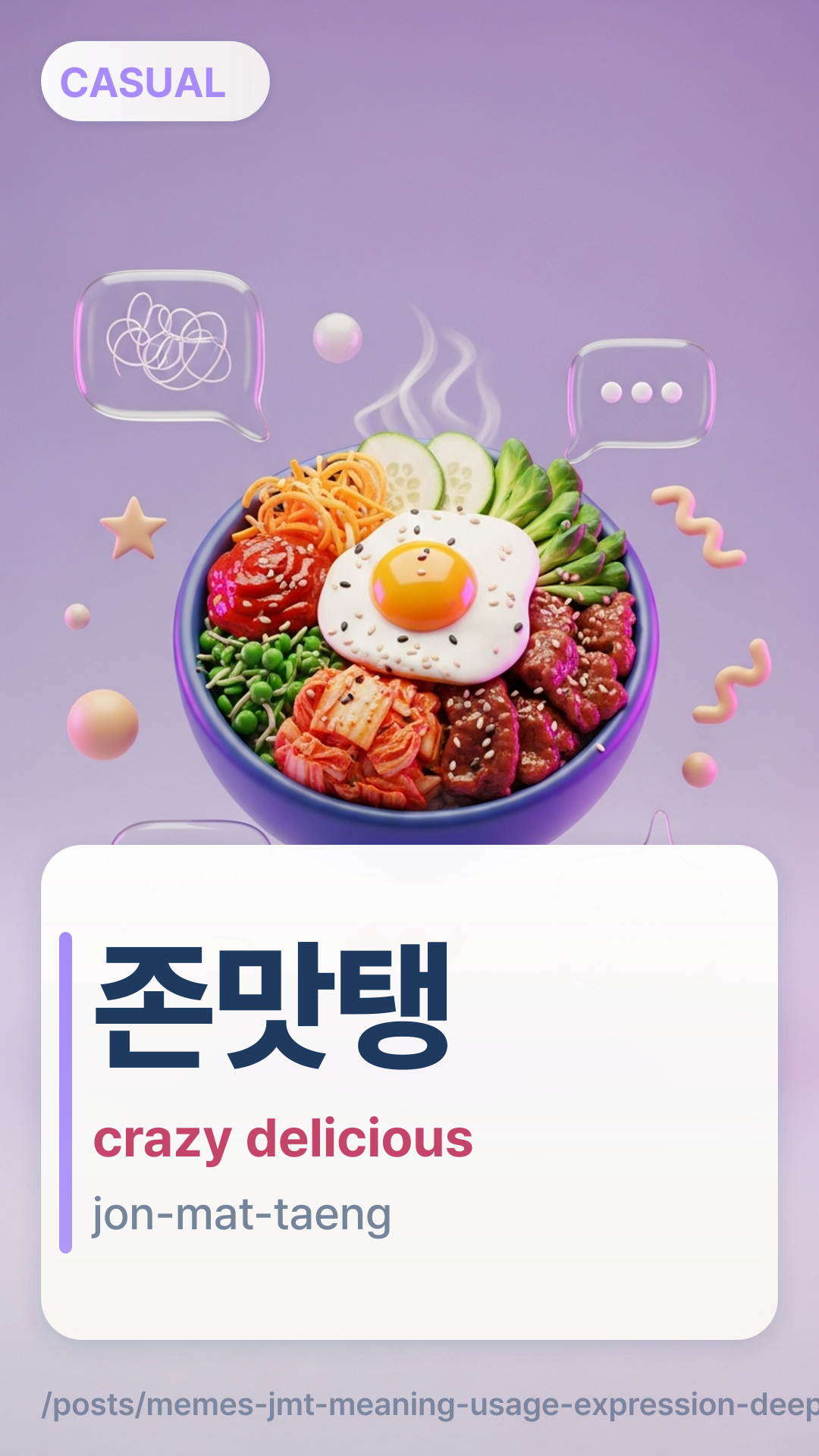
Quick meaning
존맛탱jonmattaeng means “insanely delicious.” It’s stronger than JMT.
Nuance (how it feels)
It’s over-the-top hype. In some spaces (close friends, meme comments), it feels funny and natural. In mixed company (work chat, a first-time meetup), it can feel too rough—like you’re speaking “internet-only Korean” out loud.
Common trap (misunderstanding)
Learners sometimes use it in a polite setting because they saw it in comments. Example of a mismatch: saying 존맛탱이에요jonmattaengieyo to someone older can sound awkward.
Tone ladder (risky → safer)
존맛탱구리jonmattaengguri (extra meme-y)존맛탱jonmattaeng (strong casual)JMT(short casual)진짜 맛있다jinjja masitda (safe everyday)정말 맛있어요jeongmal masisseoyo /너무 맛있어요neomu masisseoyo (polite)
Minimal pairs (A vs B)
존맛탱jonmattaeng vs너무 맛있어neomu masisseo존맛탱jonmattaeng is “meme energy.”너무 맛있어neomu masisseo is normal spoken Korean.
존맛탱jonmattaeng vs맛있다masitda존맛탱jonmattaeng is emphatic.맛있다masitda is plain and safe.
Examples (chat)
이 치킨 존맛탱i chikin jonmattaeng — This chicken is insanely good.오늘 디저트 존맛탱이네oneul dijeoteu jonmattaengine — Today’s dessert is crazy good.그 소스… 존맛탱geu soseu… jonmattaeng — That sauce… insanely good.
Register ladder + safe-substitute decision tree
Use this quick decision tree when you’re not sure what fits.
- Is it a work/school chat, or someone older you’re not close with?
- Yes → use
정말 맛있어요jeongmal masisseoyo /너무 맛있어요neomu masisseoyo. - No → go to 2).
- Is it a public comment where you want meme vibes?
- Yes →
JMTis usually safer than존맛탱jonmattaeng. - No → go to 3).
- Are you with close friends who also type slang?
- Yes →
JMTor존맛탱jonmattaeng. - No / not sure →
진짜 맛있다jinjja masitda or대박daebak.
Trap example: why spacing and “variants” confuse learners
You may see several spellings. They all point to the same idea (very tasty), but the “feel” changes.
존맛jonmat /존맛탱jonmattaeng /존맛탱구리jonmattaengguri (stronger meme vibe)JMT(short shorthand)
Rewrite drill: 12 wrong → right fixes (variants + spacing)
이거jmtigeojmt →이거 JMTigeo JMTJmt→JMTjmt→JMT이거는JMT야igeoneunJMTya →이거는 JMT야igeoneun JMTya라면 JMT다ramyeon JMTda →라면 JMT야ramyeon JMTya존 맛 탱jon mat taeng →존맛탱jonmattaeng존맛 탱jonmat taeng →존맛탱jonmattaeng존맛탱 이다jonmattaeng ida →존맛탱이다jonmattaengida이거 존맛탱 이에요igeo jonmattaeng ieyo →이거 정말 맛있어요igeo jeongmal masisseoyo선생님 이거 존맛탱seonsaengnim igeo jonmattaeng →선생님 이거 정말 맛있어요seonsaengnim igeo jeongmal masisseoyo엄마 이거 JMTeomma igeo JMT →엄마 이거 진짜 맛있어eomma igeo jinjja masisseo그 식당 존맛탱구리 맛있다geu sikdang jonmattaengguri masitda →그 식당 진짜 맛있다geu sikdang jinjja masitda
Copy/paste mini-dialogues (with EN)
Mini quiz (2 minutes)
Notes:
- Q1:
존맛탱jonmattaeng fits if you want extra hype with a close friend;JMTis also natural and slightly softer.
Next steps
- Rewrite 5 of your own food compliments into 2 versions: one with
JMT, one with정말 맛있어요jeongmal masisseoyo. - Pick a real comment you want to leave (Instagram/YouTube) and decide: meme vibe (
JMT) or neutral (진짜 맛있다jinjja masitda). - Practice saying one out loud:
진짜 맛있다jinjja masitda (so you don’t get stuck using only slang in real life).