TMI 뜻: Meaning + Polite Boundary Replies
Learn TMI (티엠아이) meaning plus easy replies like “TMI인데” and “그건 TMI야” to redirect without shaming—discover
Learn TMI (티엠아이) meaning plus easy replies like “TMI인데” and “그건 TMI야” to redirect without shaming—discover
Frame TMI as a “share too much” label plus a soft boundary tool, with scripts that let you redirect without shaming the speaker.
3-second summary
You’ll be able to reply with a light “TMI” when it’s playful, or use it as a soft boundary to redirect and close the topic.
The chat (realistic)
Chat 1 (friends)
- A:
오늘의 TMI: 나 어제 3시에 깼어.oneurui tiemai: na eoje 3sie kkaesseo. - B:
TMI인데… 그래도 괜찮아?tiemaiinde… geuraedo gwaenchanha? - A:
괜찮아. 그냥 말해보고 싶었어.gwaenchanha. geunyang malhaebogo sipeosseo.
Chat 2 (work/coworker)
- A:
솔직히 그 사람 집 얘기까지 들었거든.soljikhi geu saram jip yaegikkaji deureotgeodeun. - B:
그건 TMI야. 업무 얘기만 하자.geugeon tiemaiya. eopmu yaegiman haja. - A:
아 맞다. 미안.a matda. mian.
Quick cheat sheet
Expressions in this post
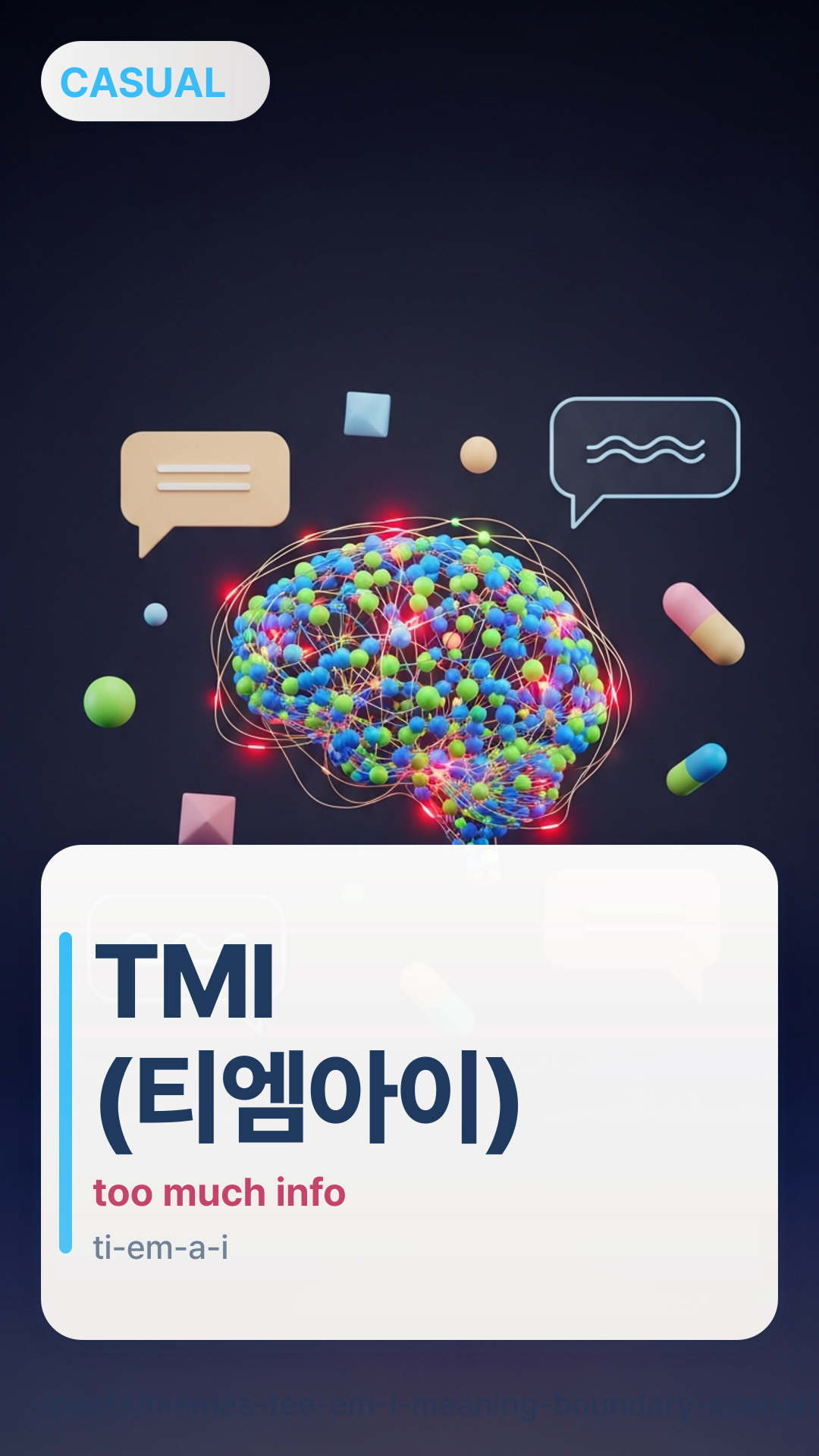
TMI is a Korean chat meme borrowed from English “Too Much Information.” In Korea it’s often used lightly, like “fun extra details,” but it can also mean “that’s too personal / unnecessary.” A common trap: learners think it always sounds rude. It depends on tone and relationship.
“If/then” reply guide
- If it’s harmless and funny (friends, group chat), then use
ㅋㅋㅋㅋ-type energy and move on. - If it’s personal or about a third person, then set a soft boundary and redirect.
- If you’re the one oversharing, then use
TMI인데…tiemaiinde… to make it feel considerate.
Example reply
TMI ㅋㅋ 근데 재밌다.tiemai ㅋㅋ geunde jaemitda. — That’s TMI lol, but it’s funny.그건 TMI야. 다른 얘기하자.geugeon tiemaiya. dareun yaegihaja. — That’s TMI. Let’s talk about something else.
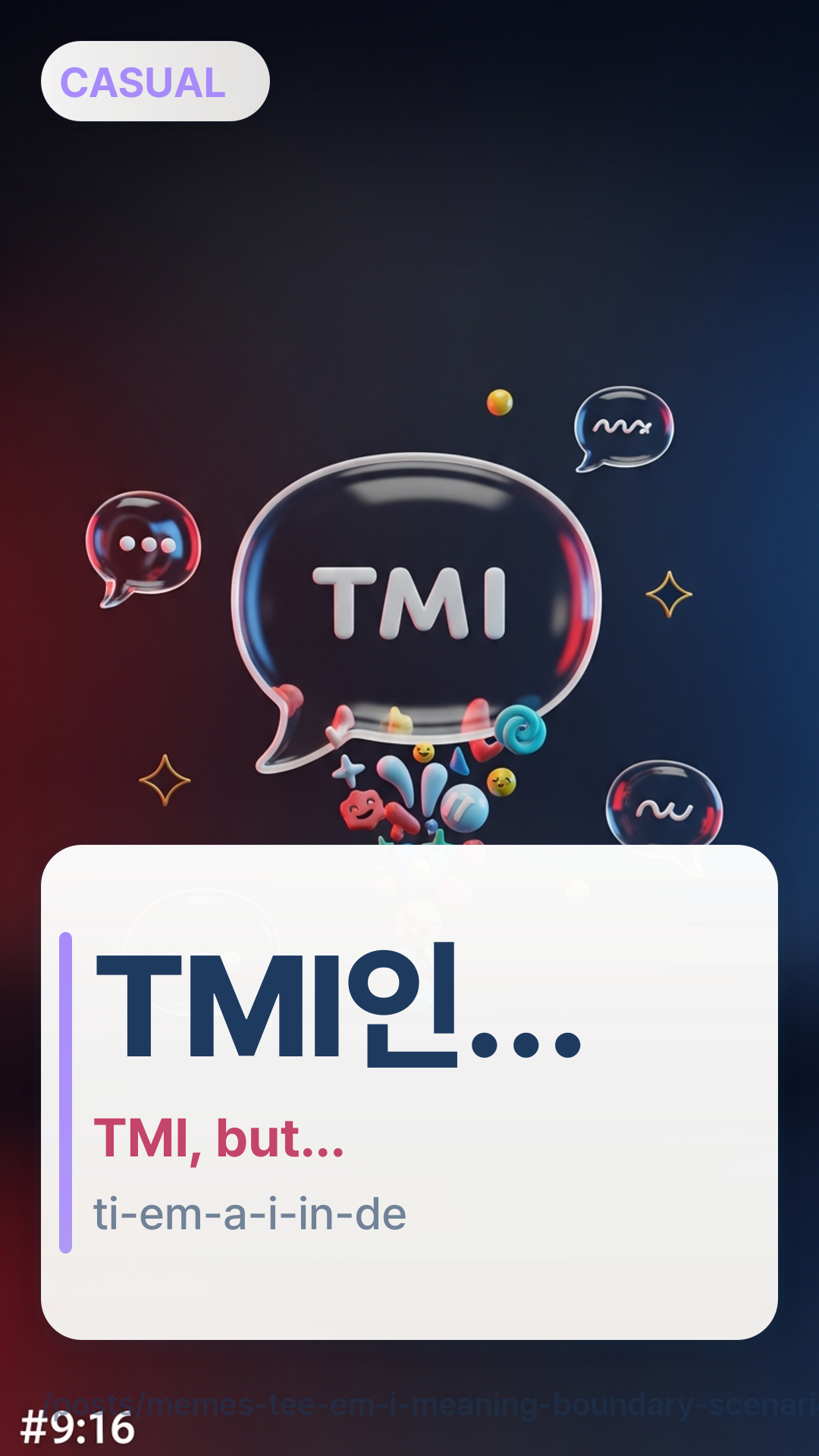
TMI인데…tiemaiinde… is a self-warning: “This might be TMI, but…” It’s useful because you’re not accusing the other person—you’re managing your own info. It reads casual/neutral depending on your ending. Trap: saying it and then dropping a long, sensitive story can still make people uncomfortable.
“If/then” reply guide
- If you want to share a small personal detail (sleep, diet, mood), then start with
TMI인데…tiemaiinde…. - If it’s about someone else’s private life, then don’t use this; skip the detail.
Example reply
TMI인데… 나 오늘 아침에 너무 긴장했어.tiemaiinde… na oneul achime neomu ginjanghaesseo. — TMI, but I was so nervous this morning.
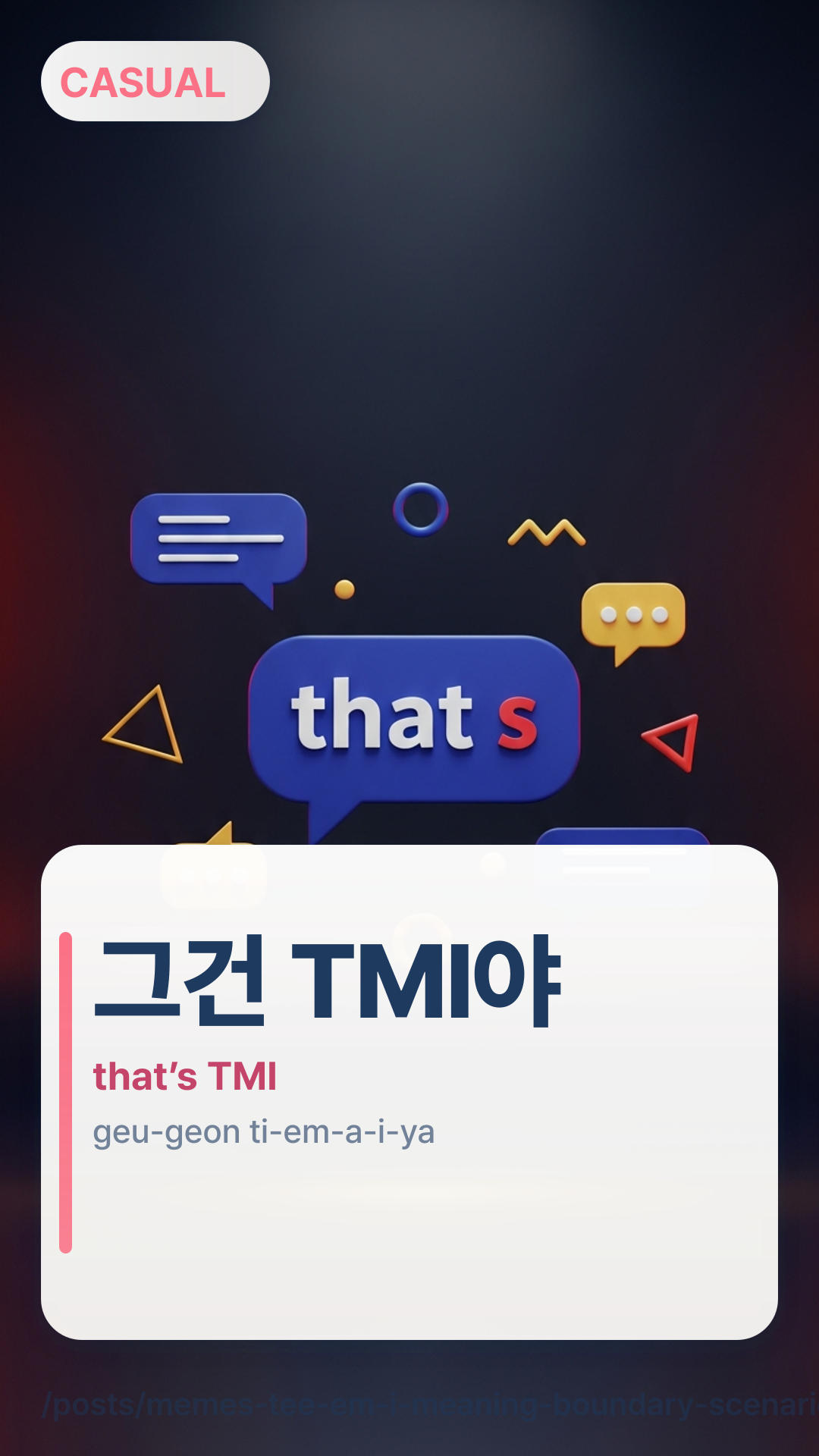
그건 TMI야geugeon tiemaiya is the “boundary” version: “That’s TMI.” It’s direct but still common in everyday talk. To keep it kind, add a redirect right after it. Trap: saying only 그건 TMI야geugeon tiemaiya with no follow-up can feel like a shutdown.
“If/then” reply guide
- If someone shares extra details that aren’t needed, then use this + redirect.
- If you’re in a public space (comments, group chat), then keep it short and calm.
Example reply
그건 TMI야. 요점만 말해줘.geugeon tiemaiya. yojeomman malhaejwo. — That’s TMI. Just tell me the main point.
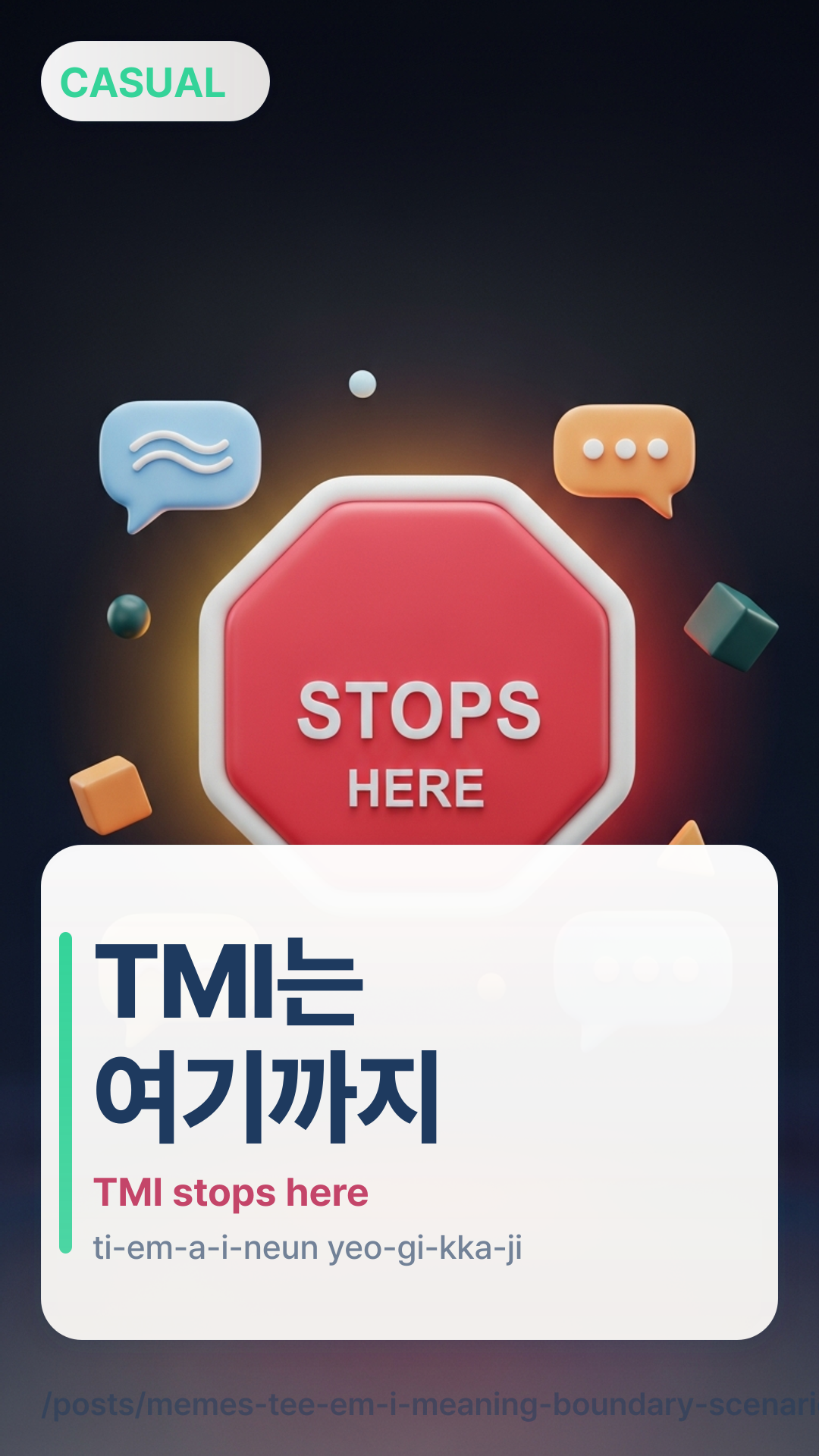
TMI는 여기까지tiemaineun yeogikkaji literally means “TMI up to here.” It’s a clean closer: you’re ending the overshare segment without attacking the person. It’s especially handy when you want to stay friendly (family, date) but still stop.
“If/then” reply guide
- If the conversation is drifting into details, then close and switch topics.
- If you want a playful vibe, then add a light ending like
ㅋㅋㅋㅋ in chats.
Example reply
TMI는 여기까지! 이제 밥 뭐 먹을래?tiemaineun yeogikkaji! ije bap mwo meogeulrae? — That’s enough TMI! What do you want to eat?
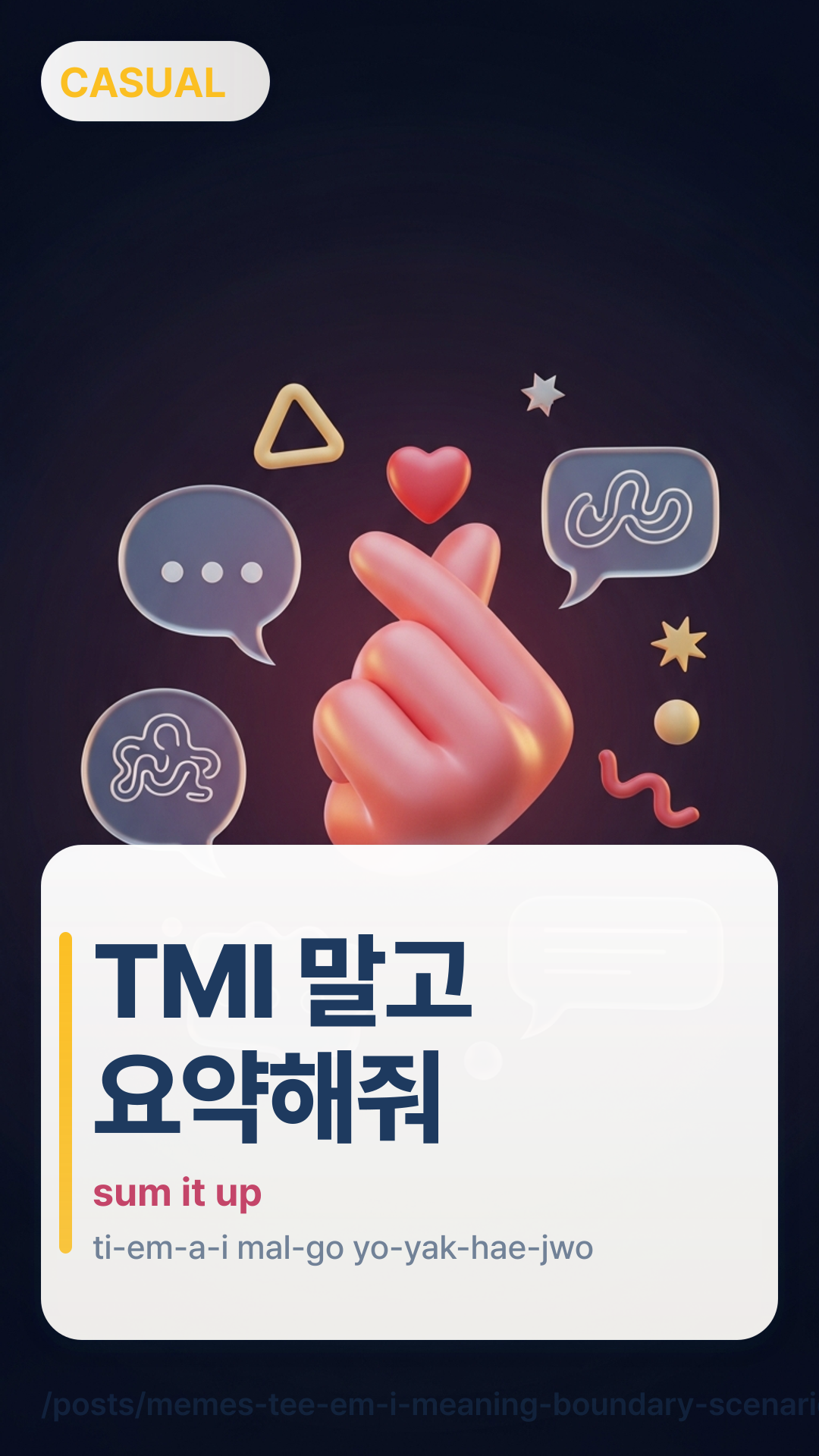
TMI 말고 요약해줘tiemai malgo yoyakhaejwo is a polite redirect: “Not TMI—summarize it.” It’s great for work, school, and stressed moments because it focuses on usefulness, not blame. Trap: with close friends, it can sound a bit “bossy” if your tone is too flat—soften it with 좀jom.
“If/then” reply guide
- If you need the point quickly, then ask for a summary.
- If you want to sound softer, then say
TMI 말고 요약 좀 해줘.tiemai malgo yoyak jom haejwo.
Example reply
TMI 말고 요약 좀 해줘.tiemai malgo yoyak jom haejwo. — Not the TMI—give me a quick summary.
Reply decision tree
- Step 1 (Ask): Is it harmless and about the speaker’s own small stuff?
- Yes →
TMI (티엠아이)tiemai (tiemai) as a playful label. - No/Not sure → go to Step 2.
- Yes →
- Step 2 (Redirect): Do you still want to keep the conversation going?
- Yes →
그건 TMI야geugeon tiemaiya orTMI 말고 요약해줘tiemai malgo yoyakhaejwo. - No → go to Step 3.
- Yes →
- Step 3 (Close): End the overshare segment cleanly.
- Use
TMI는 여기까지tiemaineun yeogikkaji and switch topics.
- Use
Six mini-scenarios (playful vs boundary)
- Friends (playful)
오늘의 TMI: 나 방금 라면 두 개 먹었어.oneurui tiemai: na banggeum ramyeon du gae meogeosseo. — Today’s TMI: I just ate two ramyeon.- Reply:
TMI ㅋㅋ 인정.tiemai ㅋㅋ injeong. — TMI lol, fair.
- Coworker (boundary)
그 사람 연애사까지 다 알게 됐어.geu saram yeonaesakkaji da alge dwaesseo. — I ended up hearing their dating history.- Reply:
그건 TMI야. 우리 업무 얘기하자.geugeon tiemaiya. uri eopmu yaegihaja. — That’s TMI. Let’s talk work.
- Date (soft redirect)
전 애인이… (디테일 시작)jeon aeini… (diteil sijak) — My ex… (details start)- Reply:
TMI는 여기까지 하고, 오늘 이야기로 가자.tiemaineun yeogikkaji hago, oneul iyagiro gaja. — Let’s stop the TMI and go back to today.
- Group chat (keep it light)
TMI인데 나 지금 땀 엄청 나.tiemaiinde na jigeum ttam eomcheong na. — TMI but I’m sweating a lot right now.- Reply:
ㅋㅋ TMI인데 공감.ㅋㅋ tiemaiinde gonggam. — lol TMI but relatable.
- Family (firm but kind)
누가 누구랑 왜 싸웠는지 다 말해줄게.nuga nugurang wae ssawotneunji da malhaejulge. — I’ll tell you all the details of who fought and why.- Reply:
그건 TMI야. 그냥 결과만 알려줘.geugeon tiemaiya. geunyang gyeolgwaman alryeojwo. — That’s TMI. Just tell me the outcome.
- Online comment (don’t escalate)
- Comment:
내 사생활 다 털어놓을게…nae sasaenghwal da teoreonoheulge… — I’ll spill my whole private life… - Reply:
TMI 말고 요약해줘.tiemai malgo yoyakhaejwo. — Not the TMI—summarize.
Common wrong → right replies
- Wrong:
너 TMI야.neo tiemaiya. — sounds like “You are TMI,” labeling the person.- Right:
그건 TMI야.geugeon tiemaiya. — labels the info, not the person.
- Right:
- Wrong:
조용히 해.joyonghi hae. — too harsh.- Right:
TMI는 여기까지. 다른 얘기하자.tiemaineun yeogikkaji. dareun yaegihaja. — close + redirect.
- Right:
- Wrong:
안 궁금해.an gunggeumhae. — can sound cold.- Right:
TMI 말고 요점만.tiemai malgo yojeomman. — focuses on the main point.
- Right:
Collocations you’ll see (10)
TMI인데…tiemaiinde… — This might be TMI, but…오늘의 TMIoneurui tiemai — today’s TMI갑자기 TMIgapjagi tiemai — sudden TMITMI 방출tiemai bangchul — TMI dumpTMI 투척tiemai tucheok — throw in a TMITMI 주의tiemai juui — TMI warningTMI 금지tiemai geumji — no TMITMI는 여기까지tiemaineun yeogikkaji — TMI stops here그건 TMI야geugeon tiemaiya — that’s TMITMI 말고 요약tiemai malgo yoyak — summary, not TMI
Tiny time/number drill (fast practice)
Say it out loud as one short line each:
오늘의 TMI: 나 7시에 일어났어.oneurui tiemai: na 7sie ireonasseo. — Today’s TMI: I woke up at 7.TMI인데… 나 3분 늦었어.tiemaiinde… na 3bun neujeosseo. — TMI but… I’m 3 minutes late.그건 TMI야. 2개만 말해줘.geugeon tiemaiya. 2gaeman malhaejwo. — That’s TMI. Tell me just two things.TMI는 여기까지. 10시에 보자.tiemaineun yeogikkaji. 10sie boja. — Enough TMI. See you at 10.