사바사 뜻: How to Use This Essential Korean Slang
Master the Korean slang 사바사 (sabasa) to talk about individual differences. Learn the meaning, usage tips, and natural alternatives in this guide.
Master the Korean slang 사바사 (sabasa) to talk about individual differences. Learn the meaning, usage tips, and natural alternatives in this guide.
Every person is unique, and Korean culture has a perfect three-letter word to describe that. You're planning a trip and ask your friend if a certain restaurant is good, and they shrug and say, "It's sabasa."
What does 사바사 actually mean in a real conversation?
Quick cheat sheet
Expressions in this post
What it actually implies
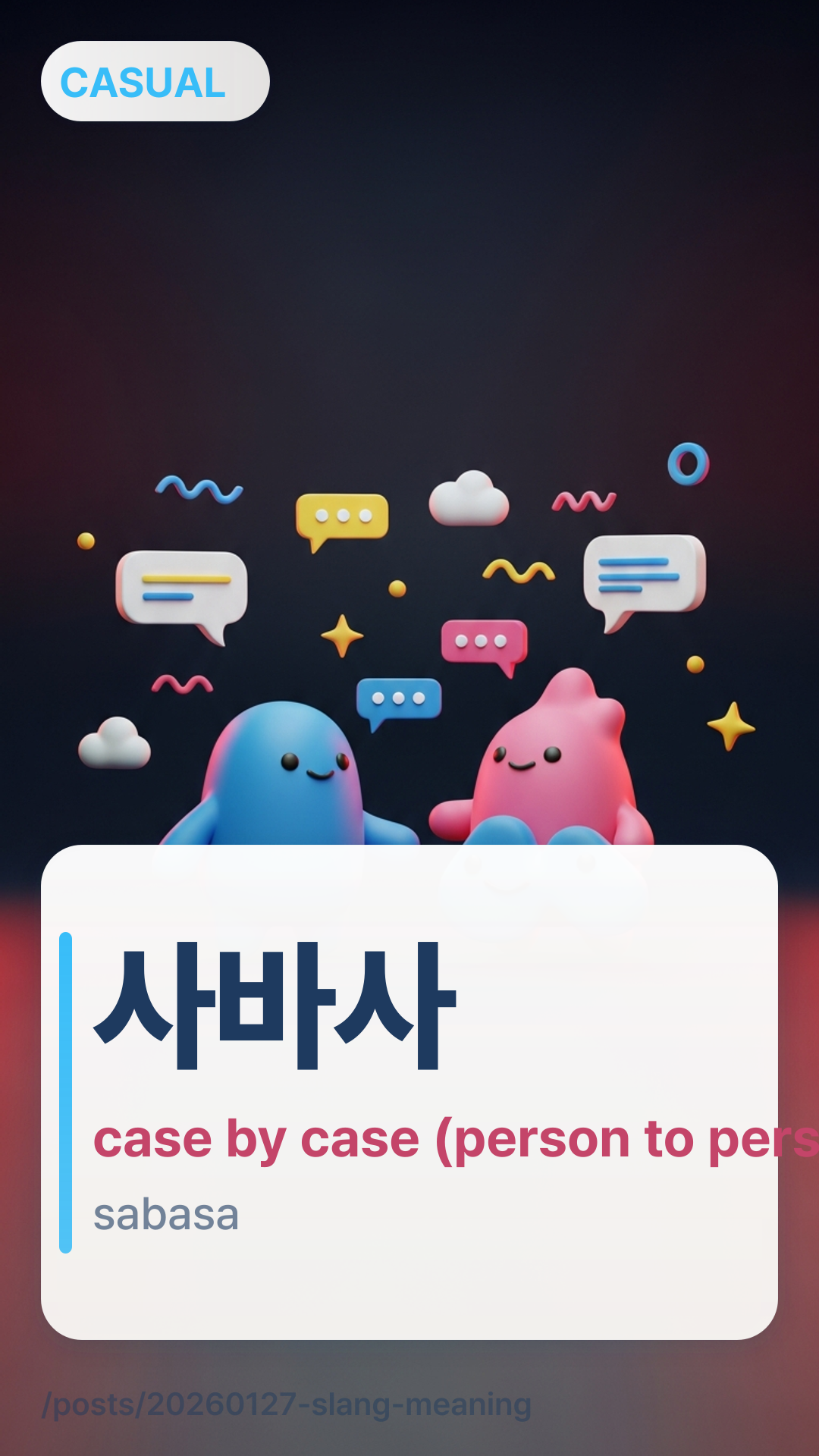
사바사sabasa is an abbreviation of the phrase "사람 바이 사람" (Saram-by-Saram). It is a Konglish (Korean-English) construction modeled after the English phrase "case by case." While Koreans do use 케바케kebake (ke-ba-ke) for "case by case," 사바사sabasa specifically highlights that the outcome or opinion depends entirely on the individual person involved.
When it sounds rude (and why)
This expression is very casual. While it isn't offensive, using it with a professor or a boss might make you sound too nonchalant or lazy in your speech. In professional settings, it is better to use the full phrase 사람마다 다릅니다sarammada dareupnida (It varies by person).
Do / Don’t checklist
- Do use it when discussing tastes in food, music, or dating preferences.
- Do use it to avoid making a sweeping generalization.
- Don't use it in formal writing or business emails.
- Don't use it when someone is asking for a factual, objective answer.
Rewrite drill (same message, 3 tones)
- Casual (Slang):
그건 진짜 사바사지.geugeon jinjja sabasaji. — That's totally sabasa. - Polite (Standard):
그건 사람마다 달라요.geugeon sarammada dalrayo. — That varies from person to person. - Formal (Business):
개인별로 차이가 있을 수 있습니다.gaeinbyeolro chaiga isseul su itseupnida. — There may be differences depending on the individual.
Examples
매운 거 잘 먹는지는 진짜 사바사야.maeun geo jal meokneunjineun jinjja sabasaya. — Whether someone can eat spicy food is really case-by-case.이 영화 평점은 사바사가 심하더라.i yeonghwa pyeongjeomeun sabasaga simhadeora. — The reviews for this movie vary wildly depending on the person.
Copy/paste mini-dialogues (with EN)
Mini Quiz
Notes:
- Q1: While both terms mean "case by case,"
사바사sabasa (Saram-by-Saram) is the most natural choice here because the sentence specifically mentions people's personalities (사람마다 성격).
Next steps
Try using 사바사sabasa the next time a friend asks for your opinion on something subjective, like a new K-pop song or a fashion trend. It's a great way to sound like a local in group chats!