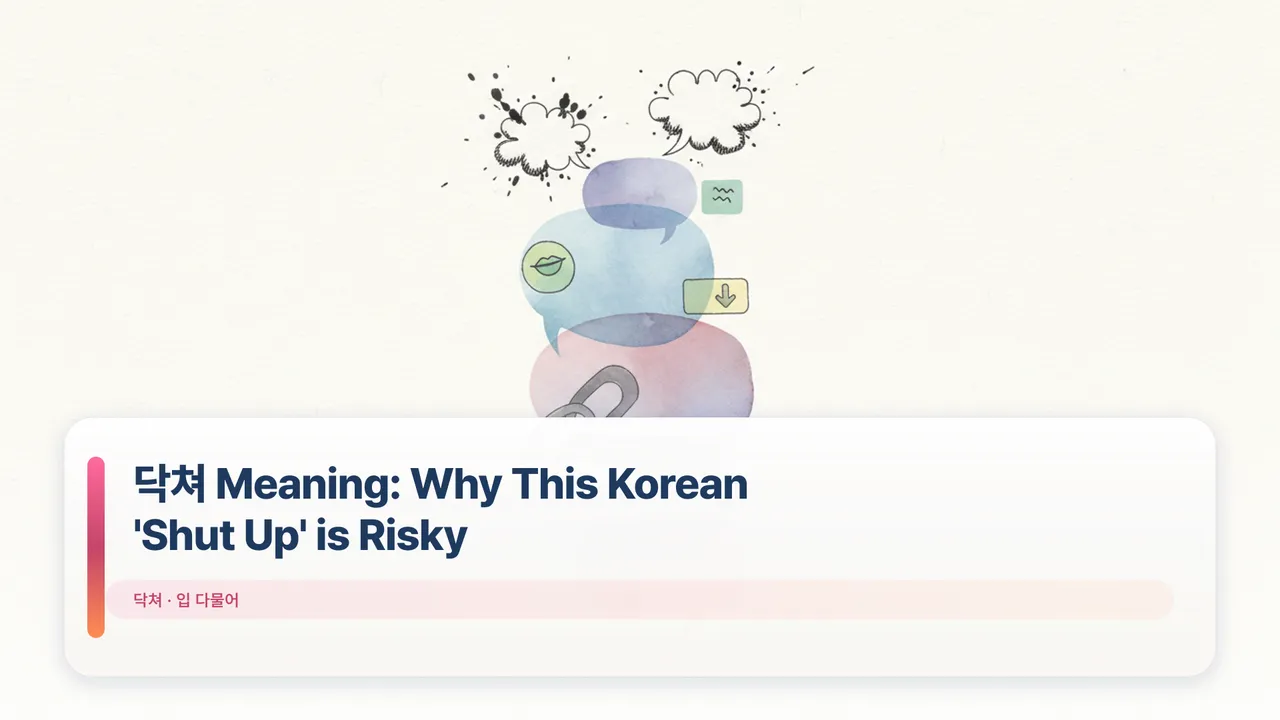
닥쳐 Meaning: Why This Korean 'Shut Up' is Risky
Learn the meaning of 닥쳐 (Dak-chyeo) and 입 다물어. Master Korean 'shut up' slang with a politeness ladder and safe alternatives. Learn more!
Learn the meaning of 닥쳐 (Dak-chyeo) and 입 다물어. Master Korean 'shut up' slang with a politeness ladder and safe alternatives. Learn more!
A politeness ladder showing why this is dangerous to use with seniors, plus 3 safer alternatives for different social settings.
You’re watching a high-stakes K-drama like The Glory or Penthouse, and a character suddenly snaps, spitting out a sharp 닥쳐!dakchyeo! (Dak-chyeo). The subtitles say "Shut up," but the reaction from other characters is often one of pure shock or immediate escalation. It’s not just a request for silence; it’s a verbal slap.
Quick cheat sheet
Expressions in this post
Quick meaning
Shut up; shut your trap.
Nuance (how it feels)
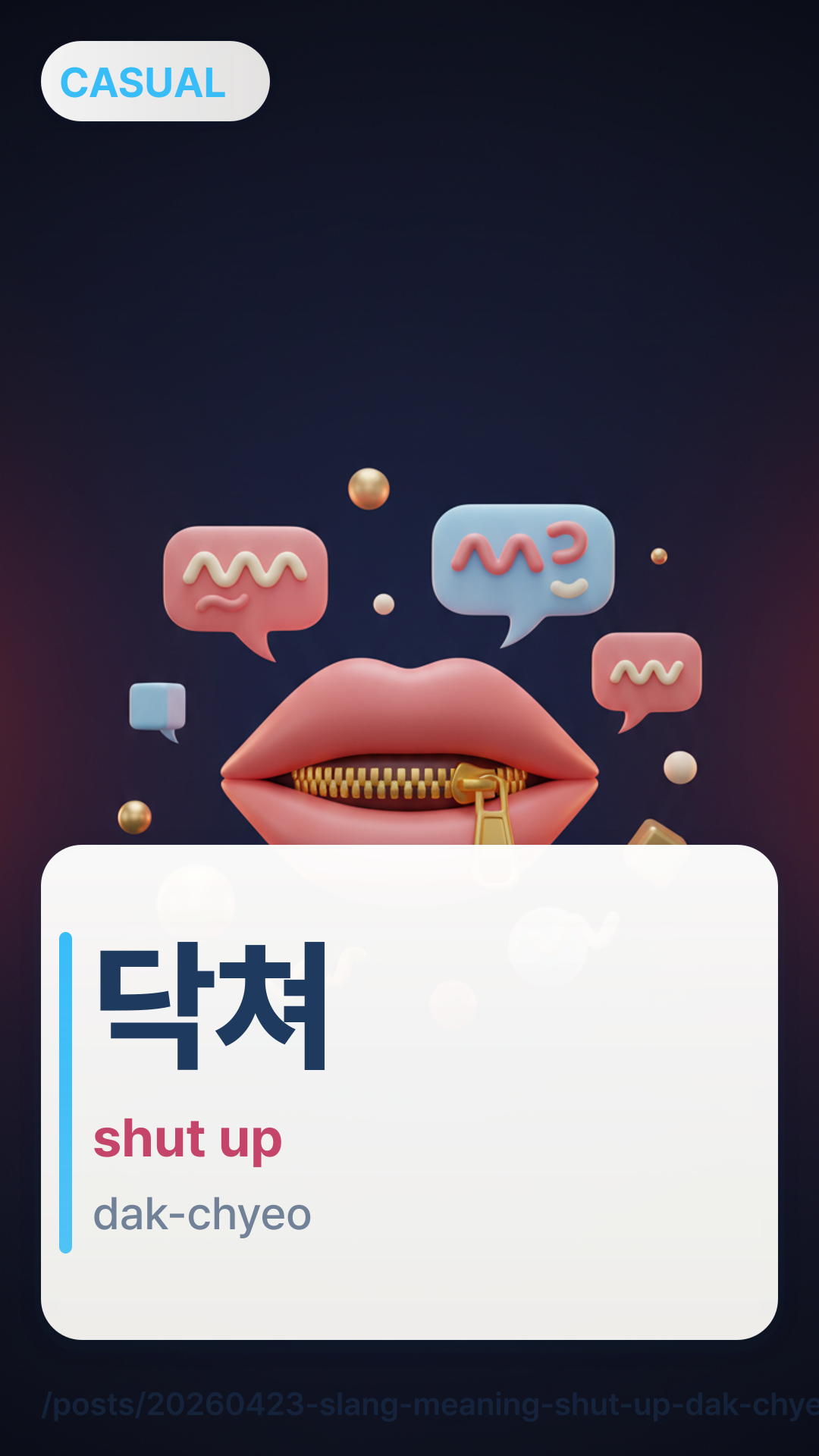
닥쳐dakchyeo is the most common way to say "shut up" in a rude, informal way. It comes from the verb 닥치다dakchida. It feels extremely aggressive and is almost exclusively used during heated arguments or by someone in a position of power bullying someone else. Using this with a stranger or a superior is a social death wish.
Common trap (misunderstanding)
Learners often think it’s equivalent to the English "Shut up!" used playfully among friends (like "No way!"). In Korean, 닥쳐dakchyeo is rarely playful. If you use it when a friend tells a surprising story, they will think you are genuinely angry or disgusted with them.
Tone ladder (risky → safer)
닥쳐dakchyeo (Extremely Rude/Aggressive)입 다물어ip damureo (Cold/Commanding)조용히 해joyonghi hae (Casual/Informal - "Be quiet")조용히 하세요joyonghi haseyo (Polite - "Please be quiet")쉿swit (Neutral - "Shh")
Minimal pairs (A vs B)
닥쳐dakchyeo (A): Focuses on the act of closing the mouth forcefully; sounds like an attack.조용히 해joyonghi hae (B): Focuses on the state of being quiet; much more common among friends.
Examples (chat)
아 진짜 짜증 나니까 닥쳐.a jinjja jjajeung nanikka dakchyeo. — I'm really annoyed, so shut up.
그만 좀 말해. 닥쳐!geuman jom malhae. dakchyeo! — Stop talking already. Shut up!

Quick meaning
Close your mouth; hold your tongue.
Nuance (how it feels)
입 다물어ip damureo is more literal than 닥쳐dakchyeo. While 닥쳐dakchyeo is an explosive burst of anger, 입 다물어ip damureo often feels colder and more calculated. It is frequently used in K-drama interrogation scenes or when a villain is threatening someone to keep a secret.
Common trap (misunderstanding)
Don't confuse this with 입을 맞추다ibeul matchuda (to kiss/to align stories). 입 다물어ip damureo is strictly about silence. Also, adding ~요~yo to make it 입 다무세요ip damuseyo doesn't actually make it "polite"—it just makes it sound like a sarcastic or terrifyingly calm command.
Tone ladder (risky → safer)
입 다물어ip damureo (Threatening/Cold)말하지 마malhaji ma (Casual - "Don't talk")말씀하지 말아주세요malsseumhaji marajuseyo (Formal - "Please do not speak")
Minimal pairs (A vs B)
입 다물어ip damureo (A): Physical command to shut the lips; feels like a threat.비밀로 해 줘bimilro hae jwo (B): "Keep it a secret"; the social way to ask for silence.
Examples (chat)
시끄러우니까 입 다물어.sikkeureounikka ip damureo. — You're being loud, so keep your mouth shut.
돈 줄 테니까 입 다물어.don jul tenikka ip damureo. — I'll give you money, so hold your tongue.
Copy/paste mini-dialogues (with EN)
Mini quiz (2 minutes)
Notes:
- Q1:
닥쳐dakchyeo is the go-to expression for explosive, angry outbursts in informal settings. - Q2:
입 다물어ip damureo fits the "cold/threatening" vibe better, especially regarding keeping information hidden.
Next steps
- Watch a clip of a K-drama argument and count how many times they use
조용히 해joyonghi hae vs닥쳐dakchyeo to feel the intensity difference. - Practice saying
조용히 해 주세요joyonghi hae juseyo (Please be quiet) instead—it's the version you'll actually use in real life if someone is being loud in a library or theater. - Try to identify the verb roots:
닥치다dakchida and다물다damulda to see how they function in other contexts.