Seoul Subway Guide: How to use -행, -(으)로, and 에/에서
Navigate the Seoul subway like a local. Master -행, -(으)로 가다, and essential particles to find your platform and exit. Learn more!
Navigate the Seoul subway like a local. Master -행, -(으)로 가다, and essential particles to find your platform and exit. Learn more!
Stop getting lost in Gangnam Station with this guide on directional markers and platform navigation for the Seoul subway system.
Situation (what’s happening)
You are at a busy transfer station like Myeong-dong or Hongdae. You need to confirm which platform goes toward your destination and ask for help when your T-money card acts up.
민수: 저기요, 잠실역으로 가려면 어디로 가야 돼요?minsu: jeogiyo, jamsiryeogeuro garyeomyeon eodiro gaya dwaeyo? — Excuse me, which way should I go to get to Jamsil Station?
직원: 2호선 성수행 열차를 타세요. 저쪽이에요.jigwon: 2hoseon seongsuhaeng yeolchareul taseyo. jeojjogieyo. — Take the Line 2 train bound for Seongsu. It is that way.
민수: 아, 감사합니다. 그런데 개찰구에서 카드가 안 찍혀요.minsu: a, gamsahapnida. geureonde gaechalgueseo kadeuga an jjikhyeoyo. — Ah, thank you. But my card isn't scanning at the gate.
직원: 역무실에 가서 확인해 보세요.jigwon: yeokmusire gaseo hwaginhae boseyo. — Go to the station office and check it.
민수: 네, 알겠습니다. 8번 출구는 어디에 있어요?minsu: ne, algetseupnida. 8beon chulguneun eodie isseoyo? — Okay, I see. Where is Exit 8?
직원: 계단 위로 올라가면 바로 있어요.jigwon: gyedan wiro olragamyeon baro isseoyo. — It's right there if you go up the stairs.
Quick cheat sheet
Expressions in this post

Why this fits the scene
When you are lost in a massive station like Seoul Station, you need to ask for the general direction. -(으)로-(eu)ro indicates the direction or the method of travel. It's more natural than just naming the station when asking for a path.
Safer alternative
-(으)로 가세요-(eu)ro gaseyo — Please go toward...
Example line (from the script)
잠실역으로 가려면 어디로 가야 돼요?jamsiryeogeuro garyeomyeon eodiro gaya dwaeyo? — Which way should I go to get to Jamsil Station?

Why this fits the scene
In Seoul, subway lines are circular or have multiple branches. Instead of just saying the line number, signs and announcements use -행-haeng (bound for) to show the final stop of that specific train. You'll see this on every digital display on the platform.
Safer alternative
...방향...banghyang — ...direction
Example line (from the script)
2호선 성수행 열차를 타세요.2hoseon seongsuhaeng yeolchareul taseyo. — Take the Line 2 train bound for Seongsu.
Why this fits the scene
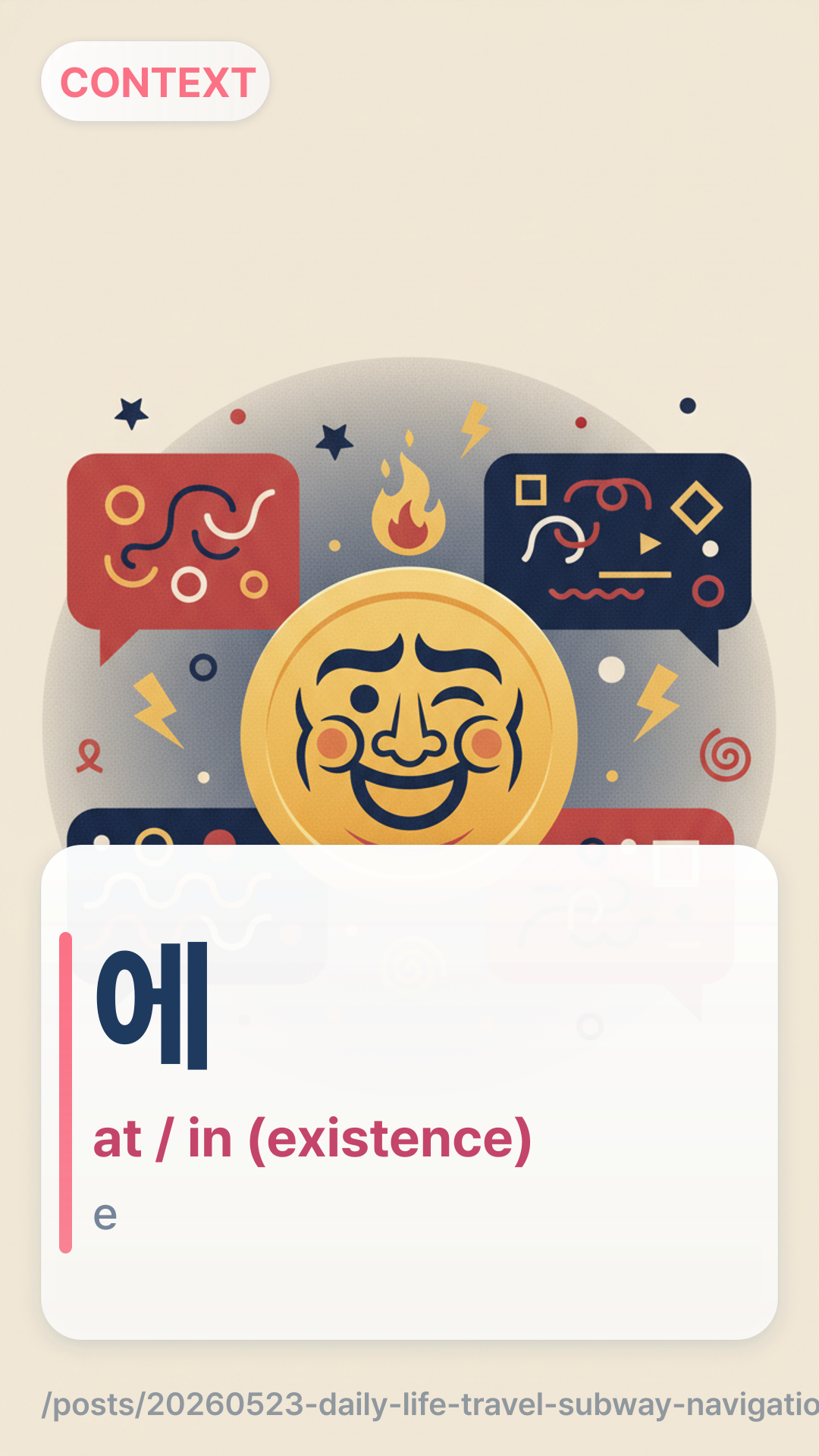
This particle is used when you are asking where something is (existence). When looking for a static object like an exit, a bathroom, or a locker, 에e is the correct choice paired with 있어요isseoyo.
Safer alternative
8번 출구가 어디예요?8beon chulguga eodiyeyo? — Where is Exit 8? (Simplified)
Example line (from the script)
8번 출구는 어디에 있어요?8beon chulguneun eodie isseoyo? — Where is Exit 8?
Why this fits the scene
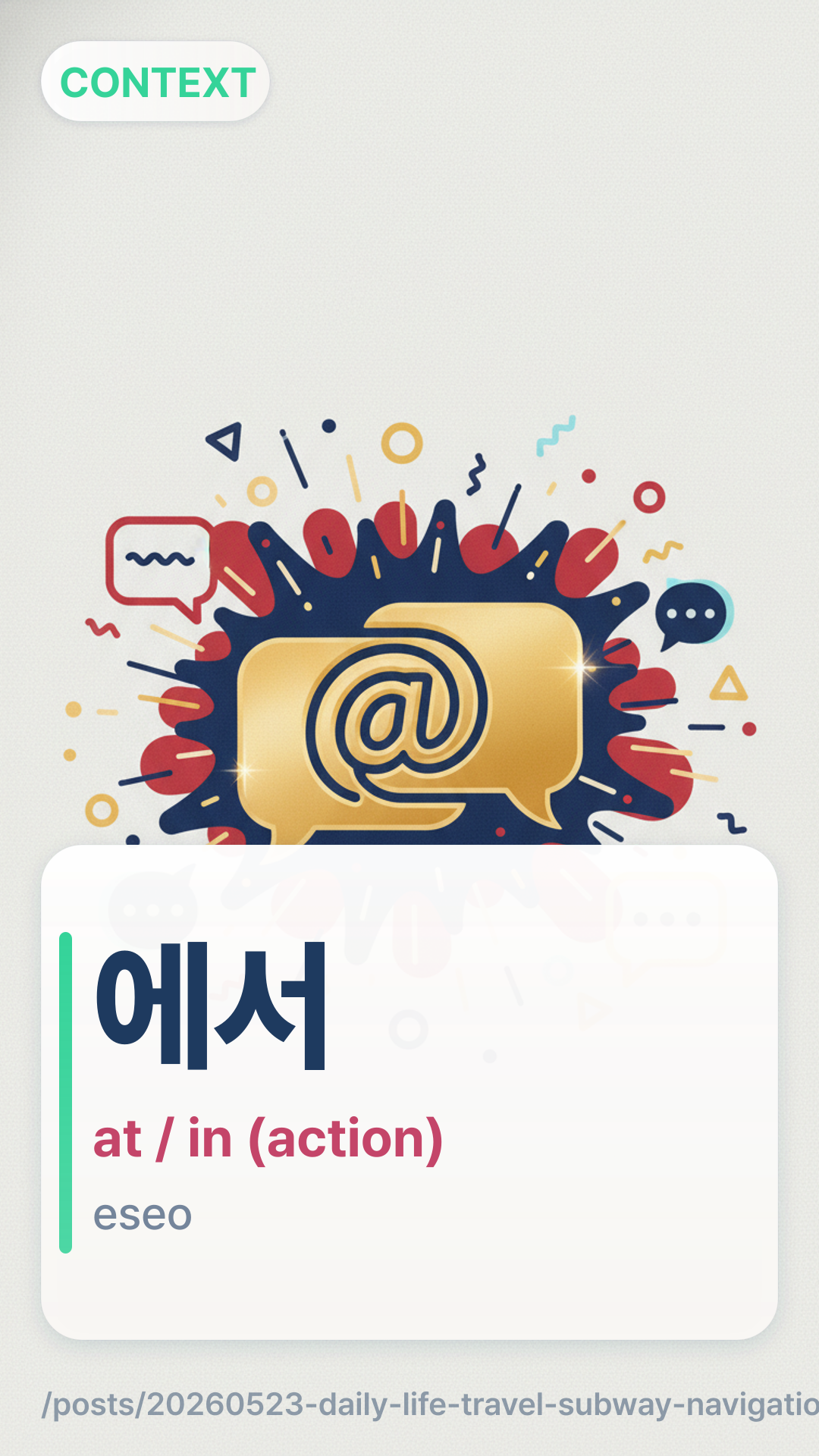
Unlike 에e, 에서eseo is for where an action happens. In the script, the card "doesn't scan" (the action of failing to tag) at the gate. Using 에e here would sound like the card is just sitting there, rather than failing to work during the tagging process.
Safer alternative
여기서yeogiseo — Right here (shortened form of 여기에서)
Example line (from the script)
개찰구에서 카드가 안 찍혀요.gaechalgueseo kadeuga an jjikhyeoyo. — My card isn't scanning at the gate.

Why this fits the scene
This is the most practical phrase for transit issues. 찍다jjikda means to stamp or tag. When your T-money card or phone tag fails at the turnstile, locals say it "doesn't get tagged" or 안 찍혀요an jjikhyeoyo.
Safer alternative
카드가 인식이 안 돼요kadeuga insigi an dwaeyo — The card is not being recognized.
Example line (from the script)
그런데 개찰구에서 카드가 안 찍혀요.geureonde gaechalgueseo kadeuga an jjikhyeoyo. — But my card isn't scanning at the gate.
Decision Tree: 에 vs 에서
- Is the verb
있다itda (to be) or없다eopda (to not be)? -> Use에e (e.g.,역에 있어요yeoge isseoyo) - Is there an action like
타다tada (to ride) or찍다jjikda (to tag)? -> Use에서eseo (e.g.,역에서 타요yeogeseo tayo) - Common Mistake:
역에 타요yeoge tayo (X) ->역에서 타요yeogeseo tayo (O)
Rewrite drill
Rewrite: 8번 출구는 어디에 있어요?8beon chulguneun eodie isseoyo? (Where is Exit 8?)
- Casual:
8번 출구 어디 있어?8beon chulgu eodi isseo? - Neutral:
8번 출구 어디예요?8beon chulgu eodiyeyo? - Polite:
8번 출구는 어디에 있나요?8beon chulguneun eodie itnayo?
Copy/paste mini-dialogues (with EN)
Mini quiz (2 minutes)
Notes:
- Q1:
-(으)로-(eu)ro is used to indicate the destination you are heading toward. - Q2:
-행-haeng is the standard suffix for train destinations in announcements. - Q3:
에e is required because the verb is있어요isseoyo (existence).
Next steps
Listen closely to the subway announcements. You will hear 이번 역은...ibeon yeogeun... followed by the station name, and then the destination using -행-haeng. If you ever get stuck at a gate, don't panic—just find the "Help" bell near the wide gate and say 카드가 안 찍혀요kadeuga an jjikhyeoyo!