Check-in Like a Local: Essential Korean Hotel Phrases
Master 예약, 체크인, and 조식 to navigate Korean hotels with ease. Learn polite requests and check-in essentials in this guide.
Master 예약, 체크인, and 조식 to navigate Korean hotels with ease. Learn polite requests and check-in essentials in this guide.
Navigate the front desk with confidence using the right level of politeness for a smooth stay in Seoul.
Situation (what’s happening)
You've just arrived at a boutique hotel in Myeongdong after a long flight. You need to confirm your booking, ask for a quiet room, and figure out when you can eat in the morning. Here is how that conversation typically flows at the front desk.
Guest: 안녕하세요, 예약yeyak했는데요. — Hello, I have a reservation.
Staff: 성함이 어떻게 되시나요? — What is your name?
Guest: 김철수입니다. 그런데 제 이름으로 예약이 안 되어 있나요? — It's Kim Cheol-su. Is there no reservation under my name?
Staff: 아, 여기 있네요. 체크인chekeuin 도와드리겠습니다. — Ah, here it is. I will help you with check-in.
Guest: 혹시 높은 층nopeun cheung으로 배정받을 수 있을까요? — Could I possibly get a room on a high floor?
Staff: 네, 가능합니다. 조식josik 포함 패키지이신데 안내해 드릴까요? — Yes, that's possible. You have a breakfast package; shall I guide you?
Guest: 네, 이용 시간iyong sigan이 어떻게 되나요? — Yes, what are the hours of use?
Quick cheat sheet
Expressions in this post
Why this fits the scene
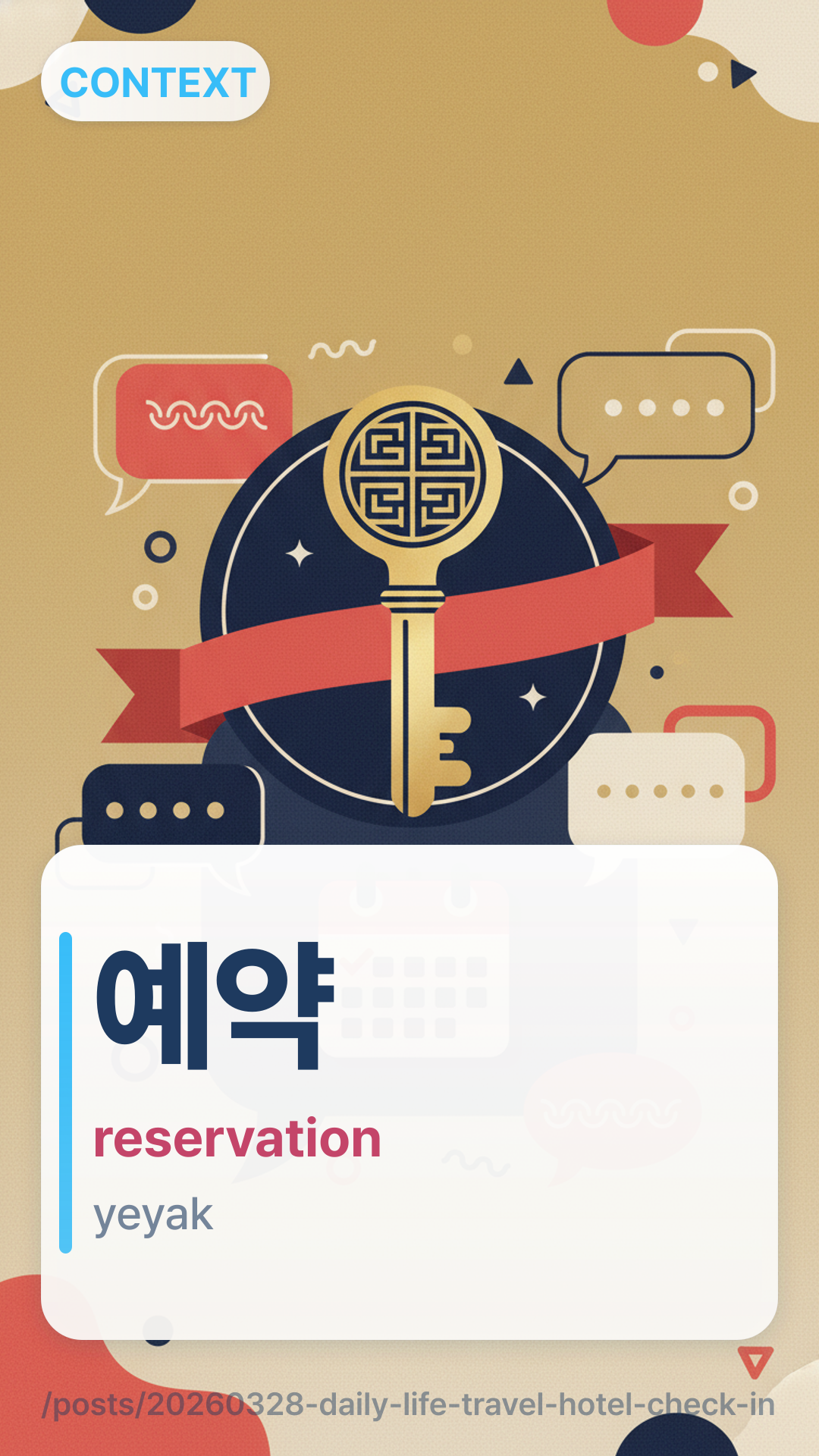
This is the most fundamental word for any travel service. In a hotel context, you use it immediately to identify yourself as a guest rather than a walk-in.
Safer alternative
부킹buking (Booking) is understood but sounds like Konglish; 예약yeyak is the standard professional term.
Example line (from the script)
안녕하세요, 예약했는데요.annyeonghaseyo, yeyakhaetneundeyo. — Hello, I have a reservation.
Why this fits the scene
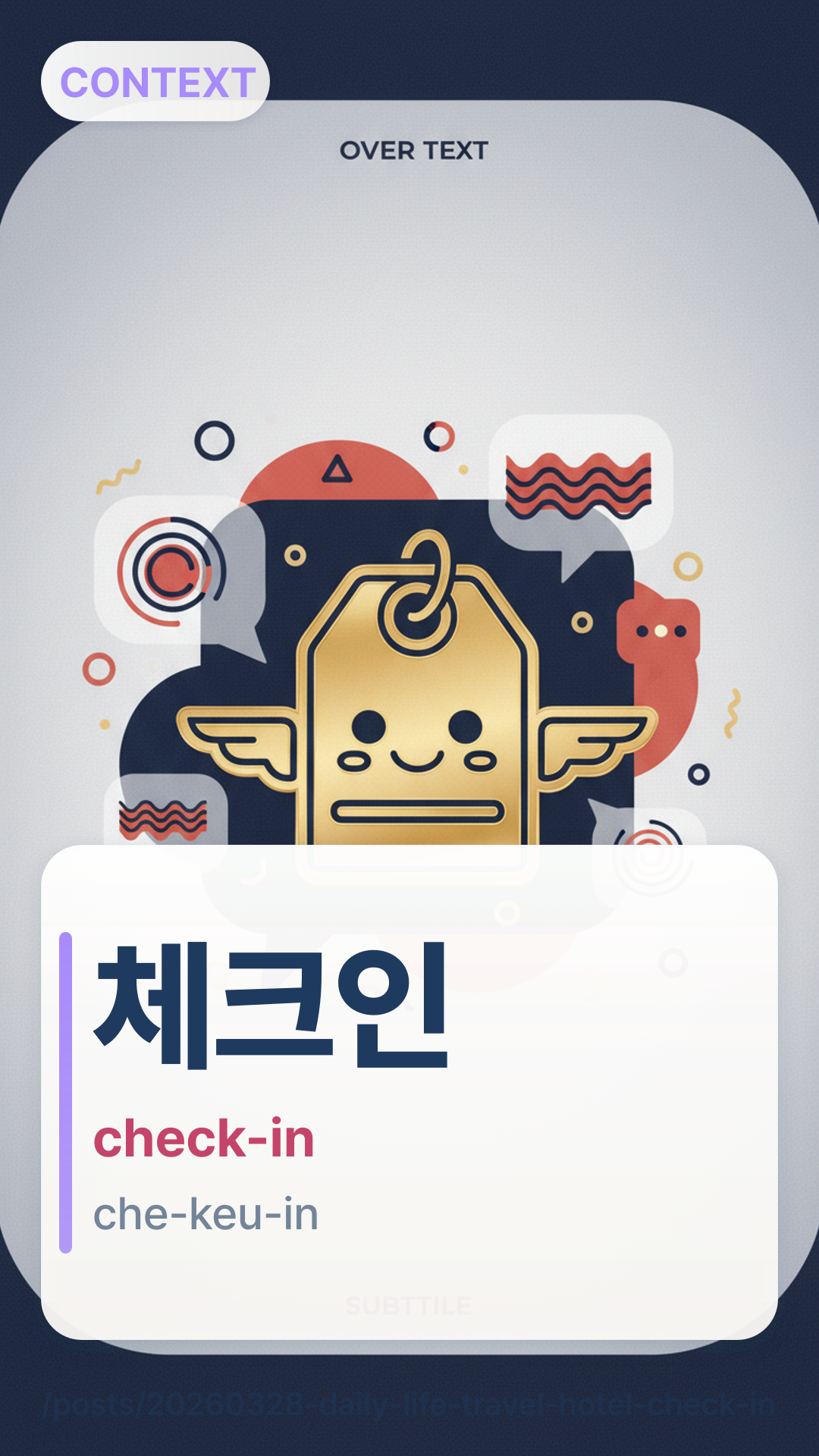
While it is a loanword from English, the pronunciation is specific (che-keu-in). It refers to the entire administrative process of getting your key card.
Safer alternative
방 배정bang baejeong (Room assignment) is more specific to the act of getting your room, but 체크인chekeuin is the universal term for the process.
Example line (from the script)
체크인 도와드리겠습니다.chekeuin dowadeurigetseupnida. — I will help you with check-in.
Why this fits the scene
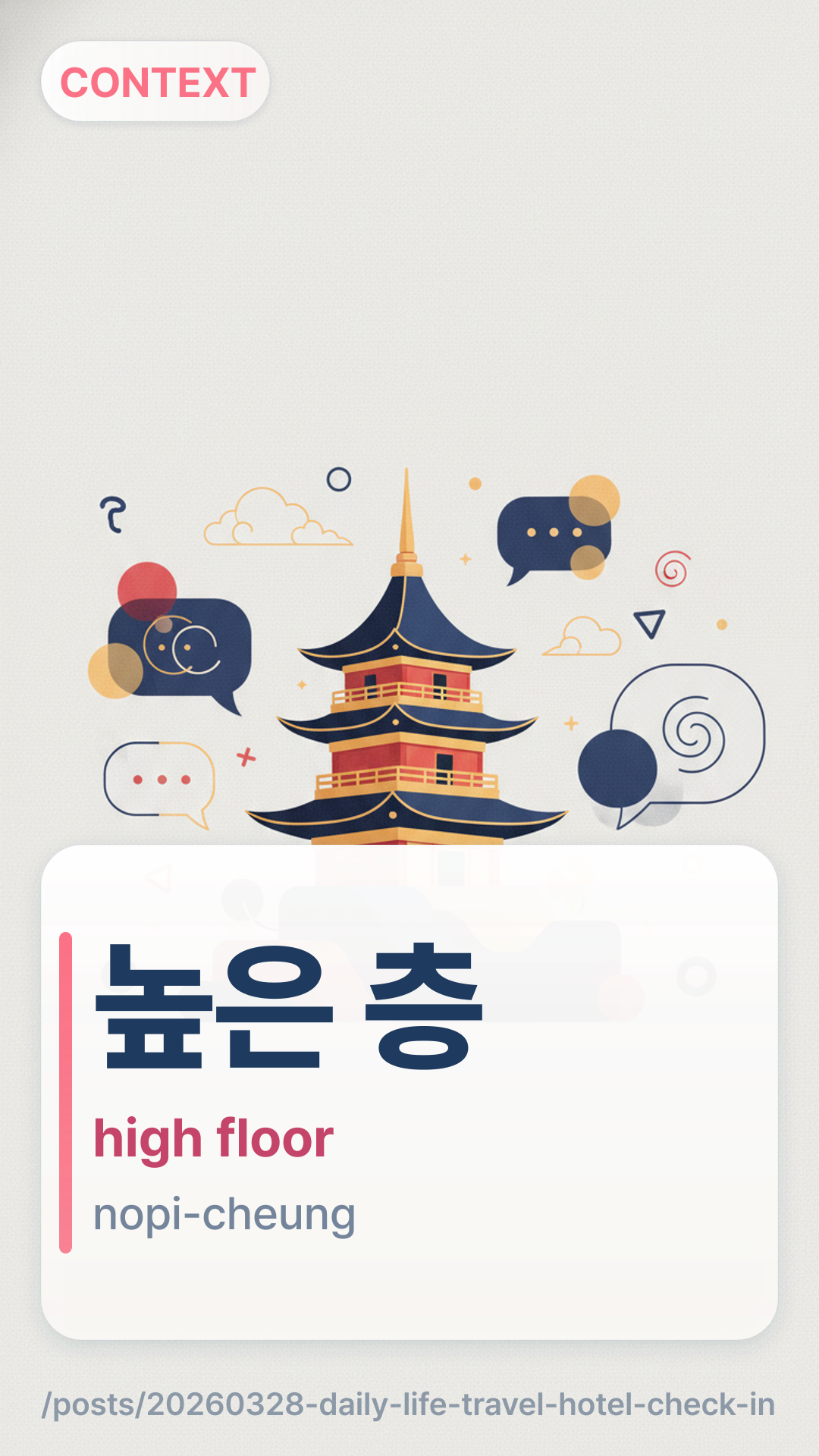
In dense cities like Seoul, a 높은 층nopeun cheung (high floor) usually means less street noise and a better view of the city skyline or Namsan Tower.
Safer alternative
전망 좋은 방jeonmang joheun bang (Room with a view) if you care more about the sight than the actual floor number.
Example line (from the script)
혹시 높은 층으로 배정받을 수 있을까요?hoksi nopeun cheungeuro baejeongbadeul su isseulkkayo? — Could I possibly get a room on a high floor?
Why this fits the scene
While 아침 식사achim siksa is the general word for breakfast, hotels almost exclusively use the Hanja-based term 조식josik on signs and in formal speech.
Safer alternative
아침achim (Morning/Breakfast) is fine for casual talk, but use 조식josik with staff to sound more prepared.
Example line (from the script)
조식 포함 패키지이신데 안내해 드릴까요?josik poham paekijiisinde annaehae deurilkkayo? — You have a breakfast package; shall I guide you?
Why this fits the scene
This phrase is essential for facilities like gyms, pools, and breakfast buffets. It covers both the opening and closing times.
Safer alternative
몇 시까지 해요?myeot sikkaji haeyo? (Until what time is it open?) is a more casual way to ask the same thing.
Example line (from the script)
네, 이용 시간이 어떻게 되나요?ne, iyong sigani eotteotge doenayo? — Yes, what are the hours of use?
Rewrite drill
Rewrite the request for a high floor in 3 tones:
- Casual:
높은 층으로 줄 수 있어?nopeun cheungeuro jul su isseo? — Can you give me a high floor? - Neutral:
높은 층으로 주실 수 있나요?nopeun cheungeuro jusil su itnayo? — Can you give me a high floor? - Polite:
혹시 높은 층으로 배정해 주실 수 있습니까?hoksi nopeun cheungeuro baejeonghae jusil su itseupnikka? — Would it be possible to assign me a high floor?
Copy/paste mini-dialogues (with EN)
Mini quiz (2 minutes)
Notes:
- Q1:
조식josik refers specifically to the hotel breakfast meal. - Q2:
체크인chekeuin is the noun for the process of registering at the hotel upon arrival. - Q3:
높은 층nopeun cheung is the standard request for guests wanting a better view or less noise.
Next steps
When speaking to hotel staff, using the -요-yo ending is perfectly safe and polite. However, you will notice staff often reply using the very formal -습니다-seupnida style. Don't feel pressured to match their formality perfectly; staying consistent with -요-yo is natural for travelers. Watch for signs in the elevator that list 이용 시간iyong sigan for the sauna or rooftop bar!