Planning a Trip? Master Weather Phrases like 일기예보 & 비 소식
Learn how to discuss travel plans based on the Korean weather forecast. Master 일기예보, 비 소식, and more to plan your perfect trip!
Learn how to discuss travel plans based on the Korean weather forecast. Master 일기예보, 비 소식, and more to plan your perfect trip!
Deciding where to go in Korea often depends on the sky; here is how to pivot your plans when the forecast changes.
Situation (what’s happening)
Minji and Paul are in a group chat planning a weekend getaway to Jeju Island. They are checking the latest reports to decide if they should hike or stay indoors.
Minji: 이번 주말 제주도 여행 갈 수 있을까?
Paul: 일기예보ilgiyebo 봤는데 토요일에 비 소식bi sosik이 있더라고.
Minji: 아 진짜? 날씨가 좋으면nalssiga joheumyeon 한라산 가려고 했는데.
Paul: 그러게. 비 오면 그냥 실내silnae 위주로 돌아다녀야 할 듯.
Minji: 기온gion도 많이 낮아질까? 옷을 어떻게 챙겨야 할지 모르겠네.
Paul: 낮에는 따뜻한데 저녁엔 쌀쌀하대. 겉옷 꼭 챙겨!
Quick cheat sheet
Expressions in this post
Why this fits the scene
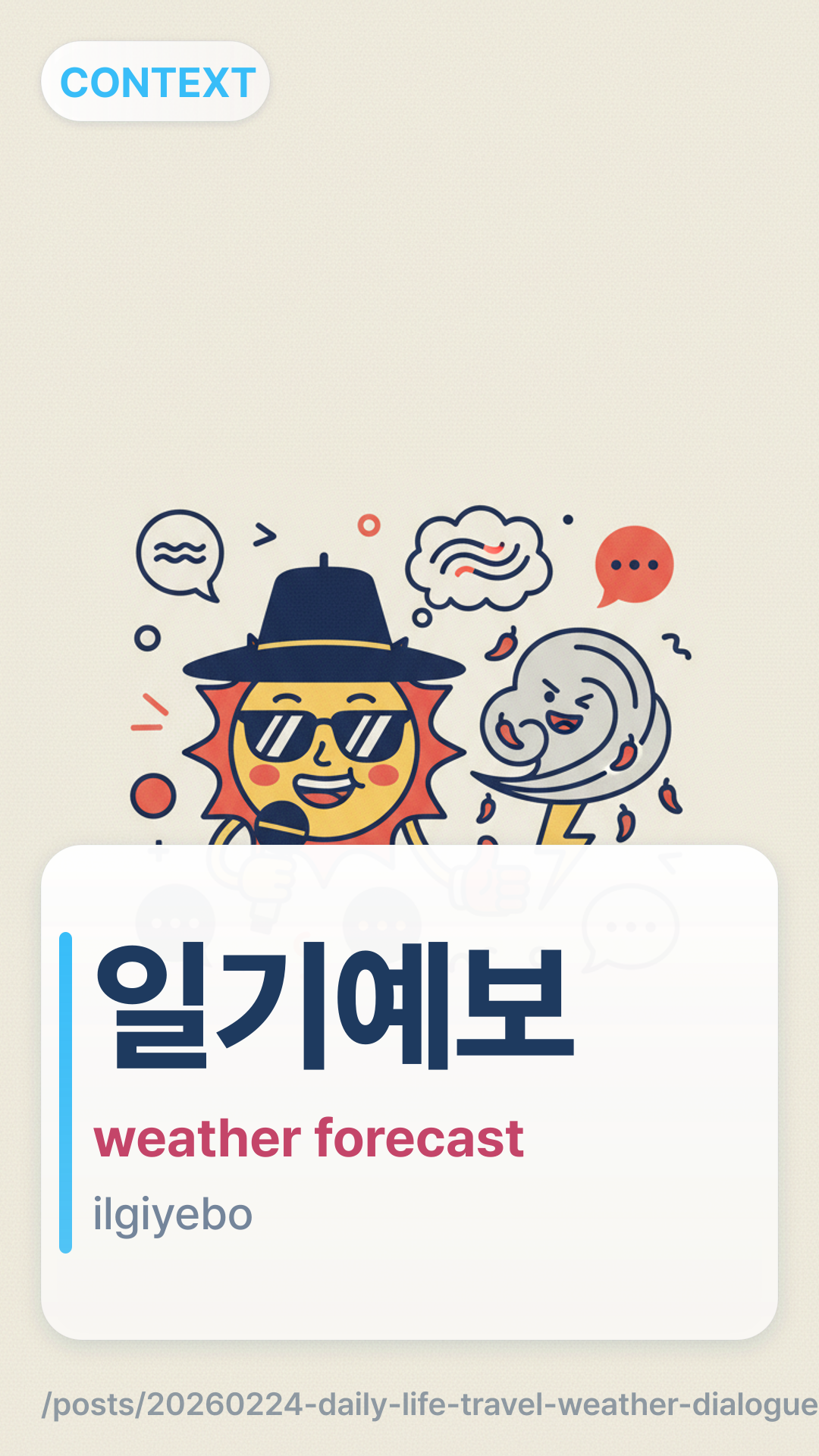
When planning travel, you don't just look at the sky; you check the official 일기예보ilgiyebo. It is the standard term used in news and apps.
Safer alternative
날씨 뉴스nalssi nyuseu (Weather news) — more casual but less precise.
Example line (from the script)
일기예보ilgiyebo 봤는데 토요일에 비 소식이 있더라고.
Why this fits the scene
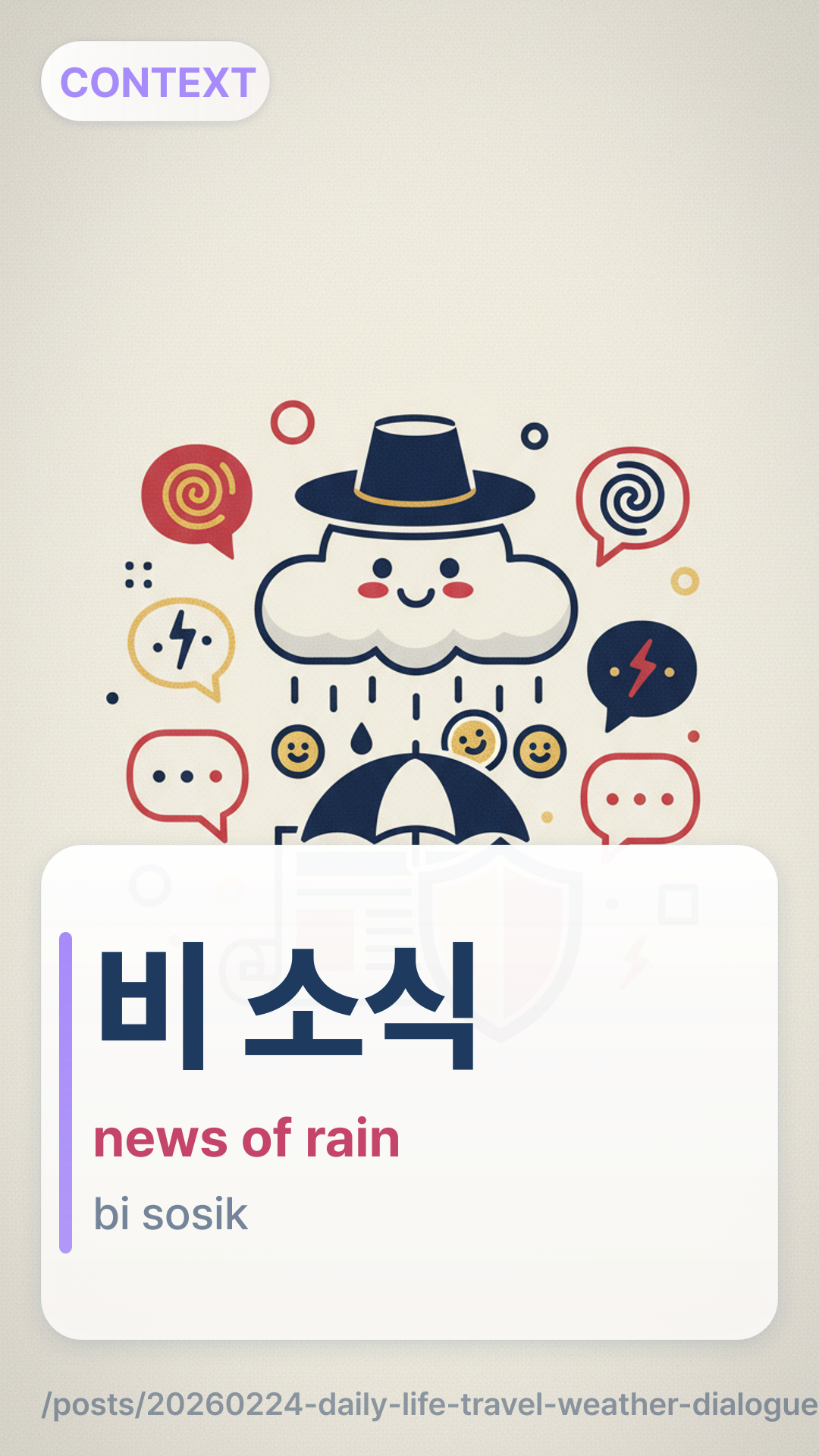
Instead of just saying "it will rain," Koreans often use 비 소식bi sosik (literally "rain news") when referring to a report or forecast they heard.
Safer alternative
비 온대요bi ondaeyo (They say it will rain).
Example line (from the script)
토요일에 비 소식bi sosik이 있더라고.
Why this fits the scene
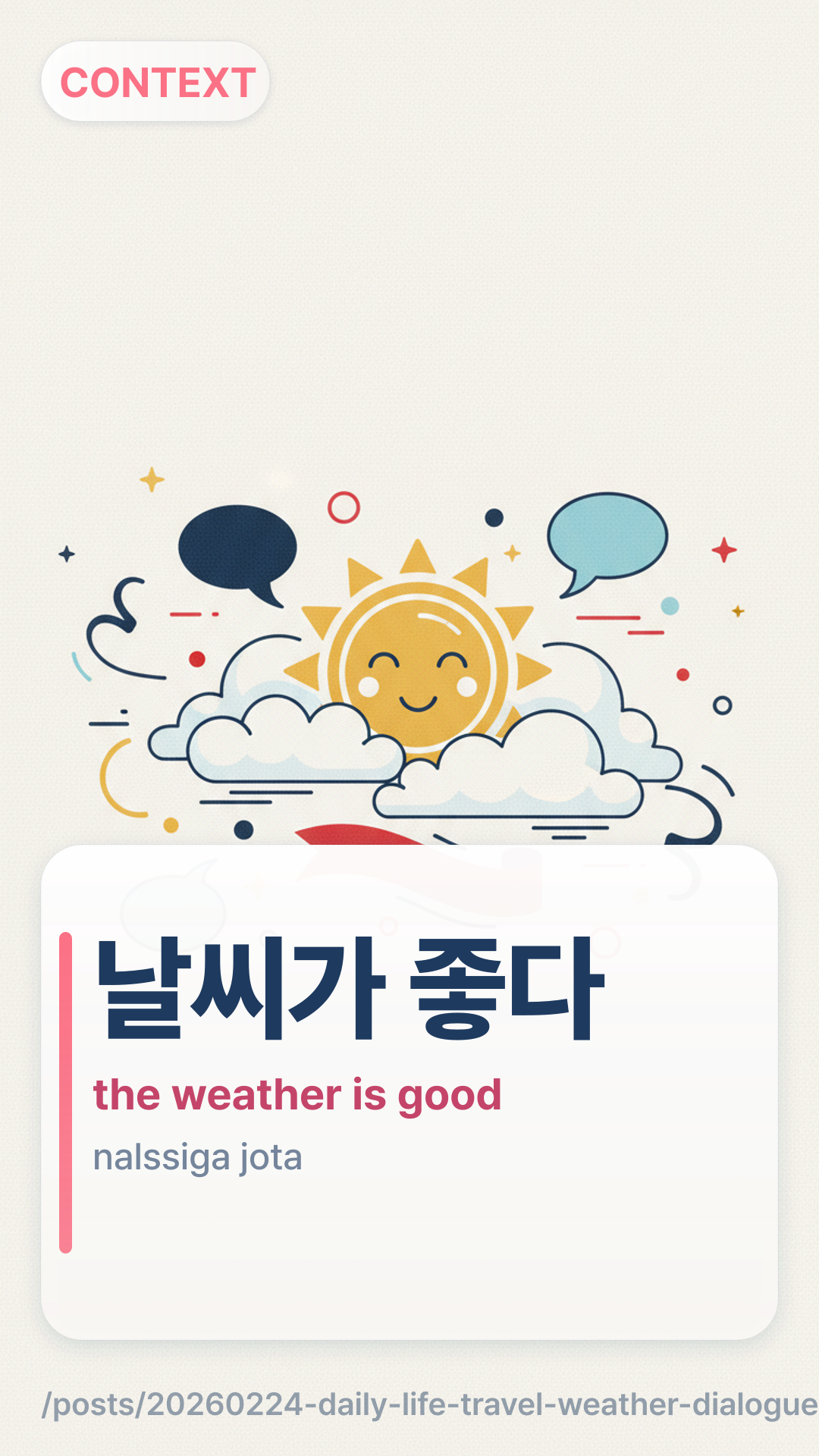
This is the most natural way to describe pleasant weather. Note the grammar: use the subject marker 가ga. A common mistake is saying 날씨를 좋다nalssireul jotda, which is grammatically incorrect because 좋다jotda is an adjective.
Safer alternative
날씨가 맑다nalssiga malda (The weather is clear).
Example line (from the script)
날씨가 좋으면nalssiga joheumyeon 한라산 가려고 했는데.
Why this fits the scene
When the weather ruins outdoor plans, you look for 실내silnae activities like museums or cafes. It is the opposite of 실외siroe (outdoors).
Safer alternative
안에서aneseo (Inside).
Example line (from the script)
비 오면 그냥 실내silnae 위주로 돌아다녀야 할 듯.
Why this fits the scene
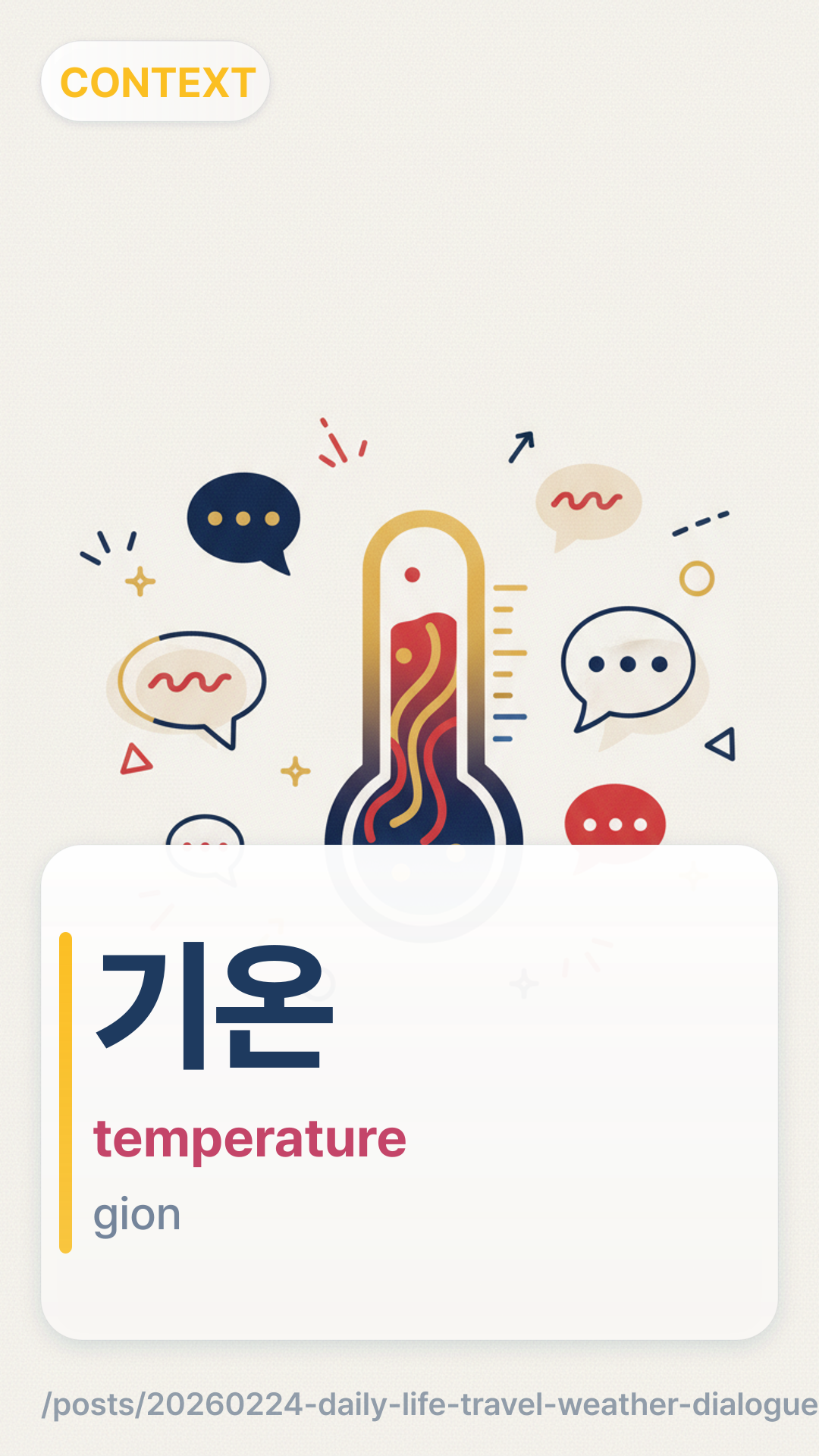
While 날씨nalssi refers to the overall weather, 기온gion is used specifically for the numerical temperature, which is crucial for packing clothes.
Safer alternative
온도ondo (General temperature).
Example line (from the script)
기온gion도 많이 낮아질까?
Decision Tree: Where to go?
- Is there
비 소식bi sosik?- Yes -> Stick to
실내silnae (Coex Mall, Museums, Cafes). - No -> Is the
기온gion above 15°C?- Yes ->
날씨가 좋다nalssiga jotda! Go to Hanriver or Namsan Park. - No -> Dress warmly and go for a short walk.
- Yes ->
- Yes -> Stick to
Rewrite drill
Rewrite: "The weather is good, so let's go outside."
- Casual:
날씨 좋으니까 나가자.nalssi joheunikka nagaja. - Neutral:
날씨가 좋아서 밖으로 나가요.nalssiga johaseo bakkeuro nagayo. - Polite:
날씨가 좋으니 외출하시는 게 어떨까요?nalssiga joheuni oechulhasineun ge eotteolkkayo?
Copy/paste mini-dialogues (with EN)
Mini quiz (2 minutes)
Notes:
- Q1: Since it is raining, you should choose an indoor (
실내silnae) activity. - Q2: You check the
일기예보ilgiyebo to find out if it will snow. - Q3:
기온gion refers to the temperature being low, requiring heavy clothing.
Next steps
Check your weather app in Korean! Look for the words 강수확률gangsuhwakryul (precipitation probability) and 최고기온choegogion (highest temperature) to practice your travel vocabulary in the wild.