-(으)ㄴ/는지 Meaning: How to Express Uncertainty in Korean
Master the Korean grammar -(으)ㄴ/는지 to express 'whether' or 'if'. Learn tense rules, avoid common verb mistakes, and take the quiz!
Master the Korean grammar -(으)ㄴ/는지 to express 'whether' or 'if'. Learn tense rules, avoid common verb mistakes, and take the quiz!
One of the most common mistakes beginners make is trying to use 인지inji for everything. For example, saying 먹은지 몰라요meogeunji molrayo when you mean you don't know if someone ate. Understanding how to attach this pattern to verbs versus adjectives is the key to sounding like a natural speaker rather than a textbook translator.
Wrong: 그 사람이 어디 가는지 알아요?geu sarami eodi ganeunji arayo? (If asking about a past trip)
Right: 그 사람이 어디 갔는지 알아요?geu sarami eodi gatneunji arayo? (Did you know where they went?)
Quick cheat sheet
Expressions in this post
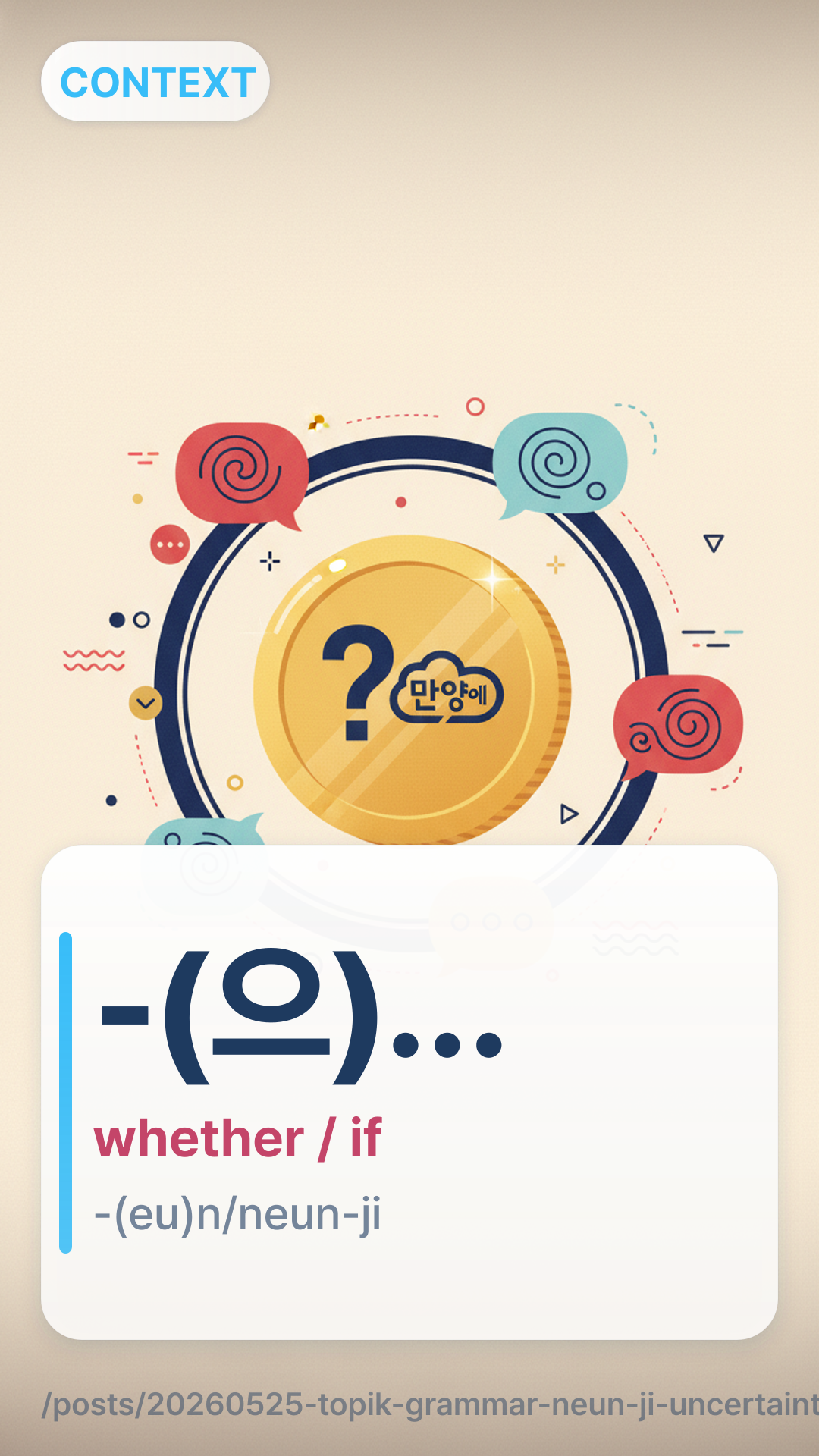
Form (how to attach)
This pattern changes based on the word class and the tense. Use this decision tree to pick the right form:
- Is it a Verb?
- Past:
-았/었는지-at/eotneunji (e.g.,갔는지gatneunji) - Present:
-는지-neunji (e.g.,가는지ganeunji) - Future:
-(으)ㄹ지-(eu)ㄹji (e.g.,갈지galji)
- Past:
- Is it an Adjective?
- Present:
-(으)ㄴ지-(eu)ㄴji (e.g.,예쁜지yeppeunji,작은지jageunji)
- Present:
- Is it a Noun?
- Present:
-인지-inji (e.g.,학생인지haksaenginji)
- Present:
Meaning range (what it can/can’t mean)
It translates to "whether" or "if" in English. It is almost always followed by verbs of cognition or inquiry like 알다alda (to know), 모르다moreuda (to not know), 궁금하다gunggeumhada (to be curious), or 확인하다hwaginhada (to check).
Register (neutral/polite)
This is a neutral connective ending. The politeness of the sentence is determined by the final verb (e.g., 모르겠어요moreugesseoyo vs 모른다moreunda).
Common mistakes (wrong → right)
- Wrong:
비가 오은지 몰라요.biga oeunji molrayo. - Right:
비가 오는지 몰라요.biga oneunji molrayo. (Verbs in present tense always use-는지-neunji regardless of batchim).
Examples
밖은 날씨가 추운지 확인해 보세요.bakkeun nalssiga chuunji hwaginhae boseyo. — Please check if the weather is cold outside.그 사람이 무엇을 먹었는지 기억 안 나요.geu sarami mueoseul meogeotneunji gieok an nayo. — I don't remember what that person ate.내일 비가 올지 모르겠어요.naeil biga olji moreugesseoyo. — I don't know if it will rain tomorrow.이게 맛있는지 한번 먹어봐.ige masitneunji hanbeon meogeobwa. — Try this and see if it's tasty.우리가 언제 만나는지 잊어버렸어요.uriga eonje mannaneunji ijeobeoryeosseoyo. — I forgot when we are meeting.
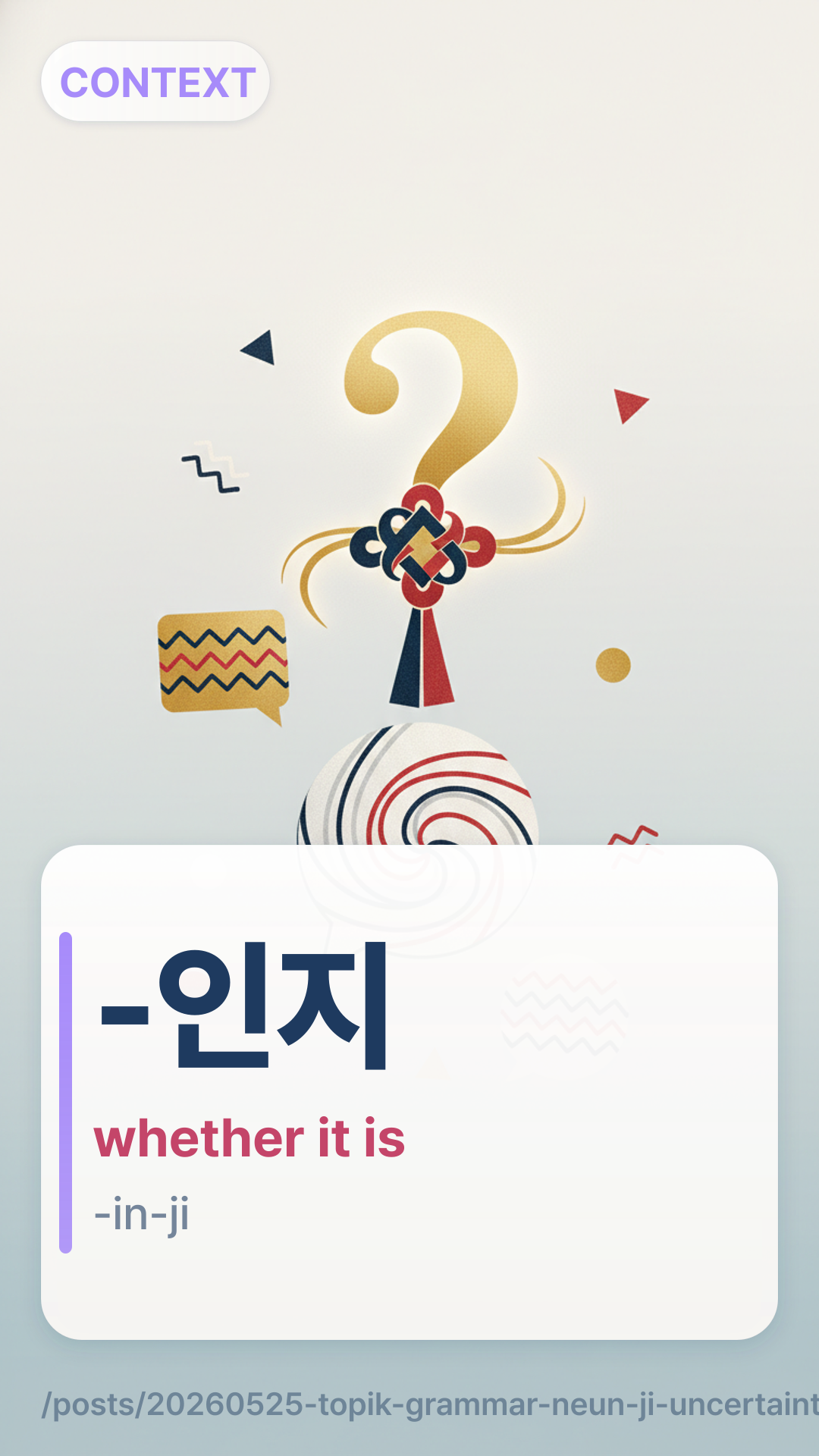
Form (how to attach)
Attach -인지-inji directly to the noun stem. If the noun ends in a vowel or consonant, it doesn't matter; it remains -인지-inji.
Meaning range (what it can/can’t mean)
This is specifically for the verb "to be" (이다ida). Use it when you are unsure about the identity or category of something.
Common mistakes (wrong → right)
- Wrong:
그게 사과는지 몰라요.geuge sagwaneunji molrayo. - Right:
그게 사과인지 몰라요.geuge sagwainji molrayo. (Since 'apple' is a noun, use-인지-inji).
Examples
저분이 선생님인지 여쭤보세요.jeobuni seonsaengniminji yeojjwoboseyo. — Ask if that person is a teacher.이게 진짜 금인지 궁금해요.ige jinjja geuminji gunggeumhaeyo. — I'm curious if this is real gold.범인이 누구인지 아무도 몰라요.beomini nuguinji amudo molrayo. — Nobody knows who the culprit is.오늘이 몇 일인지 알아요?oneuri myeot irinji arayo? — Do you know what date it is today?그게 사실인지 확인이 필요해요.geuge sasirinji hwagini piryohaeyo. — We need to confirm if that is the truth.
Mini quiz (2 minutes)
Notes:
- Q1:
오는지oneunji is correct because오다oda (to come) is a verb used in the present tense. - Q2:
인지inji is used here because사람saram (person) is a noun requiring the-인지-inji form. - Q3:
먹었는지meogeotneunji is the past tense form of먹다meokda, which is necessary because the sentence refers to "yesterday." - Q4:
추운지chuunji is the correct adjective form for춥다chupda (to be cold), where the 'ㅂ' irregular stem changes to '우' before adding-ㄴ지-ㄴji.
Next steps
Practice by converting these 5 sentences into the -(으)ㄴ/는지-(eu)ㄴ/neunji pattern:
- Is it raining? (I don't know) ->
비가 오는지 몰라요.biga oneunji molrayo. - Did he eat? (I'm not sure) ->
그가 먹었는지 모르겠어요.geuga meogeotneunji moreugesseoyo. - Is she a student? (I'm curious) ->
그녀가 학생인지 궁금해요.geunyeoga haksaenginji gunggeumhaeyo. - Is the food spicy? (Check it) ->
음식이 매운지 확인해 보세요.eumsigi maeunji hwaginhae boseyo. - Where are we going? (Do you know?) ->
우리가 어디에 가는지 알아요?uriga eodie ganeunji arayo?