N이에요 vs 예요: Master the Korean 'To Be' Verb
Learn the difference between N이에요 and 예요. Master basic Korean sentence endings with simple rules and rewrite drills.

Learn the difference between N이에요 and 예요. Master basic Korean sentence endings with simple rules and rewrite drills.
Stop guessing which 'to be' ending to use; the secret lies entirely in the final consonant of the noun.
The trap
Many beginners say 학생예요haksaengyeyo (Hakseng-yeyo) because it feels shorter to pronounce. However, because 학생haksaeng ends in a consonant (받침), you must use 이에요ieyo. The correct sentence is 학생이에요haksaengieyo.
Quick cheat sheet
Expressions in this post
Typical contexts
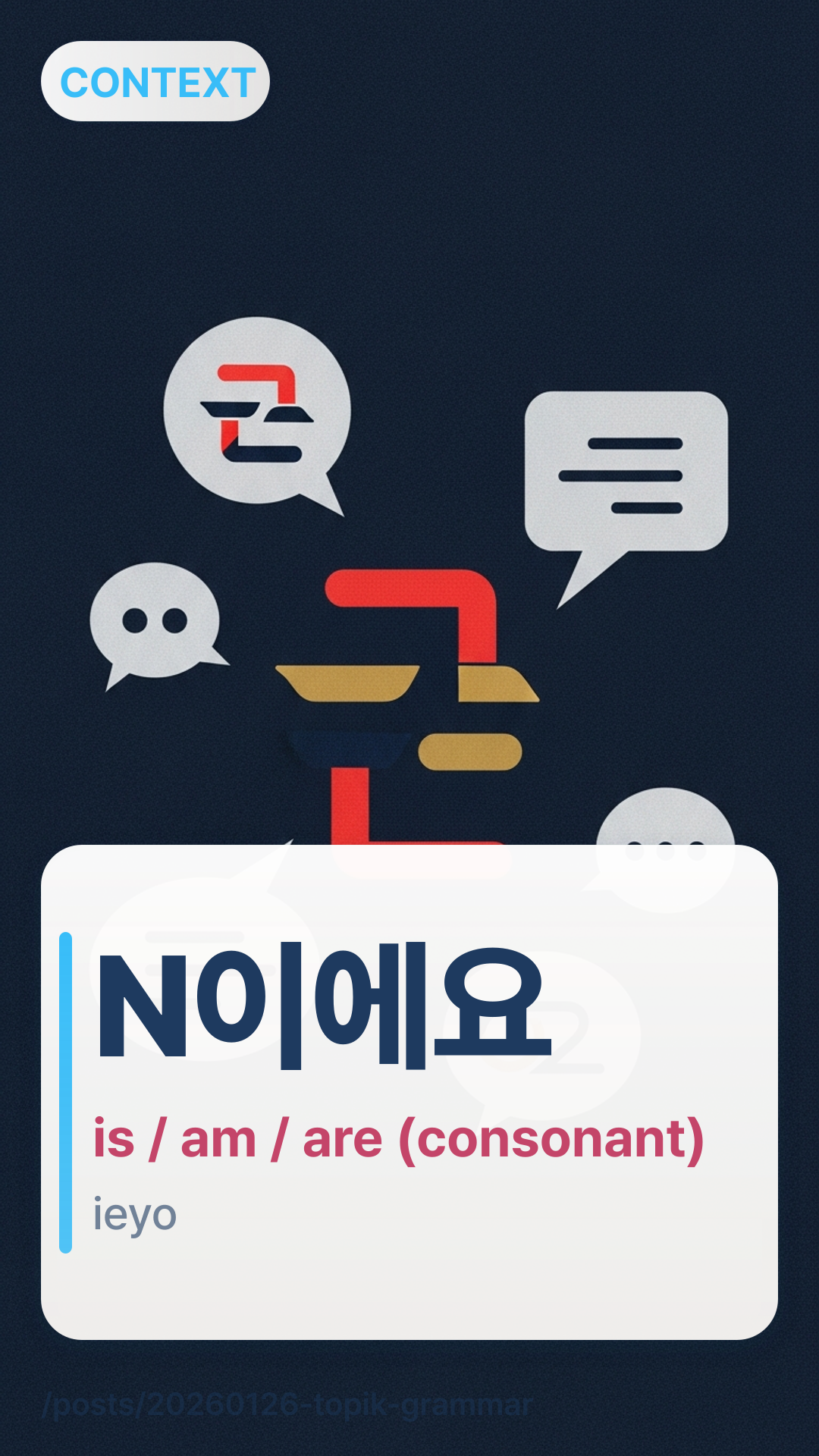
This is the polite identification marker used for names, jobs, and nationalities when the word ends in a final consonant (batchim). It acts like a bridge between the noun and the sentence ending to make pronunciation smoother.
제 이름은 지민이에요je ireumeun jiminieyo — My name is Jimin.이것은 책이에요igeoseun chaegieyo — This is a book.
Rewrite drill (swap to 예요)
If we change the subject from 책chaek (book) to 의자uija (chair), we must change the ending.
이것은 책이에요igeoseun chaegieyo ->이것은 의자예요igeoseun uijayeyo
Typical contexts
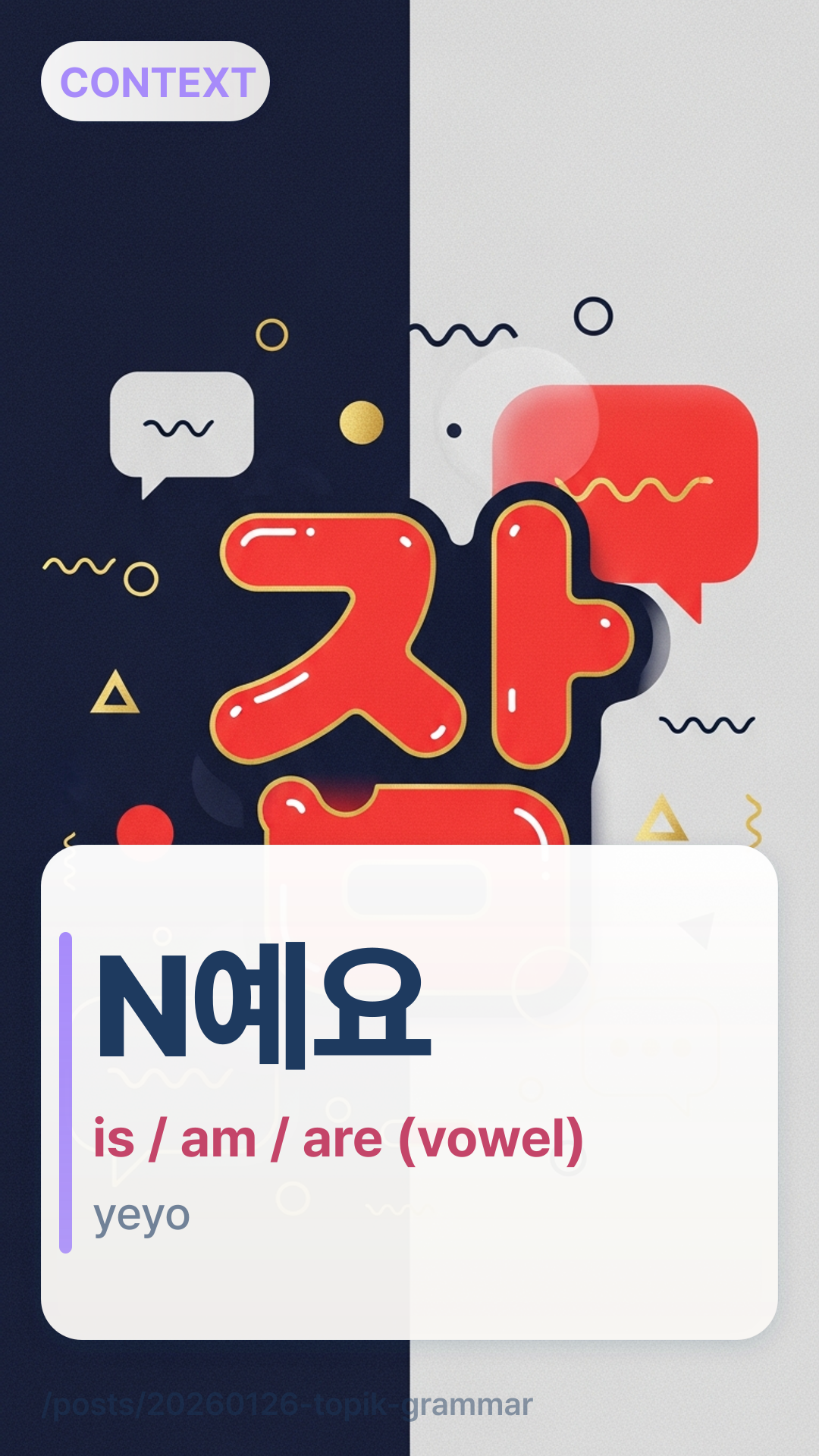
Use this when the noun ends in a vowel. It is a contracted form that allows for faster speech. It is the most common way to introduce yourself or identify objects in daily polite conversation.
저는 가수예요jeoneun gasuyeyo — I am a singer.여기는 학교예요yeogineun hakgyoyeyo — This place is a school.
Rewrite drill (swap to 이에요)
If we change the subject from 가수gasu (singer) to 선생님seonsaengnim (teacher), we must change the ending.
저는 가수예요jeoneun gasuyeyo ->저는 선생님이에요jeoneun seonsaengnimieyo
Comparison table
| Noun Ends In | Ending | Example |
|---|---|---|
| Consonant (받침 O) | 이에요ieyo | 물이에요murieyo (It's water) |
| Vowel (받침 X) | 예요yeyo | 커피예요keopiyeyo (It's coffee) |
Mini Quiz
Notes:
- Q1:
사람saram ends in the consonantㅁㅁ, so이에요ieyo is required. - Q2:
모자moja ends in the vowelㅏㅏ, so예요yeyo is the correct choice. - Q3:
핸드폰haendeupon ends in the consonantㄴㄴ, so이에요ieyo is used.
Next Steps
Try looking at five objects around you right now. If the word ends in a consonant, shout 이에요ieyo! If it ends in a vowel, shout 예요yeyo! Practicing this physical distinction helps your brain automate the grammar rule without overthinking the spelling.