국제유가 & 물가 비상: Decoding Korean Oil Price Headlines
Master essential economy terms like 국제유가 and 물가 비상 to understand Korean news about rising oil prices and inflation. Learn with our TOPIK guide!

Master essential economy terms like 국제유가 and 물가 비상 to understand Korean news about rising oil prices and inflation. Learn with our TOPIK guide!
Learn to distinguish between price surges and explosions while mastering the formal vocabulary used in Korean economic news reports.
Summary
Global oil prices are seeing a significant uptick due to geopolitical tensions and supply chain constraints. This shift is directly impacting the Korean domestic market, leading to concerns over the cost of living for average households.
In response to these rising costs, the Korean government is actively discussing whether to extend current fuel tax cuts. These measures are intended to alleviate the financial burden on consumers and stabilize the broader economy.
Economic analysts are closely monitoring the situation, as energy costs are a primary driver of inflation. If oil prices remain high, it could lead to a prolonged period of high consumer prices across various sectors.
Understanding these headlines is crucial for TOPIK learners, as economic news frequently appears in the reading and listening sections of the exam. Mastering these specific terms will help you navigate formal news broadcasts with ease.
Headline in one sentence
Global oil prices surge, sparking an inflation emergency and prompting the government to consider extending fuel tax cuts.
Quick cheat sheet
Expressions in this post
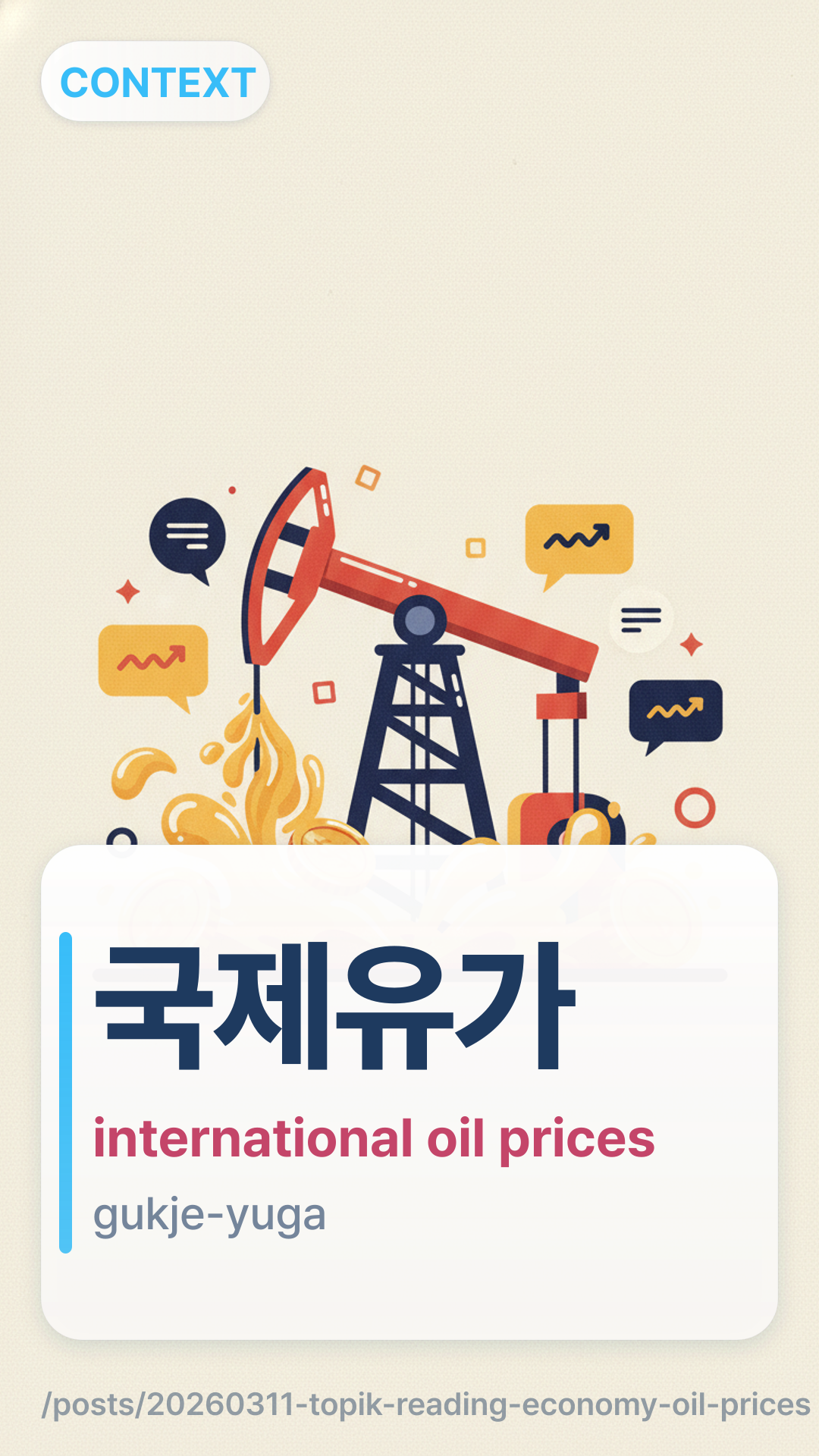
Common collocations
국제유가 하락gukjeyuga harak — Drop in international oil prices국제유가 추이gukjeyuga chui — International oil price trends
Rewrite
국제유가가 올랐습니다.gukjeyugaga olratseupnida. — International oil prices have gone up.
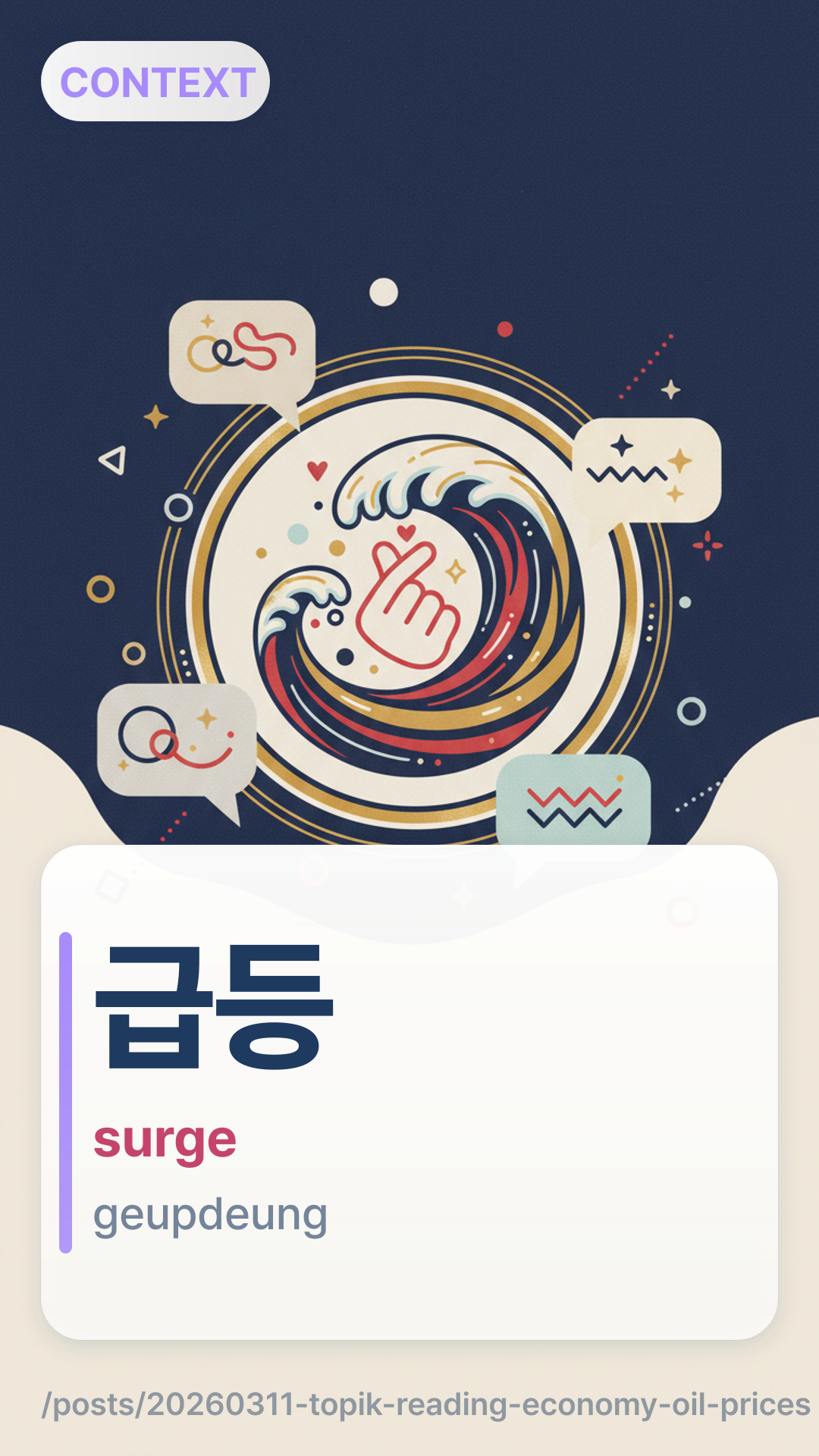
Common collocations
주가 급등juga geupdeung — Stock price surge금리 급등geumri geupdeung — Interest rate spike
Rewrite
가격이 아주 빠르게 많이 올랐습니다.gagyeogi aju ppareuge manhi olratseupnida. — The price rose very quickly and by a lot.
Common collocations
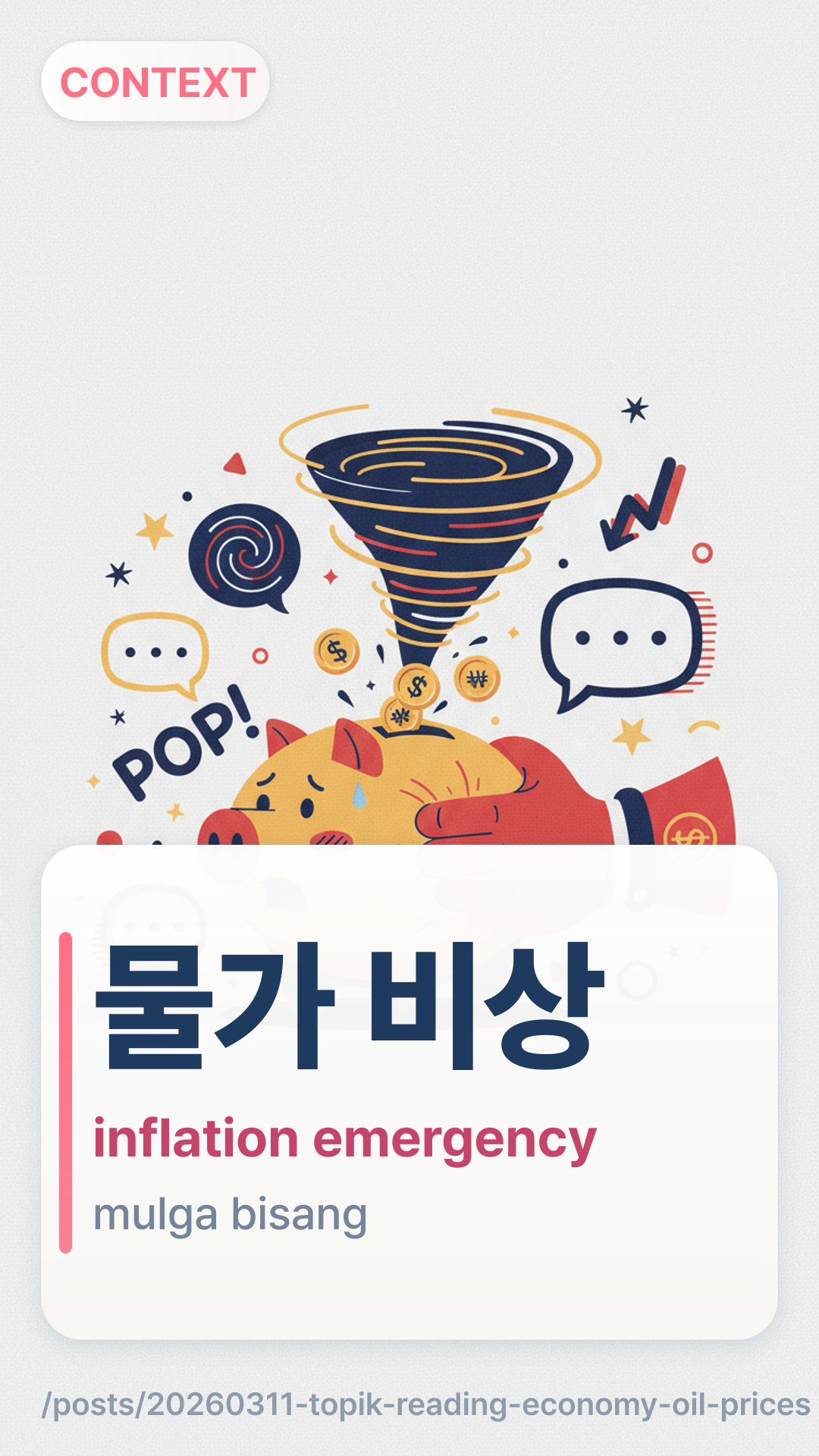
장바구니 물가 비상jangbaguni mulga bisang — Grocery price emergency연말 물가 비상yeonmal mulga bisang — Year-end price emergency
Rewrite
물가가 너무 올라서 큰 걱정입니다.mulgaga neomu olraseo keun geokjeongipnida. — Prices have risen so much that it is a big worry.
Price Change Decision Tree
When reading Korean news, the choice of word indicates the severity of the change:
인상insang (Increase): A standard, often planned increase (e.g., taxi fares, bus rates).급등geupdeung (Surge): A sudden, rapid increase that catches the market off guard.폭등pokdeung (Explosion): An extreme, uncontrollable rise that suggests a crisis level.
Rewrite drill
Rewrite these formal headlines into simple, natural Korean sentences:
국제유가 급등gukjeyuga geupdeung →국제유가가 갑자기 많이 올랐어요.gukjeyugaga gapjagi manhi olrasseoyo.물가 비상 상황mulga bisang sanghwang →물가가 너무 올라서 비상이에요.mulgaga neomu olraseo bisangieyo.유류세 인하 연장yuryuse inha yeonjang →기름에 붙는 세금을 계속 깎아주기로 했어요.gireume butneun segeumeul gyesok kkakkajugiro haesseoyo.
Mini quiz (2 minutes)
Notes:
- Q1:
국제유가gukjeyuga is the correct subject when discussing price per barrel (배럴당). - Q2:
급등geupdeung describes the action of prices rising sharply and suddenly. - Q3:
물가 비상mulga bisang is the idiomatic expression used when rising costs create a crisis for the public.
Next steps
When skimming Korean news, look for the Hanja character 高 (고 - high) or 上 (상 - up) next to these terms. Headlines often use these shorthand symbols to save space. Practice by checking the 'Economy' section of Naver News once a day to see how many times these three terms appear.