인플레이션 & 물가 상승: Decoding Korean Economy Headlines
Master Korean economy terms like 인플레이션 and 물가 상승. Learn to decode complex news headlines and practice formal rewrite drills.
Master Korean economy terms like 인플레이션 and 물가 상승. Learn to decode complex news headlines and practice formal rewrite drills.
Learn to distinguish between technical economic terms and dramatic news verbs to master TOPIK reading and news skimming.
Summary
South Korea's consumer price index has shown significant volatility recently, leading to a surge in news reports using technical economic terminology. For learners, these headlines can be intimidating because they often omit particles and use Hanja-based verbs that aren't common in daily conversation.
Understanding the nuance between a standard price increase and a 'soaring' rate is crucial for accurately grasping the economic climate. News outlets often use dramatic verbs to capture attention, which can change the perceived severity of the inflation being reported.
This lesson focuses on the core vocabulary found in the economy section of major portals like Naver News. We will look at how 'inflation' is localized and how verbs like 'record' or 'show' are used to report statistical changes formally.
By the end of this guide, you will be able to transform simple sentences about prices into professional-grade Korean news headlines, a skill highly valued in the TOPIK II reading and writing sections.
Headline in one sentence (paraphrase)
Consumer prices continue their steep upward trend as global inflation pressures persist.
Quick cheat sheet
Expressions in this post
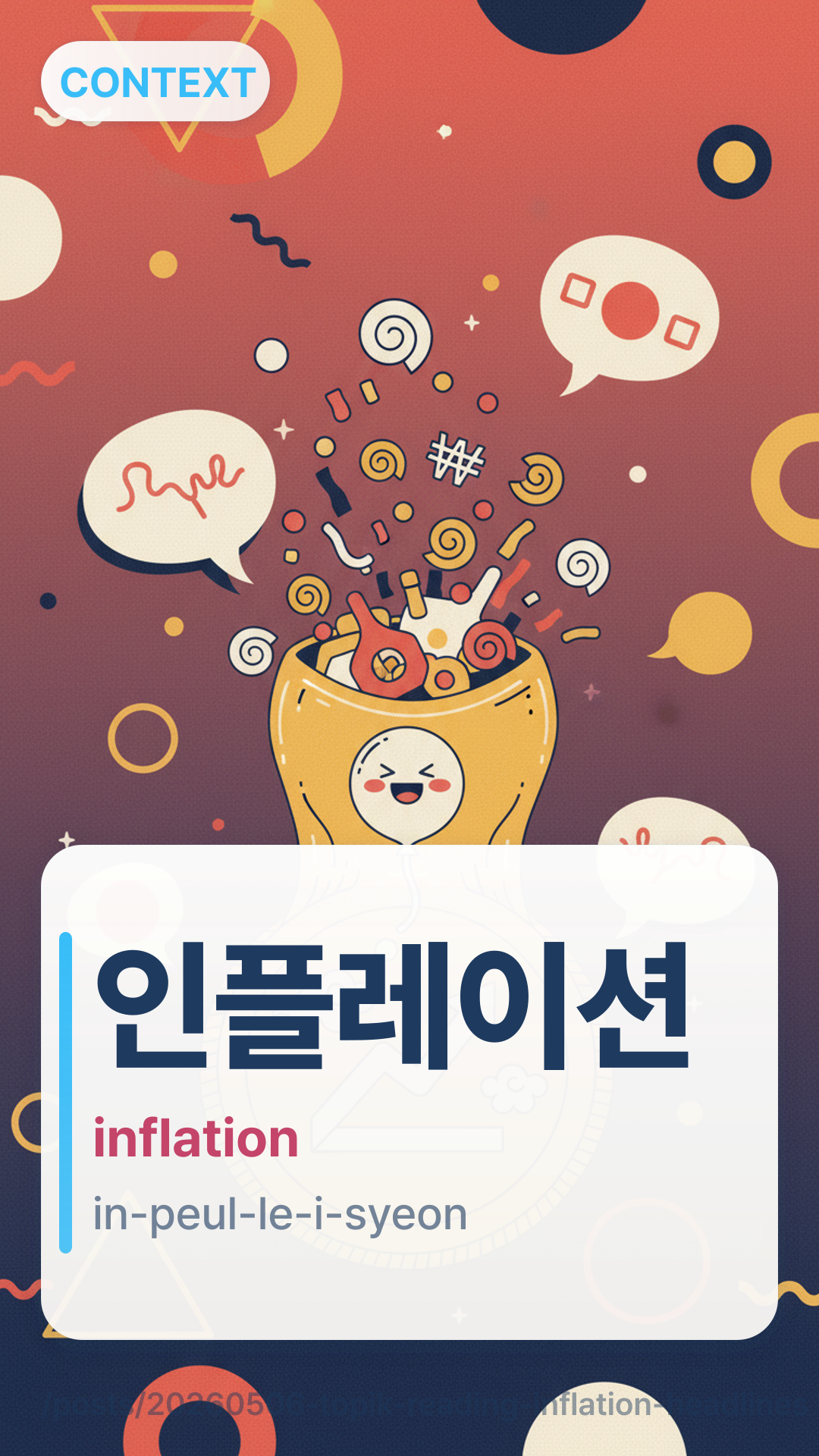
While the English loanword 인플레이션inpeulreisyeon is used frequently in analytical pieces, it is often shortened to 인플레inpeulre in tight headline spaces. It refers to the broad decrease in purchasing power rather than just one item getting expensive.
Common collocations
인플레이션 우려inpeulreisyeon uryeo — inflation concerns인플레이션 억제inpeulreisyeon eokje — curbing inflation
Rewrite (headline → simple)
인플레이션 공포 확산inpeulreisyeon gongpo hwaksan — People are becoming very worried about inflation.
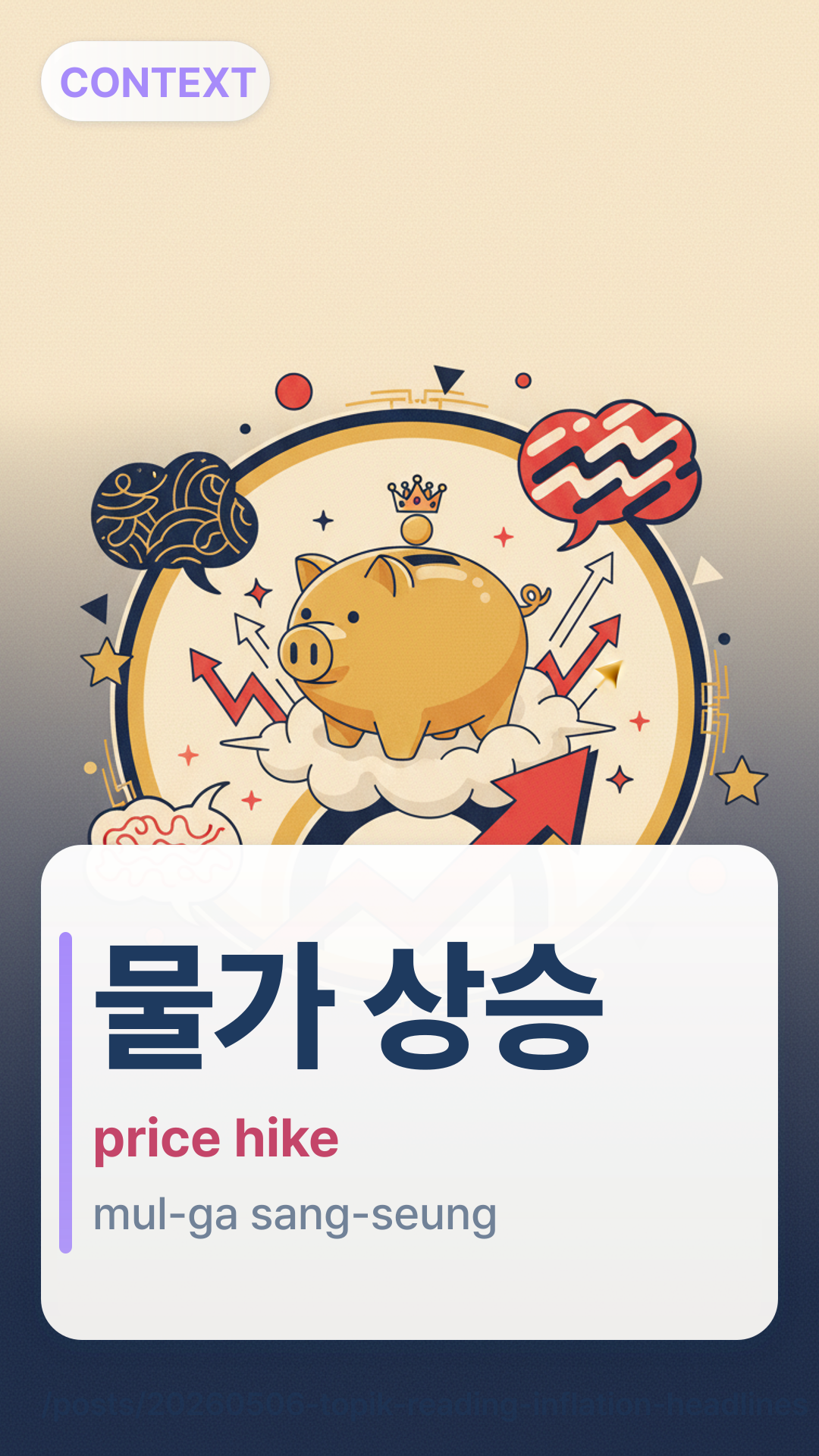
This is the most standard way to describe rising costs. In news, you will often see it paired with 압박apbak (pressure) or 지속jisok (continuation). It is more specific to the consumer experience than the abstract term 'inflation'.
Common collocations
물가 상승률mulga sangseungryul — inflation rate (price increase rate)물가 상승세mulga sangseungse — upward trend in prices
Rewrite (headline → simple)
물가 상승세 둔화mulga sangseungse dunhwa — The speed at which prices are rising has slowed down.
This is a high-intensity word. Use 폭등pokdeung only when the jump is vertical and shocking. If a price goes up by 2%, use 인상insang; if it doubles overnight, use 폭등pokdeung. In headlines, this is used to create a sense of crisis.
Common collocations
유가 폭등yuga pokdeung — oil price explosion집값 폭등jipgap pokdeung — skyrocketing house prices
Rewrite (headline → simple)
배추 가격 폭등baechu gagyeok pokdeung — The price of cabbage has gone up an incredible amount.
Decision Tree: Choosing the right word
When describing a change in price, the intensity determines your vocabulary:
- Is it a standard, planned increase (like bus fares)? Use
인상insang (Increase). - Is it a general market trend? Use
상승sangseung (Rise). - Is it a sudden, uncontrollable spike? Use
폭등pokdeung (Soaring).
Rewrite drill
Rewrite 3 short sentences: formal → simple Korean.
물가가 큰 폭으로 올랐어요.mulgaga keun pogeuro olrasseoyo. →물가 폭등mulga pokdeung (Headline style)가격이 계속 올라가는 추세입니다.gagyeogi gyesok olraganeun chuseipnida. →물가 상승세 지속mulga sangseungse jisok (Headline style)인플레이션 때문에 걱정이 많아요.inpeulreisyeon ttaemune geokjeongi manhayo. →인플레이션 우려 확산inpeulreisyeon uryeo hwaksan (Headline style)
Mini quiz (2 minutes)
Notes:
- Q1:
인플레이션inpeulreisyeon is the best fit here as it refers to the global macro-economic phenomenon linked to interest rates. - Q2:
폭등pokdeung is correct because the context mentions a "3-fold" increase, which implies a sudden and sharp spike. - Q3:
물가 상승mulga sangseung is the most natural fit for describing the daily cost of living and the price of a specific meal.
Next steps
When skimming the economy section, look for the character 高 (고 - high) attached to these words, such as 고물가gomulga (high prices). This is a common shorthand in Korean journalism to save space while signaling economic pressure.