소비자물가 상승률, 근원물가 뜻: CPI headline Korean
Decode Korean CPI headlines with 소비자물가 상승률 and 근원물가 collocations, plus a numbers drill and rewrite drill—master

Decode Korean CPI headlines with 소비자물가 상승률 and 근원물가 collocations, plus a numbers drill and rewrite drill—master
A headline-first collocation guide for CPI/inflation wording, with a rewrite drill that forces you to swap verb+noun pairs naturally.
Today’s numbers (example)
On my commute in Seoul, I used to open the Naver 경제 tab and see the same few “inflation” shapes over and over—numbers + one key noun phrase.
Here are generic examples and how to read them out loud in Korean:
3.1%— 삼 점 일 퍼센트 (a rate)0.2%p— 영 점 이 퍼센트포인트 (a change in the rate, “percentage points”)1,500원1,500won — 천오백 원 (a price)
Headline tip: when you see comparisons like 전년 동월 대비jeonnyeon dongwol daebi or 전월 대비jeonwol daebi, treat them as “which baseline?” rather than “good/bad.” Your job is to parse the pattern first.
Quick cheat sheet
Expressions in this post
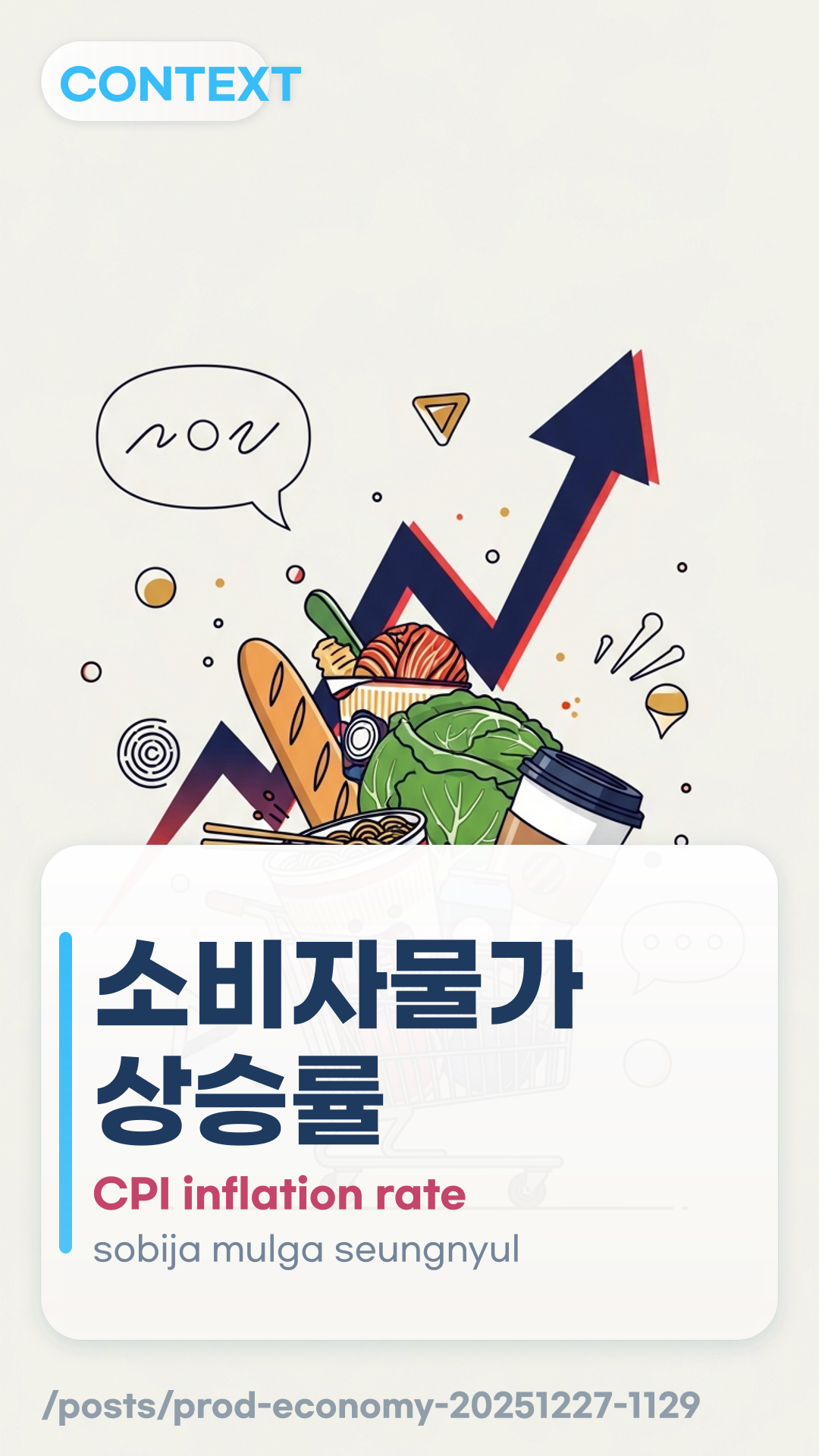
You’ll see this chunk when a headline is being “official-sounding.” It often signals a KPI-style summary rather than a story about one product getting expensive.
Common collocations
소비자물가 상승률이sobijamulga sangseungryuri오르다oreuda소비자물가 상승률이sobijamulga sangseungryuri내리다naerida상승률이sangseungryuri확대되다hwakdaedoeda /축소되다chuksodoeda상승률이sangseungryuri둔화되다dunhwadoeda /가속화되다gasokhwadoeda상승률이sangseungryuri전년 동월 대비jeonnyeon dongwol daebi몇 %myeot %기록하다girokhada
Example sentences
소비자물가 상승률이 3%대로 올라섰다.sobijamulga sangseungryuri 3%daero olraseotda. — The CPI inflation rate moved into the 3% range.상승률은 전월보다 둔화됐다.sangseungryureun jeonwolboda dunhwadwaetda. — The inflation rate slowed compared to the previous month.상승률이 확대됐다는 표현이 곧 물가가 폭등했다는 뜻은 아니다.sangseungryuri hwakdaedwaetdaneun pyohyeoni got mulgaga pokdeunghaetdaneun tteuseun anida. — “The rate widened” doesn’t automatically mean prices “skyrocketed.”
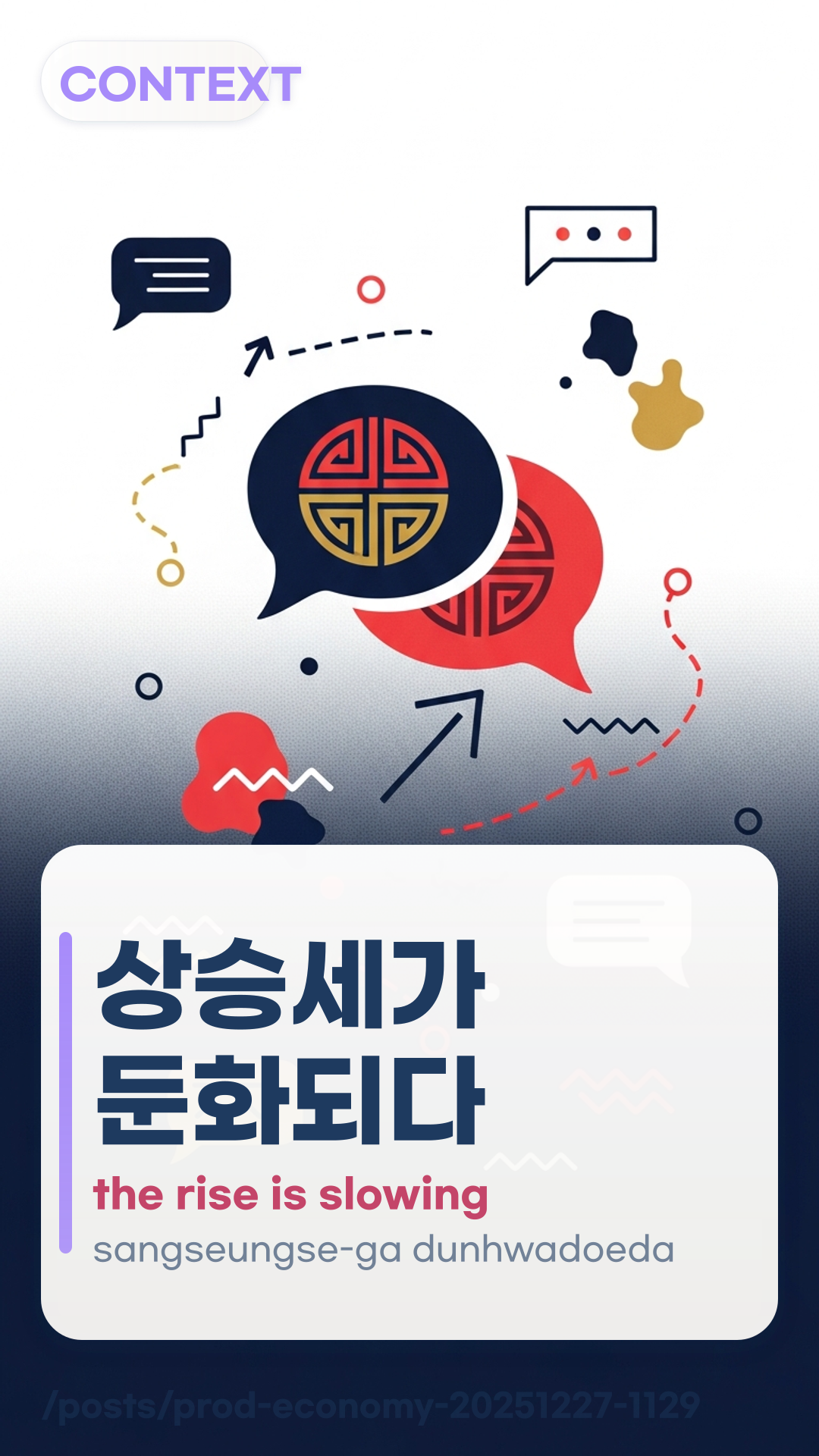
This is the classic “CPI vs inflation feeling” trap: 둔화 means the speed of rising slows, not that prices are falling.
Common collocations
상승세가sangseungsega둔화되다dunhwadoeda상승세가sangseungsega가속화되다gasokhwadoeda상승세가sangseungsega확대되다hwakdaedoeda상승세가sangseungsega꺾이다kkeokkida오름세가oreumsega주춤하다juchumhada
Example sentences
물가 상승세가 둔화됐다.mulga sangseungsega dunhwadwaetda. — Inflation’s upward momentum slowed.상승세가 꺾였지만 여전히 높은 수준이다.sangseungsega kkeokkyeotjiman yeojeonhi nopeun sujunida. — The uptrend eased, but it’s still high.상승세가 둔화됐다sangseungsega dunhwadwaetda=물가가 내렸다mulgaga naeryeotda는 해석은 흔한 오해다.` — A common misunderstanding is reading “the uptrend slowed” as “prices fell.”
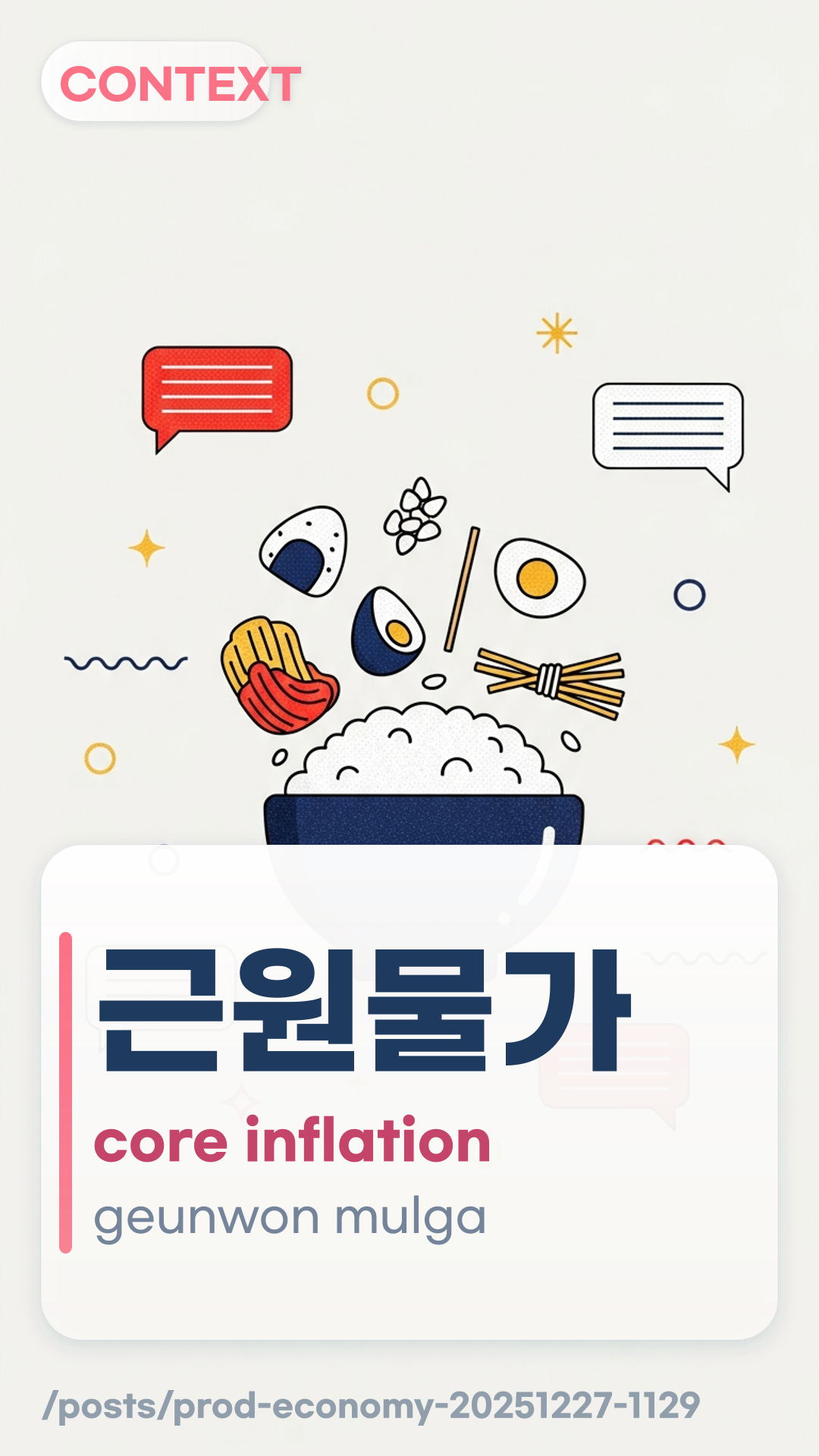
This term shows up when headlines want to separate “volatile stuff” from “underlying trend.” It’s a favorite in commentary segments and policy talk.
Common collocations
근원물가가geunwonmulgaga오르다oreuda /내리다naerida근원물가 상승률이geunwonmulga sangseungryuri둔화되다dunhwadoeda /가속화되다gasokhwadoeda근원물가가geunwonmulgaga안정되다anjeongdoeda근원물가geunwonmulga흐름heureum /압력apryeok근원물가를geunwonmulgareul보면bomyeon추세가chusega보이다boida
Example sentences
근원물가 상승률은 아직 높게 유지됐다.geunwonmulga sangseungryureun ajik nopge yujidwaetda. — Core inflation remained elevated.근원물가가 안정되면 정책 부담이 줄 수 있다.geunwonmulgaga anjeongdoemyeon jeongchaek budami jul su itda. — If core inflation stabilizes, policy pressure can ease.근원물가geunwonmulga는소비자물가sobijamulga와 같은 수치가 아니라, “어떤 품목을 빼고 보느냐” 관점의 지표다.` — Core inflation isn’t the same number as headline CPI; it depends on what’s excluded.
Collocation table
| Keyword | Verb/adjective it pairs with | Example |
|---|---|---|
소비자물가 상승률sobijamulga sangseungryul | 오르다oreuda / 내리다naerida / 기록하다girokhada | 소비자물가 상승률이 3%를 기록했다.sobijamulga sangseungryuri 3%reul girokhaetda. |
상승률sangseungryul | 둔화되다dunhwadoeda / 가속화되다gasokhwadoeda / 확대되다hwakdaedoeda | 상승률 둔화로 시장 우려가 줄었다.sangseungryul dunhwaro sijang uryeoga jureotda. |
상승세sangseungse / 오름세oreumse | 둔화되다dunhwadoeda / 꺾이다kkeokkida / 주춤하다juchumhada | 물가 오름세가 주춤했다.mulga oreumsega juchumhaetda. |
근원물가geunwonmulga | 안정되다anjeongdoeda / 높다nopda / 완화되다wanhwadoeda | 근원물가가 점차 안정됐다.geunwonmulgaga jeomcha anjeongdwaetda. |
Numbers drill
Read 5 numbers out loud (Korean) + meaning in EN.
2.4%— 이 점 사 퍼센트; a 2.4% rate0.6%p— 영 점 육 퍼센트포인트; a 0.6 percentage-point change109.8— 백구 점 팔; an index-style number1,980원1,980won — 천구백팔십 원; a price in won-0.3%— 마이너스 영 점 삼 퍼센트; a negative rate
Next steps
What to practice for headlines.
- Rewrite drill (swap verb+noun pairs, keep meaning):
상승률이 확대됐다sangseungryuri hwakdaedwaetda →상승세가 가속화됐다sangseungsega gasokhwadwaetda상승세가 둔화됐다sangseungsega dunhwadwaetda →오름세가 주춤했다oreumsega juchumhaetda근원물가가 안정됐다geunwonmulgaga anjeongdwaetda →근원물가 상승 압력이 완화됐다geunwonmulga sangseung apryeogi wanhwadwaetda
- When you read a headline, circle only two things first: the noun chunk (
소비자물가 상승률sobijamulga sangseungryul /근원물가geunwonmulga) and the verb (둔화되다dunhwadoeda /가속화되다gasokhwadoeda). - Watch for the baseline tokens (
전년 동월 대비jeonnyeon dongwol daebi,전월 대비jeonwol daebi) and read them as “comparison labels,” not as extra content you must translate word-for-word.