Master 수고하셨습니다 & 9 Essential Beginner Phrases
By Yijun Kim, Native Korean speaker and creator of Korean TokTokPublished February 1, 2026
Review 10 essential Korean phrases like 수고하셨습니다 and 안녕하세요. Master basic greetings and polite culture with our weekly quiz!
TL;DR
Review 10 essential Korean phrases like 수고하셨습니다 and 안녕하세요. Master basic greetings and polite culture with our weekly quiz!
This review focuses on the subtle social etiquette of Korean greetings that textbooks often oversimplify for beginners.
Weekly recap (60 seconds)
- Practiced the most common way to end a workday or task with colleagues.
- Mastered the distinction between arriving and leaving greetings.
- Explored how to say thank you and sorry in polite social settings.
- Reviewed basic identification phrases for introducing yourself to new friends.
Flashcards (10)
List all 10 expressions with a one-line meaning each:
수고하셨습니다sugohasyeotseupnida = Good job / Thank you for your hard work안녕하세요annyeonghaseyo = Hello (polite)감사합니다gamsahapnida = Thank you (formal)죄송합니다joesonghapnida = I am sorry (formal)반갑습니다bangapseupnida = Nice to meet you안녕히 계세요annyeonghi gyeseyo = Goodbye (to someone staying)안녕히 가세요annyeonghi gaseyo = Goodbye (to someone leaving)잘 부탁드립니다jal butakdeuripnida = I look forward to working with you네ne = Yes / I see아니요aniyo = No
Mini quiz (10 questions)
Fill in the blank with one of: 수고하셨습니다sugohasyeotseupnida, 안녕하세요annyeonghaseyo, 감사합니다gamsahapnida, 죄송합니다joesonghapnida, 반갑습니다bangapseupnida, 안녕히 계세요annyeonghi gyeseyo, 안녕히 가세요annyeonghi gaseyo, 잘 부탁드립니다jal butakdeuripnida, 네ne, 아니요aniyo
- When you finish a group project meeting, you say to everyone: ____.
- You walk into a cafe and greet the barista: ____.
- Someone gives you a gift, you say: ____.
- You accidentally step on someone's foot in the subway: ____.
- You meet a new coworker for the first time: ____.
- You are leaving a friend's house while they stay home: ____.
- Your friend is leaving your house while you stay home: ____.
- You are introduced to a new team and want to show a good attitude: ____.
- Someone asks if you are a student, and you want to say "Yes": ____.
- Someone asks if you like spicy food, and you want to say "No": ____.
Answers:
수고하셨습니다sugohasyeotseupnida안녕하세요annyeonghaseyo감사합니다gamsahapnida죄송합니다joesonghapnida반갑습니다bangapseupnida안녕히 계세요annyeonghi gyeseyo안녕히 가세요annyeonghi gaseyo잘 부탁드립니다jal butakdeuripnida네ne아니요aniyo
Notes:
- Q1:
수고하셨습니다sugohasyeotseupnida is the standard way to acknowledge effort after a shared task or workday. - Q2:
안녕하세요annyeonghaseyo is the most versatile polite greeting for any time of day. - Q3:
감사합니다gamsahapnida is the most common formal way to express gratitude. - Q4:
죄송합니다joesonghapnida is the appropriate formal apology for mistakes or accidents. - Q5:
반갑습니다bangapseupnida is used specifically when meeting someone for the first time. - Q6:
안녕히 계세요annyeonghi gyeseyo literally means "Stay peacefully," used when you are the one leaving. - Q7:
안녕히 가세요annyeonghi gaseyo literally means "Go peacefully," used when you are staying and the other person is leaving. - Q8:
잘 부탁드립니다jal butakdeuripnida is a cultural staple used to ask for someone's favor or cooperation in a new relationship. - Q9:
네ne is the standard polite affirmative. - Q10:
아니요aniyo is the standard polite negative.
Next steps
- Record yourself saying
수고하셨습니다sugohasyeotseupnida and잘 부탁드립니다jal butakdeuripnida to check your intonation. - Write a short self-introduction using at least four of these phrases.
- Practice the difference between
계세요gyeseyo and가세요gaseyo by imagining you are at a convenience store.
Quick cheat sheet
#1
수고하셨습니다
Good job / Thank you for your hard work · sugohasyeotseupnida
→
#2
안녕하세요
Hello · annyeonghaseyo
→
#3
감사합니다
Thank you · gamsahapnida
→
#4
죄송합니다
I am sorry · joesonghapnida
→
#5
반갑습니다
Nice to meet you · bangapseupnida
→
#6
안녕히 계세요
Goodbye (to stayer) · annyeonghi gyeseyo
→
#7
안녕히 가세요
Goodbye (to leaver) · annyeonghi gaseyo
→
#8
잘 부탁드립니다
Please look after me · jal butakdeuripnida
→
#9
네
Yes · ne
→
#10
아니요
No · aniyo
→
Expressions in this post
#1cultureLv 2
수고하셨습니다
sugohasyeotseupnida
Good job / Thank you for your hard work
Used to acknowledge someone's effort after a task. Never use this toward someone of much higher status like a CEO, as it can sound like you are evaluating their performance.
팀장님, 오늘 수고하셨습니다.
timjangnim, oneul sugohasyeotseupnida.
Manager, thank you for your hard work today.

#2cultureLv 1
안녕하세요
annyeonghaseyo
Hello
The standard polite greeting. It is actually a question asking if the person is at peace.
안녕하세요! 처음 뵙겠습니다.
annyeonghaseyo! cheoeum boepgetseupnida.
Hello! Nice to meet you for the first time.
#3cultureLv 1
감사합니다
gamsahapnida
Thank you
The most common formal way to say thank you. Use this with strangers, elders, and colleagues.
도와주셔서 감사합니다.
dowajusyeoseo gamsahapnida.
Thank you for helping me.
#4cultureLv 1
죄송합니다
joesonghapnida
I am sorry
A formal apology. Use this when you have made a mistake or caused inconvenience.
늦어서 죄송합니다.
neujeoseo joesonghapnida.
I am sorry for being late.

#5cultureLv 1
반갑습니다
bangapseupnida
Nice to meet you
Used when meeting someone for the first time. Often paired with 안녕하세요.
만나서 반갑습니다.
mannaseo bangapseupnida.
It is nice to meet you.
#6cultureLv 2
안녕히 계세요
annyeonghi gyeseyo
Goodbye (to stayer)
Used when you are leaving and the other person is staying where they are.
먼저 가보겠습니다. 안녕히 계세요.
meonjeo gabogetseupnida. annyeonghi gyeseyo.
I will be going first. Goodbye.
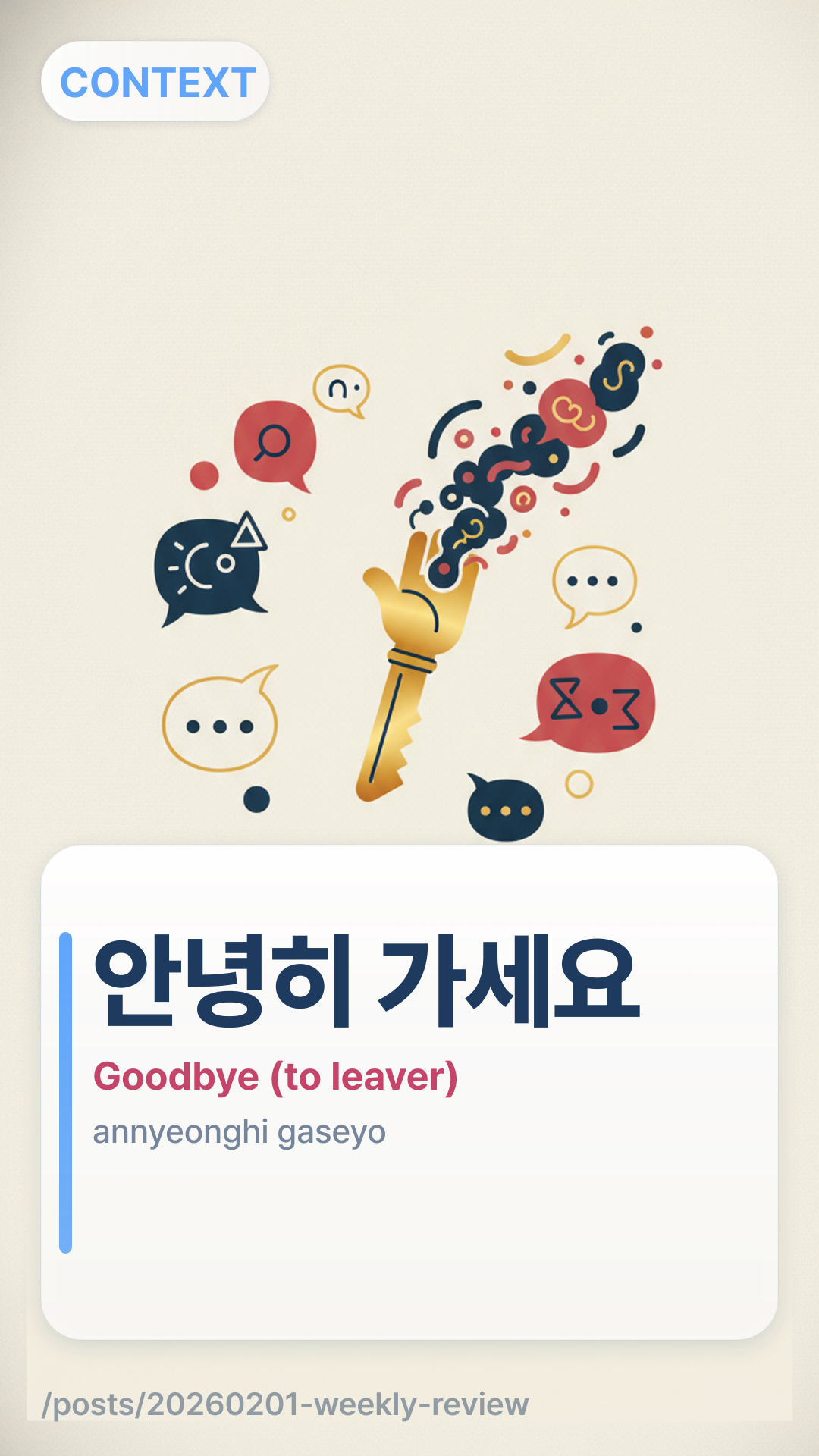
#7cultureLv 2
안녕히 가세요
annyeonghi gaseyo
Goodbye (to leaver)
Used when you are staying and the other person is leaving.
조심해서 가세요. 안녕히 가세요.
josimhaeseo gaseyo. annyeonghi gaseyo.
Go carefully. Goodbye.

#8cultureLv 3
잘 부탁드립니다
jal butakdeuripnida
Please look after me
A very common phrase in Korea when starting a new job or relationship. It asks for the other person's kindness.
신입 사원 김철수입니다. 잘 부탁드립니다.
sinip sawon gimcheolsuipnida. jal butakdeuripnida.
I am the new employee, Chul-soo Kim. I look forward to working with you.
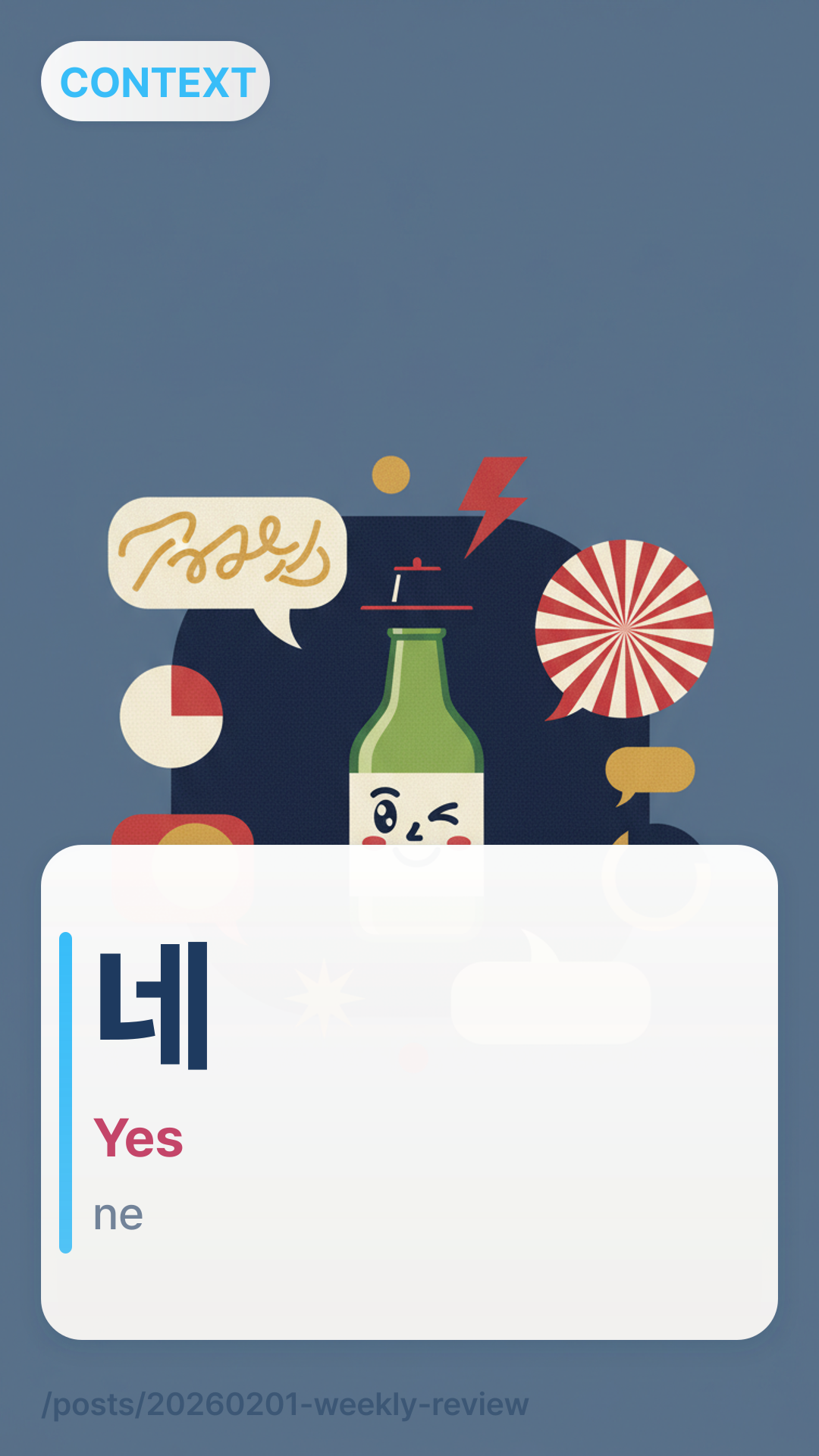
#9cultureLv 1
네
ne
Yes
The polite way to say yes. It can also mean 'I see' or 'I understand' during a conversation.
네, 알겠습니다.
ne, algetseupnida.
Yes, I understand.
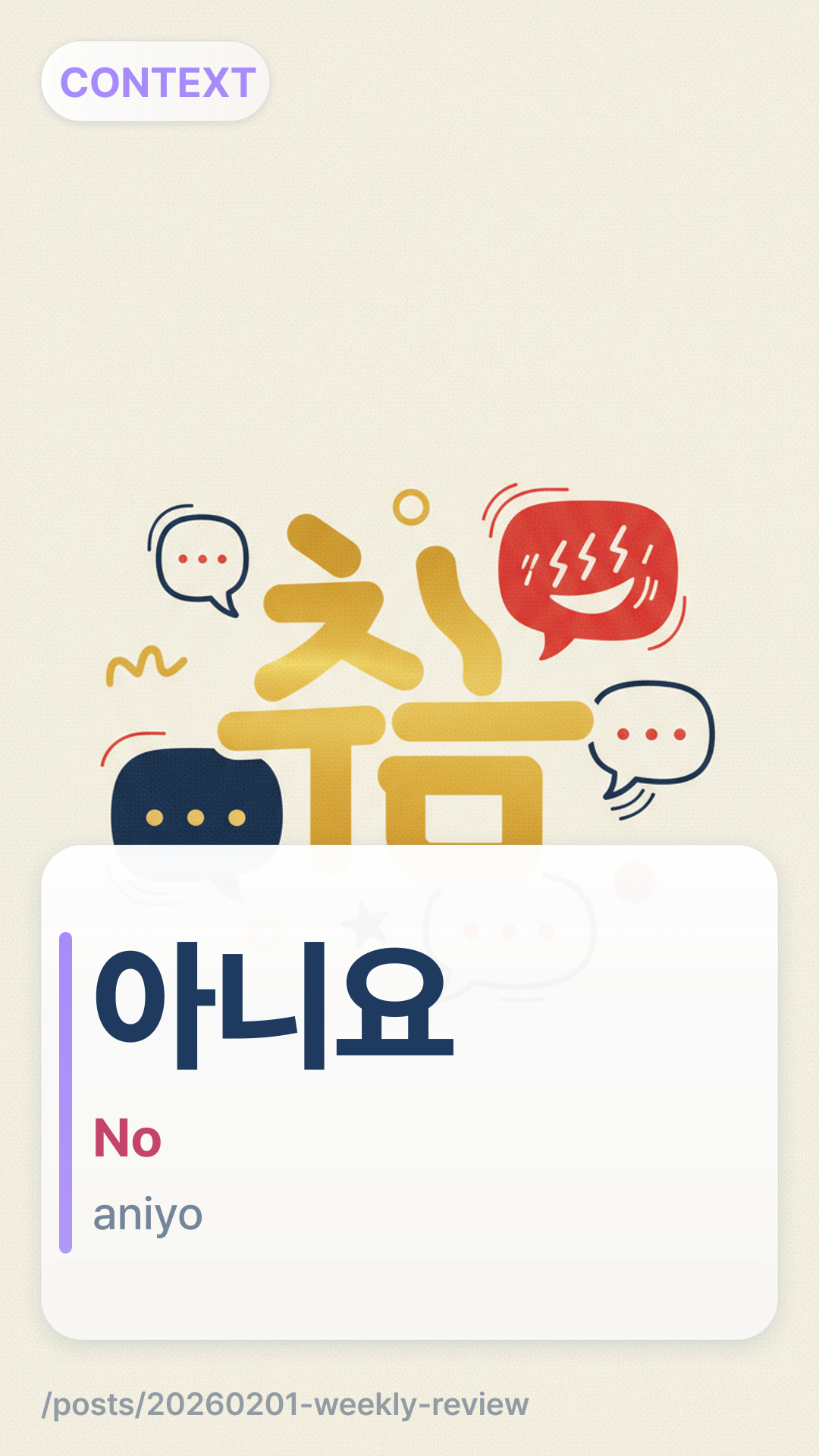
#10cultureLv 1
아니요
aniyo
No
The polite way to say no. Often followed by a reason to remain polite.
아니요, 괜찮습니다.
aniyo, gwaenchanseupnida.
No, I am okay.
Spaced Review
Rate each card to schedule your next review. Cards you find hard come back sooner.
Review: flashcards & quiz
Flashcards1 / 10
수고하셨습니다
sugohasyeotseupnida
Tap to reveal meaning →
Click to flip