K-Pop Idol Korean & Kitchen Essentials Weekly Review
Master essential phrases like 잘 먹겠습니다 and learn how K-pop idols pick up Korean so fast. Includes a 10-question quiz!
Master essential phrases like 잘 먹겠습니다 and learn how K-pop idols pick up Korean so fast. Includes a 10-question quiz!
Learn the subtle etiquette of Korean dining and the fast-track language secrets used by global K-pop stars.
Weekly recap (60 seconds)
- Explored the immersion techniques foreign K-pop idols use to achieve fluency in record time.
- Mastered the essential 'table manners' vocabulary for dining with Korean friends or colleagues.
- Differentiated between giving and receiving actions in a kitchen setting.
- Practiced the specific honorifics required when addressing elders during a meal.
- Reviewed common kitchen tools and basic cooking verbs used in variety shows like 'Jinny's Kitchen'.
Flashcards (10)
List all 10 expressions with a one-line meaning each:
잘 먹겠습니다jal meokgetseupnida = I will eat well (said before a meal)맛있게 드세요masitge deuseyo = Please enjoy your meal (said to others)잘 먹었습니다jal meogeotseupnida = I ate well (said after a meal)배불러요baebulreoyo = I am full한 입만han ipman = Just one bite (famous variety show phrase)맵찔이maepjjiri = Someone who can't handle spicy food존맛탱jonmattaeng = Super delicious (slang)간을 보다ganeul boda = To taste-test for seasoning설거지seolgeoji = Dishwashing앞접시apjeopsi = Individual side plate
Who says what? Common Table Confusion
A common mistake for learners is mixing up who says what at the start of a meal.
- Wrong: Telling your host
잘 먹겠습니다jal meokgetseupnida when they serve you, and they reply with잘 먹겠습니다jal meokgetseupnida back. - Right: You say
잘 먹겠습니다jal meokgetseupnida (I will eat well) to show gratitude. The host or the person who prepared the food says맛있게 드세요masitge deuseyo (Please eat deliciously/Enjoy your meal).
Think of it this way: 잘 먹겠습니다jal meokgetseupnida is a declaration of your own future action, while 맛있게 드세요masitge deuseyo is a wish for someone else's experience.
Quick cheat sheet
Expressions in this post
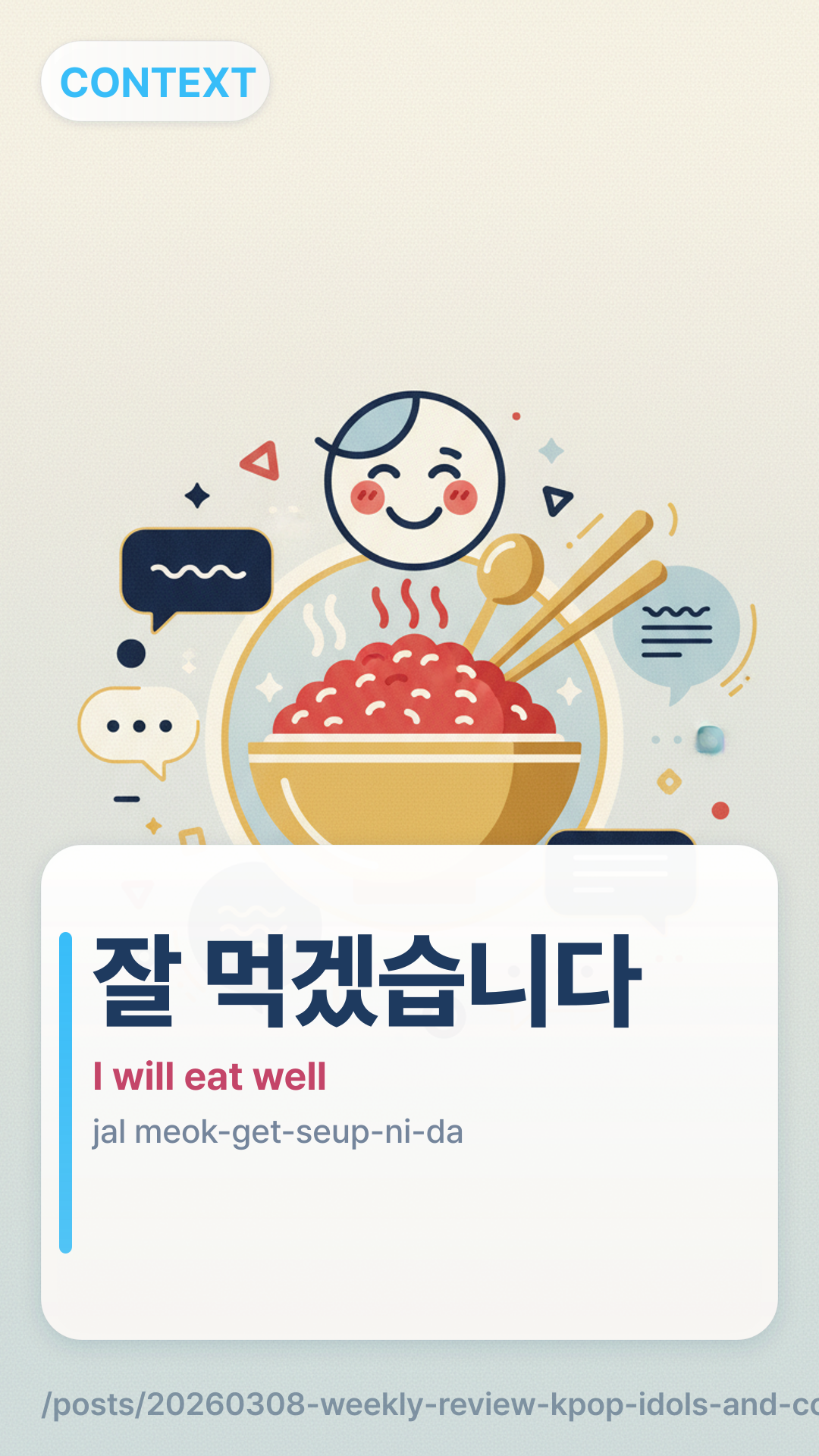
This is the standard way to begin a meal in Korea. It signals to everyone that you are ready to start and appreciate the food. Even if you are eating with friends, using the polite form is common to show respect for the effort put into the meal.
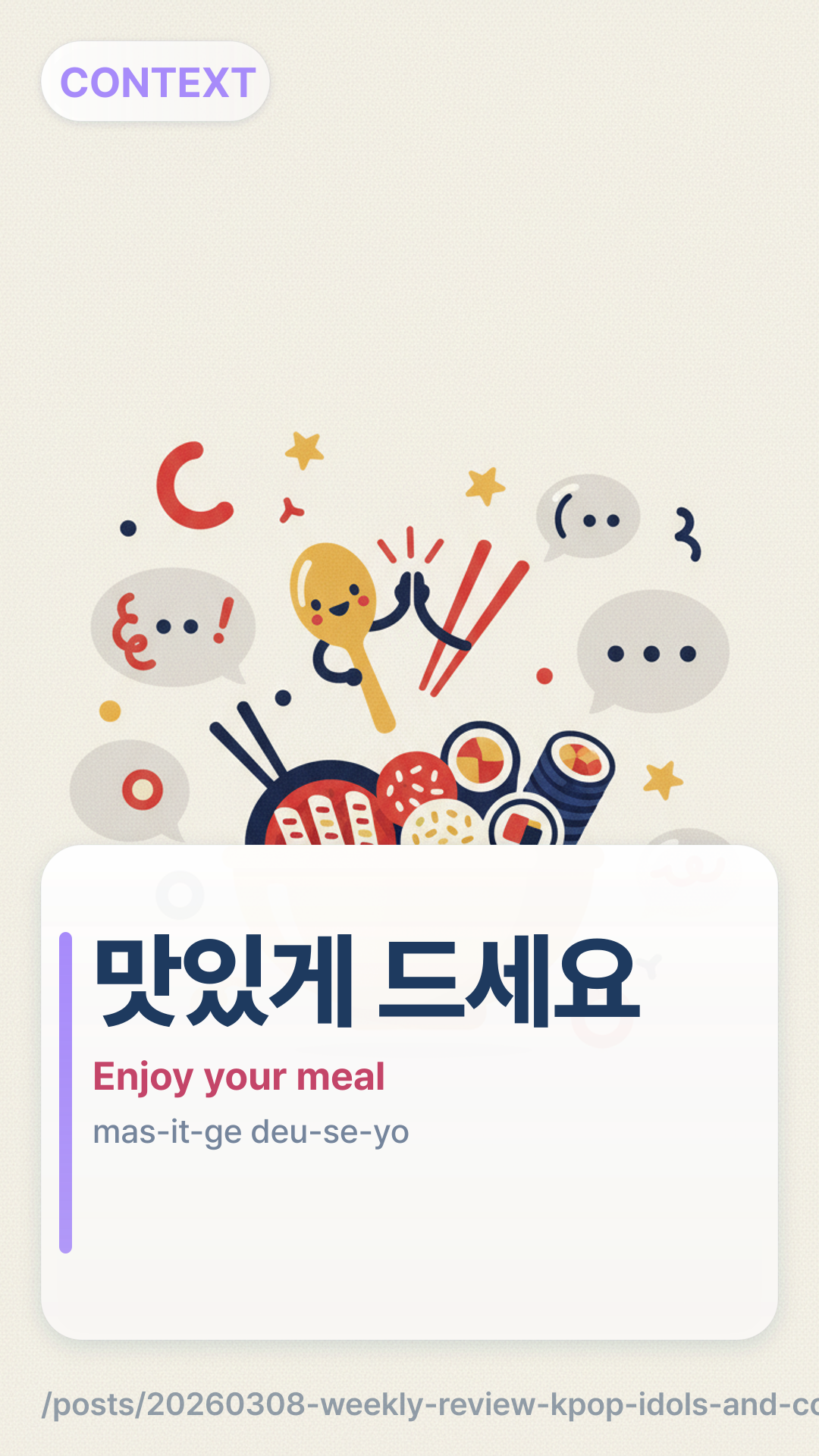
If you are the one who cooked, or if you are a waiter bringing food to a table, this is your go-to phrase. It is polite and welcoming. Avoid saying this to someone much older than you unless you are in a service position; instead, you might use more formal honorifics.
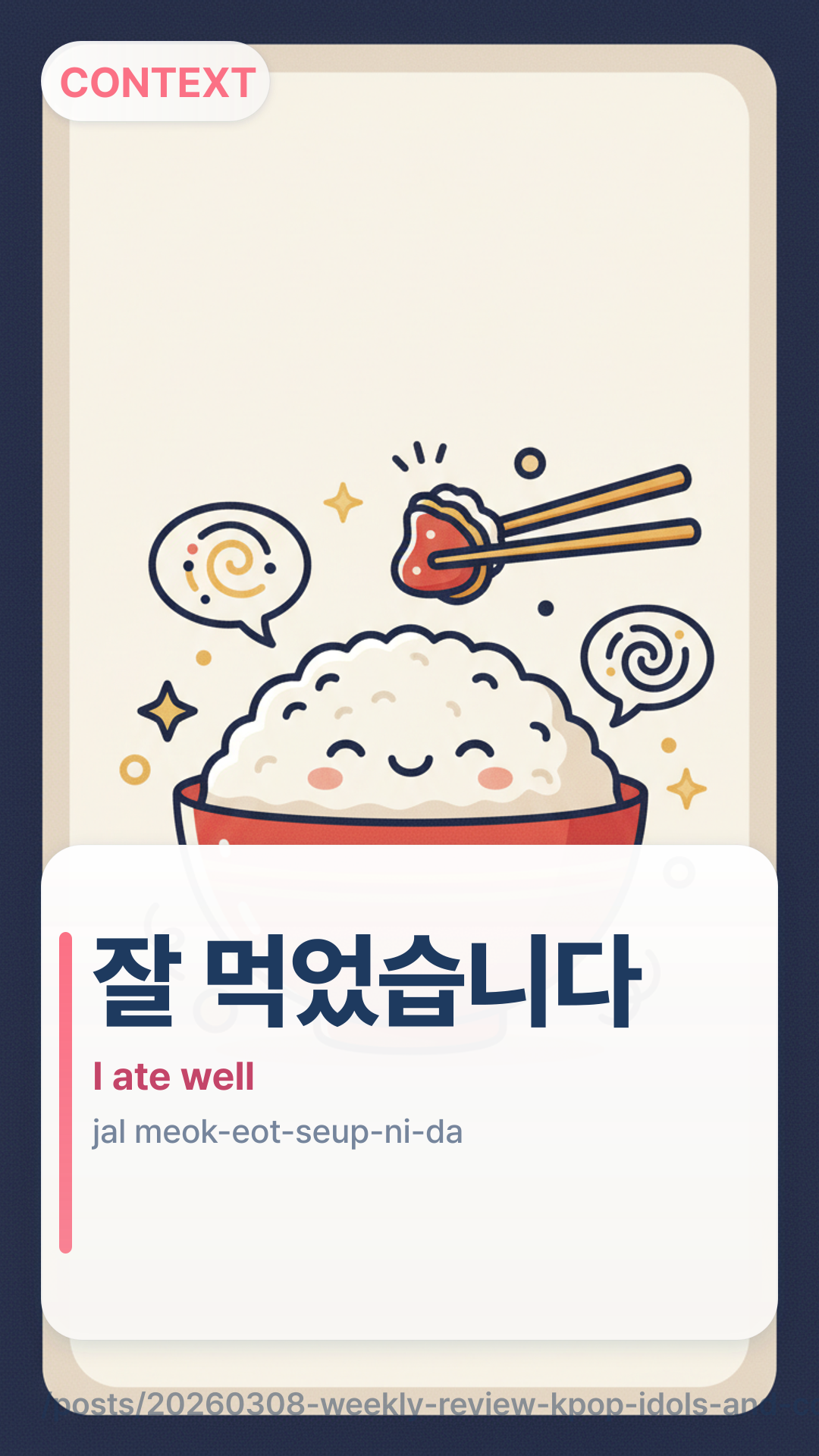
Once the meal is finished, this phrase is mandatory to signal completion and thanks. It is the past-tense counterpart to the pre-meal greeting. Even if the food wasn't your favorite, saying this is a basic social requirement in Korean culture.

Literally "The belly is full." It's a neutral way to decline seconds or simply express satisfaction. In casual settings with friends, you can drop the 'yo' to say 배불러baebulreo.
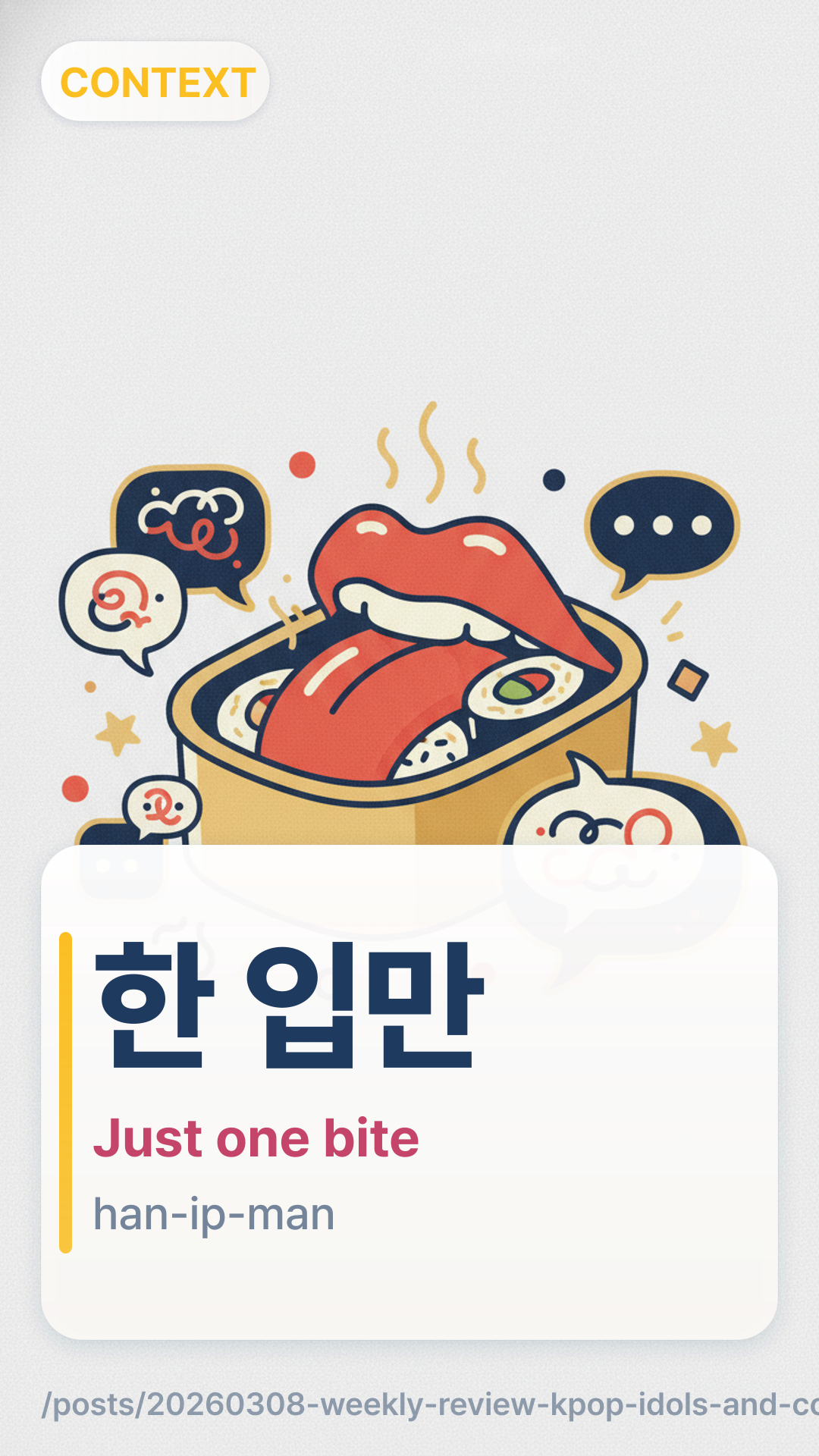
If you watch Korean variety shows like '2 Days & 1 Night', you've seen this. It's the desperate plea for a single bite of someone else's food. Use this only with very close friends or it might seem rude!
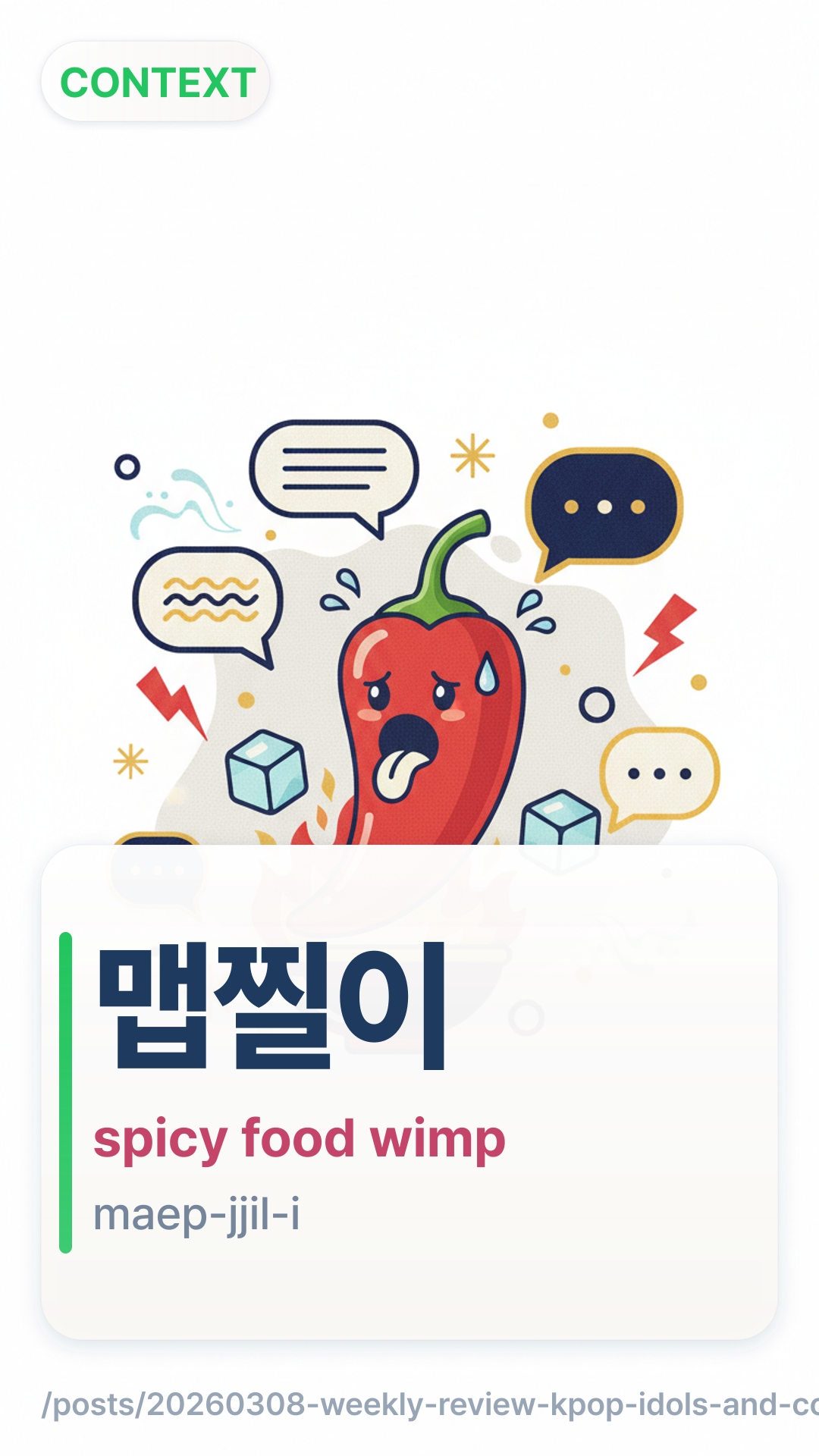
A combination of 매운maeun (spicy) and 찌질이jjijiri (loser/wimp). It's a playful, slightly self-deprecating slang term for people who can't handle the heat of Korean cuisine. Very common in K-pop idol vlogs.
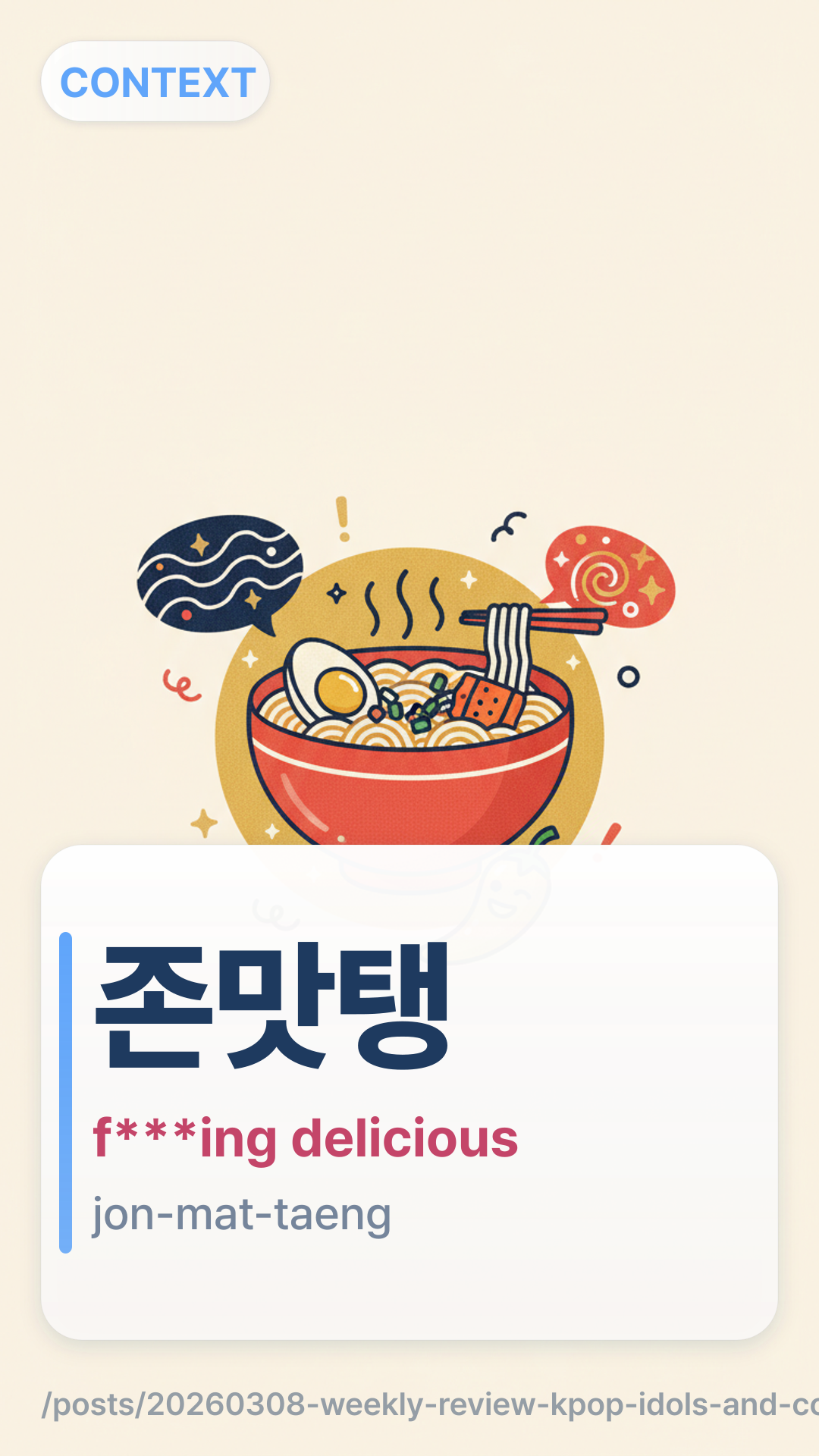
Often abbreviated as JMT. This is high-intensity slang for something incredibly tasty. It's very casual and should never be used in formal dining or with elders.
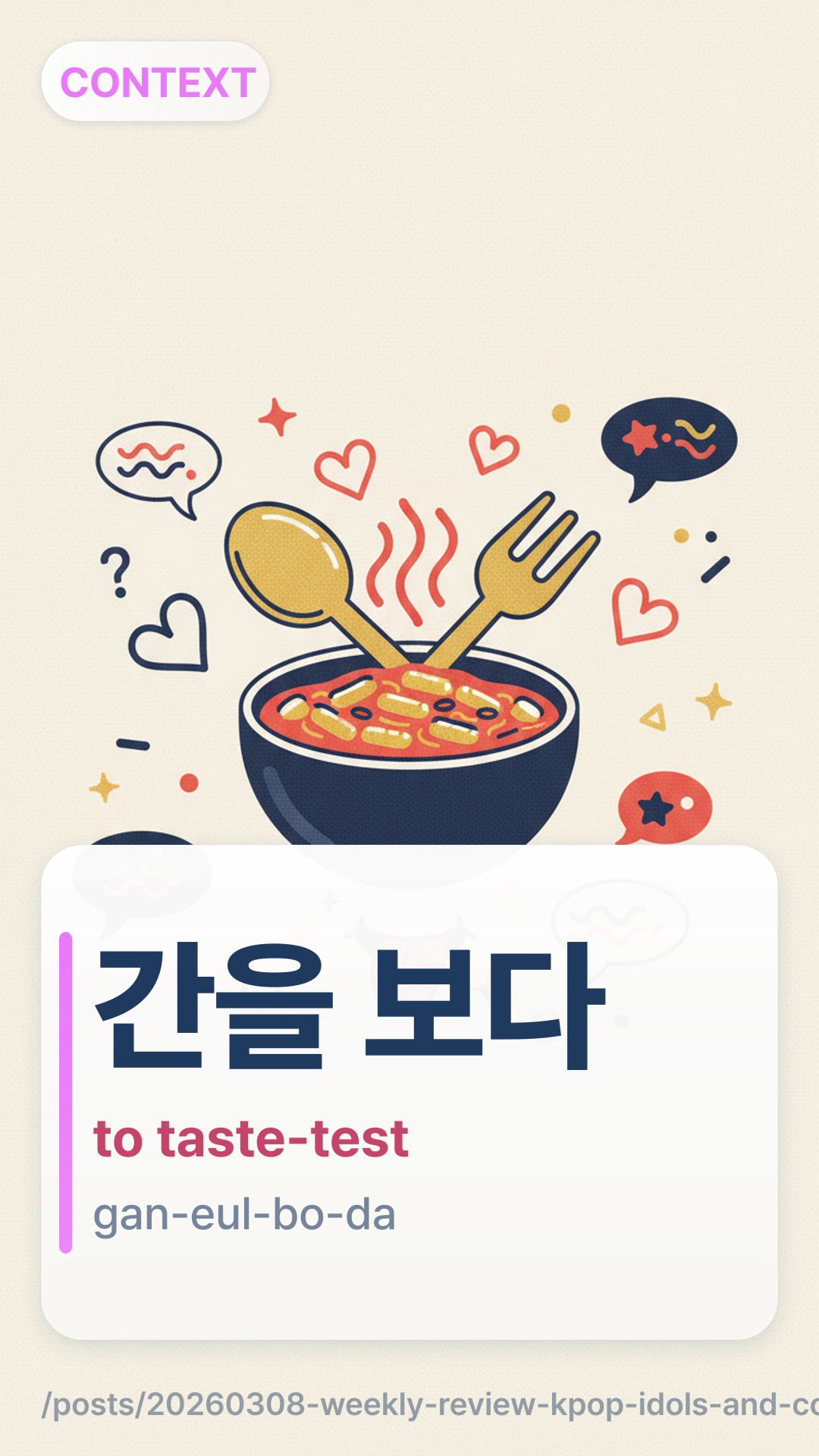
In the kitchen, this means checking if the food needs more salt or seasoning. Metaphorically, it can also mean "testing the waters" or seeing how a situation develops before committing.
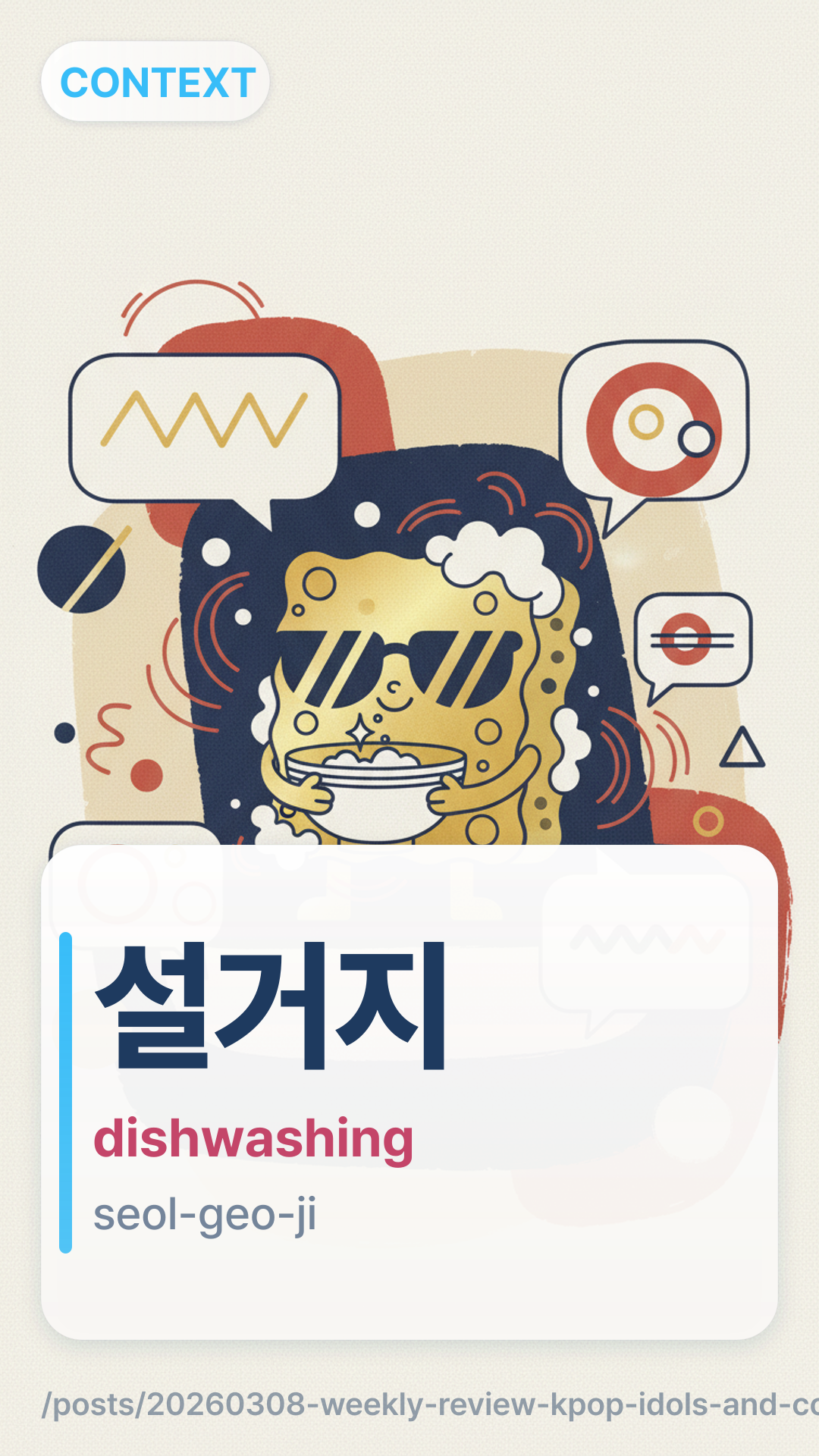
The chore everyone avoids. In idol dorm stories, 설거지 내기seolgeoji naegi (betting on who does the dishes) is a recurring theme. It's a noun, so you usually pair it with 하다hada (to do).
Since Korean dining often involves sharing large communal pots (like stew or galbi), the 앞접시apjeopsi is the small plate you use to take your own portion. Asking for one at a restaurant is a very practical skill.
Mini quiz (10 questions)
Notes:
- Q1:
잘 먹겠습니다jal meokgetseupnida is the polite announcement of intent to eat, showing gratitude to the provider. - Q2:
맛있게 드세요masitge deuseyo is the imperative form used by the provider to encourage others to enjoy. - Q3:
잘 먹었습니다jal meogeotseupnida uses the past tense to indicate the action of eating is finished and appreciated. - Q4:
배불러요baebulreoyo is the standard polite way to express satiety. - Q5:
한 입만han ipman is a very common casual request for a small taste. - Q6:
맵찔이maepjjiri is the specific slang for someone weak against spicy food. - Q7:
존맛탱jonmattaeng (JMT) is the appropriate high-energy slang for deliciousness among peers. - Q8:
간을 보다ganeul boda is the specific culinary verb for checking seasoning. - Q9:
설거지seolgeoji is the noun for the dishes that need washing after a meal. - Q10:
앞접시apjeopsi is the specific term for the small individual plate used in communal dining.
Next steps
- Shadowing: Watch a 'Mukbang' or a cooking vlog and repeat
잘 먹겠습니다jal meokgetseupnida every time they start eating. - Writing: Write down your favorite food and describe it using
존맛탱jonmattaeng or explain if you are a맵찔이maepjjiri. - Roleplay: Practice the host/guest exchange with a partner, switching between saying
맛있게 드세요masitge deuseyo and잘 먹겠습니다jal meokgetseupnida.