What Does Korean Ginseng Do? Traditional Uses and Modern Products
Korean ginseng is commonly sold as an energy and wellness tonic, traditionally used to support stamina and recovery. This guide explains the different forms (fresh, white, red), how Koreans typically use them, and the vocabulary you'll see on product labels.
Korean ginseng is commonly sold as an energy and wellness tonic, traditionally used to support stamina and recovery. This guide explains the different forms (fresh, white, red), how Koreans typically use them, and the vocabulary you'll see on product labels.
Korean ginseng, known as 인삼 (insam), is commonly sold as an energy and wellness tonic. In Korea it has a centuries-long reputation as a recovery root — the kind of thing a grandparent gives you after a long week or before a big exam. Modern Korean products market it for stamina, immunity, circulation, and fatigue, but rigorous clinical claims vary, so we'll describe how it's used rather than promise outcomes.
The three main forms
Ginseng is sold in three primary forms, each prepared differently:
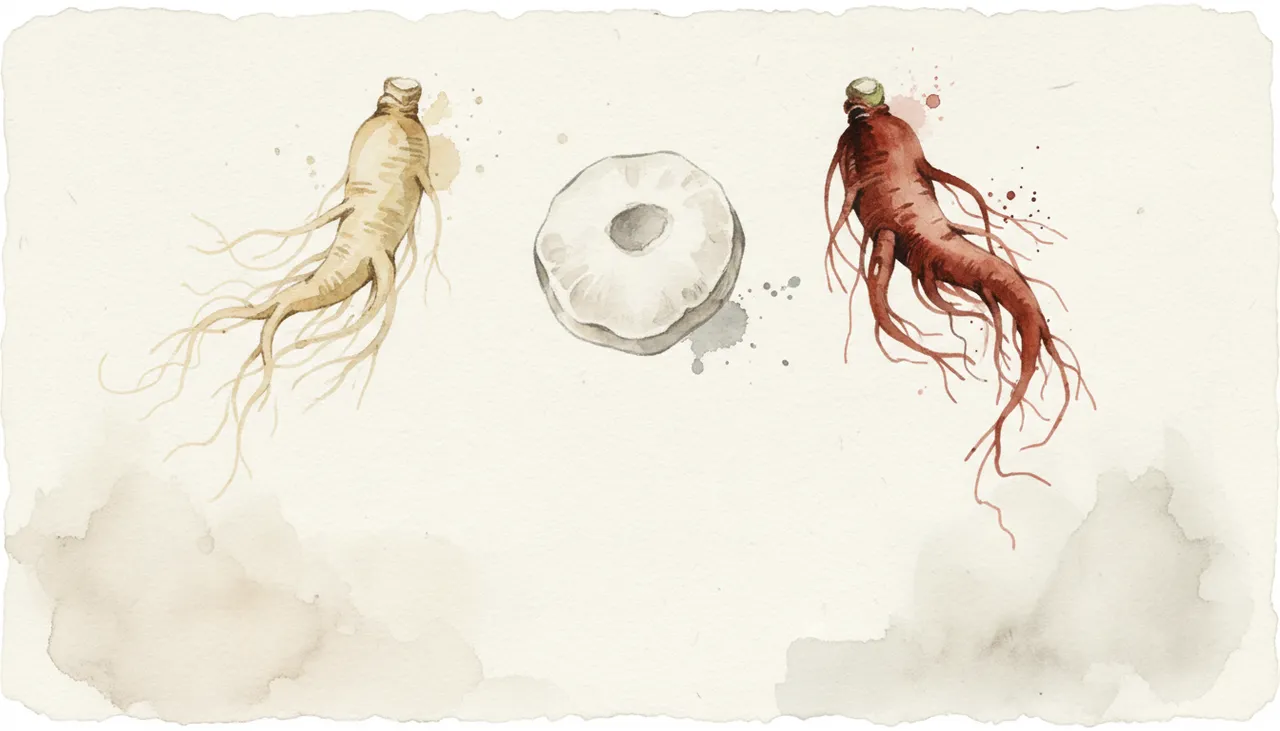
- 수삼 (susam) — fresh ginseng; the raw root, pale and mild in flavor. Often sliced into chicken soup.
- 백삼 (baeksam) — white ginseng; fresh roots peeled and air-dried. Lighter and less concentrated.
- 홍삼 (hongsam) — red ginseng; steamed and dried multiple times. Darker, richer, and the basis of most premium Korean products.
The red variety (hongsam) is the one most visible on shelves abroad. It's sold as extract sticks, capsules, teas, candies, and honey-soaked slices.
How Koreans typically use it
In everyday Korean life, ginseng shows up in a few recognizable places:
- Samgyetang (삼계탕) — a ginseng chicken soup eaten on the hottest days of summer. A small whole chicken is stuffed with rice, garlic, jujubes, and a fresh ginseng root, then simmered into a restorative broth.
- Red ginseng extract sticks — single-serve pouches people sip before work or during finals season.
- Honey-soaked slices — thin ginseng slices preserved in honey, eaten with tea.
Most Korean households keep at least one red ginseng product in the cupboard, the way many households elsewhere keep a bottle of vitamins.
Vocabulary you'll see on labels
- 인삼 (insam) — ginseng
- 홍삼 (hongsam) — red ginseng
- 6년근 (yungnyeongeun) — 6-year root (premium grade)
- 농축 (nongchuk) — concentrate
- 원기 회복 (wongi hoebok) — restoring energy / stamina
A common phrase on Korean packaging:
피로 회복에 도움을 줄 수 있습니다.piro hoeboge doumeul jul su itseupnida. — "May help with fatigue recovery." (Note the cautious phrasing — Korean regulators require "may help" language, not "will cure".)
A note on claims
Korean ginseng has a long traditional record, but medical evidence for specific health outcomes is still being studied. Treat it as a cultural tonic, not a prescription. If you're pregnant, on blood thinners, or managing blood pressure or diabetes, check with a doctor before starting a regular ginseng product.
Related on Korean TokTok
Quick cheat sheet
Expressions in this post