Skip to content
← Posts
blogcultureLv 1–3neutralen

What Does Korean Red Ginseng Do? Forms, Uses, and What to Look For

By Korean TokTok Content TeamPublished April 17, 2026

Korean red ginseng (hongsam) is steamed and dried ginseng sold in Korea as a daily tonic for energy, circulation, and immunity. This guide breaks down how it's made, the differences between extract, capsules, and sticks, and what labels like "6년근" actually mean.

4/17/2026, 3:27:55 AM
What Does Korean Red Ginseng Do? Forms, Uses, and What to Look For
ShareXFacebook
TL;DR

Korean red ginseng (hongsam) is steamed and dried ginseng sold in Korea as a daily tonic for energy, circulation, and immunity. This guide breaks down how it's made, the differences between extract, capsules, and sticks, and what labels like "6년근" actually mean.

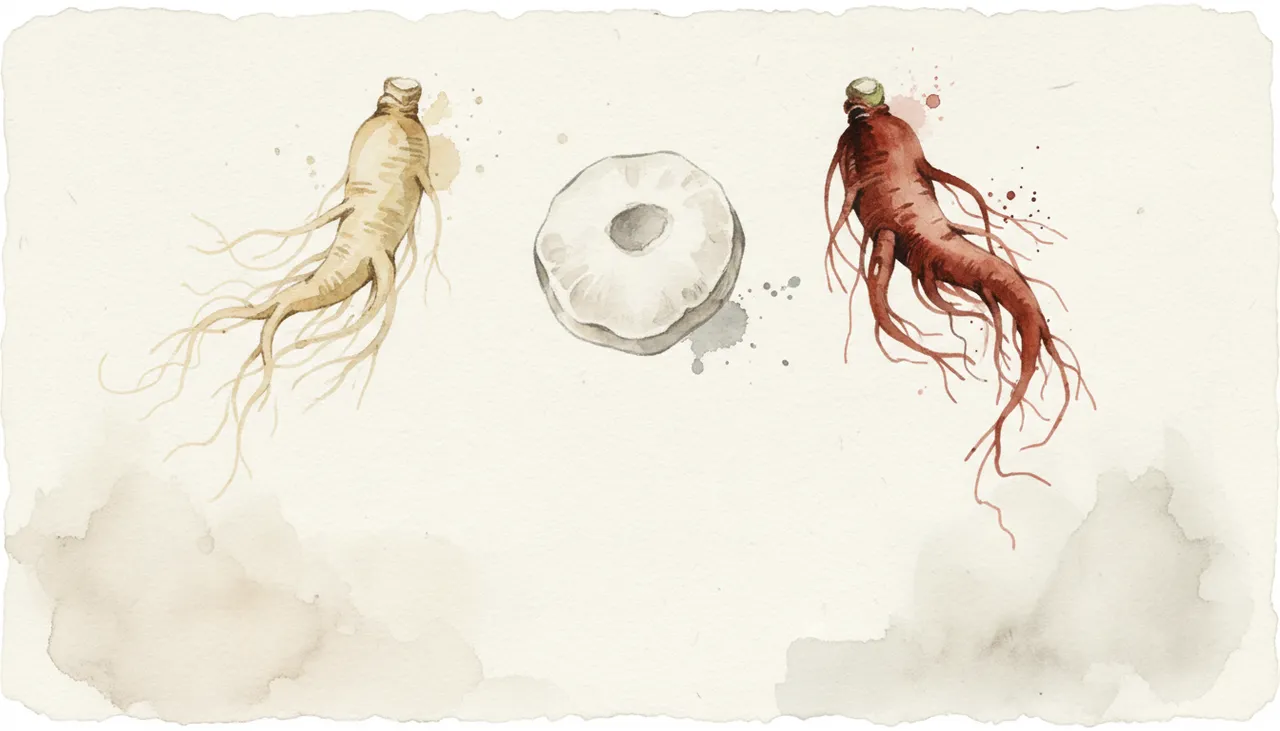
Korean red ginseng — 홍삼 (hongsam) — is commonly sold in Korea as a daily tonic, used for energy, circulation, immune support, and recovery from fatigue. It's made by repeatedly steaming and drying fresh ginseng roots, which darkens the root and concentrates its compounds. Think of it as ginseng's "long-aged" cousin.

How red ginseng is made

Fresh ginseng (수삼, susam) is washed, then steamed and sun-dried up to nine times. Each steaming-drying cycle:

  • Darkens the root to a deep amber-red
  • Reduces moisture and increases shelf stability
  • Alters the ginsenoside profile (the active compound family)

Because the process is slow and the raw root is already expensive, red ginseng products cost noticeably more than white ginseng or fresh root.

Common forms you'll see

Walk into a Korean pharmacy or a health aisle at H-Mart and you'll see:

  • Extract (농축액, nongchukaek) — a thick, tar-dark paste sold in a jar. Traditionally the "premium" form.
  • Stick packs (스틱, stick) — single-serve 10 ml pouches of extract diluted with honey or jujube juice. Convenient and widely gifted.
  • Capsules (캡슐, kaepsyul) — powdered red ginseng in gel caps for people who don't like the taste.
  • Tea (차, cha) — granulated red ginseng powder you dissolve in hot water.
  • Honey slices (절편, jeolpyeon) — thin red ginseng pieces preserved in honey.

Most Korean families keep stick packs at home for parents, grandparents, and students during exam season.

What "6년근" means

On premium Korean red ginseng, you'll see 6년근 (yungnyeongeun) — "6-year root." Ginseng takes years to mature, and 6-year roots are considered the gold standard in Korea because the ginsenoside content is thought to peak at that age. Products using younger roots (4년근, 5년근) usually cost less.

Useful Korean words on labels

  • 홍삼 (hongsam) — red ginseng
  • 6년근 (yungnyeongeun) — 6-year root
  • 원기 (wongi) — vital energy
  • 면역력 (myeonyeongnyeok) — immunity
  • 피로 (piro) — fatigue

A note on claims and safety

Korean regulators generally allow red ginseng to be described as supporting fatigue recovery, immunity, memory, blood flow, antioxidant activity, and menopausal symptoms — but always with cautious phrasing ("may help"). If you're pregnant, on blood thinners or blood pressure medication, or managing diabetes, talk to a doctor before starting a daily product.

Quick cheat sheet

Expressions in this post

홍삼 - is commonly sold in Korea as a daily tonic, used for energy, circulation, immune support, and recovery from fatigue
#1vocabularyLv 1
홍삼
hongsam
is commonly sold in Korea as a daily tonic, used for energy, circulation, immune support, and recovery from fatigue
A common Korean word meaning "is commonly sold in Korea as a daily tonic, used for energy, circulation, immune support, and recovery from fatigue". Appears in the post "What Does Korean Red Ginseng Do? Forms, Uses, and What to Look For" and related contexts.
홍삼 — is commonly sold in Korea as a daily tonic, used for energy, circulation, immune support, and recovery from fatigue
hongsam — is commonly sold in Korea as a daily tonic, used for energy, circulation, immune support, and recovery from fatigue
원기 - vital energy
#2vocabularyLv 1
원기
wongi
vital energy
A common Korean word meaning "vital energy". Appears in the post "What Does Korean Red Ginseng Do? Forms, Uses, and What to Look For" and related contexts.
원기 — vital energy
wongi — vital energy
면역력 - immunity
#3vocabularyLv 1
면역력
myeonyeongnyeok
immunity
A common Korean word meaning "immunity". Appears in the post "What Does Korean Red Ginseng Do? Forms, Uses, and What to Look For" and related contexts.
면역력 — immunity
myeonyeokryeok — immunity
Spaced Review
Rate each card to schedule your next review. Cards you find hard come back sooner.
Review: flashcards & quiz
Flashcards1 / 3
hongsam
Tap to reveal meaning →
Click to flip
What Does Korean Ginseng Do? Traditional Uses and Modern Products
culture

What Does Korean Ginseng Do? Traditional Uses and Modern Products

Korean ginseng is commonly sold as an energy and wellness tonic, traditionally used to support stamina and recovery. This guide explains the different forms (fresh, white, red), how Koreans typically use them, and the vocabulary you'll see on product labels.

What Does Korean Melon Taste Like? A Sweet, Light Summer Fruit
culture

What Does Korean Melon Taste Like? A Sweet, Light Summer Fruit

Korean melon (chamoe) tastes lightly sweet with a cool, cucumber-like freshness and a faintly floral note. This guide covers the flavor, the texture, how Koreans eat it, and the vocabulary you need to ask for one at a market.

What Does Korean BBQ Taste Like? Flavors, Sides, and What to Order
culture

What Does Korean BBQ Taste Like? Flavors, Sides, and What to Order

Korean BBQ tastes savory, slightly sweet, and deeply smoky, with meat seasoned in soy, garlic, sugar, sesame, and pear. This guide walks through the core flavors, the side dishes (banchan) that balance the grill, and the key Korean words to know before you order.

Korean Food in Koreatown: What to Order on Your First Visit
culture

Korean Food in Koreatown: What to Order on Your First Visit

Koreatown LA is where I learned most of what I know about Korean food outside of Korea. The portions are bigger, the spice is dialed back, and half the menu is fusion you won't see in Seoul. Here's the order rotation I send friends through on their first visit, plus what makes Koreatown different from Korea.

K-Pop Idol Korean & Kitchen Essentials Weekly Review
culture

K-Pop Idol Korean & Kitchen Essentials Weekly Review

Master essential phrases like 잘 먹겠습니다 and learn how K-pop idols pick up Korean so fast. Includes a 10-question quiz!

What Does Korean Money Look Like? Won Coins, Bills, and Who's on Them
culture

What Does Korean Money Look Like? Won Coins, Bills, and Who's on Them

South Korean money is the won, printed in four banknote denominations — 1,000, 5,000, 10,000, and 50,000 won — featuring Joseon-era scholars and one queen. Four coin denominations (10, 50, 100, 500) round out everyday cash.