What Does Korean Melon Taste Like? A Sweet, Light Summer Fruit
Korean melon (chamoe) tastes lightly sweet with a cool, cucumber-like freshness and a faintly floral note. This guide covers the flavor, the texture, how Koreans eat it, and the vocabulary you need to ask for one at a market.
Korean melon (chamoe) tastes lightly sweet with a cool, cucumber-like freshness and a faintly floral note. This guide covers the flavor, the texture, how Koreans eat it, and the vocabulary you need to ask for one at a market.
Korean melon (known locally as 참외 (chamoe)) tastes lightly sweet, refreshingly cool, and a bit cucumber-like, with a soft floral aroma near the seeds. It's less sugary than cantaloupe or honeydew and closer in crunch to a crisp pear. In summer, it's one of the most common fruits sold at Korean markets.
The flavor in one sentence
Imagine a honeydew melon that's been crossed with a cucumber, with a hint of pear and a subtle vanilla-floral note. That's chamoe. It is cleaner and more delicate than the Western melons most English-speaking readers grew up with.
Texture and how to eat it
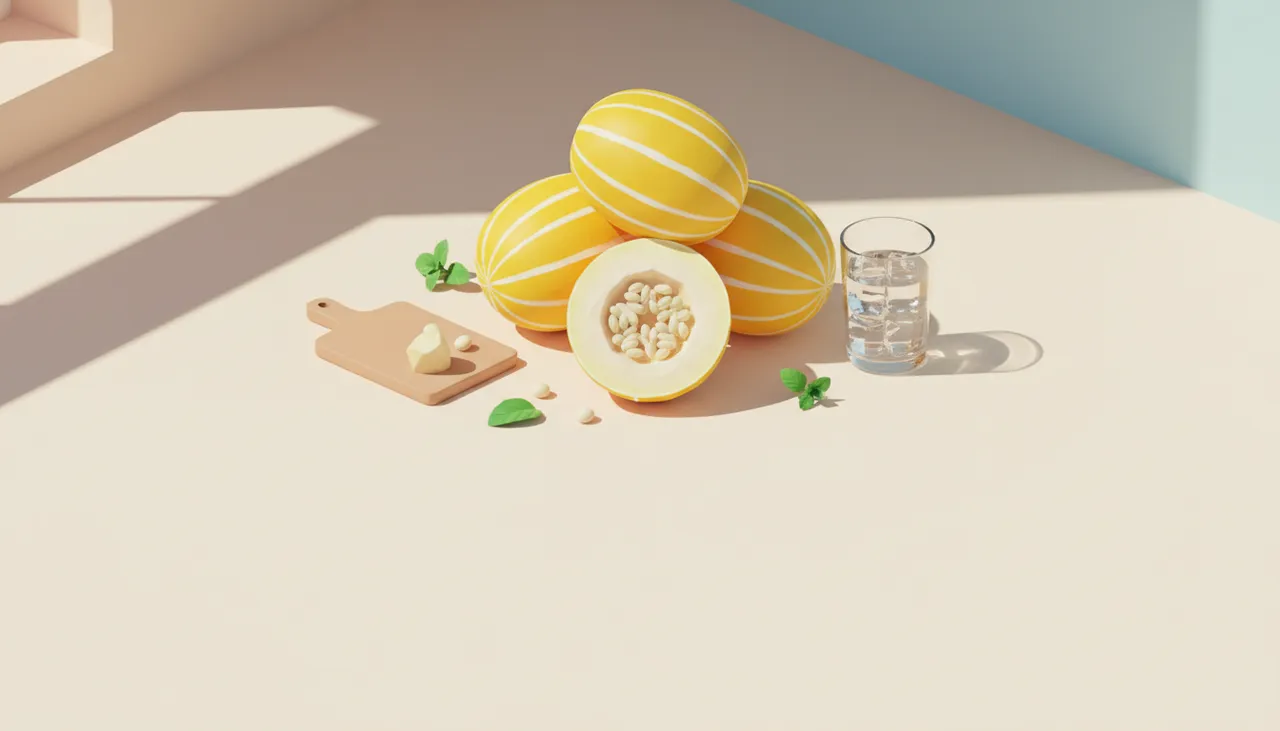
The skin is bright yellow with white grooves running lengthwise, and the flesh is pale — almost white. Unlike cantaloupe, the flesh stays firm and crisp even when fully ripe. Most Koreans:
- Wash it, then peel the yellow skin
- Cut it in half lengthwise
- Scoop out the seed core (the seeds and their gel are edible and slightly sweet)
- Slice it into wedges or cubes and chill it
The chilled wedges are eaten straight, or sometimes added to simple fruit plates served after a meal.
A few words to know
- 참외 (chamoe) — Korean melon
- 달다 (dalda) — to be sweet
- 시원하다 (siwonhada) — to be cool/refreshing
- 과일 (gwail) — fruit
- 여름 (yeoreum) — summer
A natural sentence you could hear at a Korean home in July:
참외 먹을래요?chamoe meogeulraeyo? (chamoe meogeullae-yo?) — "Do you want some Korean melon?"
Where to find it
Outside Korea, chamoe shows up at Korean, Japanese, and large Asian grocery stores from roughly June to September. If you're buying one, look for:
- Bright, even yellow skin
- Clear white grooves (not brown or bruised)
- A light, sweet floral smell at the stem end
A ripe chamoe at room temperature will smell noticeably sweet. Chill it for at least an hour before eating — the flavor pops when cold.
Related on Korean TokTok
Quick cheat sheet
Expressions in this post