What Does Korean BBQ Taste Like? Flavors, Sides, and What to Order
Korean BBQ tastes savory, slightly sweet, and deeply smoky, with meat seasoned in soy, garlic, sugar, sesame, and pear. This guide walks through the core flavors, the side dishes (banchan) that balance the grill, and the key Korean words to know before you order.

Korean BBQ tastes savory, slightly sweet, and deeply smoky, with meat seasoned in soy, garlic, sugar, sesame, and pear. This guide walks through the core flavors, the side dishes (banchan) that balance the grill, and the key Korean words to know before you order.
Korean BBQ tastes savory, slightly sweet, garlicky, and smoky, with layers of sesame and a gentle caramelization from sugar in the marinade. The meat itself is the headline, but the full flavor experience comes from wrapping grilled slices in lettuce leaves with rice, ssamjang (a spicy-savory paste), and small pickled sides.
The core flavor profile
Most marinades for Korean BBQ combine soy sauce, sugar (or pear/onion puree), garlic, sesame oil, and black pepper. On the grill, those sugars caramelize and the soy develops a slight char. The result is:
- Savory / umami from soy sauce and grilled meat juices
- Sweet from pear, sugar, and onion in the marinade
- Smoky from the charcoal or gas grill at the center of the table
- Nutty from toasted sesame oil and sesame seeds
- Garlicky and slightly pungent from raw garlic slices often grilled alongside
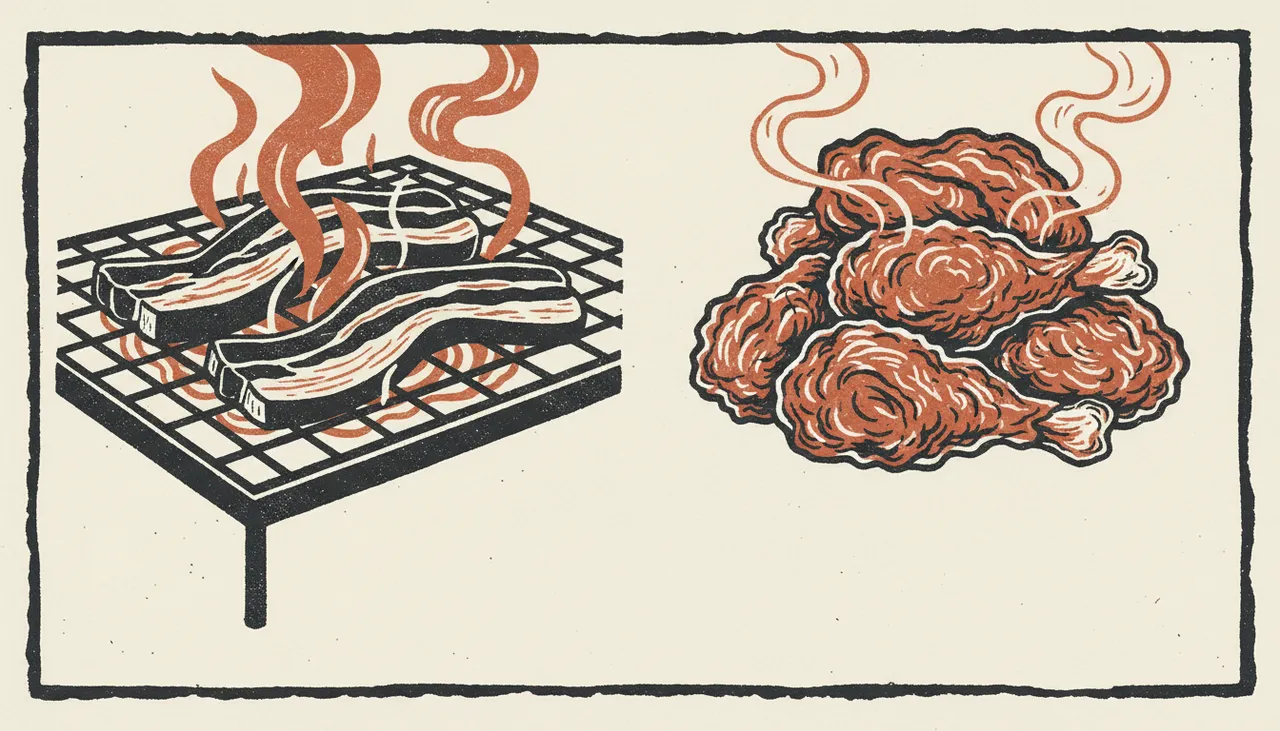
Unmarinated cuts like 삼겹살 (samgyeopsal) — thick-cut pork belly — taste cleaner: mostly pork fat, smoke, and whatever dipping sauce you choose. Marinated 갈비 (galbi) — short ribs — taste sweeter and more intense right off the grill.
How the sides change the taste
Korean BBQ is never just meat on a plate. Banchan (side dishes) are designed to cut richness and refresh your palate between bites:
- 김치 (kimchi) — fermented cabbage; tangy, spicy, and sometimes grilled alongside pork
- 상추 (sangchu) — lettuce leaves for wrapping (ssam)
- 쌈장 (ssamjang) — a thick, salty-spicy paste of soybean paste and chili paste
- 마늘 (maneul) — raw or grilled garlic slices
- 파절이 (pajeori) — thin scallion salad with a spicy-sour dressing
When you build a wrap, you stack lettuce, rice, meat, ssamjang, and a slice of garlic or pepper. That bite tastes balanced — fatty, sharp, herbal, and warming all at once.
What to order on your first visit
If it's your first time, ask for:
- 삼겹살 — pork belly (mild, rich)
- 갈비 — marinated short ribs (sweet, tender)
- 된장찌개 (doenjang jjigae) — soybean paste stew to finish the meal
Related on Korean TokTok
Quick cheat sheet
Expressions in this post