Korean Food in Koreatown: What to Order on Your First Visit
Koreatown LA is where I learned most of what I know about Korean food outside of Korea. The portions are bigger, the spice is dialed back, and half the menu is fusion you won't see in Seoul. Here's the order rotation I send friends through on their first visit, plus what makes Koreatown different from Korea.

Koreatown LA is where I learned most of what I know about Korean food outside of Korea. The portions are bigger, the spice is dialed back, and half the menu is fusion you won't see in Seoul. Here's the order rotation I send friends through on their first visit, plus what...
I spent a week in Koreatown LA in early 2023 and it genuinely changed how I think about Korean food abroad. I'd assumed Koreatown restaurants were just "Korea but transplanted." They're not. Koreatown LA runs roughly along 6th Street and Western Avenue, maybe two miles of neon signage, and the food there has its own distinct personality — bigger portions, slightly sweeter marinades, a whole category of Korean-American fusion (think kimchi quesadilla, Korean tacos) that just doesn't exist in Seoul.
This is important if you're going in blind. What you eat at a Koreatown BBQ place in LA is not identical to what you'd eat in Hongdae. Both are real. They're just different expressions of the same food tradition.
Here's the rotation I'd put you through on a first Koreatown visit, plus what makes it different from the original.
The restaurant styles you'll see on one block
Walk a block in most big Koreatowns and you'll pass these five categories.
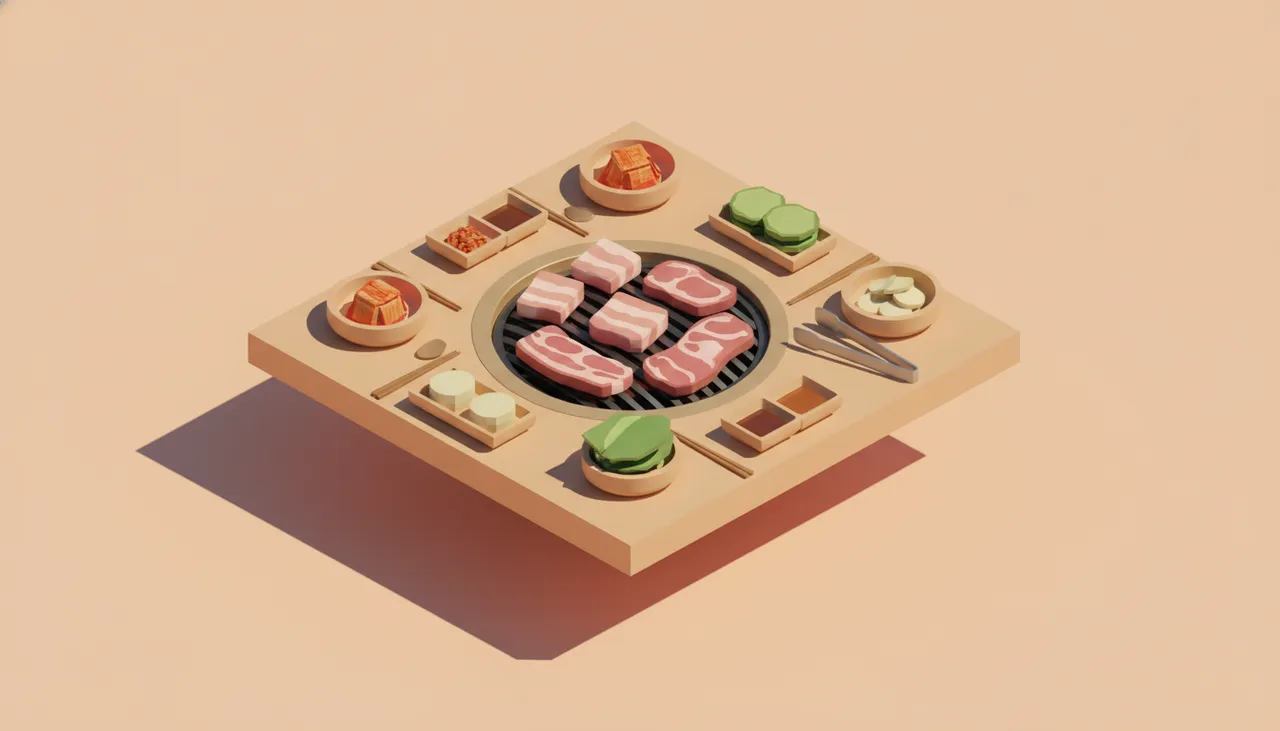
First: 고깃집 (gogitjip) — the BBQ restaurant. Tabletop grill, extraction fan above, meat-centric menu. Koreatown BBQ in LA is almost always all-you-can-eat — a structure that barely exists in Seoul outside tourist zones. You pay a fixed price per person and the meat keeps coming. It's fun, but know going in: the marinade gets sweeter at AYCE spots because they're cooking for volume.
Second: stew houses. The 찌개 specialists. Doenjang jjigae, kimchi jjigae, and the famously Koreatown-LA specialty 순두부찌개 (sundubu jjigae) — soft tofu stew. There are whole restaurants in LA's K-town that serve basically nothing but sundubu. BCD Tofu House. Sokongdong. Beverly Soon Tofu, before it closed, was a pilgrimage spot. Sundubu in Koreatown is a thing the way pho is in Little Saigon.
Third: noodle shops. Hand-cut knife noodles (칼국수), cold summer noodles (냉면), the black-bean jjajangmyeon. Noodle portions in Koreatown are about 30% bigger than in Seoul. I once finished a jjajangmyeon at a spot in Koreatown and felt like I'd eaten two bowls. In Seoul, the same dish leaves you wanting dessert.
Fourth: 치맥 (chimaek, chicken + beer) bars. Double-fried Korean chicken with draft beer. Kyochon, BBQ Chicken, Bonchon — these chains all have Koreatown outposts. A full bird usually runs $25–$35 USD in LA, which I think is expensive until I remember what it costs in Seoul now (18,000–22,000원 at Kyochon). Inflation hit both sides.
Fifth: cafes and dessert spots. Bingsu, Korean-style pastries, croffles, 20+ kinds of ginseng latte. These have exploded in the last five years.
The first-visit order rotation
If it's your first time eating at Koreatown, don't try to sample the whole map. Go through this list across two or three meals:
- 삼겹살 (samgyeopsal) — grilled pork belly at a BBQ place. Even better if you find a spot that offers unmarinated thick-cut. Wrap it in lettuce with ssamjang, raw garlic, a sliver of grilled kimchi. If you've only had marinated short rib, 삼겹살 will reset your sense of what Korean BBQ is.
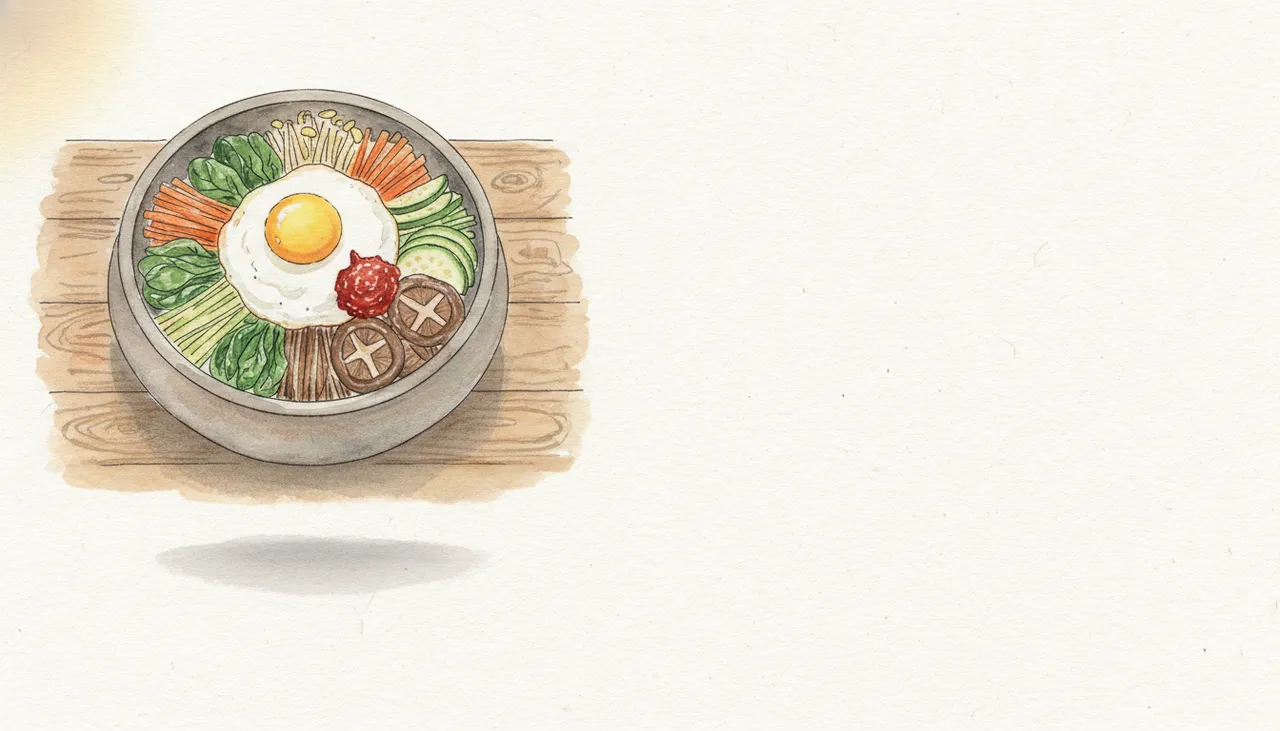
- 비빔밥 (bibimbap) — mixed rice, vegetables, egg, gochujang. The safest first order in the world. Get the 돌솥 version (stone pot) if available; the crispy rice at the bottom is worth the extra $2.
- 순두부찌개 (sundubu jjigae) — soft tofu stew. If you get one thing in Koreatown LA, make it this. Choose your spice level when ordering. The seafood version is my favorite; the pork is a close second.
- 김밥 (gimbap) — seaweed rice roll. A solo lunch or a to-go item. There are stand-alone gimbap shops in Koreatown that do 15 varieties.
- 치킨 (chikin) — Korean fried chicken. Order a half soy-garlic and half yangnyeom (spicy-sweet) if your table can swing it.
And to close — 팥빙수 (patbingsu), shaved ice with red bean and condensed milk. Koreatown cafes serve it with fruit, injeolmi (rice cake), matcha; pick your version.
How Koreatown differs from Seoul
Some honest observations after going back and forth:
Portions are larger. I'd estimate 25–35% more food per dish. This is a US thing generally, but Koreatown leans into it.
Spice is dialed back. Even when you order "extra spicy," Koreatown-extra-spicy is roughly Seoul-medium. The customer base is half non-Korean and restaurants adjust.
Banchan is more limited. In Seoul a casual stew house might give you eight banchan. In Koreatown LA the average is four or five. Refills are still free.
Fusion dishes exist. Kimchi fried rice with cheese, Korean BBQ tacos, kimchi quesadillas, Spam-and-egg bowls. In Seoul, these are rare or nonexistent; in Koreatown, they're normal. Not better or worse, just a different cuisine.
Late-night is strong. Koreatown LA restaurants that stay open past 11pm are common. A huge chunk of the local food culture is post-midnight.
Words that make the menu readable
A few terms will unlock 80% of any Koreatown menu:
- 밥 rice
- 찌개 / 국 stew / soup
- 면 noodle
- 고기 meat
- 반찬 side dishes
- 세트 set meal
- 구이 grilled
- 볶음 stir-fried
Spot those, and you can parse nearly any Korean menu from the transliterated word order.
FAQ
Is Koreatown food "authentic"? That's the wrong question. It's authentically Korean-American. Koreatown food has its own tradition now, decades deep. Ask a Korean-American friend where to eat rather than a friend from Seoul.
Which Koreatown has the best food? Debatable. LA has the biggest selection and the strongest sundubu scene. NY's 32nd Street has incredible late-night. Toronto's Bloor-Christie stretch is smaller but has some excellent noodle shops.
Will anyone speak Korean to me?
Sometimes. Many Koreatown restaurants have English menus and staff. Knowing a few phrases (이거 주세요igeo juseyo, 감사합니다gamsahapnida) always helps.
What's the one dish to order if I only get one? 순두부찌개. In Koreatown LA specifically, it's the local signature and it's nearly impossible to find a bad one.
Related on Korean TokTok
- K-Drama Korean Phrases (Top 100) — restaurant scenes explained
- Korean Slang Dictionary
Quick cheat sheet
Expressions in this post