Master 10 Essential Korean Phrases & Culture Basics
Review essential Korean greetings like 안녕하세요 and 수고하세요. Master polite vs. casual speech with our weekly culture guide and quiz.
Review essential Korean greetings like 안녕하세요 and 수고하세요. Master polite vs. casual speech with our weekly culture guide and quiz.
Stop guessing if you should bow or wave; this review clarifies the nuances of daily Korean social interactions.
Weekly recap (60 seconds)
- Practiced the distinction between formal and informal sentence endings.
- Mastered the 'work culture' greetings used when leaving the office.
- Reviewed the importance of age-based honorifics in first meetings.
- Learned how to apologize sincerely versus casually.
- Explored the 'service' culture in Korean restaurants and shops.
Flashcards (10)
안녕하세요annyeonghaseyo = Hello (polite)감사합니다gamsahapnida = Thank you (formal)죄송합니다joesonghapnida = I am sorry (formal)수고하세요sugohaseyo = Keep up the good work잘 먹겠습니다jal meokgetseupnida = I will eat well반가워요bangawoyo = Nice to meet you잠시만요jamsimanyo = Excuse me / Just a moment괜찮아요gwaenchanhayo = It is okay안녕히 계세요annyeonghi gyeseyo = Goodbye (to person staying)주세요juseyo = Please give me
Social Etiquette: Right vs. Wrong
| Situation | Common Mistake | Correct Approach |
|---|---|---|
| Meeting an elder | Waving and saying "안녕" | Bowing slightly and saying 안녕하세요annyeonghaseyo |
| Leaving a shop | Saying nothing | Saying 수고하세요sugohaseyo to the clerk |
| Receiving a gift | Taking it with one hand | Using two hands to show respect |
Decision Tree: Polite or Casual?
- Is the person older than you? -> Polite (
-요-yo /-습니다-seupnida) - Is this a professional setting? -> Polite
- Are you close friends of the same age? -> Casual (
반말banmal) - Are you unsure? -> Always default to Polite
Quick cheat sheet
Expressions in this post
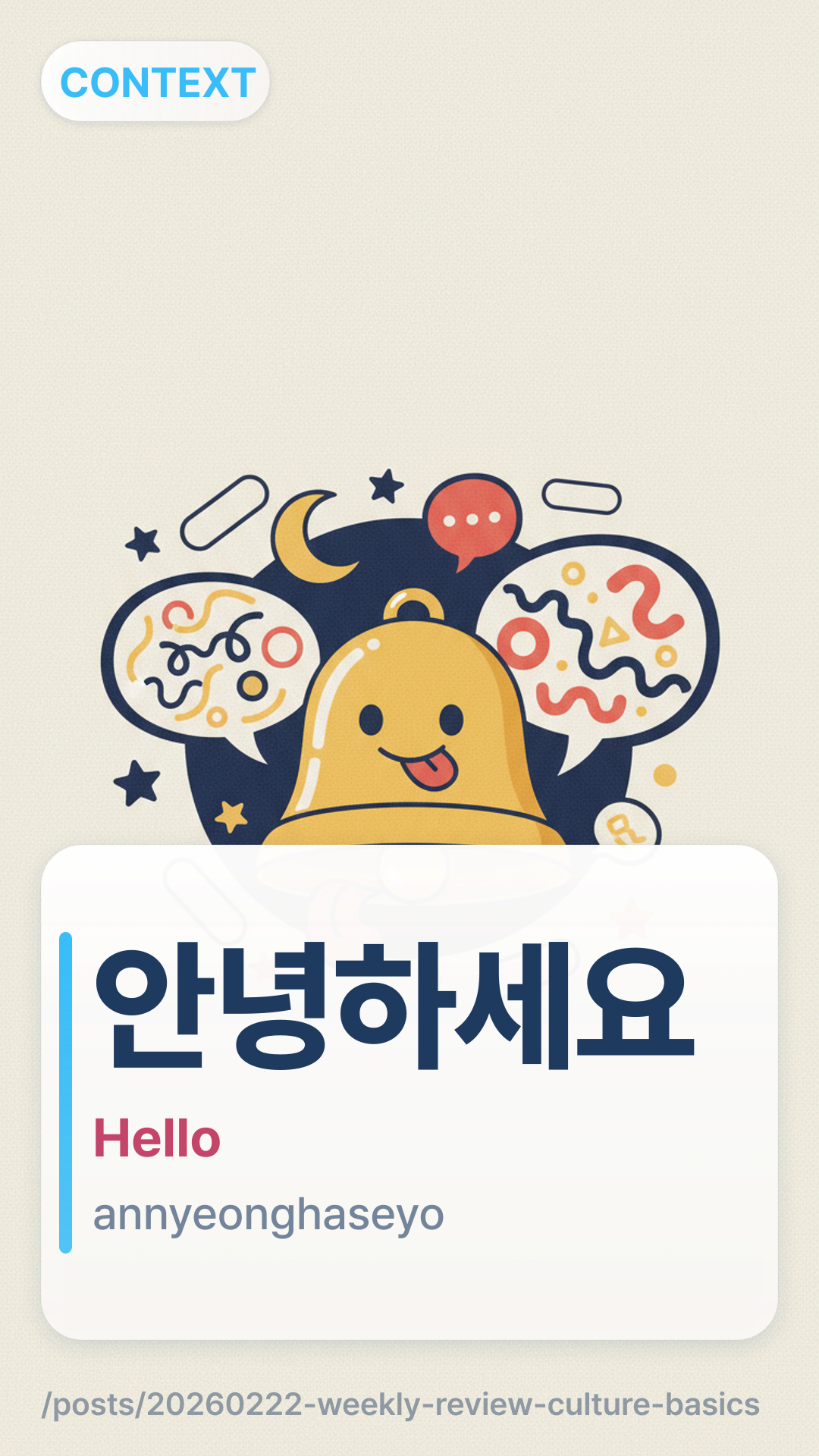
This is the gold standard for greetings. It is a question originally ("Are you at peace?"), but functions as a standard "Hello." Use it with a slight bow for anyone you aren't intimate with.
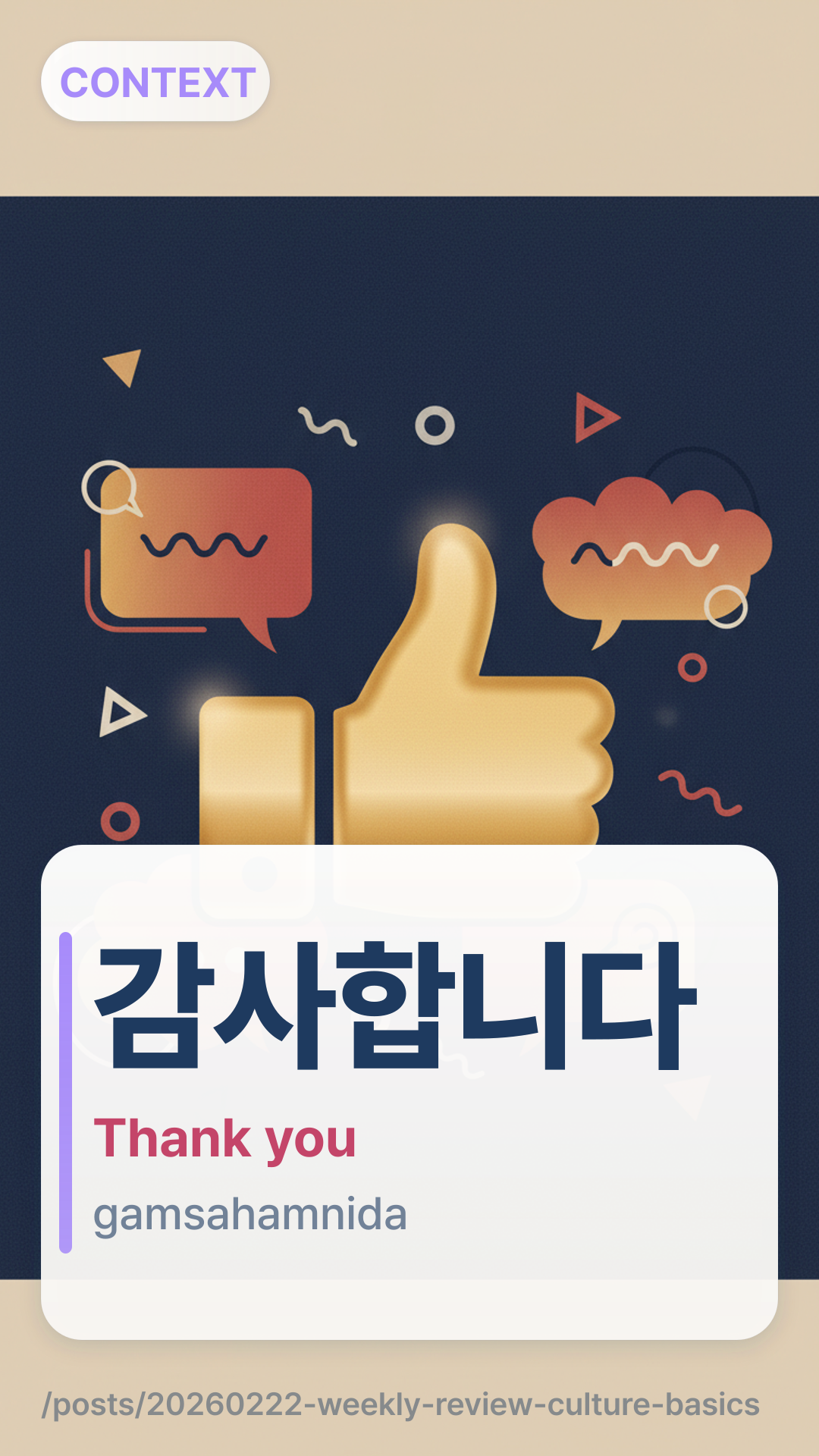
While '고마워요' is also thank you, 감사합니다gamsahapnida is the safest, most respectful version. Use this in shops, with teachers, or with strangers.
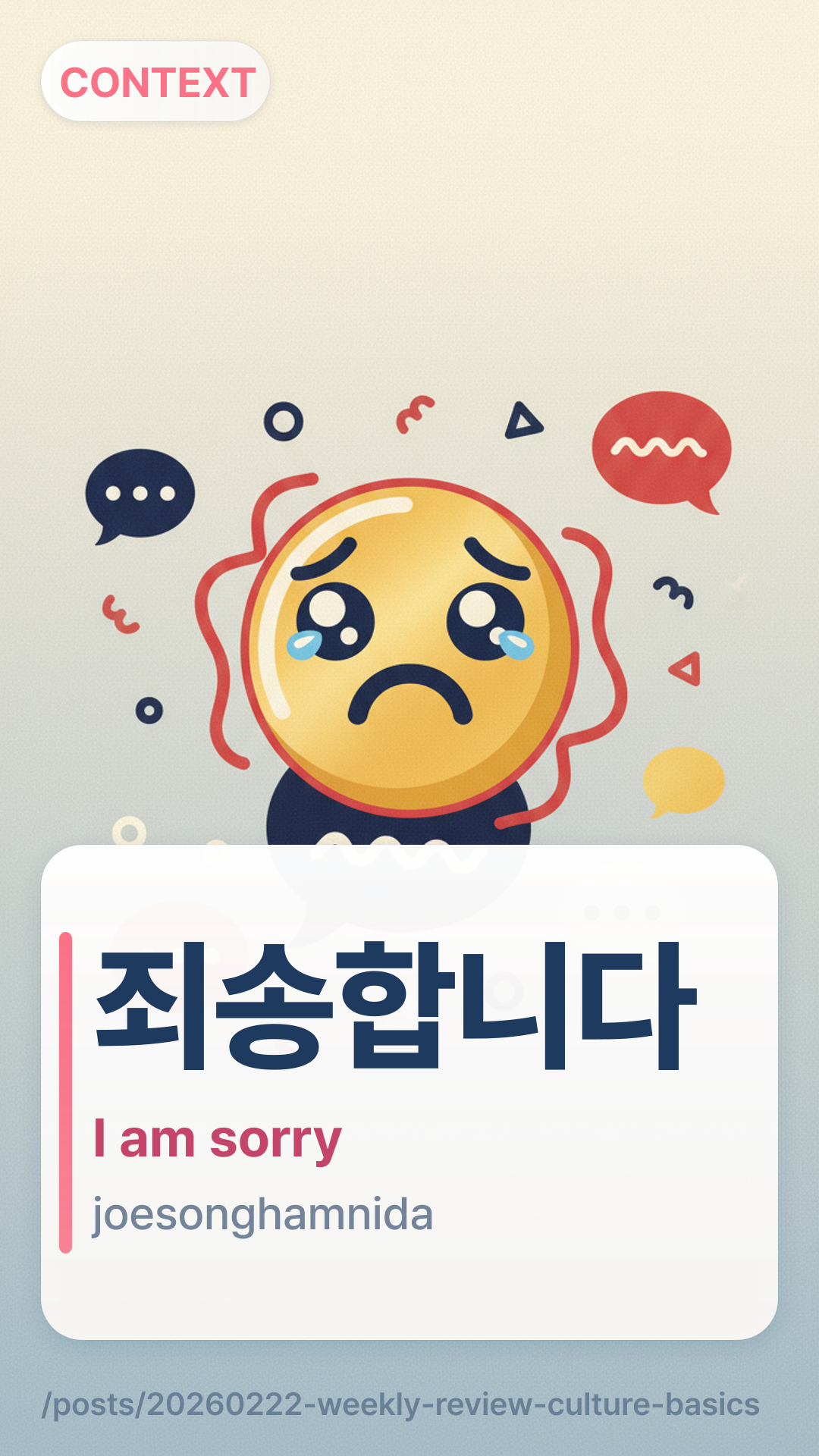
Use this for genuine mistakes. If you just want to get past someone in a crowd, 잠시만요jamsimanyo is often more appropriate than a full apology.
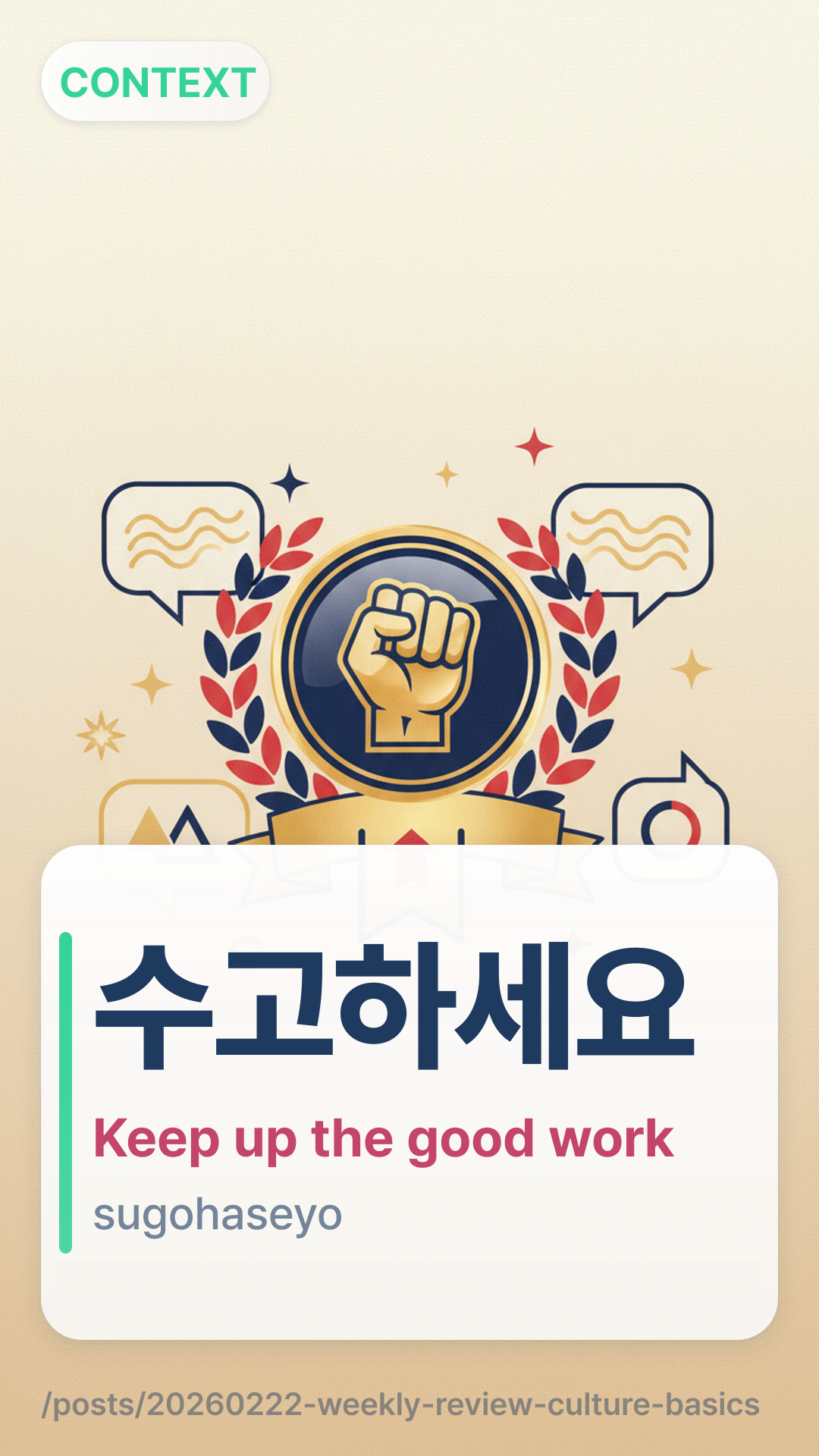
Literally "Keep laboring," this is a polite way to say goodbye to someone working (drivers, cashiers, colleagues). Do not say this to someone older than you who is NOT working.
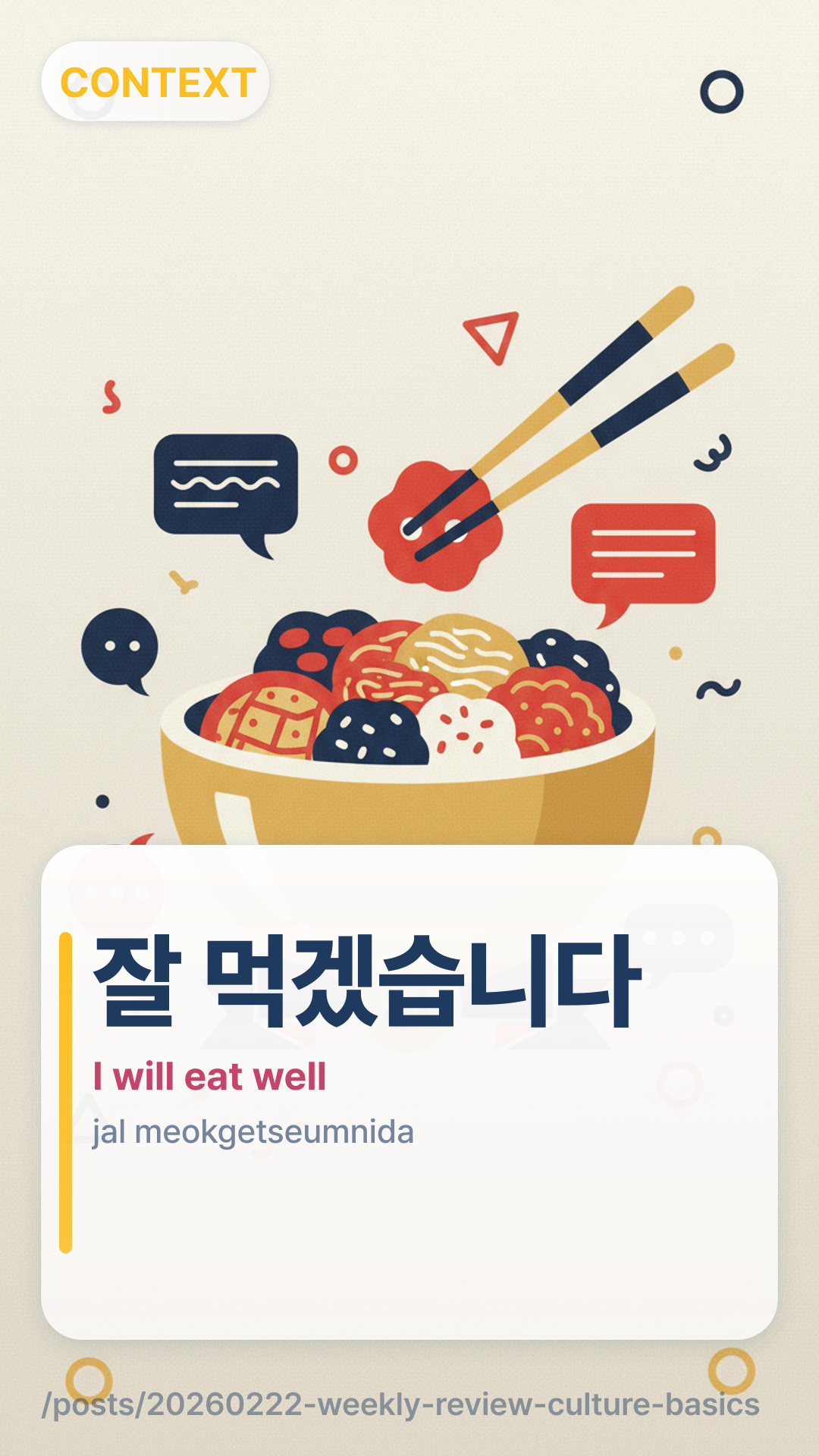
The Korean version of 'Bon appétit' but said by the eater. It shows appreciation to the host or the cook before the first bite.
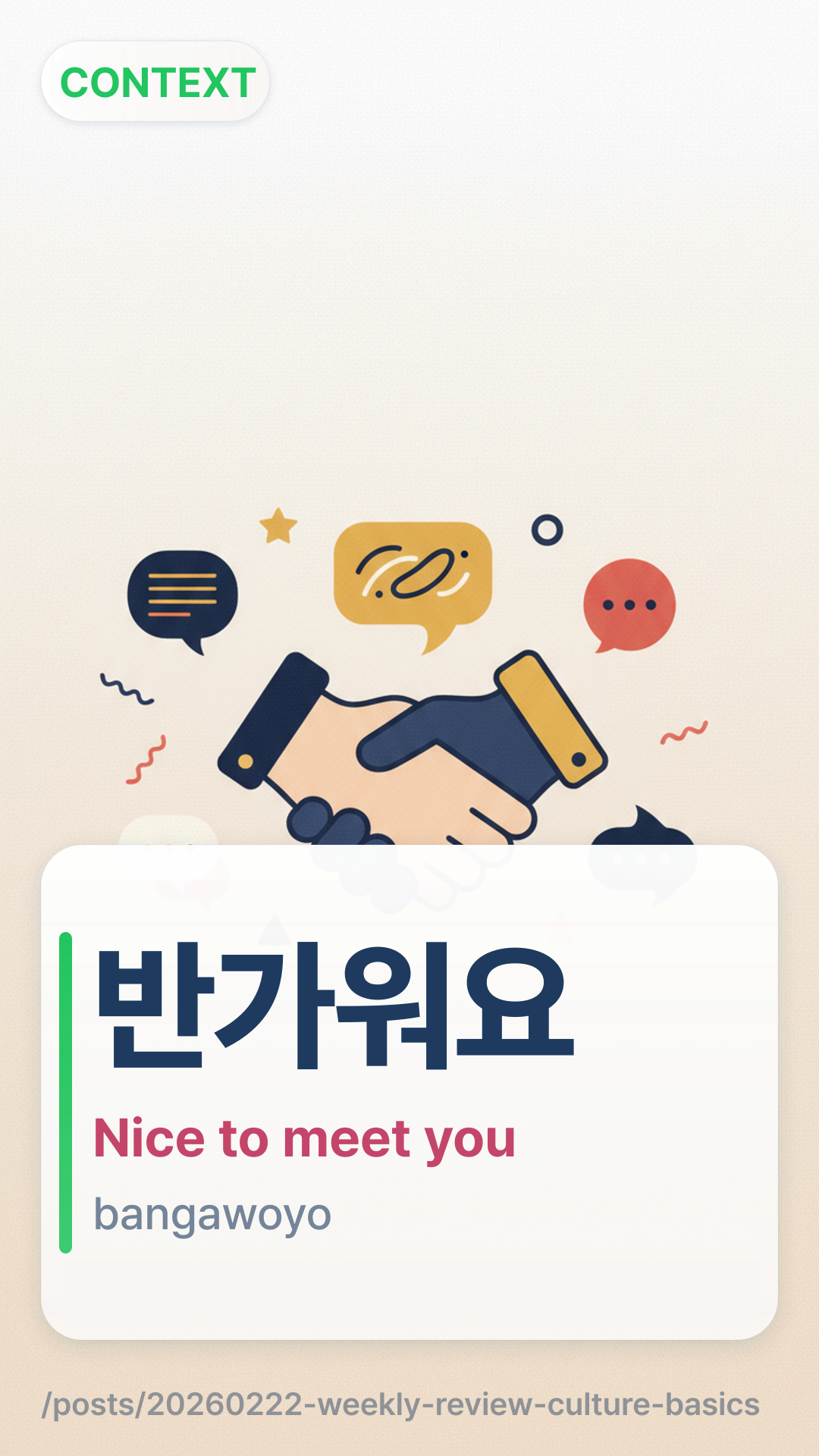
A friendly, polite way to say "Nice to meet you." In very formal settings, use '처음 뵙겠습니다' instead.

Essential for navigating Seoul. Use it when exiting a crowded subway or when you need a waiter's attention for a split second.
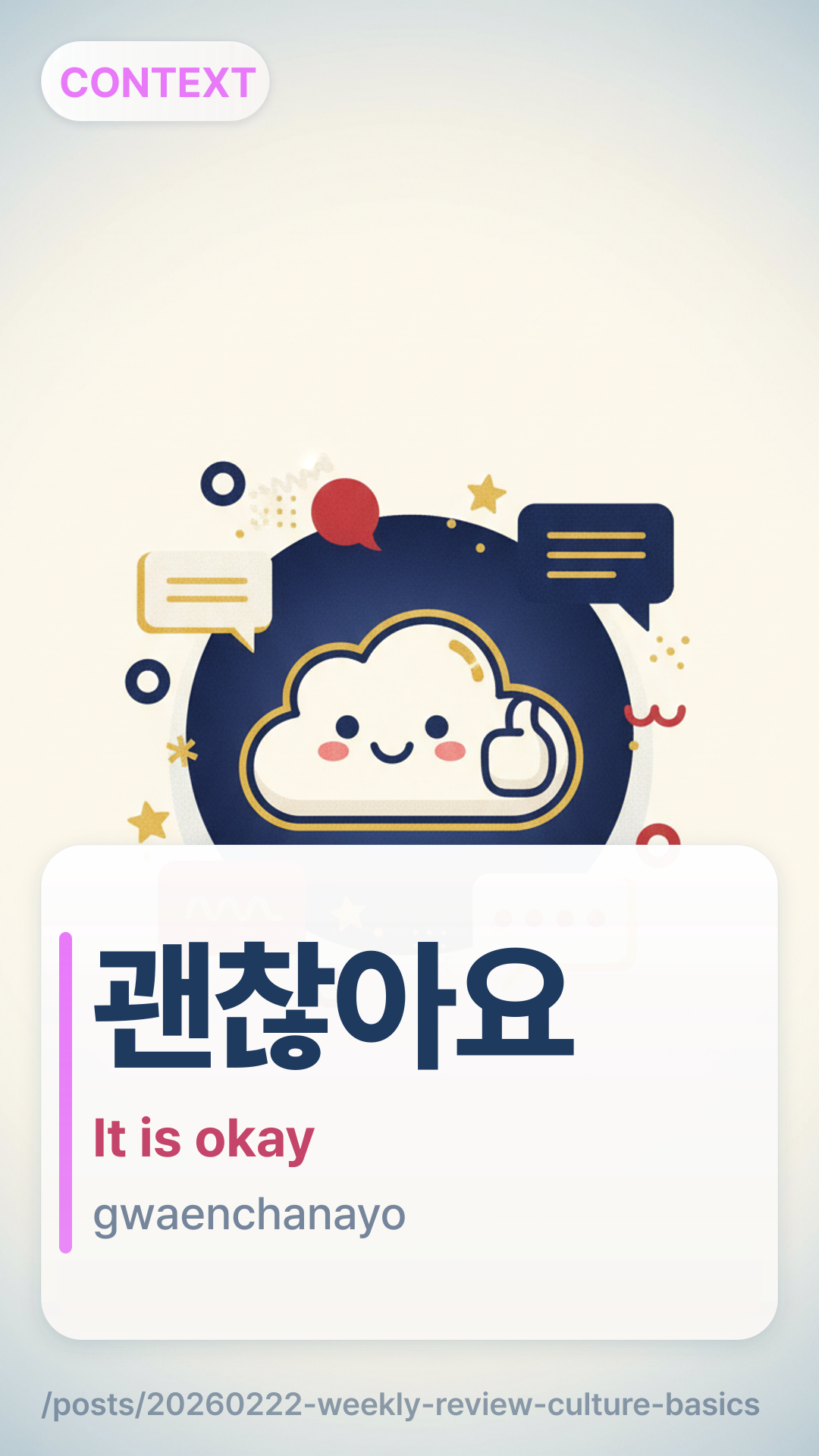
Versatile phrase meaning "I'm fine," "No thank you," or "It's okay." The tone determines if you are declining an offer or forgiving a mistake.
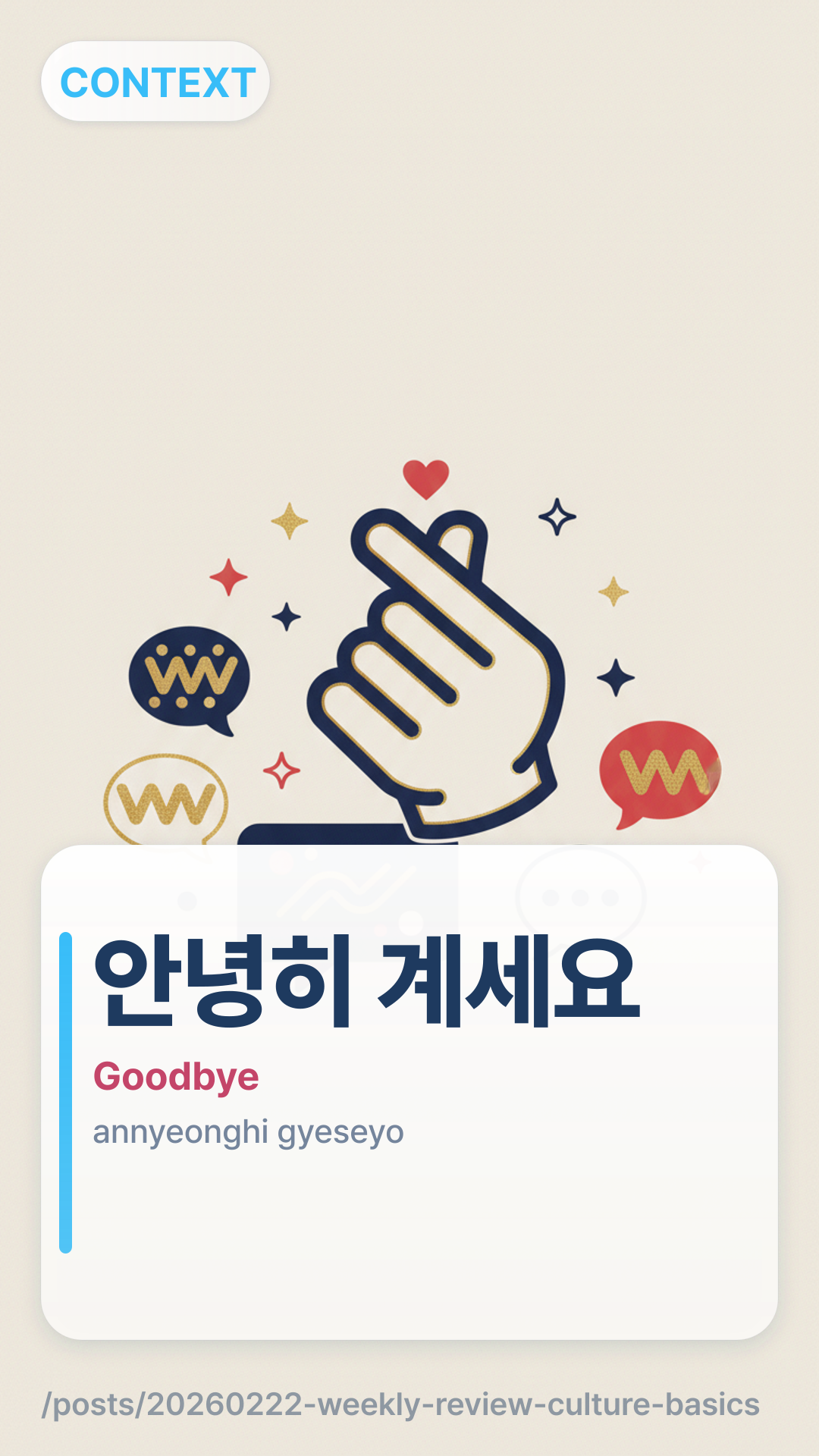
Specific goodbye used when YOU are leaving and the other person is staying. If you both leave, use '안녕히 가세요'.
The magic word for ordering. Attach it to any noun (e.g., '물 주세요' - Water, please) to get what you need politely.
Mini quiz (10 questions)
Notes:
- Q1:
안녕하세요annyeonghaseyo is the standard polite greeting for entering any business. - Q2:
감사합니다gamsahapnida is the most common formal way to express gratitude in transactions. - Q3:
죄송합니다joesonghapnida is required for physical accidents to show proper regret. - Q4:
수고하세요sugohaseyo acknowledges the worker's effort as you depart. - Q5:
잘 먹겠습니다jal meokgetseupnida is a fixed cultural expression of gratitude before eating. - Q6:
반가워요bangawoyo balances friendliness and politeness for new acquaintances. - Q7:
잠시만요jamsimanyo literally means "Just a moment" and is used to ask for space. - Q8:
괜찮아요gwaenchanhayo is the standard polite way to say "No thank you" or "I'm good." - Q9:
안녕히 계세요annyeonghi gyeseyo literally means "Stay peacefully." - Q10:
주세요juseyo is the imperative polite form of "to give," used for requests.
Next steps
- The Mirror Bow: Practice saying
안녕하세요annyeonghaseyo while giving a 15-degree bow in the mirror. - Order Drill: Write down 3 things you want to buy today and add
주세요juseyo to the end of each. - Audio Check: Record yourself saying
수고하세요sugohaseyo—ensure the '요' is clear and polite, not dropped.