그냥 (Geunyang) Meaning: Why K-Drama Characters Say It
Understand the hidden meanings of 그냥 (geunyang) in K-dramas. Learn when it means 'just because' versus 'leave me alone' and master the nuance.
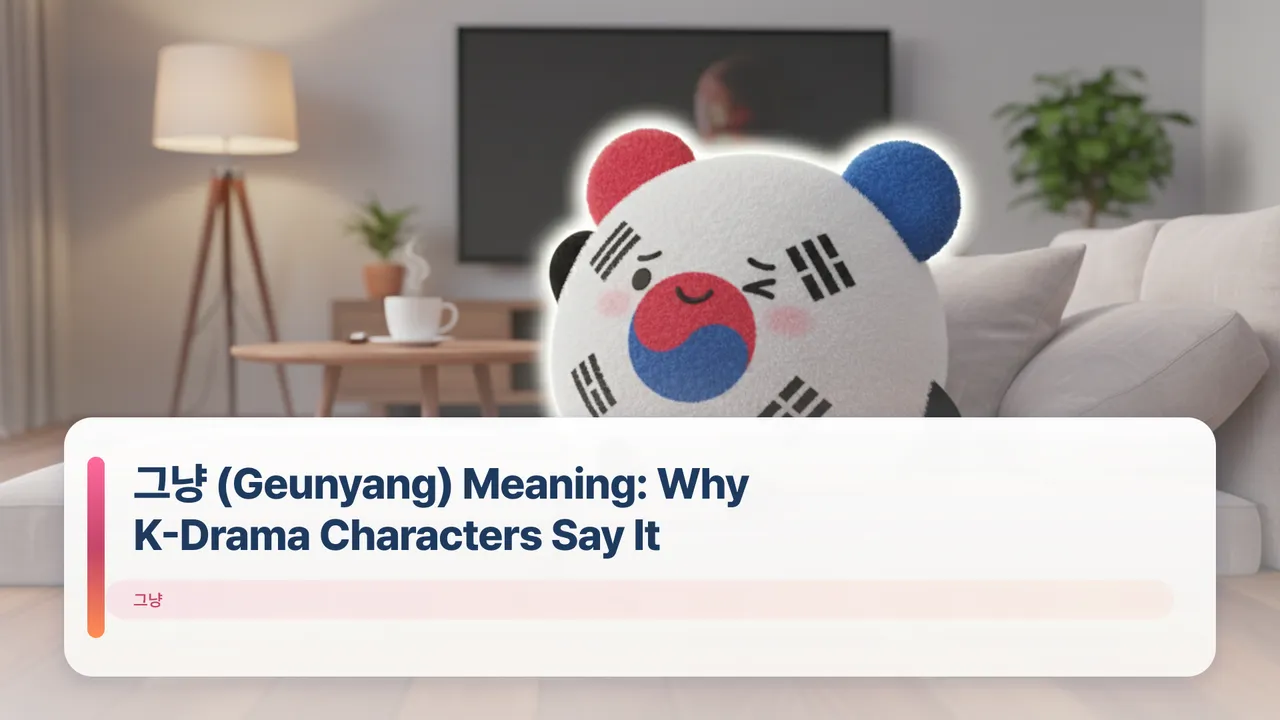
Understand the hidden meanings of 그냥 (geunyang) in K-dramas. Learn when it means 'just because' versus 'leave me alone' and master the nuance.
A K-drama lead stares at their crush, who asks, "Why are you looking at me like that?" The lead looks away and mutters, "그냥." Does it mean they have no reason, or are they hiding a heart full of secrets?
Why is this simple word used in almost every emotional confrontation in Korean media?
Quick cheat sheet
Expressions in this post
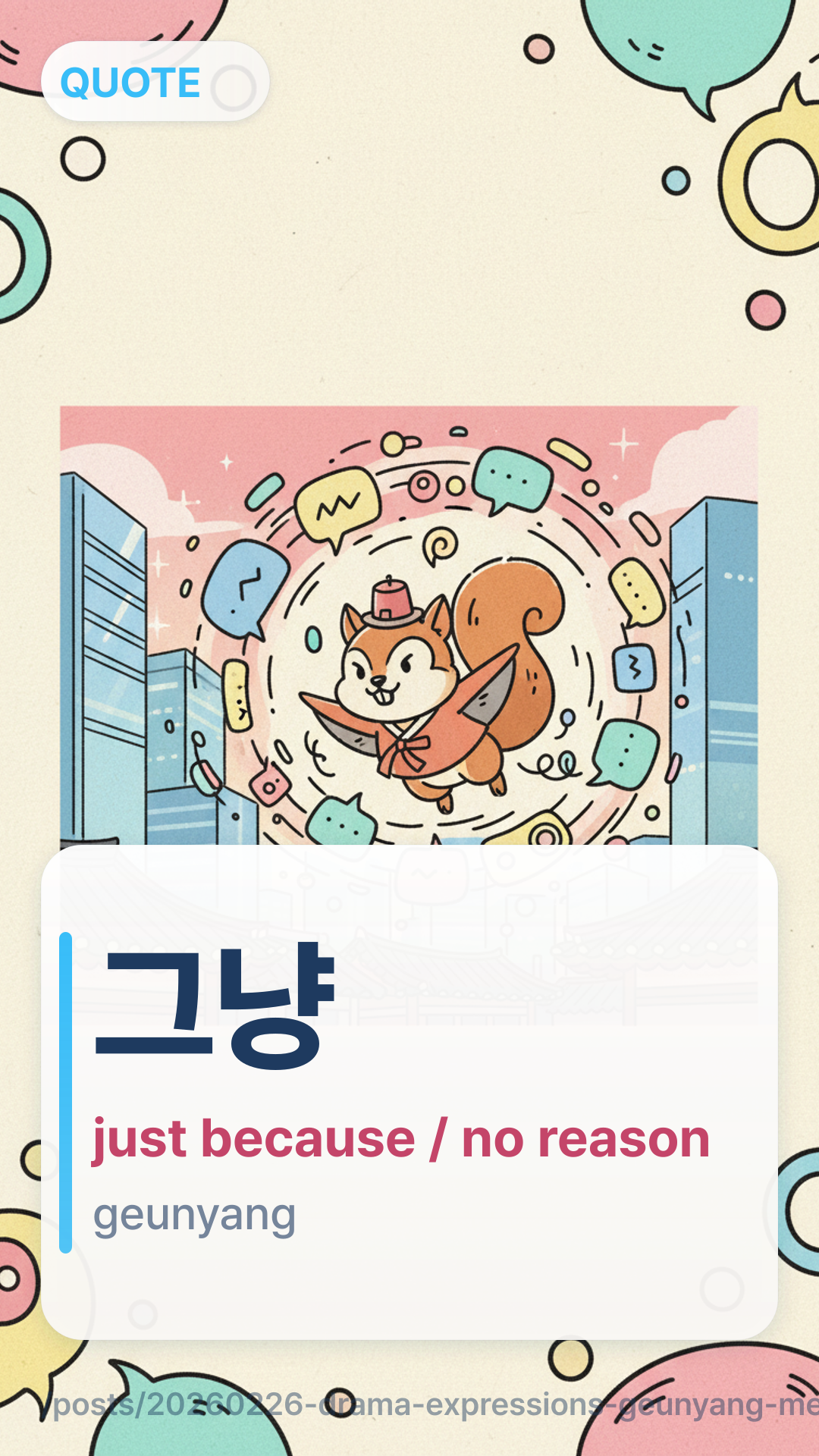
What it actually implies
In its dictionary form, 그냥geunyang means "as it is" or "without change." However, in conversation, it functions as a conversational shield. It is the ultimate way to deflect a question without being explicitly rude. When someone asks "Why?" and you don't want to explain your complex emotions, 그냥geunyang does the heavy lifting.
When it sounds rude (and why)
Intonation is everything. A short, clipped 그냥!geunyang! with a downward inflection sounds like "Stop asking me, it's none of your business." Conversely, a long, trailing 그냥...geunyang... usually signals that the speaker is hesitant to reveal their true feelings. Using it repeatedly when a boss or teacher asks for a serious explanation will make you sound irresponsible or dismissive.
Do / Don’t checklist
- Do use it when someone asks why you bought a snack (and you just felt like it).
- Do use it to soften a request:
그냥 해geunyang hae (Just do it). - Don’t use it in a job interview when asked about your motivation.
- Don’t use it to answer a "Why are we breaking up?" question unless you want to be the villain.
Decision Tree: What do they mean?
- Is the tone flat and fast? -> "No special reason / I'm bored."
- Is there a long pause before it? -> "I have a reason, but I can't tell you."
- Is it followed by a sigh? -> "Don't ask me, I'm frustrated."
Rewrite drill (same message, 3 tones)
- Casual (to a friend):
그냥 궁금해서.geunyang gunggeumhaeseo. — Just because I was curious. - Polite (to a colleague):
그냥 좀 궁금해서 여쭤봤어요.geunyang jom gunggeumhaeseo yeojjwobwasseoyo. — I just asked because I was a bit curious. - Defensive (to someone annoying):
아니, 그냥요.ani, geunyangyo. — No, just... because (stop asking).
Trap Example
Wrong: 그냥 사과를 먹고 싶어요.geunyang sagwareul meokgo sipeoyo. (When trying to say "I only want an apple")
Right: 사과만 먹고 싶어요.sagwaman meokgo sipeoyo.
Note: 그냥geunyang means "just" in the sense of "no reason," not "only" (which is 만man).
Examples
왜 웃어?wae useo? — Why are you laughing?그냥, 네가 웃기게 생겨서.geunyang, nega utgige saenggyeoseo. — Just because, you look funny.그냥 아무거나 먹자.geunyang amugeona meokja. — Let's just eat anything.
Copy/paste mini-dialogues (with EN)
Next steps
Next time you watch a K-drama, listen for the "silent" 그냥geunyang. If a character says it while looking sad, try to guess what they are actually hiding. Practice saying it with a soft "-요" (그냥요geunyangyo) to your Korean friends when they ask why you're studying so hard today!