
K-Drama
11Read the pillar guide: K-Drama Korean Phrases.
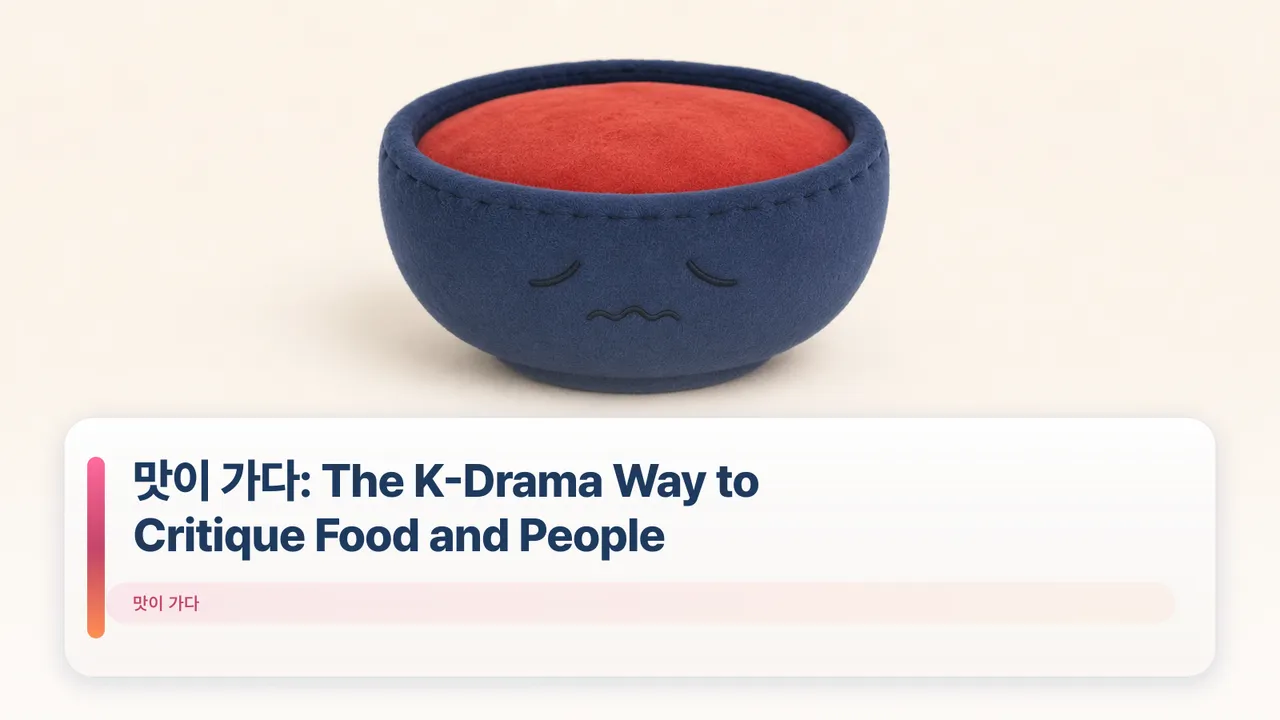
맛이 가다: The K-Drama Way to Critique Food and People
Learn how to use 맛이 가다 like a pro. Master this essential K-drama expression for food critiques and character drama. Discover more now!

Understanding 모욕: The Weight of Insults in K-Dramas
Learn the nuance of 모욕 (insult) in Korean. Master the difference between being rude and legal-level humiliation with drama examples.

Master '익힘 정도': Chef Ahn Sung-jae's Viral Critique
Learn the viral '익힘 정도' (level of doneness) expression from Culinary Class Wars and how to use it like a pro. Master Korean food critiques!
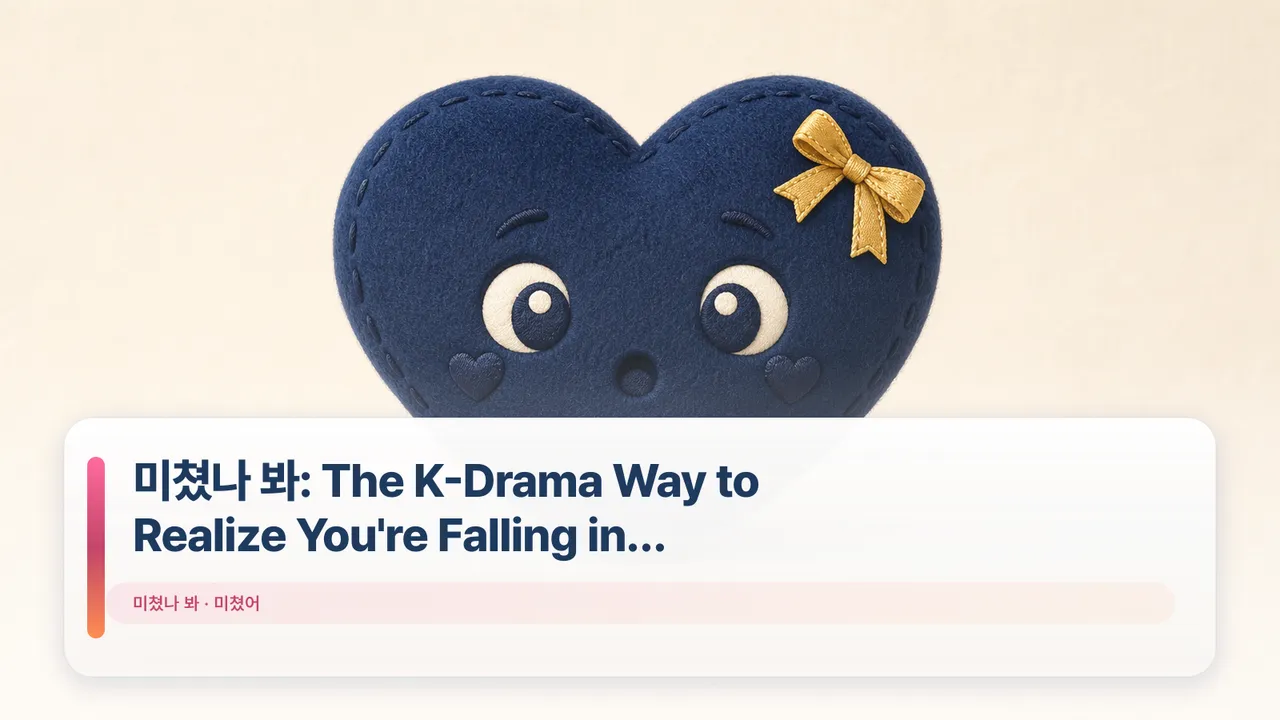
미쳤나 봐: The K-Drama Way to Realize You're Falling in Love
Master 미쳤나 봐 and 미쳤어 - essential K-drama expressions for romantic realizations and shock. Learn the nuance, tone, and usage with our quiz.
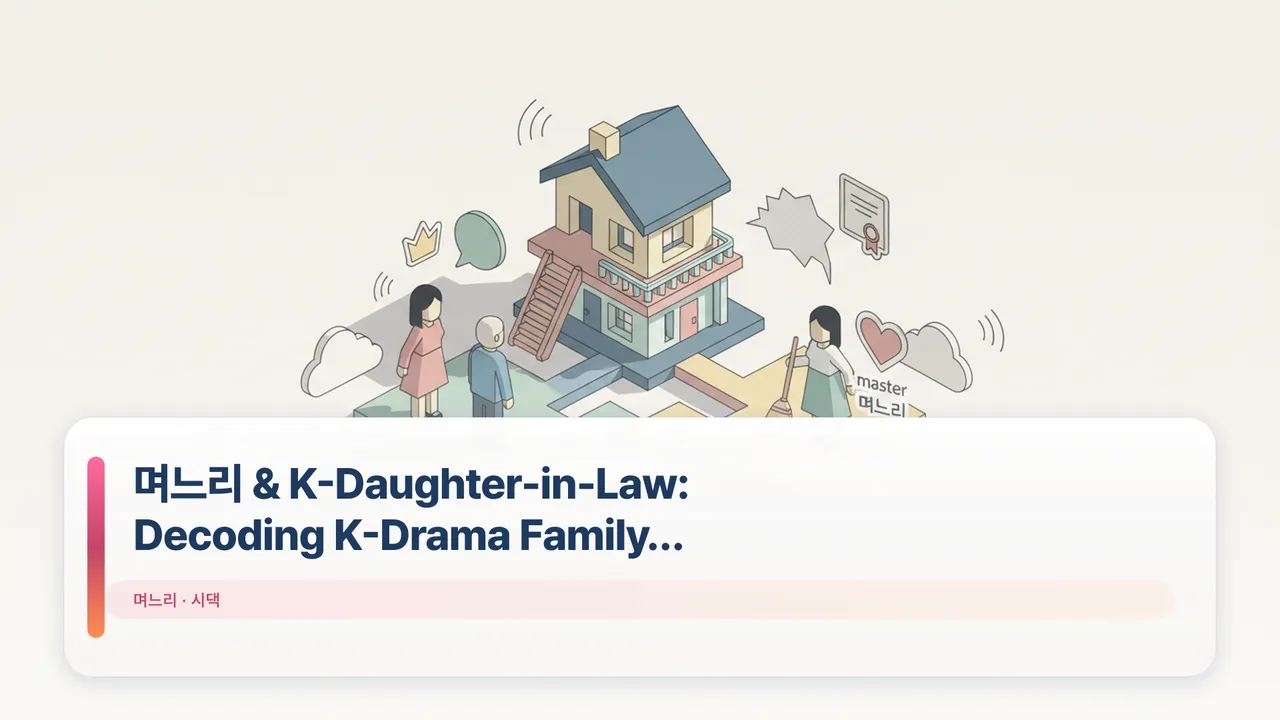
며느리 & K-Daughter-in-Law: Decoding K-Drama Family Tropes
Master 며느리 and 시댁 to understand the intense family dynamics in K-dramas. Learn the K-myeoneuri meme and honorific traps. Explore now!
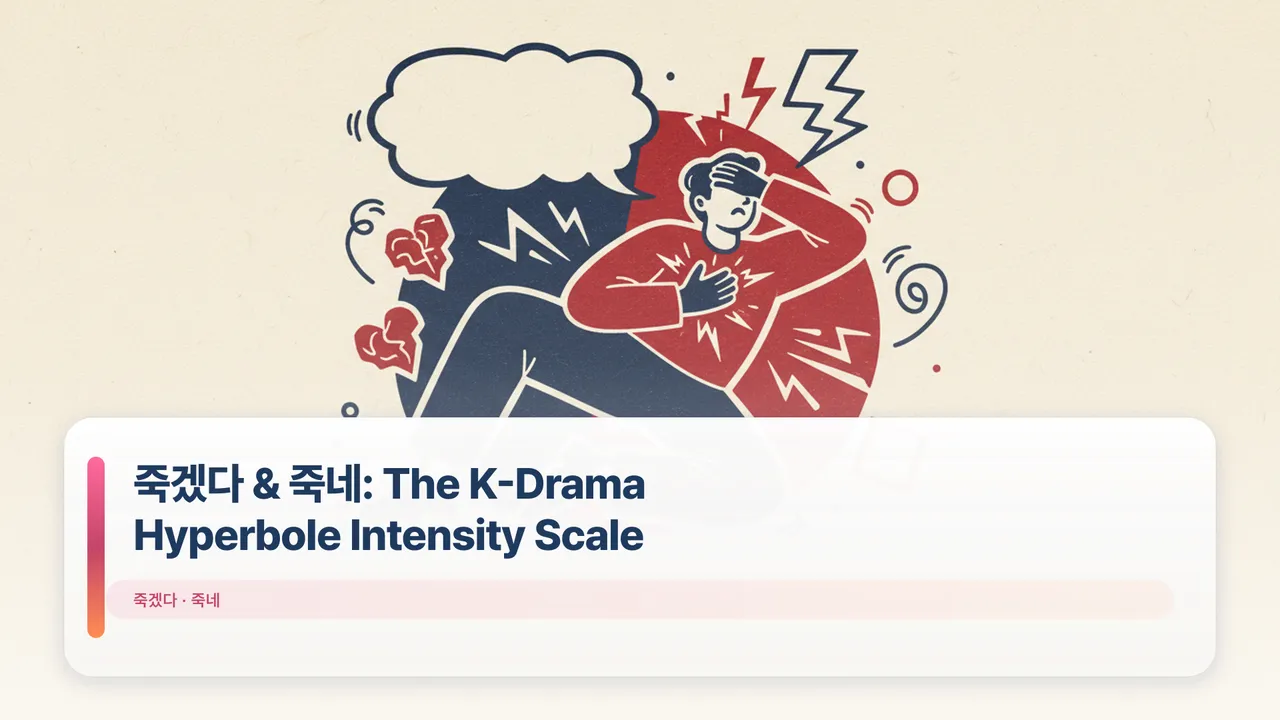
죽겠다 & 죽네: The K-Drama Hyperbole Intensity Scale
Master the dramatic use of 죽겠다 and 죽네. Learn how to express extreme hunger, love, or exhaustion like a K-drama lead.
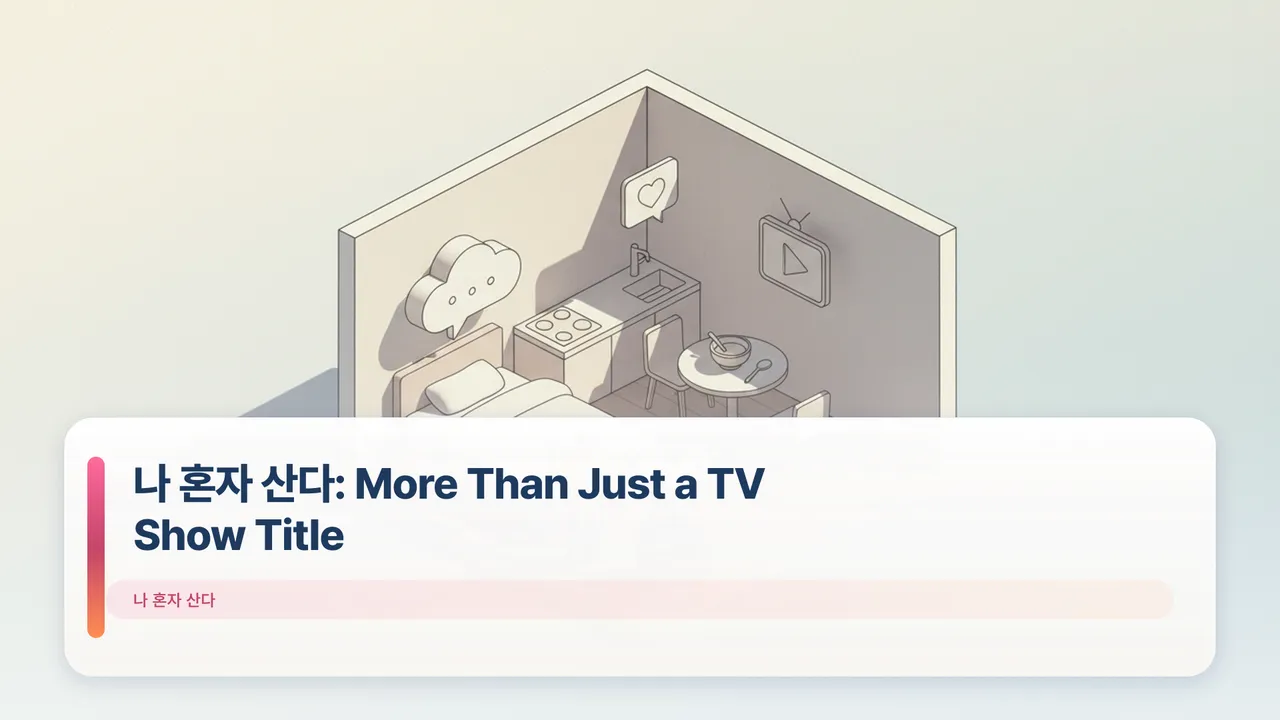
나 혼자 산다: More Than Just a TV Show Title
Master the cultural nuance of 나 혼자 산다. Learn to distinguish between proud independence and lonely isolation in Korean. Discover 'hon-bap' and more!
Master 그래도: The Emotional Pivot in K-Dramas
Master 그래도 - the essential K-drama pivot word for emotional confessions and reconciliations. Learn the nuance and practice with a quiz!
미쳤네 Meaning: From K-Drama Plot Twists to Pure Awe
Master the versatile Korean expression 미쳤네. Learn to distinguish between shock and awe in K-dramas with our intensity scale and usage guide.
안 돼 (Andwae) Meaning: From 'No' to Dramatic Despair
Master the nuances of 안 돼 (Andwae) in K-dramas. Learn the desperation scale, common traps, and how to sound natural. Discover more!
그냥 (Geunyang) Meaning: Why K-Drama Characters Say It
Understand the hidden meanings of 그냥 (geunyang) in K-dramas. Learn when it means 'just because' versus 'leave me alone' and master the nuance.