
Posts
Structured Korean lessons across the 4-stage curriculum: grammar fundamentals, TOPIK preparation, honorifics, K-drama Korean, and slang.
Page 3Where these lessons fit in the 4-stage curriculum
Every lesson on Korean TokTok belongs to one of four stages on the structured Hangul-to-TOPIK-6 path. Use the topic filter below to drill a specific category, or open a stage card to see its prerequisites and pillar guide.
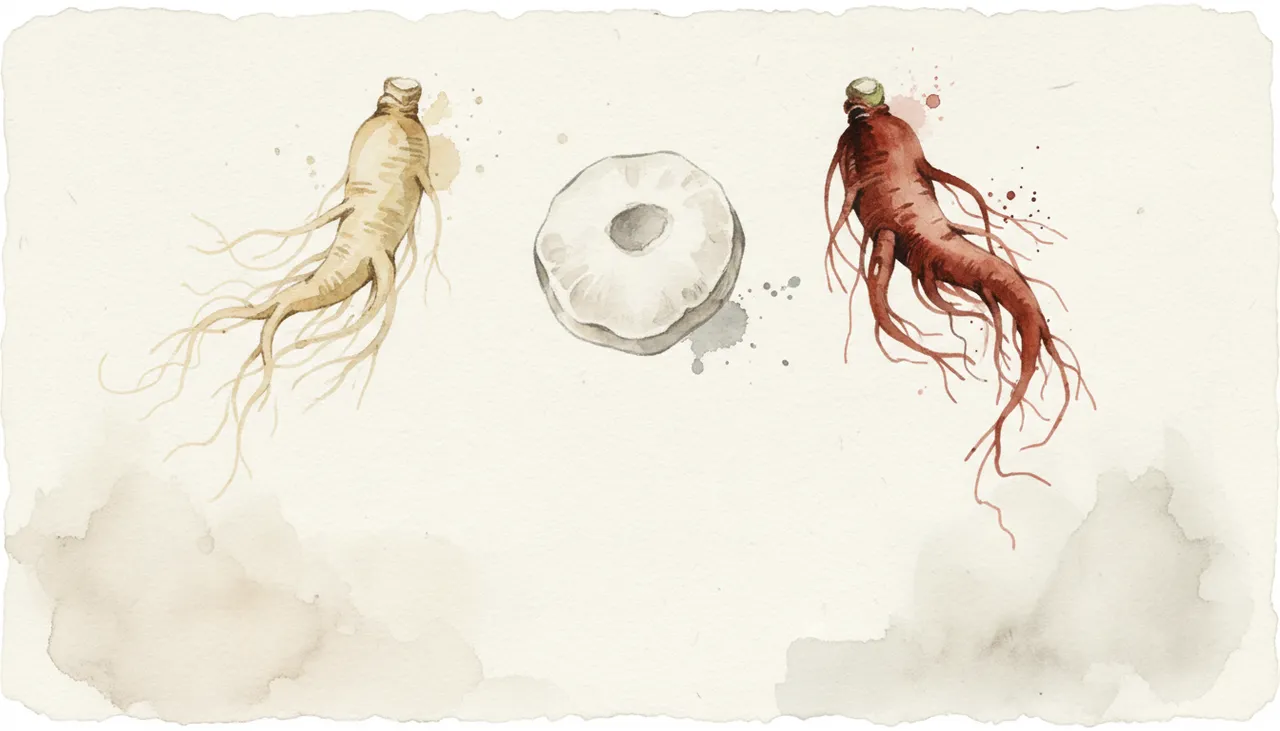
What Does Korean Ginseng Do? Traditional Uses and Modern Products
Korean ginseng is commonly sold as an energy and wellness tonic, traditionally used to support stamina and recovery. This guide explains the different forms (fresh, white, red), how Koreans typically use them, and the vocabulary you'll see on product labels.
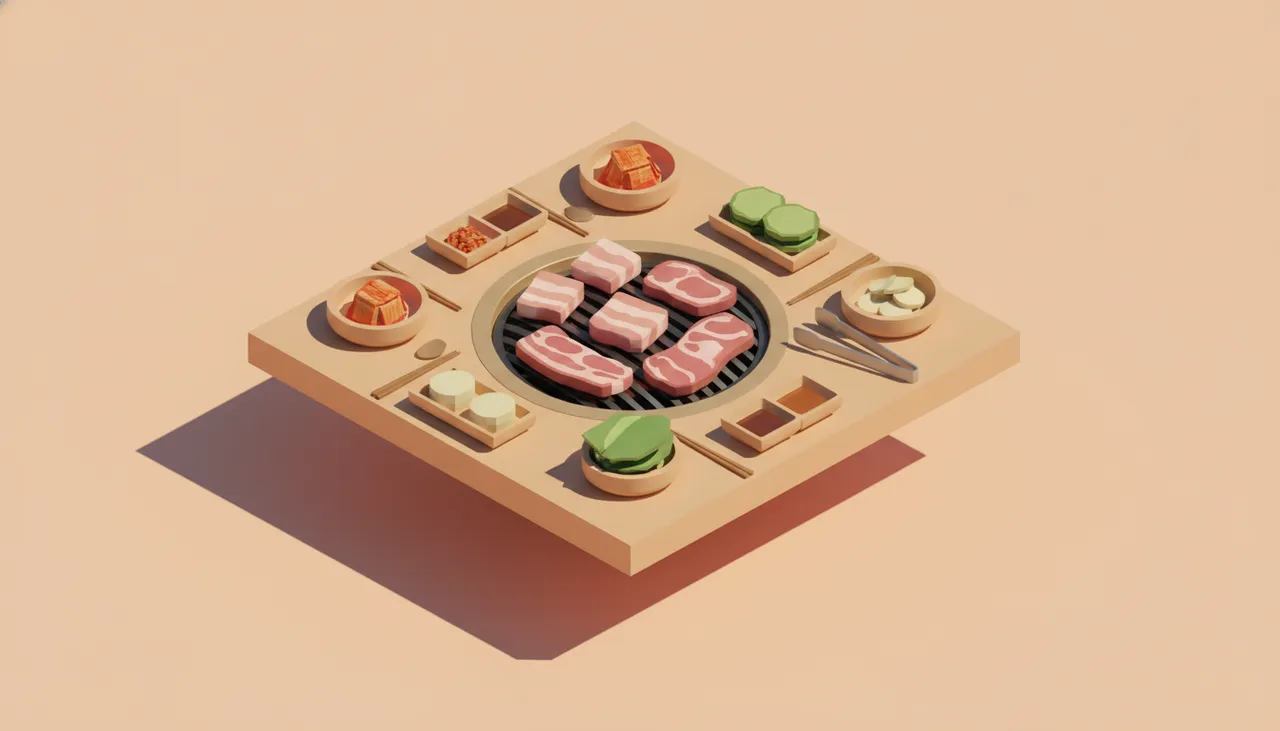
What Does Korean BBQ Taste Like? Flavors, Sides, and What to Order
Korean BBQ tastes savory, slightly sweet, and deeply smoky, with meat seasoned in soy, garlic, sugar, sesame, and pear. This guide walks through the core flavors, the side dishes (banchan) that balance the grill, and the key Korean words to know before you order.

What Does Korean Age Mean? The Old System vs. the 2023 Reform
Korean age traditionally added one or two years to your international age because Koreans were born "one" and gained a year every New Year. A 2023 law unified official records around international age, but social speech often still uses the old counts.
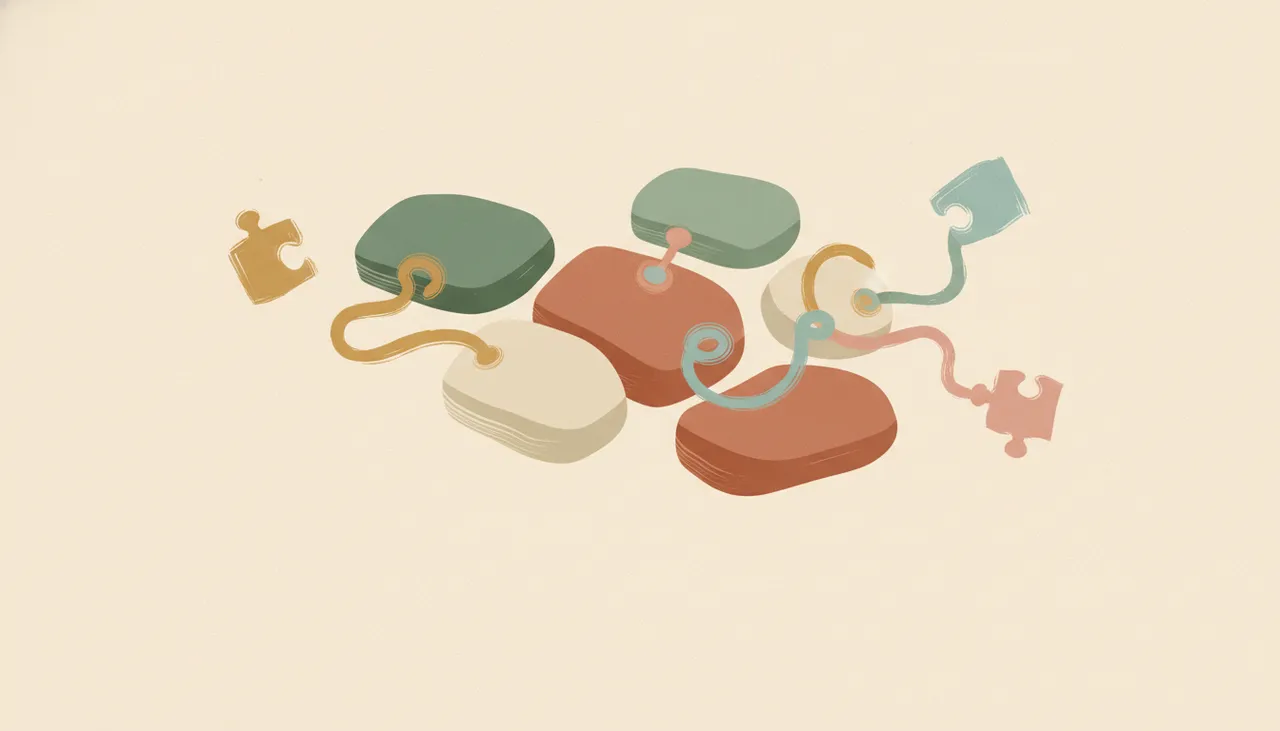
What Are Korean Particles? A Beginner's Map of 조사 (Josa)
Korean particles, called 조사 (josa), are short grammar markers attached to nouns to show their role in the sentence. This guide maps the main categories, gives you plain-English labels for each, and shows how a single sentence changes meaning as you swap them.

TOPIK Korean Level Test: How the 6 Levels and 2 Exams Work
TOPIK is the official Korean proficiency test, organized into 6 levels across 2 exams — TOPIK I (Levels 1-2) and TOPIK II (Levels 3-6). This guide explains how the levels map to your score, what each exam contains, and how to pick the right test for you.

TOPIK Korean Level 2: Scope, Sample Questions, and Study Plan
TOPIK Level 2 is the upper tier of TOPIK I, earned with a score of 140 or higher. It certifies survival Korean for daily life — about 1,500-2,000 vocab words and core grammar. This guide covers scope, sample tasks, and a realistic 3-month study plan.

TOPIK Korean Level 1: What It Tests, How to Prep, and What Passing Means
TOPIK Level 1 is the entry tier of the Test of Proficiency in Korean. It's reached by scoring 80-139 on TOPIK I. This guide explains the vocabulary and grammar it covers, sample tasks, and a realistic study plan for a complete beginner.

Korean Sino Numbers 1 to 100: The Chinese-Origin System, Fast
Korean sino numbers — the system borrowed from Chinese — are used for dates, money, phone numbers, and anything above 99. This guide walks 1-100 with Hangul, romanization, and the combination rules that let you form every number in between.

Korean Phrases for Work: Emails, Meetings, and Calls
Korean offices run on politeness. The one phrase that saved me in my first Korean-speaking job wasn't a sophisticated one — it was `조금 더 설명해 주시겠어요?`, "could you explain a little more?" Here are 20 phrases for emails, meetings, and phone calls that actually get used at a Korean-language 회사.

Korean Particles Examples: The 8 You'll Hear Every Day
Korean particles are the tiny glue-words that tell you which noun is the subject, which is the object, where something happened, who it belongs to. Get them wrong and your sentence goes nowhere. Here are the eight particles that cover nearly every beginner sentence, with example lines you'll actually say.

The Korean Numbers System: Two Counts, One Rule for Choosing
Korean has two number systems and you need both. The short rule: native for things you can point at, sino for abstract quantities. The famous mixed case is telling time — `세 시 십오 분` uses one system for the hour and the other for the minute. Here's how to keep them straight.
Korean Native Numbers 1 to 100: Pure Korean Counting, Explained
Korean native numbers are the older counting system — the one you use for age, hours, and physical objects. Learners trip on one specific thing: the first four numbers change shape when a counter follows. Here's why, and the story of how I introduced myself wrong to a Korean family in 2020.
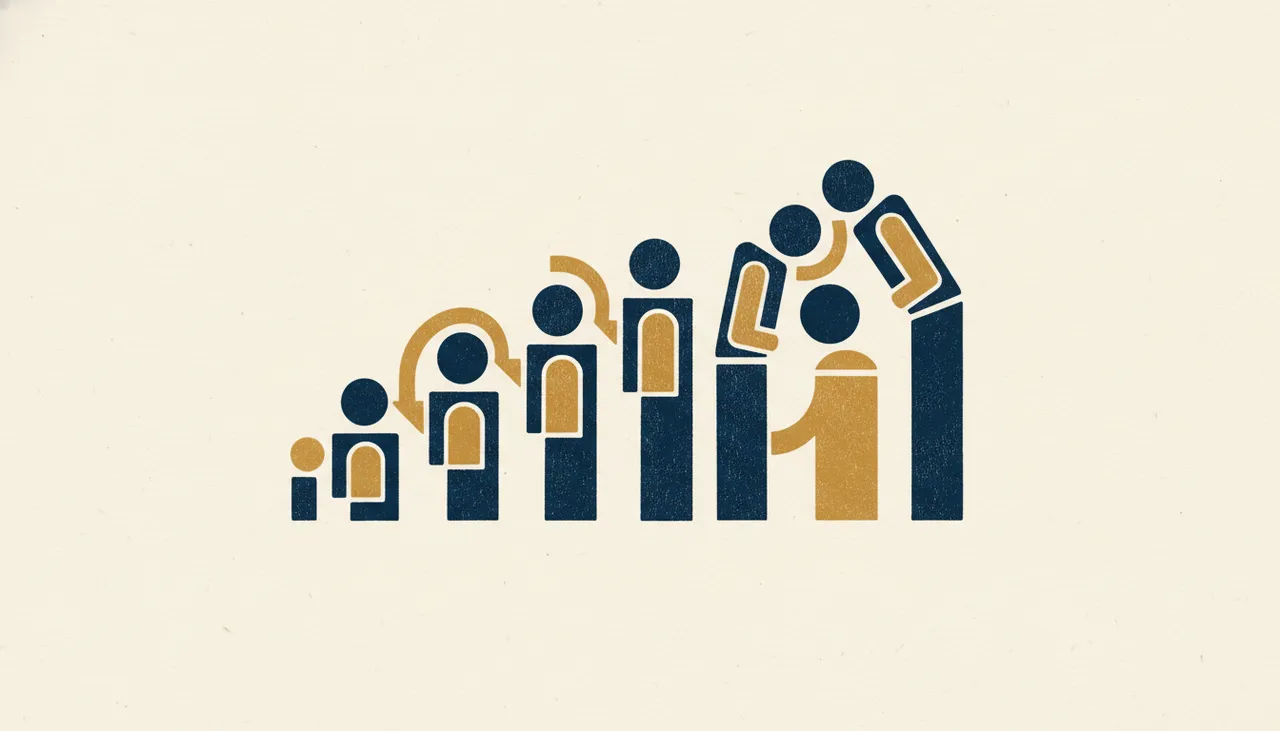
Korean Honorifics Explained: Speech Levels, Suffixes, and Titles
Korean honorifics are less a grammar rule and more a social reflex. You're reading the room — who's older, who's your boss, who's a stranger — and adjusting your verbs. Here's the practical version, starting with one sentence that shows every layer at once.

Korean Food in Koreatown: What to Order on Your First Visit
Koreatown LA is where I learned most of what I know about Korean food outside of Korea. The portions are bigger, the spice is dialed back, and half the menu is fusion you won't see in Seoul. Here's the order rotation I send friends through on their first visit, plus what makes Koreatown different from Korea.

Korean Food at Korean Restaurants: A First-Timer's Order Guide
Walking into a Korean sit-down restaurant without a Korean friend is disorienting the first time. Side dishes arrive before you order. The menu has three categories you don't recognize. Here's what I wish someone had told me — what to point at, what to actually order, and the phrase that saved me.

Korean Example Words for Beginners: 30 to Know First
The first 30 Korean words actually worth memorizing aren't the ones in the textbook index. They're the words you'll use on day one — greetings, family, food, a handful of verbs. Here's the list I'd give my past self, plus the one word I kept screwing up for a month.
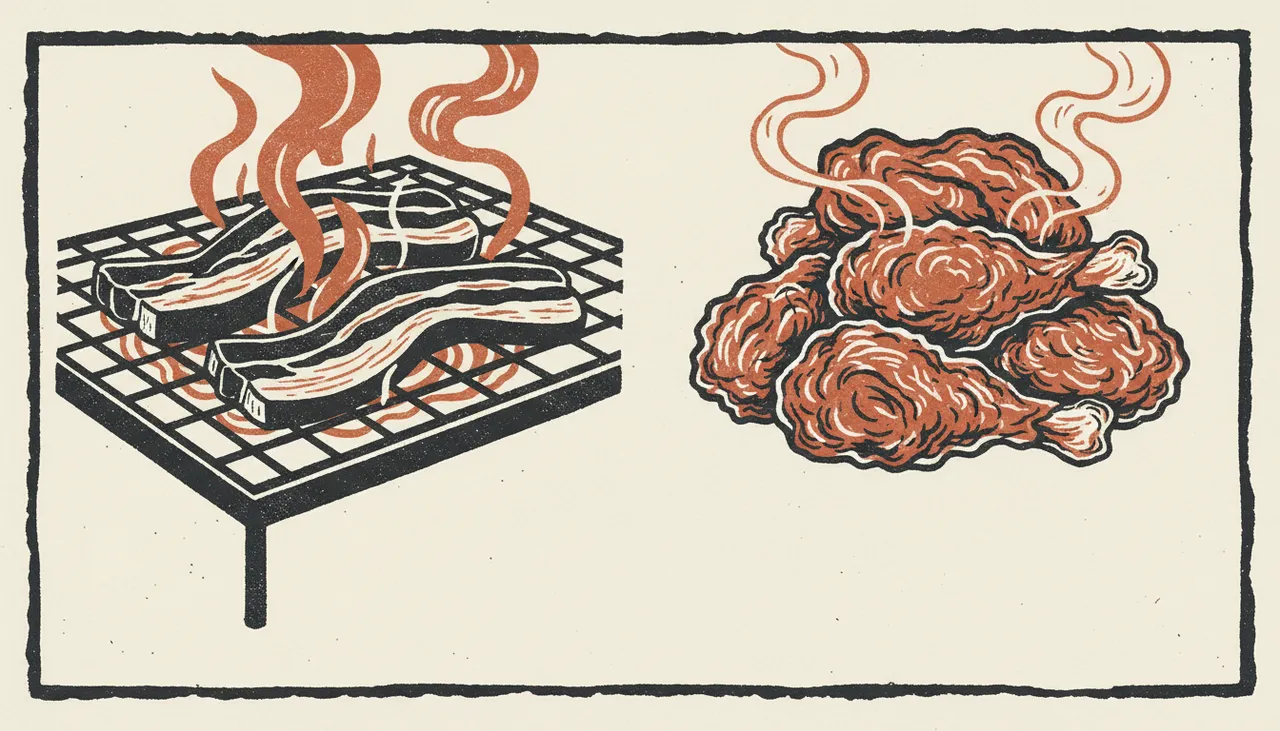
Korean BBQ vs. Korean Fried Chicken: The Two Menus Americans Love
Korean BBQ and Korean fried chicken are the two Korean meals most likely to show up on an American dinner table. They solve opposite problems — BBQ is slow and communal, chicken is fast delivery and beer. Here's the real difference, plus what to order at each.

Korean Alphabet Pronunciation: How to Actually Sound Out Every Letter
Korean pronunciation is way more regular than English, but a handful of letters trip up English speakers for months. The big one is the batchim — final consonants — and the sound shifts they trigger. Here's why 한국 sounds like "han-guk" and not "han-gook."

Korean Alphabet to English: Romanization Chart and Reading Rules
Romanization — writing Korean with English letters — is messier than it looks. There are three competing systems, and the official one changes a letter's spelling based on where it sits in a syllable. Here's the chart, the sound-change rules, and why Koreans themselves barely use any of this.

Korean Alphabet Handwriting: Stroke Order and Common Mistakes
Hangul handwriting is fast to pick up, but stroke order matters — both for how your handwriting looks to Koreans, and for being able to read theirs back. Here's the stroke order for every letter, plus the five mistakes I made during my first month.
Korean Alphabet A to Z: All 24 Hangul Letters, Plus the Doubles
The Korean alphabet isn't A to Z — it's Hangul, 24 letters split into 14 consonants and 10 vowels, plus some doubled and combined forms. I spent two weekends drilling it in 2022 and want to save you the mistakes I made. Full letter list inside.

K-Drama Korean Words: 20 You'll Hear in Every Series
K-dramas recycle a surprisingly small set of emotional words — love, wait, heart, promise, miss, believe. Once you catch those 20 by ear, subtitles start feeling like a backup instead of a crutch. Here's the list, plus which drama scenes you'll actually hear each one in.

How Long Does It Take to Learn Korean? A Realistic Timeline
The Foreign Service Institute puts Korean at around 2,200 hours for professional proficiency — one of the hardest languages for English speakers. But that number buries the real answer. Here's what 14 months of an hour a day actually got me, and what didn't.

How Do Korean Honorifics Work? The Two Questions That Decide Everything
Korean honorifics feel like a maze until you realize they hinge on two questions you ask before every sentence. Once those answers click, the verb endings and the vocabulary swaps line up on their own. Here's the shortcut, plus the story of the dinner where I figured this out.